News Trending War

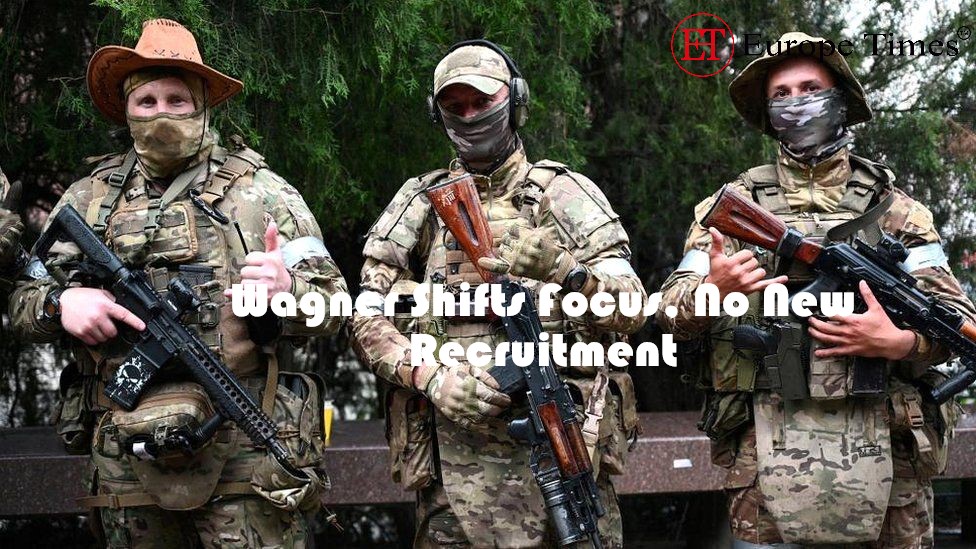
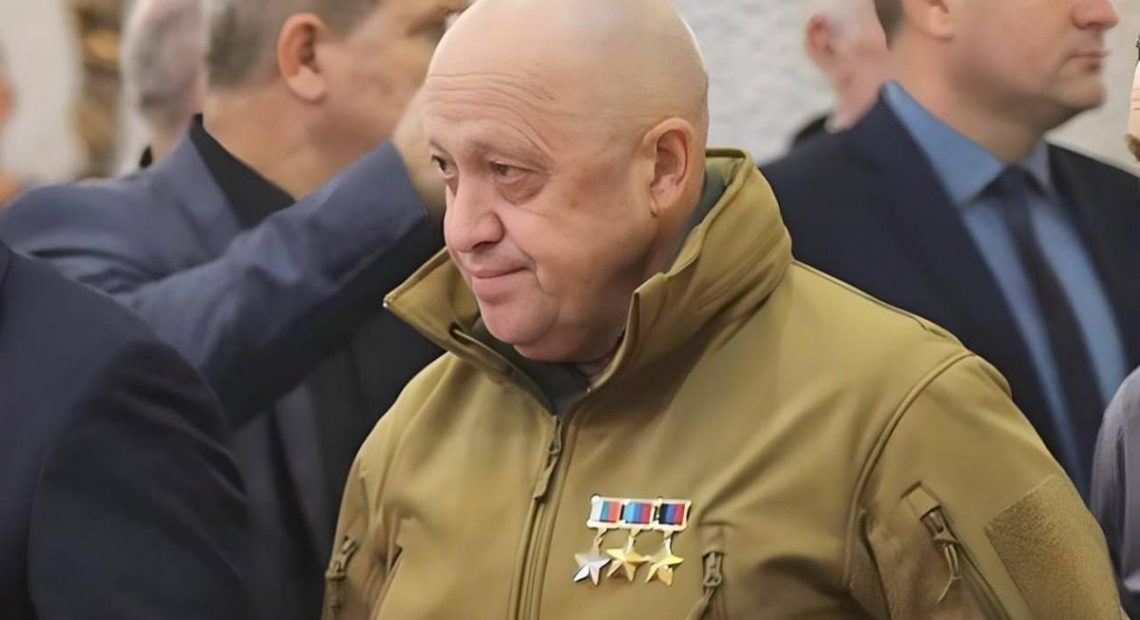
The leader of Russia’s 24-hour mutiny, Yevgeny Prigozhin, has arrived in Belarus after his Wagner mercenary group’s mutiny ended south of Moscow. Alexander Lukashenko, the leader of Belarus, claimed credit for arranging Prigozhin’s exile and stated that the Wagner mercenaries were offered an abandoned military base in Belarus if they wanted to join their leader.

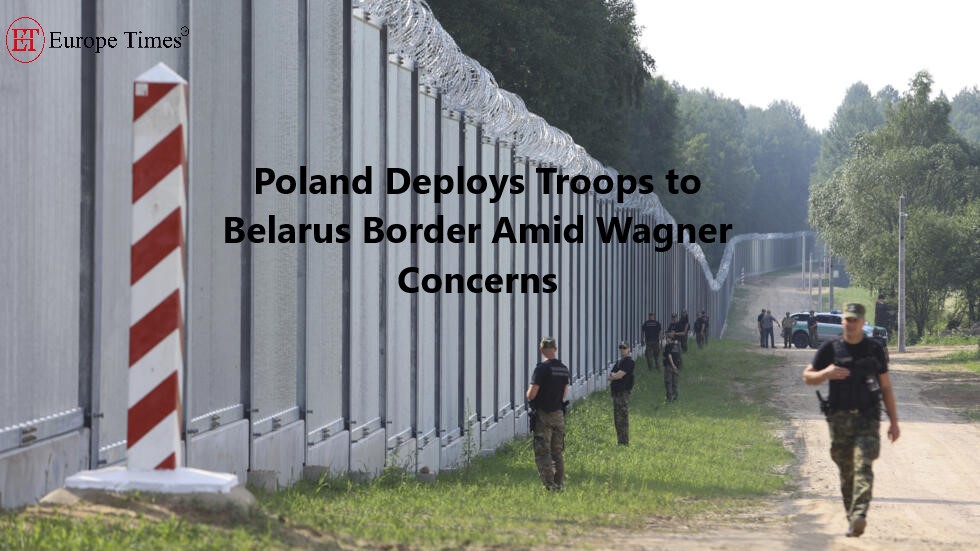
As part of the agreement that ended the mutiny, Prigozhin has been promised security, and the Russian criminal case against Wagner has been dropped. The presence of Wagner in Belarus has raised concerns among neighboring NATO members, Poland, Latvia, and Lithuania, who fear possible sabotage and infiltration operations. NATO has expressed readiness to defend against any threat from Moscow or Minsk and plans to strengthen its defenses in countries bordering Belarus.

Russia has recently deployed tactical nuclear weapons in Belarus, stating that they would only be used if Russian territory was threatened. There are mixed reactions among the Belarusian public, with some expressing concern about having someone like Prigozhin in their country. The mutiny has revealed weaknesses in the Kremlin’s control of security in Russia, but President Putin praised Russian security forces for stopping a potential civil war.

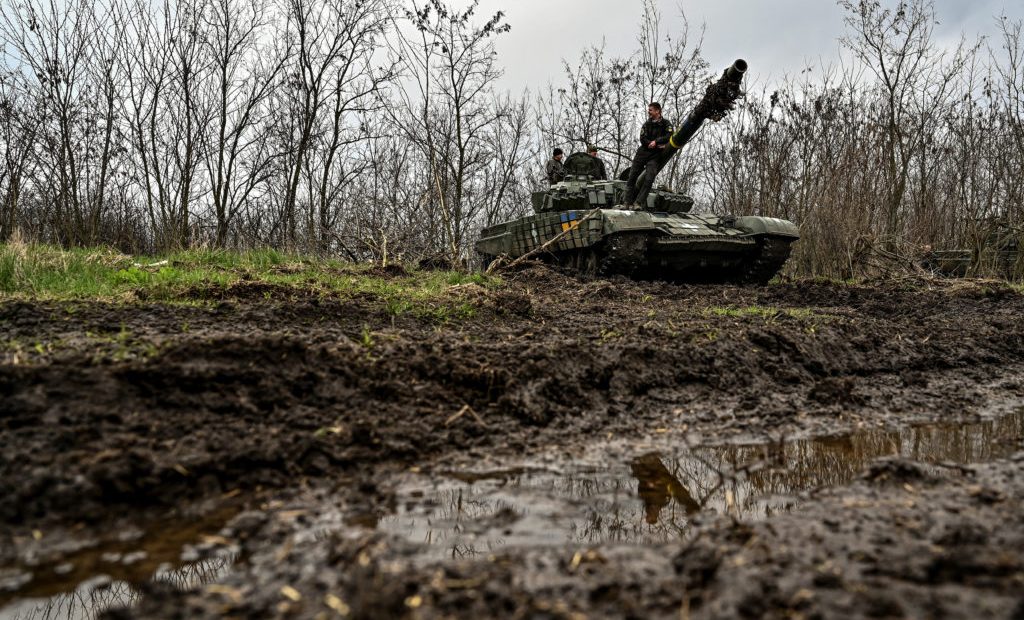
Putin also acknowledged that the state fully funded Prigozhin’s private army, which included expenditures on salaries, bonuses, and catering services. The events surrounding the mutiny remain somewhat unclear, with reports of downed military helicopters and conflicting claims about casualties. Lukashenko revealed a version of events in which he acted as an intermediary between Putin and Prigozhin, suggesting that he could play a role in managing the mercenary forces in Africa.

Observers speculate that the crisis has weakened both Putin and Lukashenko, potentially leading to more repression in Belarus in the short term and uncertainty about Russia’s reliability as a pillar of support for Lukashenko in the long term.

Picture Courtesy: Google/images are subject to copyright

News Trending

Vladimir Putin, the Russian President, has accused the leaders of the recent Wagner mutiny of seeking to create chaos and conflict within Russia. In a strongly-worded speech, Putin vowed to bring the organizers of the revolt to justice. However, he distinguished the regular Wagner troops as “patriots” and provided them with options to join the army, go to Belarus, or return home. Putin did not specifically mention Yevgeny Prigozhin, the head of Wagner, who had previously denied any involvement in attempting to overthrow Putin’s regime.

Wagner is a private army of mercenaries that has been fighting alongside the Russian military in Ukraine. The mutiny, which was short-lived, involved Wagner fighters seizing a major Russian city and advancing towards Moscow in a convoy of military vehicles. Prigozhin claimed that the revolt was in response to government plans to take direct control of Wagner, citing concerns over mistakes made by defense officials during the war with Ukraine. He insisted that Wagner had always acted in Russia’s interests.

Prigozhin’s comments were his first public statements since reaching a deal to end the mutiny, reportedly involving him going to Belarus with dropped criminal charges. However, Russian state media reported that he remains under investigation. Putin emphasized in his address to the Russian people that the organizers of the march on Moscow would face justice and criticized Prigozhin for betraying Russia. He used the speech to assert his authority and counter the perception of a weak response to the mutiny.

Putin accused the West of wanting Russians to turn against each other, although US President Joe Biden denied any involvement by the US or its allies in the rebellion. Putin claimed that his handling of the crisis prevented a catastrophe, but many Russians witnessed events differently and may not be convinced by his statements. He reiterated his promise to allow Wagner troops who did not engage in violence against fellow Russians to leave for Belarus or sign contracts with the Ministry of Defense or other military and law enforcement structures. Putin credited the unity of Russian society and thanked Belarusian leader Alexander Lukashenko for his role in peacefully resolving the situation.

The contrast between Putin’s portrayal of a united country and the scenes in Rostov, where locals welcomed and embraced the Wagner fighters, led Putin to suggest that the mercenaries had been deceived and used. The rebellion occurred after months of tensions between Wagner and Russia’s military leadership. The situation escalated when Wagner mercenaries crossed the Ukrainian border and took control of the regional military command in Rostov-on-Don, while a column of military vehicles headed towards Moscow. Prigozhin claimed that the “march of justice” exposed serious security problems across the country and mentioned Lukashenko’s involvement in brokering an agreement to end the mutiny. He expressed regret for the deaths of Russian troops during the conflict but justified their actions as self-defense.

Picture Courtesy: Google/images are subject to copyright

News Trending

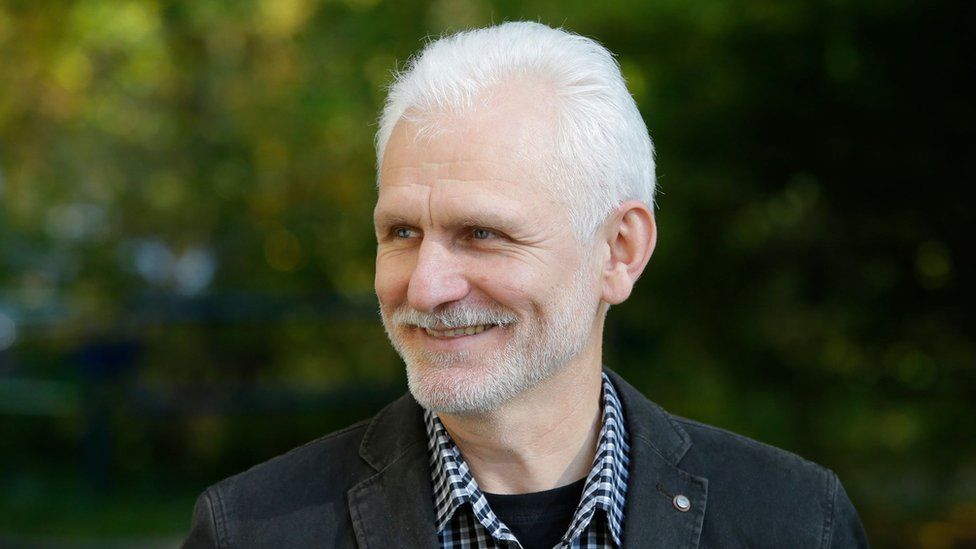
The Nobel Peace Prize has been given to a jailed activist from Belarus as well as two organisations from Russia and Ukraine for promoting democracy and human rights. As a rebuke to two authoritarian governments, the choice to honour Ales Bialiatsky, Russia’s Memorial, and the Ukrainian Center for Civil Liberties.

In December of last year, Russia forcibly closed Memorial in advance of Vladimir Putin’s decision to invade Ukraine. Alexander Lukashenko protests led to the imprisonment of Bialiatsky. The CCL of Ukraine has kept tabs on political repression and atrocities committed in regions of the nation that Russia has invaded or annexed.

All three had made “an excellent effort to expose war crimes, human rights abuses, and the misuse of power,” according to Berit Reiss-Andersen, head of the Norwegian Nobel Committee, who spoke to reporters.

She responded that the Nobel prize was always given “for something and to somebody and not against anyone” when asked if the committee was making a statement to Russia’s president on the occasion of his 70th birthday.

Belarus’s long-time ruler is a close ally of President Putin. After a re-election in 2020 that was widely condemned as rigged, he brutally cracked down on protesters and then allowed Russian forces to use his country as a launchpad in its war against Ukraine.

Ales Bialiatsky, 60, established the civil rights organisation Viasna, which is Belarusian for spring, in 1996, two years after Mr. Lukashenko took office. He was first imprisoned in 2011, and last year, he was again incarcerated without being given a reason. He is one of the 1,348 individuals that Viasna claims are being imprisoned as political prisoners in Belarus at the moment.

Svetlana Tikhanovskaya, an exiled opposition activist, hailed the Nobel committee for “recognising all Belarusians struggling for freedom and democracy,” and Natallia Pinchuk, Bialiatsky’s wife, said she was “overwhelmed with emotion.”

A spokesman for the Minsk foreign ministry claimed that Alfred Nobel was “turning in his grave” as a result of the awarding of the Nobel Peace Prize to Bialiatsky.

Picture Courtesy: Google/images are subject to copyright

News Trending

A Belarusian court sentenced a Russian student to six years in prison, one year after she and her dissident journalist partner were detained and arrested on a Ryanair flight. Sofia Sapega and Roman Protasevich were on their way to Lithuania when their flight was forced to land in Minsk.

The case prompted widespread condemnation and new sanctions against Alexander Lukashenko’s government. She was found guilty of inciting social enmity and discord by the court.She was also found guilty of illegally gathering and disseminating information about an unnamed person’s private life without his permission.The anger was sparked by Mr Lukashenko’s election to a sixth term in office in a rigged presidential election, according to the opposition.

Mr. Lukashenko denied the election was rigged and retaliated against the opposition, whose leaders were imprisoned or forced to flee the country.

Mr. Lukashenko denied the election was rigged and retaliated against the opposition, whose leaders were imprisoned or forced to flee the country.

Mr Protasevich had fled Belarus in 2019 and had only known Ms Sapega for about six months when they were apprehended.

He has yet to stand trial, and the status of the investigation into him is unknown.

The opposition activist was on Belarus’s “most wanted” list. However, the decision to declare a bomb threat on board his flight across Europe in May 2021 stunned the world.

Picture Courtesy: google/images are subject to copyright

News

The International Ice Hockey Federation has decided not to organise the 2021 Ice Hockey World Championship in the capital of Belarus, Minsk.

Belarus is facing a serious political crisis. The country recently witnessed a violent protest. The ruling government has not yet succeeded in bringing the law and order situation under control.

The decision has been taken in the wake of the unpleasant development in Minsk, where the event was supposed to be organised.

The federation has not yet publicised the new venue.

Though the embattled Belarus government has repeatedly assured the federation its capability to provide a safe atmosphere for the game, the federation has not yet lent its ears to the assurance made by the country yet.

The federation is less likely to reconsider its decision to ditch its present home ground.

Many countries in the west have already come forward to win the chance to become the home ground of the prestigious sports event.

There are rumours that the decision to ditch the present home ground has been taken after certain advertisers threatened to back off from the event.

The federation has not yet responded to the allegation. It is believed that the federation is trying to stay away from unnecessary controversies.

Photo Courtesy: Google/ images are subject to copyright 

News

The Belarus opposition has threated the government with a national wide strike. They have demanded the resignation of Belarus President Alexander Lukashenko.

The European country of Belarus is witnessing a serious political crisis since the Presidential Election which declared Mr. Lukashenko as the winner.

Belarusian opposition leader Svetlana Tikhanovskaya refused to concede defeat. She alleged that the election was not conducted in a free and fair manner.

She demanded a re-election under the monitory of trustworthy international agencies.

Anyway, the Belarus President refused to admit the demands raised by the opposition, and even allowed the security force to expert extreme force to quell the protest.

The national wide strike is the latest attempt by the opposition to oust the leader who allegedly gained the control over the country through an illicit method.

As per a latest report, many workers and students have already responded to the call made by the opposition leader.

Photo Courtesy: Google/ images are subject to copyright 

News Trending

In a shocking move, the tainted leadership of Belarus has given free hand to the police force to handle with the protest – emerged in the country since the disputed election.

The police have been awarded the right to use lethal force against the protesters who has extended their support to the anti-government movement in the country.

The tainted election is the triggering point of the issue in the country.

The election, which was denounced as unfair by the opposition, awarded a huge victory to President Alexander Lukashenko.

Several human rights organisations have exposed the unfair attitude of the country towards the protesters. They have published reports on how much improperly the situation has been handled by the country. As per a report submitted by a human rights organisation, the protesters have even been threatened with serious violence by the police.

Many western countries have warned that they would impose severe sanction against the country, demanding that the country should pave way for a free and fair election as soon as possible.

The strength of the present Belarus leadership is the support it gets from Russia. Russia has extended enormous support to the tainted leadership of Belarus.

It is yet to be seen how the things will evolve.

Photo Courtesy: Google/ images are subject to copyright 

News

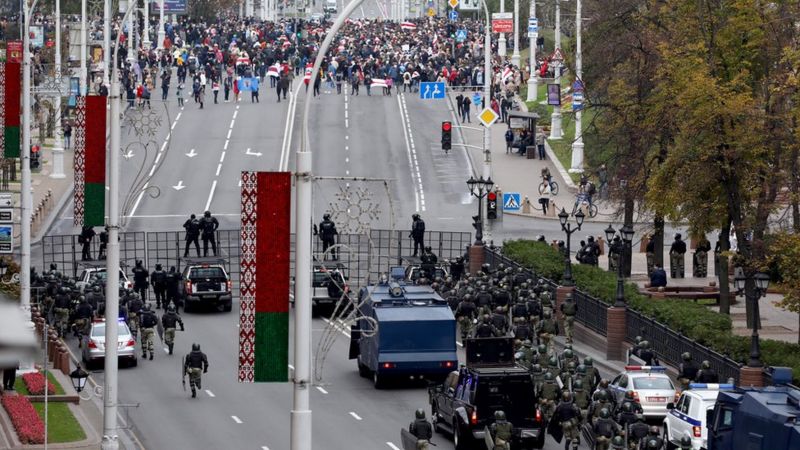
Belarus has used severe force to quell protest originated against its President, Alexander Lukashenko, who was recently re-elected as the head of the country.  

As per a report, the Belarusian riot police have used water cannon and stun grenades against the protesters.

The protest was triggered by the disputed election – which declared Mr. Alexander as the winner of the presidential election.

Several human rights organisations have raised serious criticism against the way Belarus has handled the protest organised against the disputed election.

Amnesty International has demanded the intervention of the western forces to address the issues developed in Belarus.

In the latest rally also, several people have been booked. Since the emergence of the protest, numerous people have been detained by the Belarus police.

The police, in the latest protest, have blasted protesters with coloured water to mark them out for arrest.

Many believe that it is high time to interfere in the issue.

Belarus is a country in the Eastern Europe, which has enormous growth potential. It is not in a good relation with the European Union.

It has a good relation with Russia. Recently, Russia offered support to the country to quell the protest.

The west is closely watching the development in the Eastern Europe.

Photo Courtesy: Google/ images are subject to copyright 

News

French President Emmanuel Macron is likely to interfere in the Belarus issue.

Recently, he has promised to help mediate in Belarus.

The country has been witnessing protest since Alexander Lukashenko was re-elected as the President of the country.

The European Union has declared that it would not recognise Mr. Lukashenko as the legitimate leader of Belarus.

Meanwhile, the Belarus President has been lately offered support by the European country of Russia.

At present, Russia is the only supporter of Belarus.

Russian President Vladimir Putin has alleged that pression was being applied over Belarus.

He has even promised his country’s military support to Belarus.

Recently, French President has met the exiled opposition leader, Svetlana Tikhanovskaya.

During the meeting, he has called for a peaceful transition of power in Belarus.  

Many human rights organisations have called for the interference of the International community in the issue.

They have brought the attention of the world to the human rights violations committed by the Belarus in the aftermath of the tainted election.

Some have come up with undeniable evidences.

Photo Courtesy: Google/ images are subject to copyright 

News Trending

The ongoing protest in Belarus has turned violent, as the country has organised a secret function to appoint tainted leader Alexander Lukashenko as the President of the country.

The country is in the state of unrest since the election which awarded a landslide victory to Mr. Lukashenko.

The opposition alleged that the election was not conducted in a free and fair manner. The opinion was backed by the European Union countries and the United States.

In the aftermath of the election, the Belarus dictator allegedly launched a serious crackdown in the country.

Violence was unleashed against protesters. Several International human rights organisations, including Amnesty International, appealed for the intervention of the International community.

Amnesty International claimed that those protesters who were arrested were subjected to severe mental and physical torture and some of them were event threatened with rape.

At present, Russia is the only country which supports Belarus. It even offered to send police forces to support the Belarus dictator.

Belarus is, with out any doubt, a satellite state of Russia.   

The possibility is high for this crisis to transform as a European crisis. It is pertinent not to allow such a transformation.