Bussiness featured Trending

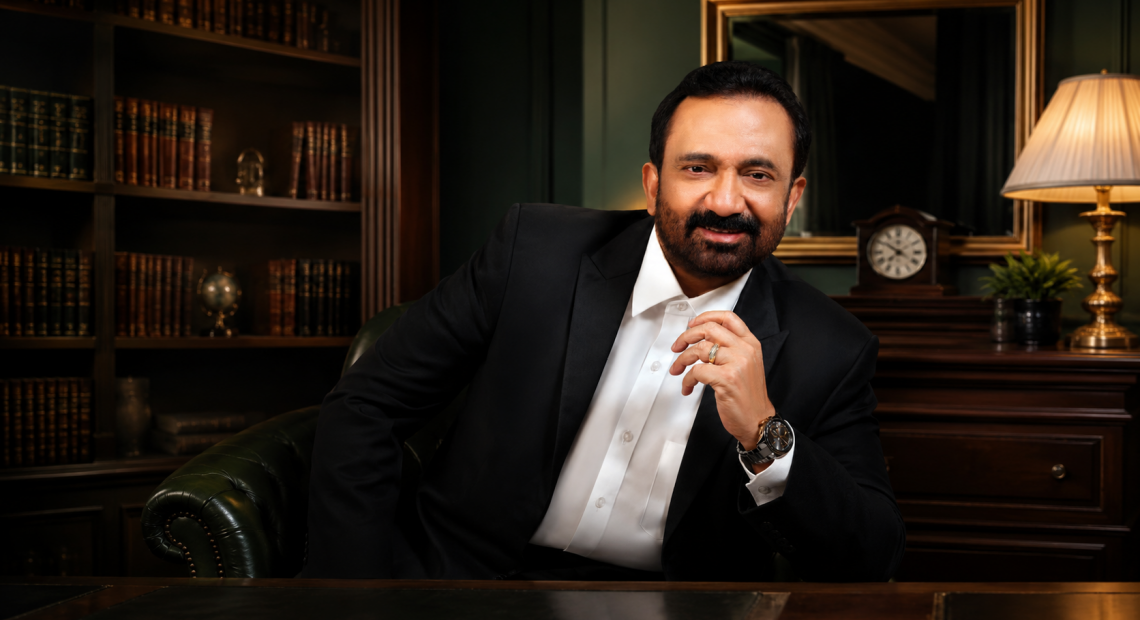
With extraordinary foresight, relentless drive and an instinctive understanding of consumer aspirations, Gopu Nandilath has transformed a modest 3,000 sq ft electronics store into an expansive retail empire. Today, Gopu Nandilath G-Mart commands a formidable presence with 66 outlets across Kerala, redefining the way the state shops for consumer durables while earning an enduring place in the hearts of generations of customers.

Walk into almost any home in Kerala and chances are high that one will find a television, refrigerator, washing machine, mobile phone or another electronic appliance purchased from Gopu Nandilath G-Mart. From Kasaragod in the north to Thiruvananthapuram in the south, the name has become synonymous with quality, choice, value and trust. Behind this remarkable retail phenomenon is a man whose entrepreneurial instincts have consistently anticipated the changing aspirations of Kerala’s consumers.

Meet Gopu Nandilath, the visionary entrepreneur from Thrissur whose ability to read the market, embrace transformation and turn opportunity into enterprise has scripted an extraordinary business story. More than four decades after he took his first steps into the world of consumer electronics, his passion remains undiminished. In a candid conversation with R L Morris, the business leader looks back on his remarkable journey, the principles that shaped his success, his vision for the future and the passions that add colour to his life beyond business.

A Modest Beginning

Born the seventh among the eight children of N P Govindan, a Sub Inspector in the Kerala Police Department, and Malathi Govindan, a homemaker, Gopu Nandilath was fascinated by electronics from an early age. His ambitions, too, were far bigger than his circumstances.

After completing his schooling at Tharakan’s High School in Aranattukara, he travelled to Delhi to pursue a Diploma in Electronics. After completing his schooling at Tharakan’s High School in Aranattukara, he went to Delhi to pursue a Diploma in Electronics. “I completed my Diploma programme in Delhi,” said Gopu. After completing his studies, he joined the electronics business, which involved the manufacture and sale of television accessories such as antennae, boosters, stabilisers and cables.

It was a fascinating period in India’s consumer history. Television was gradually moving beyond the realm of privilege and entering the homes of the expanding middle class. Gopu was not merely witnessing the change; he was learning to understand it.

A Correct Prediction and the Birth of an Entrepreneur

The 1982 Asian Games in New Delhi proved to be a defining moment in India’s television story. The live telecast on Doordarshan fuelled an unprecedented appetite for television sets, particularly black-and-white models, and Kerala was quick to embrace the new phenomenon.

As television sets began finding their way into Malayali homes, Gopu Nandilath was already studying the transformation taking place around him. He recognised that the growing fascination with electronics was not a passing trend but the beginning of a profound shift in consumer behaviour.

As television showrooms multiplied across Kerala, he decided to take the entrepreneurial plunge.

In 1984, Gopu Nandilath embarked on his business journey by opening a modest 2,000 sq ft showroom on Kuruppam Road in Thrissur, the cultural capital of Kerala. The store dealt in televisions and electronic goods. What appeared to be a modest beginning would eventually become the foundation of a formidable consumer durables empire.

From 3,000 Sq Ft to 30,000 Sq Ft

Once he established his presence in Thrissur, Gopu’s entrepreneurial instincts came to the fore. Expansion followed swiftly, with Gopu Nandilath Agencies opening outlets in Irinjalakuda, Vadanappally, Pattambi, Perinthalmanna, and Mannarkkad.

“We began with electronic items such as television sets, washing machines and refrigerators from prominent brands manufactured in India,” he recalls.

Then came the winds of economic liberalisation in the early 1990s. India began moving towards a more open economy, paving the way for the entry of global brands across various sectors. The transformation was dramatic. International names entered virtually every segment of consumer life, from automobiles and personal care products to televisions, washing machines and refrigerators.

For an entrepreneur who had built his career by reading market signals, this was an opportunity rather than a challenge.

Gopu responded decisively. Gopu Nandilath Agencies began bringing prestigious international brands such as Whirlpool, Samsung, LG and Bosch into its fold. The company was no longer simply selling appliances; it was becoming a gateway through which Kerala consumers could experience a new world of products and possibilities.

2004: The Year That Rewrote Consumer Choices

If the early years established the foundation, 2004 marked a transformational chapter in the history of the enterprise.

As technology began reshaping everyday life, Gopu realised that the conventional showroom model needed to evolve. He embarked on an ambitious revamp, culminating in the launch of the first hi-tech showroom at Poonkunnam in Thrissur.

Gopu Nandilath with his wife, Shiny Gopu, and daughter, Aishwarya Nandilath

Spread across 20,000 sq ft, the showroom represented an entirely new retail experience. The brand was rechristened Gopu Nandilath G-Mart, and the Gopu Nandilath G-Mart Home Appliances Plaza emerged as one of the largest establishments of its kind at the time.

The response was extraordinary. Customers from across Kerala travelled to Thrissur to experience the vast selection, competitive pricing and attractive offers. Until then, consumers were accustomed to visiting smaller outlets where choices were often limited to a handful of brands. G-Mart transformed that experience into something closer to a destination.

A wide range of premium Indian and international brands was brought together under one roof, turning appliance shopping into an engaging retail experience.

“We can proudly say that it was through Gopu Nandilath G-Mart that Kerala consumers gained greater exposure to international brands. We were able to bring a whole range of global electronic brands to the Indian market after the opening of the economy,” says Gopu.

The success of the Poonkunnam model became a catalyst for the group’s expansion across Kerala.

“Change Is Key to Survival”

For Gopu Nandilath, standing still has never been an option.

Asked about the secret of surviving changing market conditions, his answer is immediate: “Change is essential for survival.”

He remembers that when he began his journey, the electronics boom led to the mushrooming of numerous small outlets. Many have disappeared over the years, he says, because they failed to respond to changing market realities.

“Nandilath was fortunate enough because we embraced innovation. It is my policy to upgrade or bring in changes every five years. We have to grow with technological advancements. That is the key to survival,” he says.

That philosophy continues to define G-Mart. From the early days of televisions and refrigerators to the era of smart appliances and artificial intelligence, the organisation has consistently adapted to the changing technological landscape.

Today, even as AI reshapes the consumer electronics industry, Gopu Nandilath is already showcasing products that harness its potential. His belief is simple: innovation keeps a brand relevant, while reinvention keeps it ahead.

Earning a Place in People’s Hearts

For all the emphasis on technology, expansion and business strategy, Gopu believes that the most valuable asset a company can possess is customer trust.

“Our trust in our customers keeps growing. Since its inception more than four decades ago, Gopu Nandilath G-Mart has been able to maintain a loyal customer base that runs into three generations,” he says.

Gopu Nandilath with his wife, Shiny Gopu.

The reasons are clear. Competitive pricing, a wide selection, reputed global and Indian brands, dependable after-sales service and attractive offers have combined to create a retail experience that consumers repeatedly return to.

“In fact, anyone can walk into our showroom and buy a product at a very convenient price, with the assurance that it is of premium quality. Customer satisfaction and happiness have been key ingredients of our success. We have earned a place in people’s hearts and the trust factor has transcended generations,” he says.

Another defining feature of the business model is the absence of middlemen. Products are sourced directly from manufacturers, enabling G-Mart to operate efficiently while passing a substantial part of the benefit to customers through discounts, special offers and gifts.

The Onam season, for instance, brings a spectacular array of incentives. The group’s lucky draw offers include 25 Maruti Suzuki Baleno cars, 100 one-gram gold coins, 100 ten-gram silver coins, 100 LED televisions and 100 washing machines, besides special discounts running into crores of rupees.

Always No. 1

Gopu Nandilath takes considerable pride in the position G-Mart has carved out in Kerala’s consumer durables market.

“I can say with pride that Gopu Nandilath G-Mart has occupied the Number One position among consumer durables in Kerala for several years in succession,” he says.

The scale of the group’s showrooms reflects the ambition behind the brand. Many of its outlets span between 10,000 and 35,000 sq ft, with several more on the expansion map. “This Onam, three more outlets are going to be opened. By December, five new showrooms will be there,” he says. Having established a strong presence in Kerala with 66 showrooms, the company is now setting its sights on 100 outlets across the state, while also exploring opportunities beyond Kerala, with Karnataka emerging as the first step in this expansion.

Despite the scale of the business, Gopu has always placed strong emphasis on maintaining close control over his operations. His approach is rooted in accessibility, customer service and the ability to give every outlet the attention it deserves.

“Wherever you travel in Kerala, there should be a Gopu Nandilath showroom every 30 kilometres. That is our vision,” he explains.

It is a strategy that has served him well. By maintaining a strong presence across the state and keeping a close watch on each outlet, Gopu has built a network that has continued to grow without a single showroom being closed down over the years.

Planning Ahead, Maintaining Momentum

Gopu Nandilath is a strategist who prefers to think several moves ahead.

“I have already laid out the blueprint for the next five years,” he says. The group is also strengthening its online presence, recognising that modern consumers increasingly value convenience and seamless shopping experiences.

For him, the future of retail lies in combining choice, technology, service and convenience. Businesses that understand their customers and respond quickly to their needs will remain relevant, he believes.

At G-Mart, understanding the customer is a structured exercise. A dedicated team studies markets extensively before strategies are formulated. Even the location of a new showroom is selected after analysing population patterns, spending behaviour and other economic indicators.

“We even check the CIBIL indices before zeroing in on a new location,” he reveals.

Managing a large enterprise while continuously exploring new opportunities is no small feat. Yet Gopu remains as energetic and hands-on as ever. He continues to closely monitor consumer behaviour, motivate employees and identify emerging categories.

The group’s entry into laptops and smartphones is another example of that forward-looking approach, adding new dimensions to an already extensive consumer electronics portfolio.

For Gopu, entrepreneurship demands perpetual alertness. A successful entrepreneur must remain sensitive to market fluctuations, anticipate what consumers will need next and introduce products and experiences before competitors do.

Family and Next-Gen Entrepreneurs

Behind every enduring entrepreneurial journey is often a strong support system, and Gopu Nandilath readily acknowledges the role played by his wife, Shiny Gopu.

A partner in the enterprise as well as in life, Shiny has remained a steadfast presence throughout his journey. The next generation, too, has already stepped into the business, bringing fresh perspectives and new-age expertise.

Arjun Nandilath with his wife, Ashvika Arjun, and their son, Adhrith Nandilath

Their daughter, Aishwarya Nandilath, pursued an MBA after completing her Engineering degree and is involved in Sales, Online Marketing and Social Media. Their son, Arjun, completed his MBA in the UK and is responsible for Sales and Marketing in the Mobile and Laptop Division.

Both have taken on their responsibilities with confidence, demonstrating that the entrepreneurial legacy is already in capable hands.

Gopu’s advice to his children when they entered the business was characteristically practical.

“Business is not easy like a bed of roses. But once you enter, it will become a passion,” he told them.

He also impressed upon them the importance of discipline and completing every task without delay.

“Procrastination can prove detrimental to any business as the backlog just keeps piling up. Time will never wait for us. So, we ought to complete all tasks on a daily basis without keeping them for tomorrow.”

He believes that a business has to be nurtured with constant care and attention. Aishwarya and Arjun are now steadily taking the reins of the business, carrying forward the legacy built by their father. “This is what I told them. They have successfully undergone the training and are excelling in what they are doing. I place full confidence in them,” he says with evident pride. More than the business itself, Gopu hopes to pass on the values that have guided his journey — honest, ethical and responsible leadership — so that the next generation can take the company forward with the same commitment and integrity.

In Love with the Beautiful Game

Away from boardrooms, expansion strategies and sales figures, Gopu Nandilath has another enduring passion: football.

His love for the beautiful game dates back to childhood. As a schoolboy, he would eagerly seize every opportunity to play football with friends. The passion has remained undiminished.

He considers himself fortunate to have watched the semi-finals and finals of eight FIFA World Cups, including the latest edition held in the United States.

A passionate admirer of Lionel Messi, Gopu continues to experience the same excitement every time he watches the Argentine maestro in action. Cristiano Ronaldo and Kylian Mbappé are among the other stars whose performances he follows closely.

For a man whose professional life revolves around strategy and competition, football perhaps offers another form of the same thrill: the unpredictability of the game and the exhilaration of staying ahead.

On a Globe-Trotting Spree

Gopu Nandilath is also an enthusiastic traveller who has visited more than 60 countries. His travels have combined business, curiosity and leisure, allowing him to observe different cultures and, importantly, study retail trends around the world.

The United States is among the countries he has visited several times, while New Zealand and Switzerland remain particular favourites.

“There is zero pollution in those two countries and the natural beauty is simply outstanding. That is why I wish to visit them again and again,” he says.

His first international trips took place in 1988, when he travelled to Singapore, Malaysia and the United States. India was still years away from economic liberalisation, and foreign exchange restrictions made overseas travel a very different experience.

For Gopu, travel is more than recreation. It is also research.

“Whenever I visit a country, I invariably visit electronic gadget showrooms there and try to keep abreast of the latest technology and changes, which I implement when I return,” he says.

The habit perfectly captures his entrepreneurial personality: even while travelling, he is observing, learning and searching for the next idea.

A Blessed Encounter

Among his many journeys, one particular experience holds a special place in Gopu’s heart.

In October 2024, during a visit to the Vatican, he was selected by the Sree Narayana Trust of Sivagiri to be part of a delegation attending a global inter-religious meeting hosted by the Vatican.

The occasion offered him the rare opportunity to spend a few moments with Pope Francis, the spiritual leader of more than a billion Catholics worldwide.

Gopu Nandilath presenting an elephant sculpture to Pope Francis during his visit to the Vatican.

Gopu presented the pontiff with a sculpture of an elephant and received his blessing. The memory remains a treasured one, preserved in a photograph of the encounter that occupies a prominent place in the elegant parlour of his residence in Thrissur.

For a man accustomed to meeting business leaders and navigating boardrooms, the encounter represented something altogether different: a deeply personal and spiritual moment that continues to resonate with him.

A Craze of Elephantine Proportions

Like many proud sons of Thrissur, Gopu Nandilath shares a deep fascination with elephants and the grandeur of traditional elephant pageantry.

At one point, he owned 11 tuskers. Three were donated to Guruvayur Temple, while three others passed away. Today, three remain.

Among them is ‘Nandilath Gopalakrishnan’, regarded as the biggest tusker in Kerala and a magnificent presence whenever he takes part in a procession.

His love for animals extends beyond elephants.

For more than two decades, Gopu has maintained a sprawling seven-acre farm at Kundannoor in Wadakkanchery. The property houses around 200 cows of different breeds, more than 100 goats, poultry, canines and exotic birds.

The farm grows grass for the cattle, and the cows collectively produce around 800 litres of milk every day, which is supplied to Milma.

“I have loved animals from a tender age and that is one reason why I wanted to have a farm. We also used to raise cows at our house when I was a child,” he says.

The entrepreneur’s passions do not end with animals. He is equally fond of premium automobiles, with an impressive collection adding another distinctive touch to his lifestyle.

With an instinct for opportunity, an appetite for innovation and an unwavering commitment to his customers, Gopu Nandilath has built much more than a chain of consumer durables stores. He has created a retail legacy that has evolved alongside Kerala itself.

From a 3,000 sq ft showroom in Thrissur to a statewide network of 66 outlets, his journey is a compelling study in foresight, resilience and reinvention. Yet perhaps the most remarkable aspect of Gopu Nandilath’s story is that, even after more than four decades at the helm, the hunger to evolve remains undiminished.

His empire may have grown from one showroom to a formidable retail network, but the philosophy at its heart remains unchanged: understand the customer, anticipate the future, embrace change and never stop moving forward.

And so, with integrity as his foundation, vision as his compass and an extraordinary zest for life as his driving force, Gopu Nandilath continues his winning streak—one showroom, one innovation and one customer at a time.

Pic courtesy: Pegasus/ images are subject to copyright

featured Interview

Some entrepreneurs build companies. Others build systems. Anish K. Joy’s business journey is best understood as the latter—a structured expansion across industries that, at first glance, appears unrelated, but on closer examination reveals a consistent blueprint. Electronics, food manufacturing, interiors, hospitality, and now beauty—each venture is less of an isolated pursuit and more of a calculated extension of a broader strategy.

At the centre of this evolution sits KLAMY—not as a departure from what came before, but as its most advanced expression.

Building the Foundation: Execution Before Identity

Long before brand-building entered the picture, Anish’s early ventures were rooted in execution-driven markets. His work in air conditioning—spanning assembly, marketing, and servicing—placed him in a space where performance dictated survival.

There was no room for abstraction. Products had to function. Services had to deliver. This phase established a principle that would remain constant across all future ventures:
Credibility is earned operationally before it is communicated commercially.

It also provided something more valuable than early success—clarity. By understanding how customers interact with products at a functional level, Anish built a foundation that would later allow him to scale with precision.

Servosonic: Creating a Reliable Core

Servosonic marked the transition from hands-on service operations to a scalable product-driven business. Entering the competitive inverter segment, the company chose not to differentiate through aggressive branding but through reliability and consistency.

Its expansion was guided by a disciplined focus on delivering durable, performance-oriented products while steadily strengthening distribution networks and maintaining dependable after-sales support. This measured approach allowed the company to grow without compromising trust, an asset that later supported diversification into new sectors. Servosonic ultimately became more than a revenue generator—it evolved into a template for disciplined scaling.

Expanding the Model: Interiors and Infrastructure

Anish K. Joy’s expansion into office interiors and furniture, particularly in Bengaluru, reflects a strategic understanding of how businesses evolve alongside economic growth. As companies scale, their physical environments must also transform, with workspaces, layouts, and infrastructure becoming essential contributors to productivity and organisational identity. By entering this sector, he positioned his business within the natural growth cycle of enterprises rather than limiting himself to traditional consumer markets.

This move was not diversification pursued for variety or experimentation. Instead, it followed a clear and deliberate logic rooted in identifying sectors supported by long-term demand, entering areas where operational execution could create meaningful differentiation, and building relationships that extend beyond single transactions. The interiors segment allowed for deeper engagement with clients, fostering partnerships that develop alongside the expansion of the businesses they serve.

As a result, the interiors venture added a new dimension to Anish’s broader portfolio. It enabled integration into business ecosystems, connecting his operations directly with corporate infrastructure and long-term enterprise development. This shift strengthened the overall system he was building, moving his portfolio beyond product-based engagement toward sustained, ecosystem-driven growth.

Sweet 17: Competing Where Trust is Fragile

The food industry introduced a completely different set of variables compared to Anish’s earlier ventures. Unlike electronics, where durability and performance are judged over time, food products are evaluated instantly and repeatedly with every purchase. Consumer trust in this sector is fragile, built through consistent quality rather than technical performance. Recognising this distinction, Anish approached the launch and growth of Sweet 17 with a strategy centred on reliability instead of rapid experimentation.

Rather than chasing trends or novelty, Sweet 17 positioned itself around clean and dependable production standards that customers could rely on daily. The brand focussed on creating products suited for regular household consumption, ensuring accessibility and familiarity across diverse consumer groups. This emphasis shifted the brand away from one-time appeal and towards sustained usage, encouraging repeat purchases as the foundation of growth.

Over time, this approach transformed Sweet 17 into a habitual brand rather than a trend-driven one. Consumers began to associate the brand with consistency and everyday convenience, strengthening loyalty through routine consumption. By prioritising stability in taste, quality, and availability, the company built trust that extended beyond marketing narratives and into daily life.

The brand’s expansion into international markets, particularly among Indian expatriate communities, further reinforced a key strategic insight: in the food industry, familiarity itself becomes a competitive advantage. By maintaining consistent standards across geographies, Sweet 17 ensured that customers experienced the same reliability regardless of location, allowing trust to travel across borders and strengthening the brand’s global presence.

Hospitality: Experience Anchored in Place

The Servosonic Resort in Josegiri, Kannur introduces a spatial and experiential dimension to Anish K. Joy’s business portfolio. Unlike product-based industries, hospitality is immersive and deeply connected to place, where customer value is shaped by emotion, environment, and experience. By positioning the resort as a destination wedding venue, the venture enters a segment driven not only by demand but by cultural significance and personal milestones, creating deeper engagement with consumers.

What makes the project particularly significant is its context—establishing a large-scale resort in his hometown serves both as a strategic investment and a symbolic statement. The venture creates asset-backed value while anchoring the brand within a physical location and opening the door to experience-led consumer interaction. In a portfolio largely built around products and services, the resort adds tangible presence, strengthening the overall ecosystem through long-term brand visibility and emotional connection.

KLAMY: The Convergence of Everything Built Before

KLAMY represents the convergence of capabilities Anish built through his earlier ventures. While previous businesses focused on establishing operational strength and market credibility, KLAMY applies those learnings within a category that demands more than execution alone. The beauty and personal care industry operates at the intersection of science, identity, and perception, where consumer expectations are rapidly shifting from standardised offerings toward personalised experiences tailored to individual needs.

Recognising this transformation, KLAMY emerges as a strategic response to changing consumer behaviour. By acquiring and developing a New York–based brand for the Indian market, Anish enters a high-growth and highly competitive sector shaped by strong brand perception, deep consumer loyalty, and increasing technological influence. The move signals not just diversification but a deliberate step into a future-facing industry aligned with evolving global trends.

What ultimately distinguishes KLAMY is not only its positioning but its structural approach. Rather than functioning as a traditional product brand, it is designed as a platform capable of integrating technology, personalisation, and consumer engagement into a unified model. In doing so, KLAMY brings together the operational discipline, market understanding, and scalability developed across earlier ventures into a single forward-looking enterprise.

Personalisation as a Business Model

At the core of KLAMY is the integration of Artificial Intelligence into product discovery and usage.

This transforms the brand from a product provider into a solution platform.

Key elements include:

  • AI-based analysis of skin and hair profiles
  • Customised product recommendations
  • Continuous refinement through user data

This approach aligns with a broader industry transition toward precision-driven consumption. Consumers are no longer passive buyers. They expect products that adapt to them. KLAMY is designed to meet that expectation at scale.

Why KLAMY Changes the Portfolio Dynamics

Within Anish’s multi-industry ecosystem, KLAMY introduces a fundamentally new form of engagement. His earlier ventures were largely necessity-driven in nature—electronics addressed functional requirements, food supported everyday consumption, and interiors enabled business operations. Each solved practical problems rooted in utility and reliability. KLAMY, however, operates in a category shaped not by necessity alone but by identity, self-expression, and personal aspiration.

This shift transforms the role the brand plays within the overall portfolio. Beauty and personal care encourage deeper emotional connections with consumers, resulting in higher engagement levels and stronger brand loyalty. Unlike traditional product cycles, the category supports recurring interaction and long-term customer relationships. As a result, KLAMY becomes a consumer-centric anchor capable of introducing higher-margin opportunities and sustained engagement cycles, factors that have the potential to reshape the economic dynamics of the broader business ecosystem.

Timing and Market Positioning

KLAMY’s entry into the Indian market coincides with a pivotal moment in the evolution of the beauty and personal care industry. Consumer preferences are rapidly shifting toward premium and personalised products, supported by increased digital adoption and growing awareness around skincare, wellness, and self-care. Technology has empowered consumers with information, raising expectations for products that respond to individual needs rather than offering one-size-fits-all solutions.

Despite rapid market growth, a clear gap remains between mass-market accessibility and genuine customisation. KLAMY positions itself precisely within this space, aiming to deliver personalisation without exclusivity. By balancing innovation with accessibility, the brand seeks to meet evolving expectations while remaining relevant to a broad and expanding consumer base.

Bridging Global Identity with Local Relevance

Introducing a globally originated brand into India requires careful strategic calibration. KLAMY’s approach reflects a deliberate balance between preserving international appeal and adapting to local cultural and consumer preferences. Global identity creates aspiration and credibility, while localisation ensures relevance and adoption within a diverse market.

This dual strategy allows the brand to maintain its premium positioning without appearing disconnected from local realities. By aligning global standards with regional expectations, KLAMY strengthens its ability to scale sustainably while building authentic connections with Indian consumers.

A Portfolio That Functions as a System

When viewed collectively, Anish’s ventures reveal themselves not as independent successes but as interconnected components of a larger system. Servosonic contributes technical expertise and distribution strength, Sweet 17 builds large-scale consumer trust, the interiors business integrates with enterprise ecosystems, and hospitality establishes physical presence and experiential engagement. KLAMY adds a new layer by introducing technology-driven personalisation and data-informed consumer interaction.

Together, these ventures form a diversified yet cohesive structure in which each business reinforces the others. The portfolio operates less as a collection of companies and more as an evolving ecosystem built on complementary strengths.

Leadership Beyond Visibility

Managing such a diversified system requires leadership grounded in structure rather than visibility alone. Anish’s approach emphasises building capable teams across verticals, delegating responsibility with accountability, and creating operational frameworks that allow independent growth. This philosophy reduces reliance on centralised decision-making while ensuring strategic alignment across businesses.

By enabling autonomy within clearly defined systems, multiple ventures can scale simultaneously without losing direction or consistency. Leadership, in this context, becomes less about control and more about designing environments where growth can occur organically.

The Road Ahead: Integration as the Next Phase

As the portfolio matures, the next phase of expansion is likely to focus not on entering new industries but on deeper integration across existing ones. Shared distribution networks, cross-industry operational efficiencies, and data-driven insights offer opportunities to strengthen connections between ventures and unlock new value.

KLAMY, supported by its technological foundation, may play a central role in this evolution by introducing data intelligence into a traditionally operations-driven ecosystem. Through integration rather than diversification, the portfolio moves toward becoming a unified business architecture—one where technology, experience, and operational discipline converge to define the next stage of growth.

Retail Expansion and Market Leadership

This approach to structured scaling is also reflected in the group’s retail expansion. Central Bazaar, which operates over 109 showrooms across Kerala, has steadily strengthened its position in the state’s retail landscape. Over the past five years, the brand has grown into the second-largest retail chain in Kerala, reflecting a consistent strategy of scale, distribution, and operational strength. The first anniversary of its Thodupuzha hypermarket marked a key milestone in this journey, highlighting both rapid growth and increasing market presence.

With more than 1,300 employees and extensive retail and logistics infrastructure already in place, the group continues to expand its footprint through new outlets and investment-driven growth. Plans to add 40 new stores and achieve a turnover of ₹200 crore within the next coming years underline a clear focus on long-term market leadership. Anish K. Joy, serving as the Designated Director, plays a pivotal role in driving this expansion and strengthening the group’s overall operational reach.

The Power of Structured Growth

Anish K Joy’s journey is not defined by a single industry, a sudden breakthrough, or a moment of disruption. Instead, it is shaped by a repeatable method—one built on patience, clarity, and calculated evolution. His approach follows a simple but disciplined philosophy: build steadily, expand logically, and adapt when the market demands change. Each venture represents a deliberate step forward rather than a departure from the past.

Servosonic established operational reliability and technical credibility. Sweet 17 transformed consistency into everyday consumer trust. Interiors and hospitality expanded the vision into spaces where businesses function and experiences are lived. Together, these ventures laid the structural foundation of a diversified yet interconnected ecosystem.

KLAMY brings these accumulated strengths into a single forward-facing model, combining technology, personalisation, and deeper consumer engagement. It does not replace what came before; it refines and elevates it. In that progression lies the defining characteristic of his entrepreneurial story—not expansion for its own sake, but evolution with purpose. And within that evolution emerges the blueprint for the future of his business empire.

Pic Courtesy: pegasus/ images are subject to copyright