featured News Trending

Sébastien Lecornu has stirred controversy after visiting a village bakery on Labour Day to buy baguettes, a move critics say undermines the tradition of May 1 as a mandatory rest day in France. The highly publicised visit, where he purchased bread and flowers, is part of a government push to allow small businesses like bakeries and florists to remain open on the holiday.

The French government argues such shops are essential to daily life and has proposed a bill to exempt them from closure rules, provided employees volunteer to work and receive double pay. Current laws only clearly permit essential services like hospitals and hotels to operate, leaving ambiguity around small retailers.

Labour unions, including leaders like Marylise Léon, have criticised the move as political theatre, warning it could erode workers’ rights. They argue employees may feel pressured to work despite the “voluntary” clause and caution that exceptions could gradually weaken long-standing labour protections across France.

Pic courtesy: google/ images are subject to copyright

featured News Trending

Switzerland has sparked diplomatic tension with Italy after announcing plans to recover medical costs for treating Italian nationals घायल in the deadly New Year’s Eve fire at the Crans-Montana ski resort, which killed 41 people. The Swiss Federal Social Insurance Office confirmed that the expenses would be billed under existing cross-border healthcare agreements.

Italian Prime Minister Giorgia Meloni strongly criticised the move, calling it “disgraceful” and stating that Italy would reject any formal request for payment. Swiss authorities clarified that the charges would not be directed at victims’ families but instead billed to the relevant foreign health insurer, which in Italy’s case would involve the government.

The dispute has further strained relations between the two countries, with Italian officials highlighting their own support during the tragedy, including medical treatment for Swiss victims and emergency rescue assistance. Switzerland is reportedly seeking over 100,000 Swiss francs for treating a small number of Italian patients, intensifying the diplomatic disagreement.

Pic courtesy: google/ images are subject to copyright

featured News Trending

A public dispute has erupted in Russia after celebrity blogger Victoria Bonya responded sharply to criticism from state TV host Vladimir Solovyov. The clash followed Bonya’s viral video appeal to President Vladimir Putin, in which she said he was being shielded from the country’s real problems, including corruption and pressure on ordinary citizens. The video drew tens of millions of views and prompted rare acknowledgment from the Kremlin.

Solovyov accused Bonya on air of working with Western interests and called for authorities to investigate her, using harsh and personal language. In response, Bonya condemned his remarks as misogynistic and demanded he be removed from television. She argued that insults directed at her also demean single mothers and women more broadly, gaining support from parts of the public.

Escalating the feud, Bonya said she may pursue legal action and circulated a viral AI-generated video mocking Solovyov. Meanwhile, some Russians interviewed expressed sympathy for her, saying public figures should not use their platforms to insult others and that citizens have the right to voice concerns about their country.

Pic courtesy: google/ images are subject to copyright

featured News Trending

Rumen Radev has secured a sweeping victory in Bulgaria’s parliamentary election, paving the way to lead the country’s first single-party government in nearly 30 years. The former president capitalised on widespread public frustration with corruption, political instability, and rising living costs, following years of repeated elections and fragile coalitions.

Radev, a former fighter pilot often viewed as sympathetic to Russia, positioned himself as an anti-establishment figure promising reform. His win also dealt a major blow to traditional parties, including those led by Boyko Borissov. Despite his rhetoric and past criticism of EU policies, analysts believe he is unlikely to risk jeopardising crucial European Union funding or dramatically shift Bulgaria’s geopolitical alignment.

The new government faces significant domestic challenges, including tackling corruption, stabilising the economy, and restoring public trust in institutions. While some voters remain concerned about his perceived pro-Russian stance, many see his decisive mandate as an opportunity to bring stability after years of political turmoil.

Pic courtesy: google/ images are subject to copyright

featured News Trending

Hungary is set for a major political shift after Péter Magyar and his Tisza party secured a sweeping victory, ending Viktor Orbán’s 16-year rule. Winning 52% of the vote and a two-thirds parliamentary majority, Magyar has moved quickly to accelerate the transition of power, with plans for parliament to convene in early May. His government is already outlining reforms, including curbing media influence and introducing term limits that could block Orbán from returning to office.

Orbán, who finally addressed the defeat days later, described it as “the end of an era” and accepted responsibility, though he offered little reflection on campaign failures. His Fidesz party suffered a dramatic drop in representation and now faces internal uncertainty, with no clear successor emerging. The loss has exposed growing dissatisfaction among voters, especially younger generations, and highlighted the challenges of maintaining support after years in power.

Magyar’s incoming administration is expected to act swiftly on anti-corruption measures, economic recovery, and restoring democratic institutions. Priorities include preventing capital flight, preserving evidence of alleged wrongdoing, and unlocking withheld EU funds by meeting governance standards. With Hungary’s economy struggling, the new leadership faces pressure to deliver rapid reforms while redefining the country’s direction both domestically and within Europe.

Pic courtesy: google/ images are subject to copyright

featured News Trending

Peter Magyar secured a sweeping victory in Hungary’s parliamentary election, handing his Tisza party a powerful two-thirds majority. The result gives the new government broad authority to push reforms, strengthen the rule of law, and potentially unlock billions in frozen European Union funds. Analysts say the outcome, once seen as unlikely, is the most market-friendly scenario and could boost investor confidence.

The win marks a major shift after years of tensions under former Prime Minister Viktor Orban, whose government frequently clashed with the EU. Magyar has pledged to rebuild ties with Brussels and position Hungary as a strong ally within both the EU and NATO. He also promised constitutional changes to restore checks and balances and tackle corruption, aiming to reverse what critics described as institutional control under the previous administration.

While markets have reacted positively, uncertainty remains over how quickly Hungary can access EU funding. Diplomats and analysts caution that the government must first deliver concrete reforms before funds are released. Despite comparisons with Poland’s recent experience, experts say Hungary may face stricter conditions, making the pace of economic recovery dependent on the government’s ability to follow through on its promises.

Pic courtesy: google/ images are subject to copyright

featured News Trending

Nicusor Dan appointed seven chief prosecutors and deputies despite opposition from civil society groups and the country’s top judicial regulator. The move has raised concerns about the direction of Romania’s anti-corruption efforts, especially as the regulator had declined to endorse the nominees.

Romania, often ranked among the more corrupt countries in the European Union, has seen scrutiny over its justice system even after special EU monitoring ended in 2023. Critics say the pace of anti-corruption investigations has slowed, with recent high-profile acquittals adding to fears that enforcement is weakening.

Among the appointments, Cristina Chiriac was named prosecutor general, alongside key roles in anti-corruption and organized crime units. While the president defended his choices as necessary, critics—including former justice minister Stelian Ion—warned that ignoring the regulator’s negative opinion could undermine judicial independence and public trust.

Pic courtesy: google/ images are subject to copyright

featured News Trending

Finland’s Supreme Court has fined Member of Parliament Paivi Rasanen for describing homosexuality as a “developmental disorder,” in a landmark ruling that has intensified debate over free speech and minority rights. The court found her guilty of incitement against a group based on statements made in a 2019 social media post and later on her website.

The court ruled that Rasanen’s claims contradicted established medical understanding and that she should have recognised the potential harm of her statements. She was ordered to pay a fine of 1,800 euros. The decision was closely contested, with a 3–2 vote, overturning earlier rulings by lower courts that had acquitted her.

Rasanen, who has served in parliament since 1995, said she was shocked by the verdict and is considering appealing to the European Court of Human Rights. The case has drawn international attention, with support from conservative groups and criticism from others, while also prompting renewed calls within Finland for changes to laws governing freedom of speech and incitement.

Pic courtesy: google/ images are subject to copyright

featured News Trending

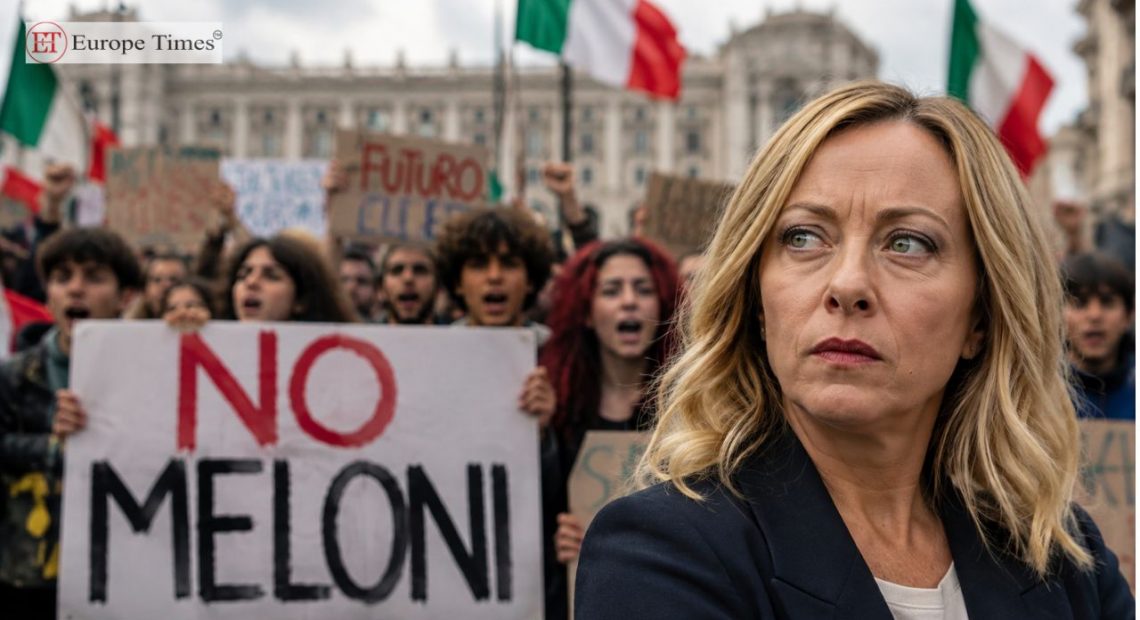
Giorgia Meloni faced a major political setback after Italian voters rejected her proposed judicial reforms in a national referendum. Around 54% voted against the changes, dealing a blow to her right-wing coalition ahead of upcoming elections.

Despite the defeat, Meloni said she would not resign, acknowledging the result while expressing regret over the missed opportunity to modernize Italy’s justice system. The vote saw strong turnout, reflecting deep divisions between the government and the judiciary.

The outcome has weakened Meloni’s political momentum and boosted opposition forces, with centre-left parties now aiming to unite. Analysts suggest the referendum result may reshape the political landscape as the country heads toward future elections.

Pic courtesy: google/ images are subject to copyright

featured News Trending

Denmark is set to hold a parliamentary election on March 24, with Prime Minister Mette Frederiksen seeking a third term in office. Although her Social Democrats are projected to secure their weakest result in over a century, she remains the frontrunner to retain power. The campaign initially took an unusual geopolitical turn due to U.S. President Donald Trump’s renewed push to assert control over Greenland, a semi-autonomous Danish territory, briefly boosting Frederiksen’s support.

As the election approaches, domestic issues have regained prominence. Voters are largely focused on the rising cost of living, inequality, and debates over immigration policy. Frederiksen has proposed reintroducing a wealth tax to fund welfare and education, signaling a shift toward more traditional left-wing policies, though critics argue the move could hurt economic growth.

Polls suggest no clear majority for either political bloc, pointing instead to a tight race. While the left-leaning alliance is expected to fall short of a majority, it may still form a government due to divisions within the right-wing bloc. The final outcome could depend on centrist parties, particularly former Prime Minister Lars Lokke Rasmussen, who may play a निर्णாயக (decisive) role in shaping the next government.

Pic courtesy: google/ images are subject to copyright