featured News Trending

Spain’s citizenship law granting nationality to descendants of Spaniards exiled during the Civil War and the Franco dictatorship has become the center of a political dispute ahead of the country’s next general election. Since the law was expanded in 2022, more than 544,000 people have obtained Spanish citizenship, with over 306,000 registering to vote, while hundreds of thousands of applications are still awaiting approval.

Opposition parties, including the conservative People’s Party (PP) and far-right Vox, have accused Prime Minister Pedro Sánchez’s government of using the citizenship process to influence future election results. They allege, without providing evidence, that the government is strategically processing applications and voter registrations. The government has firmly denied the claims, calling them irresponsible and stating it has no control over where new citizens choose to register to vote.

The legislation extends earlier reparations measures by allowing more descendants of Spanish exiles, as well as people affected by historical discrimination, to claim citizenship. Similar ancestry-based citizenship laws exist in several European countries. While overseas voting has traditionally been low, the growing number of new citizens has intensified debate over the potential political impact of Spain’s expanding diaspora electorate.

Pic courtesy: google/ images are subject to copyright

featured News Trending

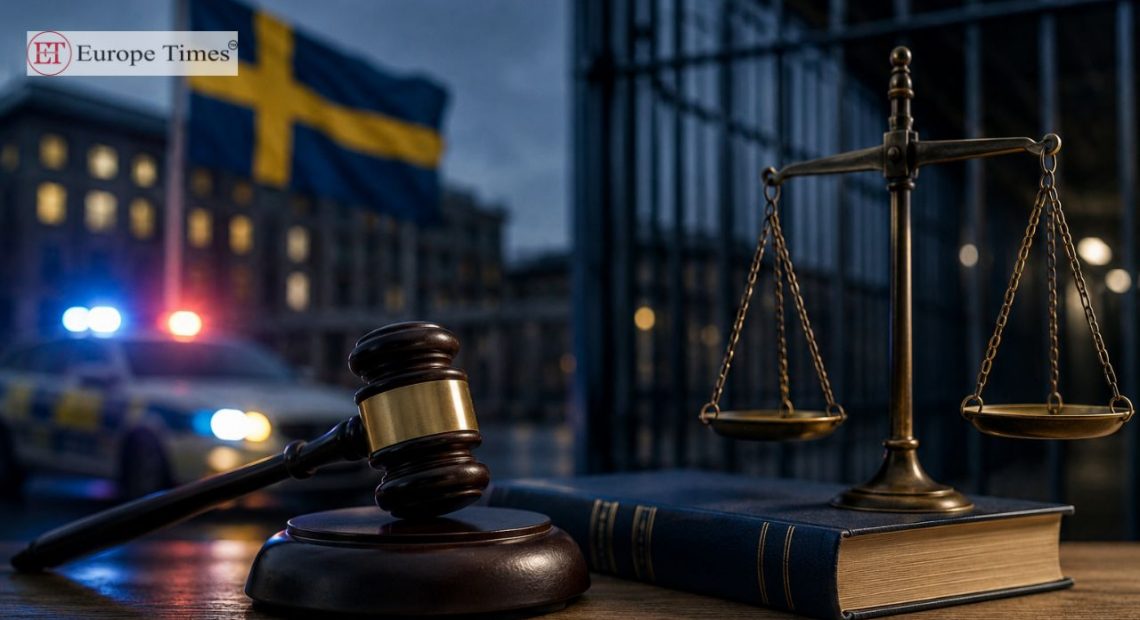
The Swedish government has announced plans to introduce tougher criminal sentencing laws ahead of the country’s September general election, aiming to strengthen its response to crime and repeat offenders. The proposed legislation would encourage courts to impose harsher penalties by making greater use of the upper end of sentencing ranges and ensuring that multiple offences are more fully reflected in prison terms.

Justice Minister Gunnar Strömmer said the current system often fails to adequately punish repeat offenders because sentences are largely based on the most serious offence rather than the total number of crimes committed. Under the proposed reforms, courts would consider all offences when determining sentences. The government also plans to reduce the weight given to mitigating factors, such as the impact of imprisonment on a person’s employment.

The measures are part of Sweden’s broader crackdown on gang-related crime, which has remained a major political issue despite a decline in shootings in recent years. The right-wing government has already introduced stricter laws, including tougher penalties for gang offences, expanded police surveillance powers and prison sentences for offenders as young as 14, as it seeks to reassure voters ahead of the election.

Pic courtesy: google/ images are subject to copyright

featured News Trending

Thousands of people gathered in the Serbian city of Kraljevo on Sunday, continuing nationwide anti-government protests a day after President Aleksandar Vucic announced he would step down within weeks, paving the way for early presidential and parliamentary elections. While many protesters welcomed the announcement, they expressed concern that Vucic could retain influence by seeking the post of prime minister and backing a close ally for the presidency.

The protests began after the deadly collapse of a railway station canopy in Novi Sad in late 2024, which claimed 16 lives and sparked widespread public anger over alleged government corruption and mismanagement. Demonstrators carrying Serbian flags and banners reading “Students are winning” marched peacefully, calling for political change and greater accountability. Vucic has denied allegations of corruption.

The developments are being closely watched by both the European Union and Russia, given Serbia’s strategic position and its balancing of relations with both sides. The EU has urged Serbia to uphold democratic standards, strengthen judicial independence, improve press freedom and ensure fair elections as part of its bid to join the bloc. Protesters say their movement is about securing lasting institutional reforms rather than simply replacing political leaders.

Pic courtesy: google/ images are subject to copyright

featured News Trending

Switzerland has officially rejected a controversial referendum proposal to cap its population at 10 million, with approximately 55% of voters casting a “no” ballot. Championed by the right-wing Swiss People’s Party (SVP), the initiative mandated that if the population exceeded the threshold before 2050, the country would be forced to terminate its free movement of labor agreement with the European Union. The high-stakes vote drew a 59% turnout—well above the national average—and was widely compared to Britain’s 2016 Brexit referendum due to its potential to disrupt vital European trade relations.

The result has been widely celebrated by Swiss business groups and government officials, who warned that the cap would trigger economic chaos, freeze vital foreign recruitment, and sour diplomatic ties with Brussels. Opponents successfully argued that isolating the small nation was highly risky, especially following a volatile 2025 marked by heavy U.S. trade tariffs on Swiss goods under President Donald Trump. While Swiss Justice Minister Beat Jans welcomed the signal of economic stability and openness, he simultaneously pledged to address mounting public anxieties regarding rising rents and strained public infrastructure.

Despite the defeat, political analysts and green-party lawmakers warn that the close nature of the debate has permanently shifted the country’s political landscape. Switzerland’s population currently stands at 9.1 million—with foreign nationals comprising nearly 28%—and is on track to hit the 10 million mark by the early 2040s. While SVP leadership maintains that the core issues of mass migration remain unresolved and vows to keep pushing for curbs, opposing lawmakers caution that the initiative has effectively legitimized a highly sensitive debate surrounding population caps.

Pic courtesy: google/ images are subject to copyright

featured News Trending

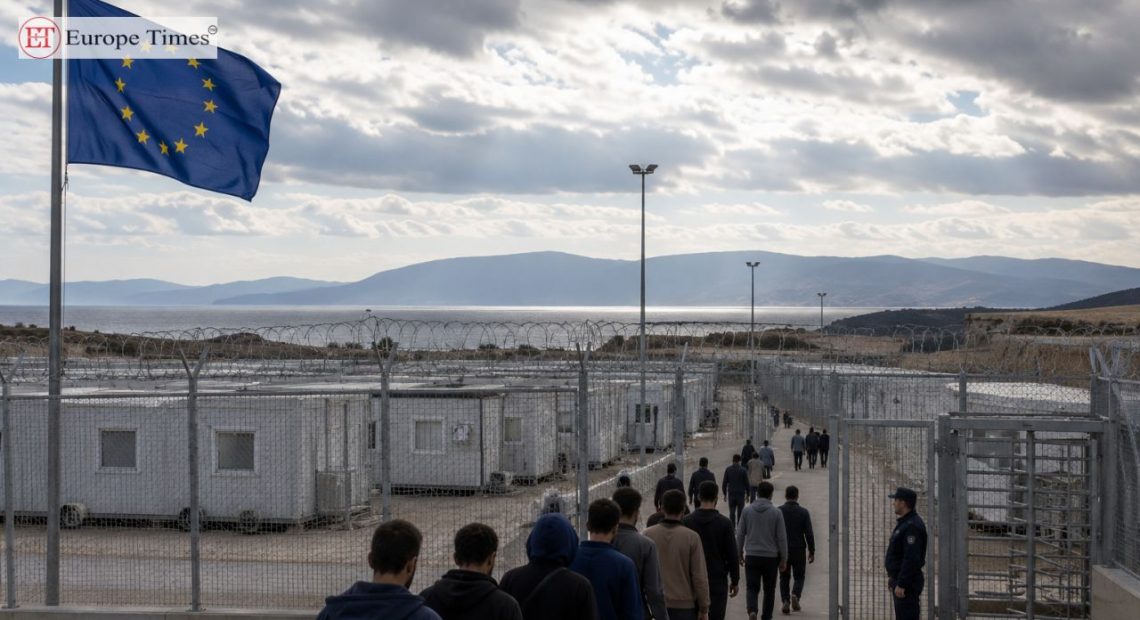
The European Union has reached a political agreement on new migration rules that would allow member states to send rejected asylum seekers and visa overstayers to “return hubs” located outside the EU. The proposal, aimed at improving deportation enforcement, comes as European governments face growing political pressure to curb irregular migration despite a decline in arrivals over the past year.

Under the new framework, authorities would gain expanded powers, including longer detention periods, the collection of biometric data, searches of premises, and penalties for migrants who do not cooperate with deportation procedures. EU officials argue the measures are necessary because only a small percentage of people ordered to leave the bloc currently do so.

Human rights organizations and opposition lawmakers have strongly criticized the plan, warning it could lead to abuses and undermine migrant rights. Critics say the rules resemble aggressive immigration enforcement practices seen elsewhere and could increase detentions, home searches, and transfers to third countries with limited safeguards. The legislation still requires formal approval from EU governments and the European Parliament.

Pic courtesy: google/ images are subject to copyright

featured News Trending

Voting began in Malta’s parliamentary elections on Saturday, with opinion polls indicating that Prime Minister Robert Abela’s ruling Labour Party is on track to secure a record fourth consecutive term in office. Abela called the snap election a year ahead of schedule, citing the need to address future challenges arising from global uncertainty.

Malta enters the election with one of the strongest economies in the European Union, recording 4% growth last year, low inflation, and minimal unemployment. The Labour government has highlighted economic stability and frozen energy prices as key achievements, though concerns remain over the potential impact of Middle East tensions on inflation and tourism.

The opposition Nationalist Party, led by Alex Borg, has argued that economic growth has not significantly improved residents’ quality of life. Issues such as rising rents, overcrowding, pressure on public services, and the growing number of migrant workers have become major campaign topics. Election results are expected to be announced around midday on Sunday.

Pic courtesy: google/ images are subject to copyright

featured News Trending

German Chancellor Friedrich Merz said he would currently discourage his children from studying or working in the United States, pointing to what he described as a worsening social climate and shrinking opportunities even for highly educated professionals. Speaking at a Catholic convention in Wuerzburg, Merz said Germany now offers stronger prospects for young people.

His remarks come amid growing tensions between the United States and its European allies under President Donald Trump. Disagreements over trade, the wars in Ukraine and Iran, and NATO relations have strained ties between Washington and Berlin. Merz recently criticized the United States over the Iran conflict, while Washington responded with plans for partial troop withdrawals from Germany and increased tariffs on European Union car imports.

Although Merz described himself as a longtime admirer of America, he admitted that his opinion was changing. He said many highly educated Americans are struggling to find jobs and suggested the country’s environment has shifted rapidly. Trump has also criticized Germany under Merz, saying the chancellor should focus on fixing his own country before commenting on the United States.

Pic courtesy: google/ images are subject to copyright

featured News Trending

Hungary’s powerful pro-government media network is rapidly weakening after former Prime Minister Viktor Orban’s election defeat last month. Several major outlets linked to Orban have already seen leadership removals, programme cancellations, and shifts in editorial tone following the landslide victory of Peter Magyar’s opposition-led Tisza party.

The new government has pledged sweeping reforms aimed at restoring media independence and press freedom after years of criticism over state influence in Hungarian journalism. Public broadcasters have begun featuring more opposition voices, while some pro-Orban influencers and media figures have reduced their activity or disappeared from major platforms. Magyar has also announced plans for a new media law and a review of public service media financing.

Analysts say one of the biggest challenges will be dismantling the financial structure that supported pro-Orban media for years, particularly through state advertising. The KESMA media conglomerate, which includes hundreds of outlets, could face severe financial pressure if government support is cut. European Union leaders are closely monitoring Hungary’s reforms, viewing the country as a key test for rebuilding democratic institutions and media freedom in Europe.

Pic courtesy: google/ images are subject to copyright

featured News Trending

French President Emmanuel Macron is facing a major political challenge as lawmakers prepare to vote on his nomination of former chief of staff Emmanuel Moulin to lead the Bank of France. Critics argue the move is part of Macron’s effort to place trusted allies in key institutions ahead of the 2027 presidential election, where the far-right National Rally is expected to be a major contender.

The parliamentary vote is considered a key test of Macron’s influence as his presidency enters its final phase without a clear majority in parliament. Opposition lawmakers from both the left and right have questioned whether Moulin can remain politically independent after serving closely under Macron. However, supporters say Moulin is one of France’s most experienced economic policymakers and well-qualified for the central bank role.

If rejected, the nomination would mark an embarrassing setback for Macron and strengthen claims that his political power is weakening before the next election. The Senate vote is expected to be decisive, with conservative lawmakers divided over whether to back Moulin or oppose another Macron ally taking a powerful institutional position.

Pic courtesy: google/ images are subject to copyright

featured News Trending

Sébastien Lecornu has stirred controversy after visiting a village bakery on Labour Day to buy baguettes, a move critics say undermines the tradition of May 1 as a mandatory rest day in France. The highly publicised visit, where he purchased bread and flowers, is part of a government push to allow small businesses like bakeries and florists to remain open on the holiday.

The French government argues such shops are essential to daily life and has proposed a bill to exempt them from closure rules, provided employees volunteer to work and receive double pay. Current laws only clearly permit essential services like hospitals and hotels to operate, leaving ambiguity around small retailers.

Labour unions, including leaders like Marylise Léon, have criticised the move as political theatre, warning it could erode workers’ rights. They argue employees may feel pressured to work despite the “voluntary” clause and caution that exceptions could gradually weaken long-standing labour protections across France.

Pic courtesy: google/ images are subject to copyright