EU Leaders Face Tough Talks Over €1.6 Trillion Budget and Ukraine Funding
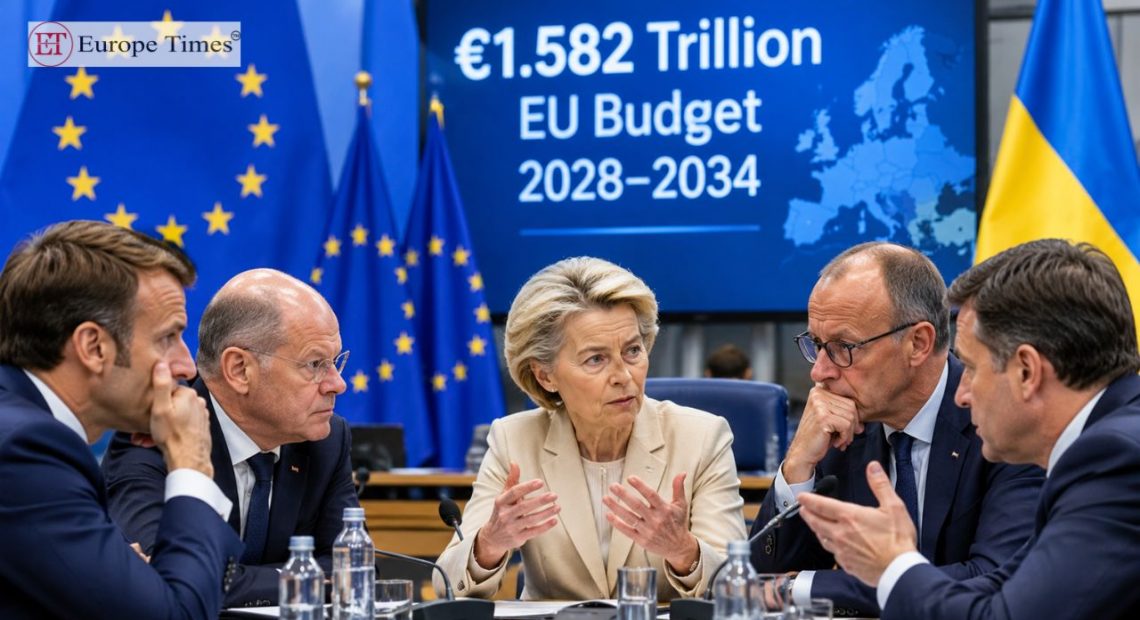
European Union leaders are preparing for difficult negotiations over the bloc’s proposed €1.582 trillion seven-year budget for 2028–2034, as disagreements over Ukraine funding, agricultural subsidies and national contributions threaten to delay an agreement. The discussions on November 26 are expected to expose differences among the 27 member states, with leaders hoping to reach a deal at a summit scheduled for December 17–18.
A major point of contention is continued financial support for Ukraine. The proposed long-term budget includes up to €100 billion for Kyiv, while the EU is also considering a €45 billion loan for 2027, expected to be repaid only after Russia provides war reparations. Slovakia, the Czech Republic, Hungary and Bulgaria oppose requiring all member states to contribute to the loan, while Germany and several other countries insist on shared responsibility. Additional contributions from non-EU countries could bring the proposed support for 2027 to around €70 billion.
The negotiations also reflect wider divisions over spending priorities. Wealthier net contributors, including Germany, Sweden, the Netherlands and Finland, want budget reductions and greater investment in European competitiveness. Countries receiving more EU funding defend agricultural subsidies and regional development programmes, which account for a significant share of the proposed budget. Discussions will also cover possible new EU revenue sources, including carbon-credit income, technology taxes and levies on certain products. Since the seven-year budget requires unanimous approval, leaders face pressure to reach an agreement before elections in several member states next year complicate negotiations.
Pic courtesy: google/ images are subject to copyright