featured News Trending

German prosecutors have arrested a German-Rwandan national accused of assisting in the 1994 Rwanda genocide by ordering the killings of Tutsis. The suspect, identified only as Innocent S under German privacy laws, was detained in the central state of Hesse. He faces charges of complicity in genocide and 25 counts of murder for allegedly directing attacks while serving as an assistant to the mayor of Kayove in northwestern Rwanda.

According to prosecutors, the suspect is accused of ordering the deaths of 25 Tutsi victims across five separate incidents. In one case, he allegedly took part directly in the killing by stabbing a victim in the chest. Investigators also claim he used his official position to incite violence against the Tutsi population and helped prepare death lists during the genocide.

Germany has pursued several Rwanda genocide suspects under the principle of universal jurisdiction, which allows courts to prosecute serious international crimes regardless of where they were committed. The 1994 Rwanda genocide, carried out by Hutu extremists over approximately 100 days, claimed the lives of more than 800,000 Tutsis and moderate Hutus, making it one of the deadliest atrocities of the 20th century.

Pic courtesy: google/ images are subject to copyright

News Trending


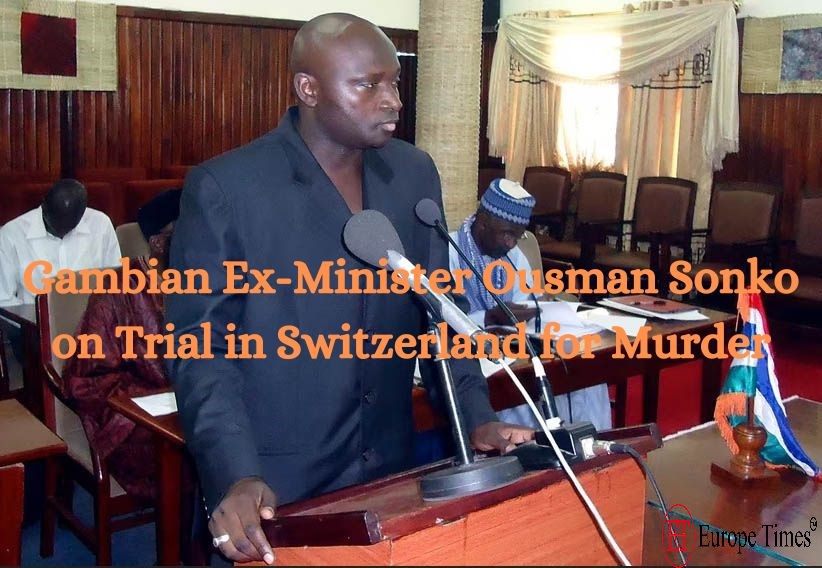
A former interior minister from The Gambia, Ousman Sonko, is facing trial in Switzerland on charges of crimes against humanity. Sonko fled to Switzerland in 2016, just before the fall of Gambian President Yahya Jammeh’s repressive regime. He is accused of involvement in killings, rape, and torture, with evidence presented by NGOs leading to his arrest. Sonko’s defense argues that he was not responsible, claiming the National Intelligence Agency was behind the alleged crimes and was not under his authority.

Switzerland is utilizing universal jurisdiction to prosecute the case, allowing countries to try individuals for crimes committed elsewhere. Sonko is the highest-ranking government official in Europe to be prosecuted under this principle. The trial is seen as a potential warning to repressive governments, emphasizing that they can be held accountable even outside their borders. The extensive charges against Sonko include ordering killings, torture, and rape against political opponents, potentially constituting crimes against humanity under Swiss law.

Swiss investigators gathered evidence in The Gambia, interviewing numerous victims and witnesses. The trial marks only the second instance of Switzerland using universal jurisdiction for crimes against humanity. Human rights groups believe it serves as a precedent for accountability. Sonko, who was a key figure in Jammeh’s regime, fled to Switzerland and claimed asylum, leading to his arrest after Trial International provided details of his alleged abuses. The trial is expected to last a month, with a verdict scheduled for March. Other countries are also pursuing cases against members of Jammeh’s regime, contributing to efforts for accountability in the face of widespread abuses during his rule.

Picture Courtesy: Google/images are subject to copyright