News Trending

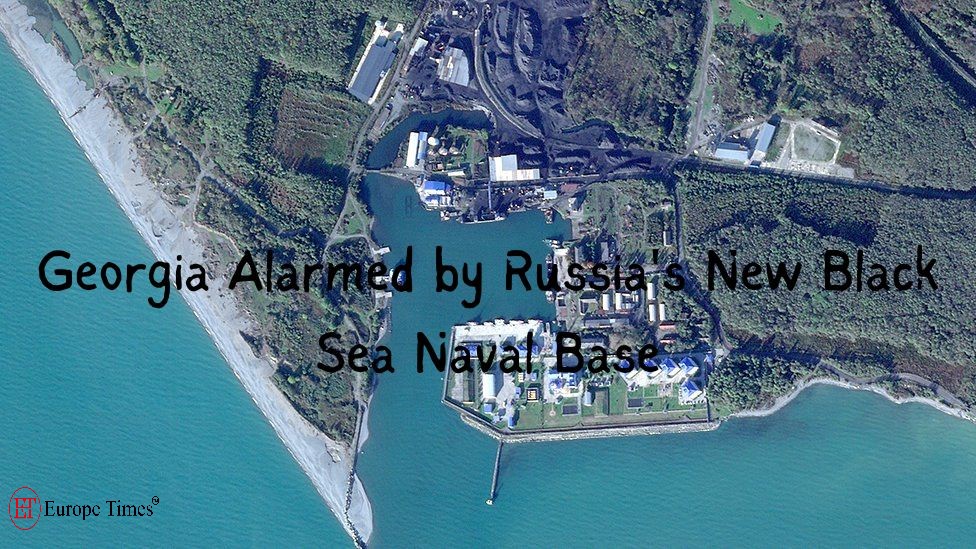
In early November, 50 opposition MPs in Georgia urged NATO and EU member states to unite against Russia’s plan to establish a permanent naval base in Abkhazia, a breakaway region. The move has raised concerns that it could involve Georgia in Russia’s conflict in Ukraine and disrupt Tbilisi’s plans for a Black Sea port. Abkhazia, though internationally recognized as part of Georgia, has been under Russian and separatist control since the 1990s.

Georgia’s foreign ministry condemned Russia’s plan as a violation of sovereignty, but officials downplayed the immediate threat. Satellite imagery suggests ongoing dredging and construction at the port, indicating potential infrastructure for larger cargo ships. Some fear the base could involve Georgia in a conflict between Russia and Ukraine.

The head of Georgia’s Foreign Relations Committee emphasized the government’s focus on immediate threats, such as Russian forces near the occupation line. Despite assurances, concerns exist that the naval base could impact Georgia’s mega-infrastructure project—a deep-sea port in Anaklia, crucial for the Middle Corridor, a fast route between Asia and Europe avoiding Russia.

The Anaklia project was canceled in 2020, with accusations that the government yielded to Moscow’s interests. The cancellation led to international arbitration. The government maintains plans to revive the deep-sea port.

While Georgia has a pro-EU population, its government has a complex relationship with Moscow. Accusations of a pro-Russian stance were labeled “absurd,” citing EU agreements and aspirations. However, the delicate situation underscores Georgia’s vulnerability due to its history of conflicts with Russia and lack of NATO security.

Georgia alleges Russia is using the naval base to pressure against EU integration. A decision on Georgia’s EU candidate status is expected at a December summit. Officials assert Russia aims to undermine Georgia’s stability and European integration, showcasing its influence in the South Caucasus.

Picture Courtesy: Google/images are subject to copyright

News Sports Trending

The majority of Spain’s national football team members have agreed to end their boycott, as confirmed by the Secretary of State for Sports, Victor Francos. This decision was reached after over seven hours of discussions that concluded at 05:00 local time on Wednesday.

Francos stated that the Spanish Football Federation (RFEF) has committed to implementing immediate and significant reforms. Out of the 23 players initially selected for this month’s Nations League matches, two, Mapi Leon and Patri Guijarro, have chosen to leave the squad.

The boycott began when the former RFEF president, Luis Rubiales, kissed forward Jenni Hermoso without her consent following Spain’s Women’s World Cup victory over England on August 20. This incident led to Rubiales’ resignation and the dismissal of Spain’s manager, Jorge Vilda.

The Spanish team is scheduled to play against Sweden and Switzerland in their upcoming matches. Francos expressed relief that the team would participate with assurances.

He mentioned that the decision was the result of “amicable” discussions in Valencia involving players, RFEF officials, the CSD (Spanish government’s national sports agency), and the women’s players’ union Futpro. A joint commission will be established to oversee the agreed-upon changes, with the signing set to take place soon.

Leon and Guijarro will not face penalties for their decision to leave, which Francos described as “fully respectable.” They had previously boycotted the national team along with 15 other players before the World Cup, citing issues with Coach Vilda. They did not participate in this year’s tournament in Australia and New Zealand.

Regarding the situation, Leon stated, “We already knew this was not the right way to return, and we are not in the right state,” and Guijarro added, “It’s quite difficult and quite hard. Mentally we are not right to be here.”

The new head coach, Montse Tome, included 15 players from the World Cup squad in her selection for the Nations League games, but the players reaffirmed their boycott in a statement, expressing their reluctance to participate and exploring potential legal implications.

Tome excluded Hermoso from the squad “to protect her,” but Hermoso argued that this decision indicated that “nothing has changed” at the RFEF.

The CSD announced the establishment of a commission to oversee the agreed-upon changes, focusing on equality policies, equal pay advancements, and improvements to women’s sports infrastructure.

Furthermore, the RFEF confirmed plans to merge the men’s and women’s Spanish national teams under a single logo and branding known as “Seleccion Espanola de Futbol” (Spanish national team). This move aims to promote equality in football.

Amanda Gutierrez, the president of Futpro, stated that most players had chosen to stay in the interest of the agreement, calling it the beginning of a long journey.

The Spain players arrived at their training camp in Valencia on Tuesday. When asked about her feelings regarding the situation, midfielder Alexia Putellas, a two-time Ballon d’Or winner, responded, “Well, bad.”

Rubiales has been ordered to stay at least 200 meters away from Hermoso after she filed a legal complaint against him. In his first court appearance, Rubiales denied the allegations of sexual assault.

Picture Courtesy: Google/images are subject to copyright

News Trending

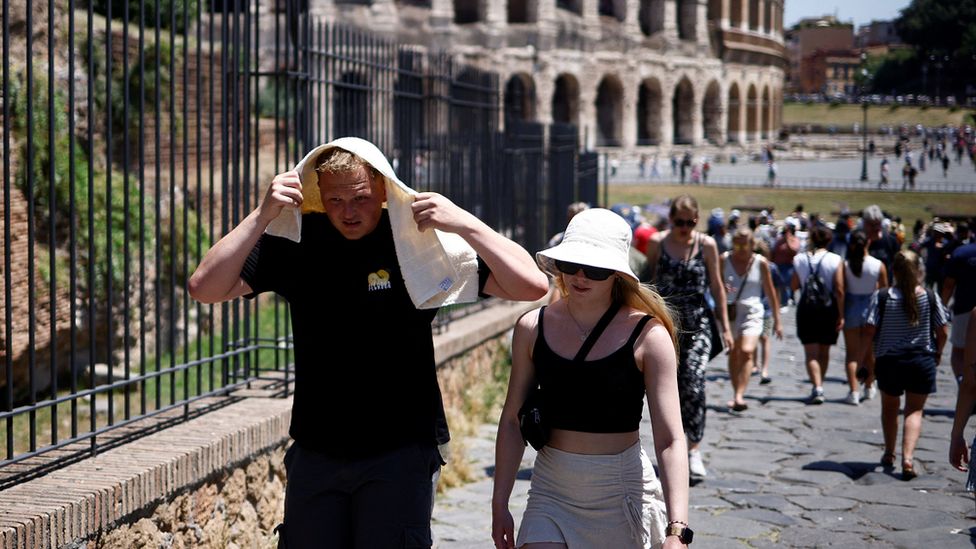
A powerful heatwave is currently sweeping across southern Europe, leading to widespread discomfort and raising concerns about the wellbeing of residents and the resilience of infrastructure. Known as “Cerberus,” this extreme weather event is characterized by a relentless onslaught of high temperatures that are significantly surpassing the seasonal norms. Several countries in the region, including Spain, Italy, Greece, and Turkey, are experiencing the effects of this scorching heatwave.

The heatwave has prompted authorities to issue heat alerts and take precautionary measures to safeguard vulnerable individuals from the potentially dangerous consequences of extreme heat. Both residents and tourists are struggling to cope with the oppressive weather, seeking refuge and searching for ways to stay cool amid the soaring temperatures.

The persistent and intense nature of the heatwave has sparked concerns regarding its potential impacts on various aspects of life in the affected areas. Agriculture, in particular, is at risk due to the extreme heat’s detrimental effects on crops and livestock. Water resources, already strained by the prolonged dry spell, are further under pressure as demand for water increases during the heatwave. Additionally, the heightened risk of wildfires is a significant concern, as the combination of scorching temperatures and dry conditions provides ideal conditions for fire outbreaks.

In response to these challenges, authorities are closely monitoring the situation and implementing measures to mitigate the effects of the heatwave. Efforts are focused on providing adequate support to vulnerable populations, ensuring the availability of cooling centers, and implementing fire prevention strategies.

Overall, the Cerberus heatwave is posing significant challenges to southern European countries, requiring coordinated efforts to minimize its impact on public health, infrastructure, and the environment.

Picture Courtesy: Google/images are subject to copyright