featured News Trending

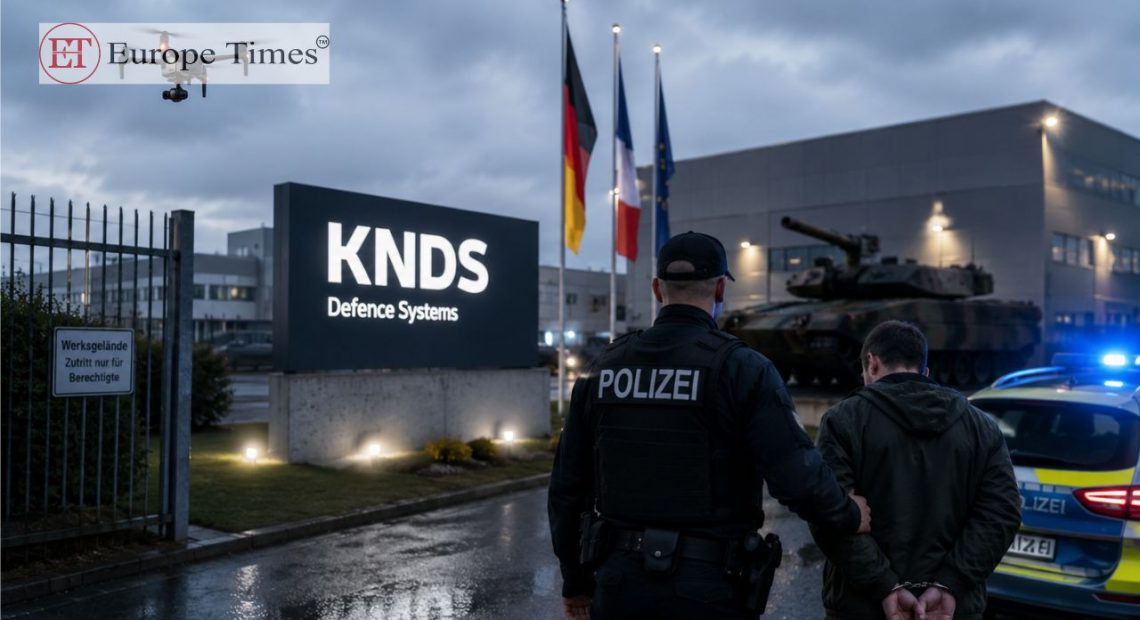
German authorities have arrested a 37-year-old Moldovan man on suspicion of flying a drone over the premises of a major defence manufacturer in what investigators believe may have been an act of surveillance. The suspect was detained on July 15 after members of the public alerted police about the drone activity.

According to Munich prosecutors, the man is suspected of recording sensitive defence facilities on behalf of a foreign entity or a banned organisation. An arrest warrant has since been issued as investigators continue to examine the purpose of the drone flight and any possible links to foreign intelligence or prohibited groups.

A security source identified the targeted company as KNDS, the Franco-German defence manufacturer known for producing the Leopard 2 main battle tank and the Caesar self-propelled howitzer. The incident comes amid heightened security concerns across Europe over the use of drones near military and critical infrastructure.

Pic courtesy: google/ images are subject to copyright

featured News Trending

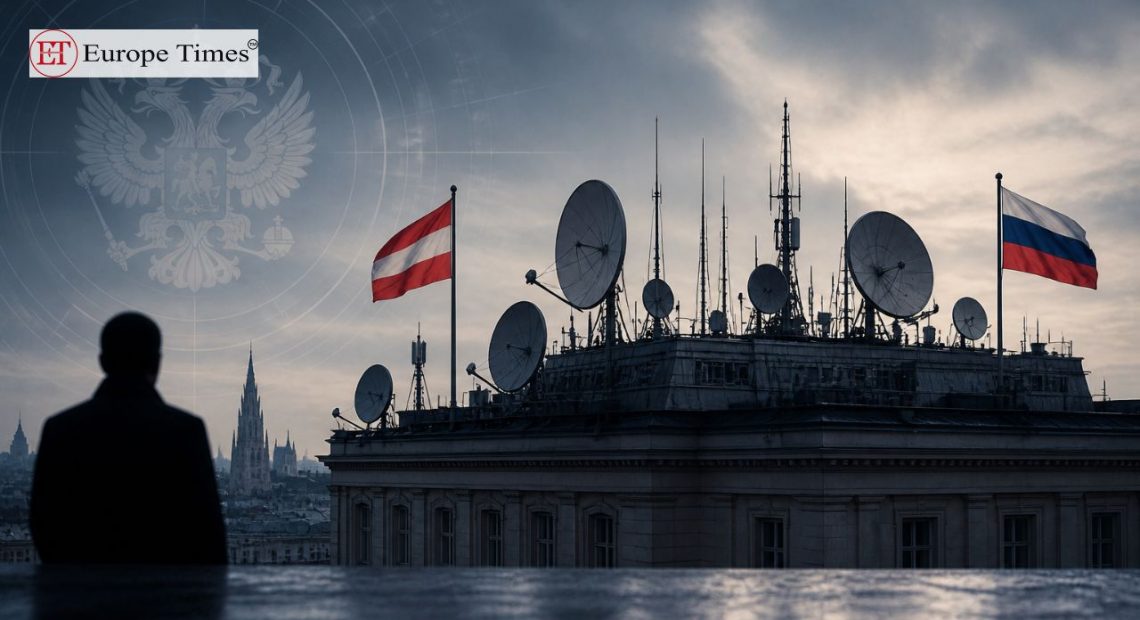
Austria has expelled three Russian diplomats over concerns they were involved in signals intelligence activities, citing suspicious satellite installations on diplomatic buildings in Vienna. Authorities flagged an “antenna forest” of satellite dishes, believed capable of intercepting communications, as a potential security threat.

Foreign Minister Beate Meinl-Reisinger said the misuse of diplomatic immunity for espionage was unacceptable, confirming the diplomats had already left the country. The move brings the total number of Russian diplomats expelled by Austria since 2020 to 14. While officials did not disclose detailed intelligence findings, concerns had reportedly been raised for years about the scale and nature of the installations.

Russia has reacted strongly, warning of a firm response. Vienna, home to major international bodies like the International Atomic Energy Agency and the Organization for Security and Co-operation in Europe, has long been known as a hub for diplomatic and intelligence activity due to its dense concentration of foreign missions.

Pic courtesy: google/ images are subject to copyright

featured News Trending

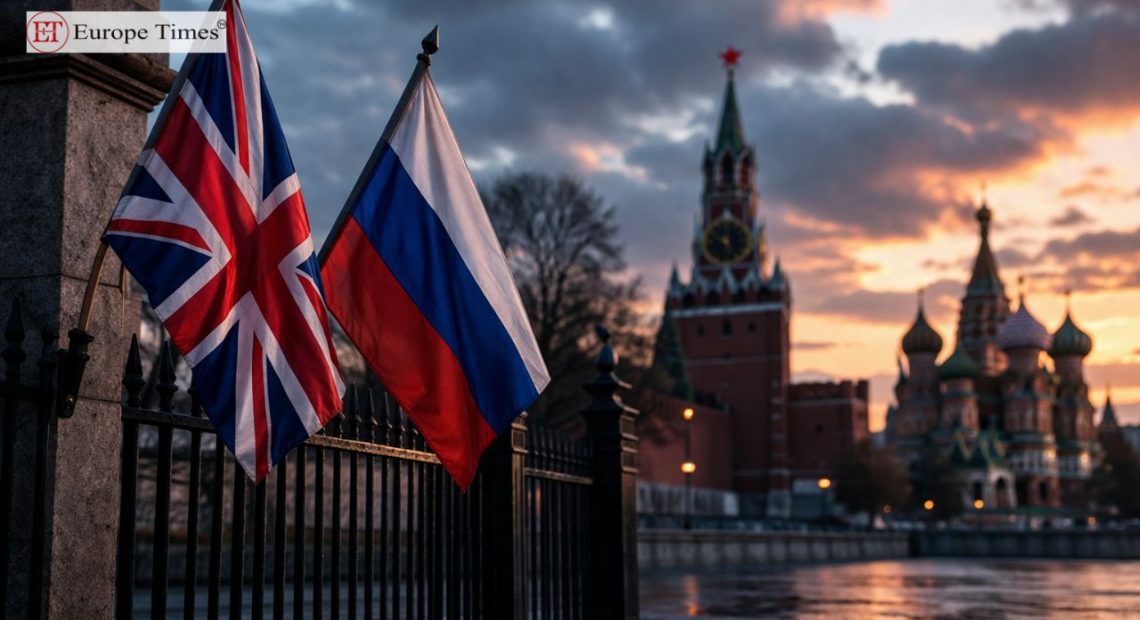
Russia has expelled a British diplomat, accusing him of engaging in economic espionage and activities threatening national security. The Federal Security Service (FSB) said the diplomat, a second secretary at the British embassy in Moscow, was involved in intelligence-gathering efforts, including attempts to obtain sensitive economic information through informal meetings with Russian experts.

The move comes amid heightened tensions between Moscow and London during the ongoing Ukraine conflict, with Russia increasingly portraying Britain as a primary adversary. Russian authorities warned citizens to avoid contact with British diplomats, cautioning that such interactions could lead to serious legal consequences. The Russian Foreign Ministry also lodged an official protest with Britain’s diplomatic mission.

Britain has not immediately responded to the latest expulsion, though it has previously rejected similar accusations as baseless. Diplomatic relations between Russia and Western nations remain strained, with increased surveillance, travel restrictions on diplomats, and mutual claims of harassment. Western officials describe diplomatic postings in Moscow as increasingly difficult amid rising geopolitical tensions.

Pic courtesy: google/ images are subject to copyright

featured News Trending

A Greek court has found Intellexa founder Tal Dilian and three associates guilty of illegally accessing private data in 2020-2021, sentencing each to a cumulative 126 years and eight months, though the actual prison term is capped at eight years. The case stems from allegations that journalists, politicians, and business leaders were targeted using Predator spyware, developed by a surveillance company within the Intellexa consortium.

The Misdemeanour Court in Athens also referred the case for further investigation into potential espionage and other serious offenses. The defendants denied the charges and did not formally enter a plea, with legal representation present during the proceedings. The court’s ruling follows a 2024 Supreme Court decision that dismissed state intelligence agency involvement but allowed misdemeanor charges against the individuals.

The scandal has shaken Greece’s government, prompting the removal of key officials and a narrowly avoided vote of no confidence in 2023. Plaintiffs, including journalist Thanasis Koukakis, expressed satisfaction at the verdict while calling for further judicial investigation into the broader network of wiretapping crimes.

Pic courtesy: google/ images are subject to copyright

featured News Trending

Two Chinese nationals, aged 27 and 29, have been arrested in the quiet south-western French village of Camblanes-et-Meynac, near Bordeaux, on suspicion of espionage. Locals became wary after the men, who had rented a house via Airbnb, installed a large parabolic satellite dish in their garden, coinciding with disruptions to nearby internet services. French authorities seized a significant amount of computer equipment during a raid by the General Directorate for Internal Security (DGSI).

The suspects, who arrived last month on work visas claiming to be engineers in wireless communications, are accused of attempting to capture satellite data from Starlink and sensitive information from military and critical installations in the region. Two other Chinese-origin men living in France were also charged with assisting the operation. They are currently in custody facing charges of “delivering information to a foreign power.”

South-western France, home to major aerospace, defense, and telecommunication hubs, has been a recurring target for Chinese espionage. Experts highlight previous incidents, including satellite dish installations near Toulouse and breaches at the University of Bordeaux. Authorities are increasingly publicizing such cases to emphasize the espionage threat, though locals remain bemused by spies setting up in their typically peaceful villages.

Pic courtesy: google/ images are subject to copyright

News Trending

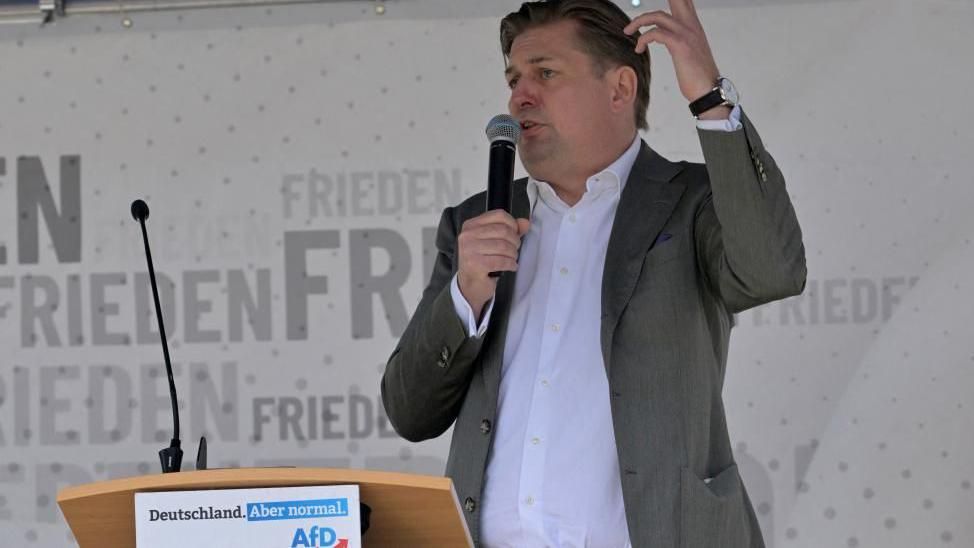
Maximilian Krah, a prominent far-right German politician from the Alternative for Germany (AfD), announced he would scale back his campaign efforts for the upcoming EU elections while remaining the party’s lead candidate. This decision followed a controversial interview with the Italian newspaper La Repubblica, where Krah remarked that not all SS members were automatically “criminals” and emphasized assessing individual culpability. He referenced Günter Grass, the German novelist who served in the Waffen SS, to support his point.

The SS, or Schutzstaffel, was a Nazi paramilitary group notorious for its central role in the Holocaust and other war crimes. Krah’s comments provoked a strong reaction, leading France’s far-right National Rally (RN) to sever ties with the AfD in the European Parliament. RN leader Marine Le Pen called for a “cordon sanitaire” to distance her party from the AfD, stating the urgency of this separation due to the extremity of Krah’s views.

The relationship between RN and AfD had already been strained following a secret meeting involving AfD members discussing the mass deportations of non-ethnic Germans. Marine Le Pen had previously condemned such ideas.

Facing mounting pressures ahead of the EU elections in June, Krah declared on social media that he would step back from public campaign appearances and resign from the federal executive board to preserve party unity. This decision comes amid various scandals, including the arrest of one of his staffers for alleged espionage for China and an ongoing investigation into Krah over purported payments from Russia and China, which he denies. Despite these controversies, the AfD remains a significant political force, polling second or third nationally and leading in some states set for local elections later this year.

Picture Courtesy: Google/images are subject to copyright

News Trending

In the latest string of assaults targeting German politicians, Franziska Giffey, a prominent figure in the centre-left SPD and former mayor of Berlin, was attacked in a local library. She was struck on the head and neck with a bag containing hard objects. This incident follows several other assaults on politicians and campaign workers, particularly in eastern Germany.

Matthias Ecke, a lead candidate for the upcoming European elections, was seriously injured in Dresden while putting up posters, allegedly attacked by four individuals, at least one of whom has ties to the far right. Additionally, a campaign worker for the Greens was assaulted, and a female Greens politician was pushed and spat on while putting up posters, with the perpetrators reportedly making Nazi salutes.

Giffey expressed shock at the attack, emphasizing the unacceptable trend of violence against those involved in politics. Police have identified a suspect but have not disclosed further details. There’s growing concern among politicians and officials, with calls for better legal protection against such attacks.

Interior ministers from federal and state levels convened to discuss responses to these assaults, acknowledging a worrying escalation in physical violence against politicians. The far-right AfD party, aiming for significant gains in upcoming elections, is embroiled in espionage allegations, adding to the political tensions in Germany.

Picture Courtesy: Google/images are subject to copyright

News Trending

Special services in Poland uncovered and removed listening devices in a room where cabinet ministers were scheduled to convene. The regular cabinet meeting, typically held in Warsaw, was relocated to Katowice due to the attendance of several ministers, including Prime Minister Donald Tusk, at an economic conference there.

The increased spying activity in Poland is attributed to its role as a hub for military and humanitarian aid to Ukraine following Russia’s invasion in 2022. The State Protection Service, in collaboration with the Internal Security Agency, detected and dismantled the eavesdropping devices during a routine security sweep of the room. The Internal Security Agency is currently investigating the matter further.

Despite the discovery, the cabinet meeting proceeded as planned in the building. A spokesperson for the Silesia regional authorities suggested that the device may have been part of the room’s old communication system.

In a separate development, a Polish judge sought asylum in Belarus, citing concerns over Poland’s policies towards Belarus and Russia. The judge’s actions have raised suspicions of espionage, particularly as he was due to preside over cases involving security clearance for NATO-related information.

Polish Foreign Minister Radoslaw Sikorski condemned the judge’s actions, referring to him as a traitor. Prime Minister Tusk has called for a meeting of the Secret Services College to discuss potential Russian and Belarusian influence in Polish politics. He emphasized concerns about the judge’s long-standing relationship with Belarusian authorities and its implications for national security.

This incident comes after the previous year’s arrest of several members of an alleged Russian spy network in Poland, accused of planning sabotage near the Ukrainian border.

Picture Courtesy: Google/images are subject to copyright

News Trending

Prosecutors in Germany have apprehended an individual suspected of spying for China, who was identified as Jian G, 43, allegedly working as an assistant to AfD MEP Maximilian Krah. Jian G is accused of passing information about the European Parliament to Chinese intelligence and monitoring Chinese opposition figures in Germany. The timing of these allegations, just before the European Parliament elections, is sensitive for the AfD.

Maximilian Krah stated that he learned of his aide’s arrest through the media and emphasized that if the accusations were proven, the employment would be terminated immediately. The AfD expressed concern over the reports and awaited further investigations.

German officials, including Interior Minister Nancy Faeser and Justice Minister Marco Buschmann, deemed the allegations gravely serious, emphasizing the necessity of severe consequences if proven true.

China’s foreign affairs ministry dismissed the arrest as unfounded speculation aimed at defaming China. Prosecutors indicated that Jian G was scheduled to appear before an investigating judge soon.

Meanwhile, another separate incident involved the arrest of two men and a woman suspected of spying for China, unrelated to Jian G’s case. This group allegedly obtained military technology information in Germany for China.

These developments occurred shortly after German Chancellor Olaf Scholz’s recent visit to Beijing, where discussions with President Xi Jinping touched upon various issues, including the conflict in Ukraine.

Picture Courtesy: Google/images are subject to copyright

News Trending

A Polish man has been detained and accused of collaborating with Russian intelligence to potentially target Volodymyr Zelensky, according to authorities. The individual, identified as Pawel K, allegedly aimed to gather intelligence on an airport in Poland frequently used by the Ukrainian president. The arrest was prompted by Ukrainian intelligence information, though it’s unclear if any information was actually transmitted. If convicted, Pawel K could face a sentence of up to eight years. He remains in custody while investigations continue.

Polish prosecutors stated that Pawel K had offered his services to Russian military intelligence and had direct contact with individuals involved in the conflict in Ukraine. His assignment reportedly involved gathering details about security measures at Rzeszow-Jasionka Airport in southeastern Poland.

Rzeszow-Jasionka Airport, previously a small regional facility, has become crucial for supplying Western military aid to Ukraine since the full-scale invasion. It serves as a significant transit point for military and cargo aircraft from the US and Europe, facilitating the delivery of supplies to Ukraine via trucks.

The airport is frequently used by leaders traveling to and from Ukraine, including President Zelensky, who has utilized it for foreign trips. Notably, other dignitaries like US President Joe Biden have also transited through this airport on their visits to Ukraine.

This incident follows previous arrests related to espionage suspicions, including the apprehension of foreign nationals accused of spying for Russia. They were reportedly involved in installing surveillance cameras, some of which were positioned around Rzeszow-Jasionka Airport.

Additionally, neighboring Germany recently detained two alleged Russian spies suspected of planning to disrupt German military aid intended for Ukraine.

Picture Courtesy: Google/images are subject to copyright