featured News Trending

Italy’s parliament has voted down a proposal to introduce equal parental leave for mothers and fathers, rejecting a plan that aimed to balance caregiving responsibilities. The measure, which would have provided equal, fully paid and non-transferable leave, was defeated by the ruling coalition citing financial constraints, drawing criticism from opposition leaders who called it a missed opportunity for social change.

Despite the policy setback, a growing number of Italian fathers are reshaping traditional roles through social media. Influencers like Diego Di Franco share daily caregiving routines, highlighting a more involved and equal approach to parenting. Experts say these “dad influencers” are helping shift cultural perceptions of fatherhood in a country where women still bear most childcare responsibilities.

Italy continues to face one of the widest gender employment gaps in the European Union, with many women leaving jobs after childbirth. Analysts argue that unequal parental leave policies reinforce this imbalance, affecting economic growth and demographic trends. While change at the policy level remains slow, evolving social attitudes suggest a gradual transformation in how parenting roles are shared.

Pic courtesy: google/ images are subject to copyright

featured News Trending

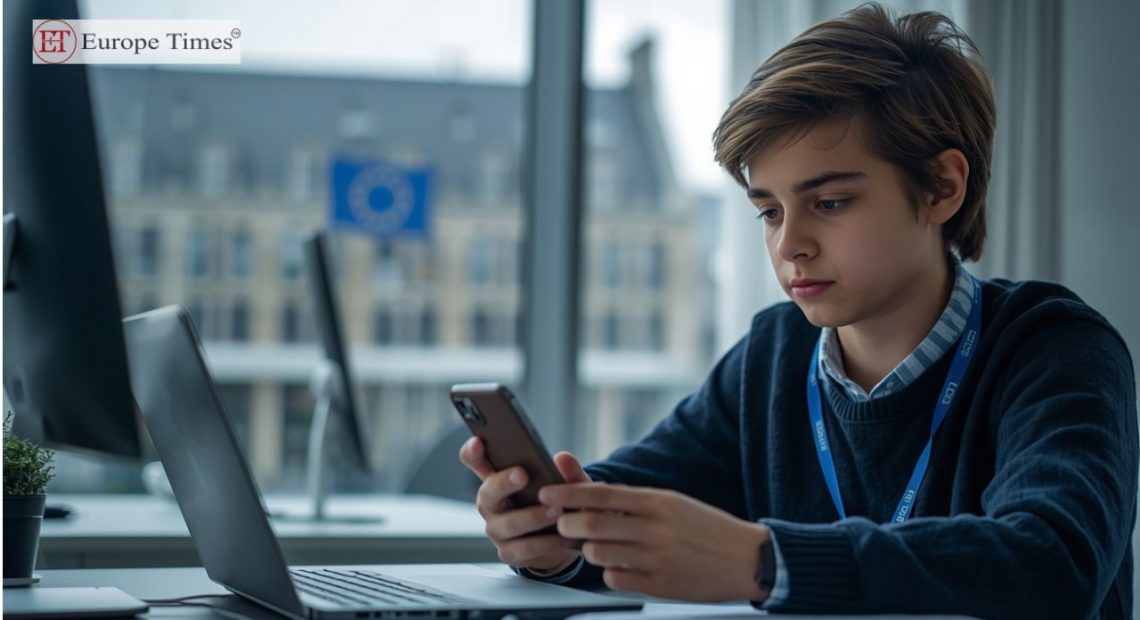
Norway plans to introduce legislation banning children under the age of 16 from using social media, with a bill expected to be presented in parliament by the end of the year. The proposal would place responsibility on technology companies to enforce strict age verification measures, marking a significant step in regulating youth access to digital platforms.

Prime Minister Jonas Gahr Støre said the move aims to protect childhood from excessive screen exposure and algorithm-driven content. The government emphasized the importance of preserving traditional aspects of growing up, such as play, friendships, and real-world interactions, rather than allowing them to be dominated by digital environments.

The initiative follows similar actions by other countries, including Australia, which recently introduced a comparable ban. Major tech firms like Meta Platforms, Alphabet Inc., and Snap Inc. could be affected, though Norway has not specified which platforms will be targeted. The proposal reflects growing global concern over children’s online safety and the impact of social media on young users.

Pic courtesy: google/ images are subject to copyright

featured News Trending

A public dispute has erupted in Russia after celebrity blogger Victoria Bonya responded sharply to criticism from state TV host Vladimir Solovyov. The clash followed Bonya’s viral video appeal to President Vladimir Putin, in which she said he was being shielded from the country’s real problems, including corruption and pressure on ordinary citizens. The video drew tens of millions of views and prompted rare acknowledgment from the Kremlin.

Solovyov accused Bonya on air of working with Western interests and called for authorities to investigate her, using harsh and personal language. In response, Bonya condemned his remarks as misogynistic and demanded he be removed from television. She argued that insults directed at her also demean single mothers and women more broadly, gaining support from parts of the public.

Escalating the feud, Bonya said she may pursue legal action and circulated a viral AI-generated video mocking Solovyov. Meanwhile, some Russians interviewed expressed sympathy for her, saying public figures should not use their platforms to insult others and that citizens have the right to voice concerns about their country.

Pic courtesy: google/ images are subject to copyright

featured News Trending

Turkish authorities have detained 162 people accused of posting or sharing online content that allegedly praised recent school shootings and undermined public order. Officials said the arrests were part of a wider crackdown on social media activity following two separate attacks this week that left multiple students and a teacher dead, and several others injured.

The first shooting occurred at a vocational high school in southeastern Turkey, where 16 people were injured before the attacker killed himself. A second, more deadly attack followed a day later at a secondary school in Kahramanmaras, killing at least nine people including students and a teacher. The teenage attacker was also killed, and officials said he had planned the assault in advance and referenced a known US mass killer in online material.

Hundreds of mourners gathered for funerals of the young victims as grief spread across the country, with officials confirming increased security measures and widespread restrictions on social media accounts. Justice authorities said dozens were also detained for allegedly spreading misinformation or encouraging further attacks online, while more than a thousand accounts faced restrictions.

Pic courtesy: google/ images are subject to copyright

featured News Trending

Poland plans to introduce a nationwide ban on mobile phone use for students under 16 in schools starting September 1, 2026, the country’s education minister said. The move is part of a broader legislative change aimed at improving classroom focus and reducing digital dependency among children aged 7 to 15 in primary education.

Education Minister Barbara Nowacka said the government is finalizing the law, stressing that phone use in schools “cannot be the norm” due to growing concerns over children’s reliance on the internet. The proposal also follows earlier discussions about restricting social media access for children under 15.

Poland joins countries like the Netherlands, South Korea, and Italy that have already imposed similar restrictions. These measures reflect a global trend to limit screen time and address its impact on students’ concentration, behavior, and overall well-being.

Pic courtesy: google/ images are subject to copyright

featured News Trending

France’s National Assembly has approved legislation to ban children under the age of 15 from accessing social media platforms, citing rising concerns over online bullying, mental health risks and youth violence. Lawmakers voted 116 to 23 in favour of the bill, which would also restrict social-networking features embedded within wider digital platforms. The proposal now heads to the Senate before returning to the lower house for a final vote.

President Emmanuel Macron has strongly backed the move, urging France to follow Australia’s lead after it introduced a world-first ban on social media access for under-16s in December. Macron wants the French ban to take effect by the start of the next academic year in September. Supporters of the bill argue that social media is harming children’s well-being, with lawmakers warning it is reducing sleep, reading habits and self-esteem among young users.

If enacted, the law would require platforms such as Instagram, TikTok, YouTube and Snapchat to enforce age restrictions using verification systems compliant with EU regulations. While enforcement remains a challenge, public backing in France is strong, with a 2024 survey showing nearly three-quarters of respondents support the ban. The legislation would also extend France’s existing smartphone ban in schools to include high schools, as debate continues across Europe on setting minimum ages for social media use.

Pic courtesy: google/ images are subject to copyright

featured News Trending

Italian fashion influencer Chiara Ferragni has been acquitted of aggravated fraud charges, bringing to an end a two-year controversy over the promotion of charity-linked Christmas cakes and Easter eggs. A Milan court cleared Ferragni and two co-defendants after a fast-track trial, rejecting prosecutors’ claims that consumers had been deliberately misled. Conviction could have resulted in a prison sentence, but the judge ruled there was no aggravating fraud.

The case, dubbed “pandorogate,” stemmed from the 2022 sale of pink, special-edition pandoro cakes branded with Ferragni’s name and linked to a children’s hospital in Turin. While consumers believed proceeds would support the hospital, it later emerged the producer had made a one-off €50,000 donation before sales began. Ferragni, whose companies earned about €1 million from the promotion, later pledged to donate an equivalent amount to the hospital.

Although acquitted, Ferragni had previously faced a €1 million fine from Italy’s competition authority and agreed to further charity payments over similar claims involving Easter eggs. The scandal damaged her public image and personal life, including the breakdown of her marriage to rapper Fedez. It also prompted Italy to tighten transparency rules for influencers involved in fundraising initiatives.

Pic courtesy: google/ images are subject to copyright

featured News

Australian lawmakers are debating a groundbreaking bill to ban children under 16 from accessing social media platforms, with fines of up to AUD 50 million ($33 million) for non-compliance. Sunita Bose, Managing Director of Digital Industry Group Inc., representing platforms like Facebook, Instagram, TikTok, and X (formerly Twitter), argued during a Senate committee hearing that the legislation should be delayed until the government concludes its evaluation of age-verification technologies in June 2025. She warned that rushing the bill could lead to implementation challenges, leaving both children and platforms unprepared.

Bose highlighted the broader implications of such a ban, cautioning that it could isolate children and push them toward less safe online spaces. This sparked criticism from Senator Sarah Henderson, who accused her of prioritizing corporate interests over child safety. Addressing questions about children’s exposure to harmful content, Bose stated that current algorithms already employ filters to reduce risks, though she acknowledged the industry’s shortcomings in enforcing existing age restrictions.

Research by the Harvard T.H. Chan School of Public Health revealed that major platforms earned $11 billion in advertising revenue from U.S. users under 18 in 2022. However, Bose admitted she did not know how much revenue these platforms derived from Australian children. The bill, if passed, would make Australia the first country to impose such strict regulations, with the outcome likely to set a global precedent.

Pic Courtesy: google/ images are subject to copyright

featured News

An Italian journalist, Giulia Cortese, has been ordered to pay Prime Minister Giorgia Meloni €5,000 (£4,210) in damages for social media posts mocking Meloni’s height. A judge ruled that two tweets by Cortese, who also received a suspended fine of €1,200, were defamatory and constituted “body shaming.”

The incident began in October 2021 when Meloni’s far-right Brothers of Italy party was in opposition. Cortese posted a doctored image on X (formerly Twitter) showing Meloni with a framed photo of fascist dictator Benito Mussolini in the background. Meloni condemned the image as extremely serious and announced legal action. Cortese deleted the image, admitting it was fake but accused Meloni of creating a “media pillory” against her. She called Meloni a “little woman” and later tweeted, “You don’t scare me, Giorgia Meloni. After all, you’re only 1.2m [3ft 9in] tall. I can’t even see you.” Meloni’s actual height is reported as 1.63m (5ft 3in) in Italian media.

Cortese was cleared of any wrongdoing for posting the doctored image but was convicted for the subsequent tweets. She has the option to appeal but hasn’t decided yet. Meloni’s lawyer stated that any awarded money would be donated to charity.

Cortese reacted to the verdict on X, criticizing the Italian government for its stance on freedom of expression and journalistic dissent. She compared the situation to Hungary under Viktor Orbán, expressing concern for independent journalists and opinion leaders in Italy. Cortese added that while she is proud to be Italian, the country deserves better than its current government.

Picture Courtesy: Google/images are subject to copyright

News Trending

In Germany, tensions escalated as hundreds of climate protesters clashed with law enforcement while attempting to breach the Tesla factory near Berlin. The demonstrators were rallying against the proposed expansion of Tesla’s only European plant, situated in Grünheide, Brandenburg. Their concerns revolved around potential environmental damage resulting from the factory’s enlargement.

Despite the activists’ efforts, police successfully thwarted their attempts to enter the facility. However, the confrontation led to injuries, including three police officers, and resulted in several arrests. Videos circulating on social media depicted the chaotic scene, with protesters donning blue caps and flags, attempting to overrun the police cordon.

The protest tactics employed by the demonstrators included blocking nearby motorways, disrupting railway services, and staging sit-ins on country roads surrounding the factory. While some managed to breach the police lines, Tesla CEO Elon Musk reassured the public that the facility remained secure. Musk also criticized the leniency shown by law enforcement toward the left-wing protesters.

The group orchestrating the protest, Disrupt Tesla, aimed to draw attention to what they termed “environmental destruction” in Grünheide. Their activism included occupying parts of the forest slated for clearance for the factory expansion, with protesters building tree houses and erecting signs in opposition. Despite the disruptions, Tesla announced that the site would be closed for the day due to the demonstration, with employees allowed to work remotely.

Picture Courtesy: Google/images are subject to copyright