News Trending

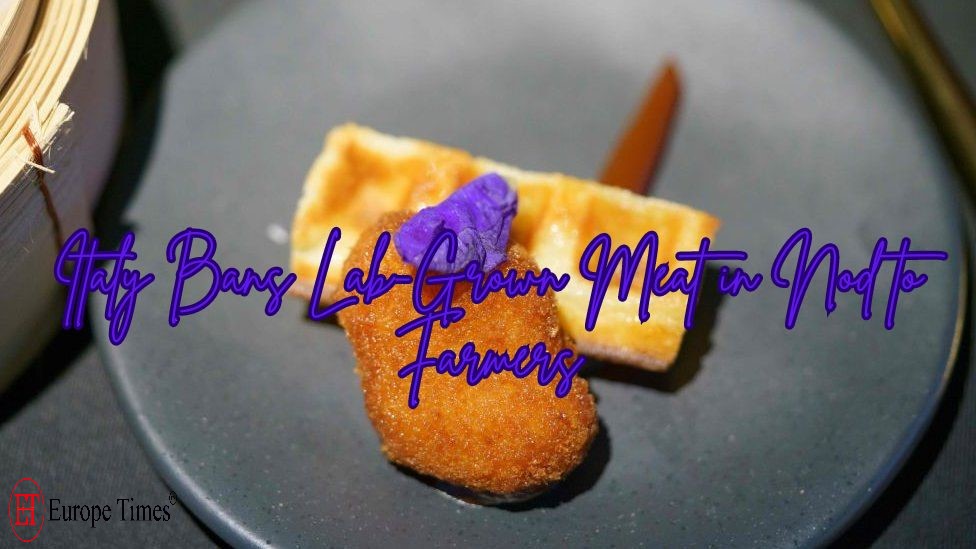
Italian Members of Parliament have given their approval to a law that bans the production, sale, or import of lab-grown meat or animal feed, a move championed by the right-wing government under the banner of defending Italian culinary traditions. Agriculture Minister Francesco Lollobrigida asserted that Italy has become the first nation to shield itself from the perceived social and economic risks associated with synthetic food. The parliamentary vote prompted both support and opposition, leading to a physical altercation between farmers and some MPs.

Despite the scuffle, the bill passed with a majority of 159 votes in favor and 53 against. Violating the law could result in fines of up to €60,000. Presently, the impact of the law is limited, as lab-grown meat has only been approved for human consumption in Singapore and the United States. The European Union has yet to give the green light to lab-grown meat, categorized as “novel foods.” If EU approval is granted, Italy’s new law may face challenges from the European Commission.

The legislation, initiated in response to a petition organized by the Coldiretti lobby group, prohibits synthetic foods produced from animal cells without causing harm to the animal. Additionally, it restricts producers from using meat-related terms on labels to describe plant-based protein. Critics argue that there is nothing synthetic about lab-grown meat, as it is created by growing natural cells without genetic modification.

The passage of this law marks a victory for Italy’s Agriculture Minister, who, a year ago, pledged to prevent “synthetic food” from entering Italian dining tables. Minister Lollobrigida praised MPs for supporting the new law, emphasizing the preservation of the relationship between food, land, and human labor that has endured for millennia. However, the petition behind the legislation faced condemnation from critics such as Prof Elena Cattaneo, a lifelong senator and bioscience specialist, who denounced it as an emotive leaflet that oversimplified the distinction between natural and cultivated foods.

Picture Courtesy: Google/images are subject to copyright

News Trending

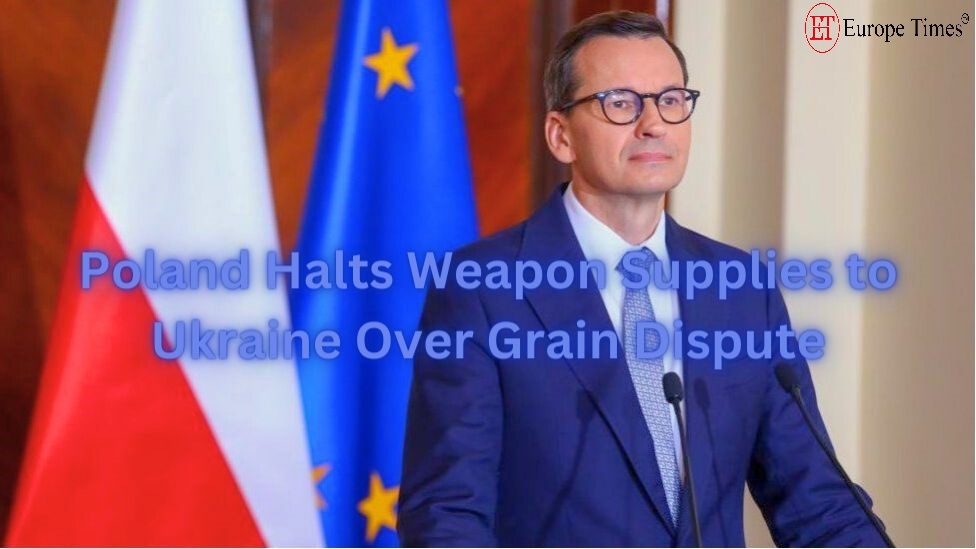
One of Ukraine’s steadfast supporters, Poland, has declared that it will cease its weapon supplies to its neighboring country, Ukraine, citing a diplomatic dispute regarding Ukraine’s grain exports as the primary reason. Prime Minister Mateusz Morawiecki emphasized that Poland’s current focus is on bolstering its own defense capabilities with more modern weaponry.

Poland had already provided Ukraine with significant military assistance, including 320 Soviet-era tanks and 14 MiG-29 fighter jets. However, their willingness to continue such support has dwindled, coinciding with escalating tensions between the two nations.

The recent diplomatic rift was triggered when Poland, along with Hungary and Slovakia, extended a ban on Ukrainian grain imports. Ukrainian President Volodymyr Zelensky’s comments at the United Nations, characterizing their actions as political theater, added fuel to the fire. Poland viewed these remarks as unjustified, given their longstanding support for Ukraine.

In his interview, Prime Minister Morawiecki underlined that while Poland remains committed to assisting Ukraine in its struggle against Russian aggression, it could not allow its own markets to be destabilized by Ukrainian grain imports. He pointed out that Poland was already replacing its depleted military hardware, which had been significantly reduced through transfers to Ukraine, with modern Western-produced equipment.

While arms exports to Ukraine will not cease entirely, only previously agreed deliveries of ammunition and armaments, including those from existing contracts with Ukraine, will be fulfilled. This decision reflects Poland’s commitment to its own security and stability, while the future of its assistance to Ukraine remains uncertain.

The ongoing grain dispute arises from Ukraine’s need to find alternative overland routes for grain exports due to Russia’s full-scale invasion, which nearly closed the main Black Sea shipping lanes. Consequently, large quantities of grain flowed into Central Europe, leading the European Union to temporarily ban grain imports into several countries. Despite the EU lifting the ban, Poland, Hungary, and Slovakia have maintained it, leading to Ukraine’s WTO lawsuits against these nations. Poland has signaled its intention to uphold the ban, while also hinting at the possibility of expanding the list of banned products should Ukraine escalate the grain dispute. However, diplomatic channels remain open, with discussions ongoing to seek a mutually beneficial solution.

Picture Courtesy: Google/images are subject to copyright

News Trending

A powerful heatwave is currently sweeping across southern Europe, leading to widespread discomfort and raising concerns about the wellbeing of residents and the resilience of infrastructure. Known as “Cerberus,” this extreme weather event is characterized by a relentless onslaught of high temperatures that are significantly surpassing the seasonal norms. Several countries in the region, including Spain, Italy, Greece, and Turkey, are experiencing the effects of this scorching heatwave.

The heatwave has prompted authorities to issue heat alerts and take precautionary measures to safeguard vulnerable individuals from the potentially dangerous consequences of extreme heat. Both residents and tourists are struggling to cope with the oppressive weather, seeking refuge and searching for ways to stay cool amid the soaring temperatures.

The persistent and intense nature of the heatwave has sparked concerns regarding its potential impacts on various aspects of life in the affected areas. Agriculture, in particular, is at risk due to the extreme heat’s detrimental effects on crops and livestock. Water resources, already strained by the prolonged dry spell, are further under pressure as demand for water increases during the heatwave. Additionally, the heightened risk of wildfires is a significant concern, as the combination of scorching temperatures and dry conditions provides ideal conditions for fire outbreaks.

In response to these challenges, authorities are closely monitoring the situation and implementing measures to mitigate the effects of the heatwave. Efforts are focused on providing adequate support to vulnerable populations, ensuring the availability of cooling centers, and implementing fire prevention strategies.

Overall, the Cerberus heatwave is posing significant challenges to southern European countries, requiring coordinated efforts to minimize its impact on public health, infrastructure, and the environment.

Picture Courtesy: Google/images are subject to copyright

News

The European country of the United Kingdom, which few years back voted to walk out from the European Union, has assured the agricultural industry of the continent that the Brexit will not affect the export of agricultural products from the European country to the countries in the union.

The assurance has come at the time the EU and the UK is negotiating their post-Brexit trade deal. The talk between the EU and the UK regarding the trade deal has not yet fructified.

Anyway, as a part of the EU decision to allow farm products from the UK to freely enter the union, the EU has granted third country listed status to the United Kingdom.   

The EU’s decision will come to effect from 1st January, 2021 onwards. The union is expected to released an official notice in connection with the matter in the near future itself.

The policy has no link with the impending Brexit deal. It has been clarified that the decision will not affect the post-Brexit trade deal.

Several prominent farmers’ unions have welcomed the decision taken by the European Union. The unions have opened that the decision will help the agricultural sector of the continent enormously.

Photo Courtesy: Google/ images are subject to copyright