
featured News Trending

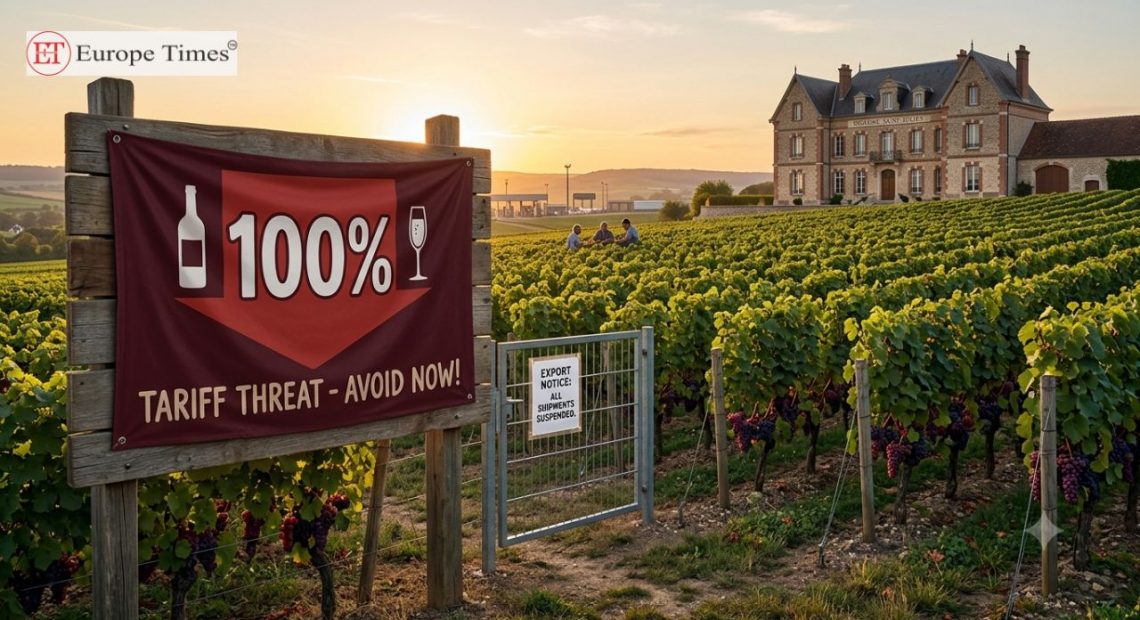
French wine and spirits exporters expressed deep concern on Monday following U.S. President Donald Trump’s latest threat to impose 100% tariffs on all French wines and champagnes. The Federation of Wine and Spirits Exporters (FEVS) stated that the escalating friction is incredibly damaging for a highly export-dependent sector that finds itself trapped in a political dispute entirely beyond its control. The trade group has urgently called for “responsible behavior” and the restoration of constructive transatlantic trade ties to protect businesses in both economies.
The punitive measures are being brandished as a direct retaliatory strike against Paris’s domestic fiscal policies. President Trump warned that the United States would have no choice but to implement the sweeping duties unless France completely scraps its 3% digital services tax, which targets major American technology conglomerates. This ultimatum is part of an ongoing effort to pressure European governments out of imposing specialized levies on digital revenues generated within their borders.

This development marks yet another volatile chapter in a series of recurring economic disputes between Washington and Brussels. President Trump has previously threatened even higher penalties, including a 200% tariff on European Union alcohol imports during separate trade disputes in both early 2026 and early 2025. With the U.S. remaining a critical market for premium French agricultural goods, local producers fear that a prolonged standoff will severely damage their global competitive edge.

Pic courtesy: google/ images are subject to copyright

News Trending

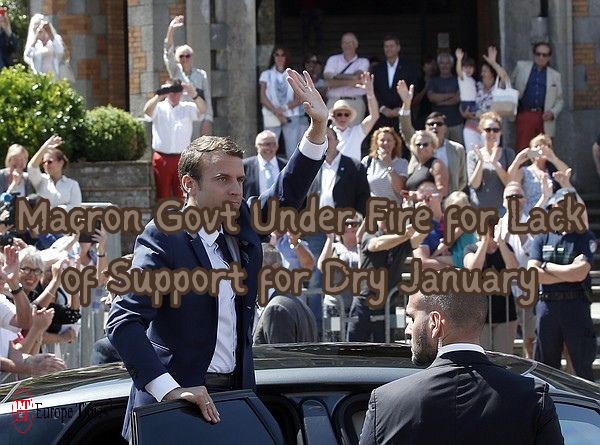
France’s President Emmanuel Macron is under scrutiny for not endorsing the alcohol-free “Dry January” initiative, with accusations that he succumbed to pressure from the wine lobby. A group of 50 addiction specialists expressed their disappointment in an open letter, claiming that the government’s indifference compromises its commitment to a coherent policy against alcoholism. Despite Dry January gaining popularity since its introduction from the UK in 2020, government officials, including Agriculture Minister Marc Fesneau, have distanced themselves, citing a decline in overall alcohol consumption and expressing a preference for moderation over complete abstinence.

Critics argue that the government’s reluctance to support Dry January is indicative of prioritizing the interests of the powerful wine lobby over public health. Macron, known for his public endorsement of alcohol, faced allegations that he personally discouraged backing for the initiative. His previous statements, such as being elected Personality of the Year by a wine magazine and publicly consuming alcohol, have contributed to perceptions that he may be influencing the government’s stance against initiatives promoting alcohol abstinence.

Despite France being Europe’s fourth-largest alcohol consumer, government officials argue that the decline in overall alcohol consumption and individual choice make campaigns like Dry January irrelevant and intrusive. Former Health Minister Aurélien Rousseau, before his resignation, expressed suspicion about the government dictating lifestyle choices to the public. Critics maintain that these reactions reflect the government’s alignment with President Macron, who they believe prioritizes not upsetting the wine lobby over championing public health.

Proponents of Dry January highlight France’s status as the fourth-largest consumer of alcohol in Europe and emphasize that alcohol is responsible for over 40,000 deaths annually in the country. They argue that a government-backed campaign would have a more significant impact, reaching beyond the 16,000 participants in 2023. The accusation that Macron personally discouraged support for Dry January is underscored by his past public endorsements of alcohol, including statements about drinking wine daily and engaging in public acts of alcohol consumption. Despite the economic importance of the wine industry, critics contend that Macron’s public drinking is not only rational for supporting French winemakers but also serves as a populist gesture to counter perceptions of being “out-of-touch.”

Picture Courtesy: Google/images are subject to copyright