featured News Trending

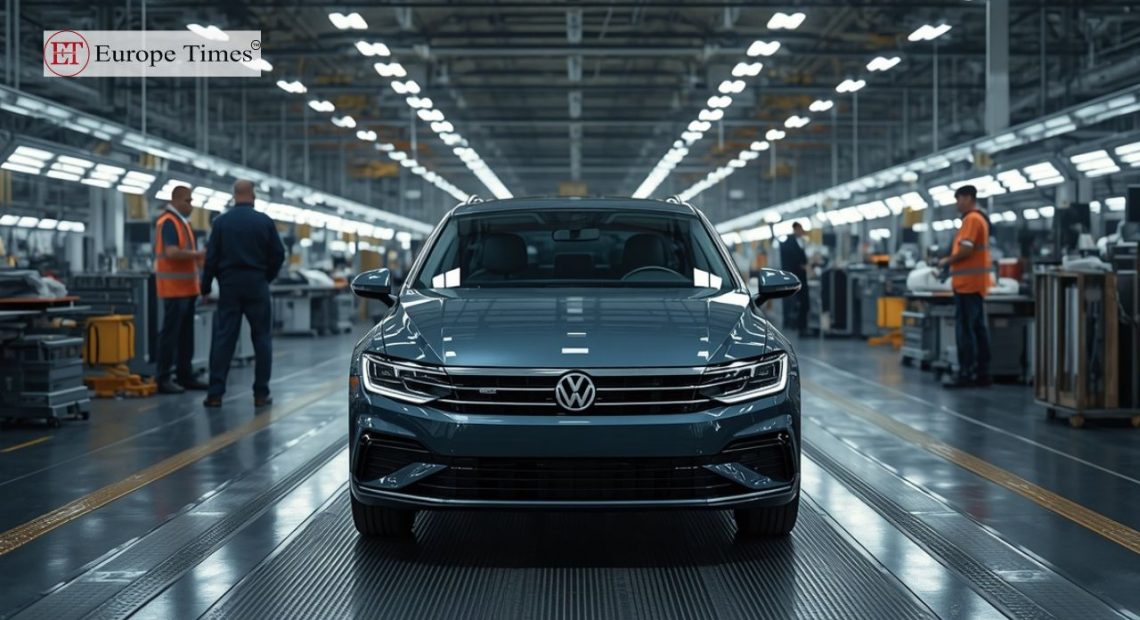
Volkswagen’s board has approved plans to eliminate another 50,000 jobs by 2030 as part of the German automaker’s biggest restructuring in its nearly 90-year history. The latest cuts will bring the total number of jobs the group plans to reduce to around 100,000. The company, which owns brands including Audi, Porsche and Skoda, is also reviewing the future of four German plants.

Volkswagen said the workforce reduction is necessary to improve competitiveness amid changing demand and rapid technological shifts. The company also plans to reduce the number of vehicle models it produces by 50% by 2035 and cut product complexity by 75%. Shares of Volkswagen rose around 7% in Frankfurt following the announcement.

The automaker has faced declining profits and weaker sales, particularly in China, where competition from rapidly expanding Chinese manufacturers has intensified. Sales have also declined in the US, partly due to tariffs. Volkswagen employed more than 660,000 people worldwide in 2025 and is now assessing alternative uses for its plants in Emden, Zwickau, Hanover and Neckarsulm, where production capacity exceeds demand.

Pic courtesy: google/ images are subject to copyright

featured News Trending

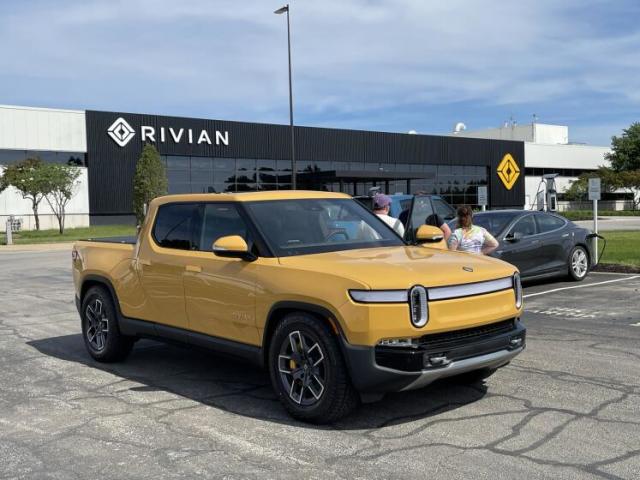
Volkswagen (VW), the German automotive giant, has announced an investment of up to $5 billion (£3.94 billion) in Rivian, a competitor to Tesla. This partnership forms a joint venture allowing both VW and the US-based electric vehicle (EV) manufacturer to share technology. Following the announcement, Rivian’s stock surged nearly 50%.

The collaboration comes amid increasing competition among EV manufacturers and the imposition of tariffs on Chinese imports by Western nations. VW will start with an initial $1 billion investment in Rivian, with an additional $4 billion planned by 2026.

Founded in 2009, Rivian has yet to achieve a quarterly profit, reporting a net loss of over $1.4 billion in the first quarter of 2024. VW, facing pressure from competitors like Tesla and China’s BYD, is working to transition from fossil fuel-powered vehicles to EVs.

The partnership provides VW with immediate access to Rivian’s software, which it can integrate into its vehicles. The deal also comes as Chinese EV manufacturers expand globally, increasing competition. The European Union (EU) recently announced plans to raise tariffs on Chinese EV imports by up to 38%, following an investigation that found Chinese EV companies had been unfairly subsidized. China criticized these tariffs as violating international trade rules and labeled the investigation as protectionist.

The tariff increase by the EU follows the United States’ decision to raise import duties on Chinese EVs from 25% to 100%. Canada is also considering similar measures to align with its allies.

Separately, Tesla announced a recall of over 11,000 Cybertrucks sold in the US due to issues with windscreen wipers and exterior trim. The Cybertrucks were first released at the end of November last year.

Picture Courtesy: Google/images are subject to copyright