
News Trending War

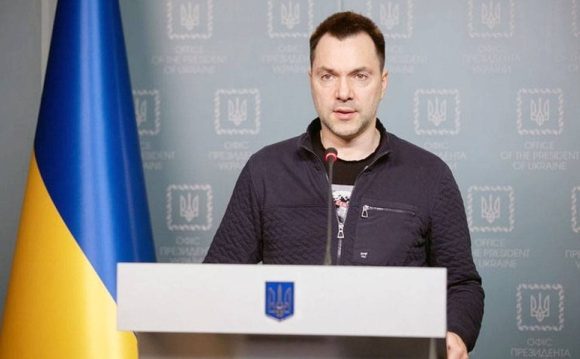
Oleksiy Arestovych, a presidential adviser for Ukraine, has submitted his resignation after alleging that Kiev shot down a Russian missile that struck a building in Dnipro and killed 44 people.

Mr. Arestovych expressed regret and admitted to having made a “basic error.” The original comment incited intense resentment throughout the nation, and Russian officials used it as an excuse to accuse Ukraine.

The adviser is well-known due to his regular YouTube updates, which are viewed by millions of people. Volodymyr Zelensky, the president of Ukraine, has yet to respond to Mr. Arestovych’s resignation.

Mr. Arestovych initially stated that it looked that the Russian missile had fallen on the structure after being shot down by Ukrainian air defences hours after Saturday’s missile strike on an apartment building in Dnipro. The structure was allegedly struck by a Russian Kh-22 missile, which Ukraine claimed was exceedingly inaccurate and beyond its ability to shoot down.

When Mr. Arestovych made his original remarks, the Ukrainian public responded strongly, with some claiming he had strengthened the position of Russian propagandists. A petition advocating for Mr. Arestovych’s dismissal as a government official was signed by certain Ukrainian lawmakers. Later, he published a statement announcing his retirement and admitting that he had committed a “fundamental error.”

“I offer my sincere apologies to the victims and their relatives, the residents of Dnipro and everyone who was deeply hurt by my prematurely erroneous version of the reason for the Russian missile striking a residential building,” he wrote in a longer post on Telegram.

One of the war’s most well-known Ukrainian faces is Mr. Arestovych, who regularly holds debates on the conflict on his YouTube channel. His videos frequently receive more than 200,000 views, and the channel has more than 1.6 million subscribers. He speaks in Russian instead of Ukrainian, which is unusual for Ukrainian officials.

Before he offered to leave, Russian authorities had used his words to attribute the strike to Kiev.

Russian attacks “do not damage residential buildings,” according to Kremlin spokesman Dmitry Peskov, who also claimed that “certain officials of the Ukrainian side” had come to the same conclusion.

Picture Courtesy: Google/images are subject to copyright
Uncategorized

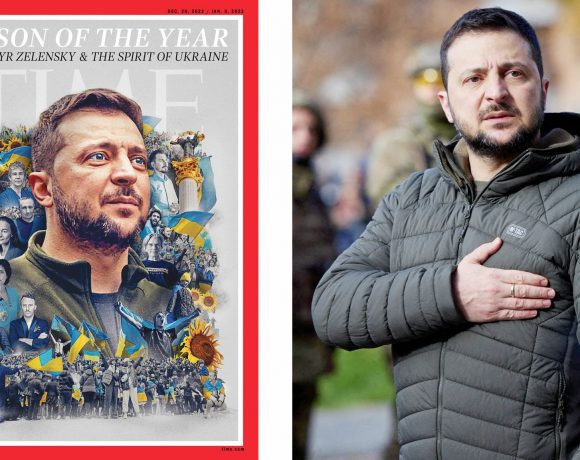
Volodymyr Zelensky, the president of Ukraine, and “the spirit of Ukraine” have been selected Time Magazine’s 2022 Person of the Year.  The honour is given to an occasion or somebody who, in the past 12 months, is thought to have had the greatest impact on world events.

Iranian demonstrators, China’s president Xi Jinping, and the US Supreme Court were among the other candidates.  The editor of the magazine referred to the choice as “the most clear-cut in recollection.”

“In a world that had come to be defined by its divisiveness, there was a coming together around this cause, around this country,” Edward Felsenthal wrote.

He added that the “spirit of Ukraine” referred to Ukrainians around the world, including many who “fought behind the scenes”. This includes people like Ievgen Klopotenko, a chef who provided thousands of free meals to Ukrainians and medic Yuliia Payevska who was captured, then released after three months in Russian captivity.

According to the magazine, Mr. Zelensky’s bravery in repelling the Russian invasion had inspired Ukrainians and earned him recognition on a global scale. The article stated that “Zelensky’s success as a wartime leader has depended on the idea that heroism is contagious.”
 
David Nott, a British trauma surgeon who travelled to Ukraine to aid those hurt in the conflict, is only one of numerous people who are featured on the magazine’s cover. The American baseball player Aaron Judge is named Time’s Entertainer of the Year, the Malaysian actress Michelle Yeoh is named Time’s Icon of the Year, and the K-pop group Blackpink is named the Entertainer of the Year.

The winner from the previous year, Elon Musk, was once again selected as a finalist. His electric vehicle manufacturer Tesla rose to the position of most valuable automaker in the world in 2021.

Although it was the Man of the Year back then, the tradition started in 1927.

Other such winners include the German tyrant Adolf Hitler in 1938 and the 2007 Person of the Year, Russian President Vladimir Putin.

Picture Courtesy: Google/images are subject to copyright
News Trending War

US intelligence agencies predict that the combat in Ukraine will continue to wane through the upcoming winter. However, according to US head of intelligence Avril Haines, there hasn’t been any indication of Ukrainian forces’ resistance weakening.

Both sides, according to her, would endeavour to “refit, replenish, and reconstitute” for any springtime counteroffensive. The crucial energy infrastructure of Ukraine had already been attacked by Russia.

Even though Russia has lost more than half of the territory it had conquered, the war in Ukraine is already in its ninth month. The majority of the combat is presently taking place near the eastern Ukrainian cities of Bakhmut and Donetsk, Ms. Haines stated at a defence symposium in California.

She said fighting had slowed down following Russia’s withdrawal of troops from the west of the Kherson region last month.

“We’re seeing a kind of a reduced tempo already of the conflict… and we expect that’s likely to be what we see in the coming months,” she said.

She said both Ukraine and Russian militaries would be looking to prepare for any counter-offensive after the winter.

“But we actually have a fair amount of scepticism as to whether or not the Russians will be, in fact, prepared to do that,” she said.

“I think more optimistically for the Ukrainians in that time frame.”

According to Ms. Haines, US intelligence believes that Russian President Vladimir Putin is now unaware of the full extent of his military’s difficulties.

“We observe ammo shortages, morale problems, supply problems, logistics, and a host of other issues that they are dealing with.”

On the other hand, Ukraine’s President Volodymyr Zelensky said on Saturday that a price ceiling imposed on Russian oil exports by his Western partners was “weak” and that it was not “severe” enough to harm the Russian economy.

The cap, which is set to take effect on Monday, aims to prevent nations from paying more than $60 (£48) a barrel for Russian crude oil that is transported by sea.

Dmitry Peskov, a spokesman for the Kremlin, stated that although Moscow had planned for the action, it would not sell its oil under the quota.

Picture Courtesy: Google/images are subject to copyright
News Trending War

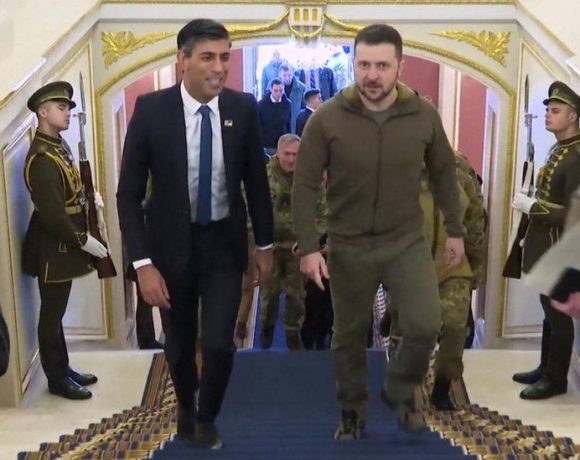
In his first trip to Kyiv as prime minister, Rishi Sunak met with Ukraine’s President Volodymyr Zelensky and committed £50 million in defence assistance.

According to No. 10, the meeting was organised to demonstrate “continuing UK support” for Ukraine.

Following the meeting, Mr. Zelensky posted on Telegram, “We discussed the most significant topics, both for our countries and for world security.”

He continued, “We are stronger, and we will get the desired outcomes.

Mr. Sunak, who assumed his position last month, described his visit to Kyiv as “very humbling” and promised that the UK would continue to support Ukrainians in their struggle.

During the meeting with Mr Zelensky, he said the UK would provide a major new package of air defence to help protect Ukrainian civilians and the country’s national infrastructure from Russian strikes.

As a result of frequent Russian aircraft raids on Kyiv and other parts of the country, Ukraine has recently asked for assistance from Western countries.

125 anti-aircraft guns, technologies to combat lethal drones supplied by Iran, several radars, and anti-drone electronic warfare capacity are included in the £50 million defence aid package.

It follows the announcement of more than 1,000 additional anti-air missiles made earlier this month by UK Defense Secretary Ben Wallace.

Earlier that week, only days after being ordered to evacuate its forces from Kherson, Russia launched one of its heaviest missile barrages against Ukraine.

Strikes occurred all over the nation, from Chernihiv in the north to Lviv in the west, including in Kyiv.

That attack coincided with the G20 summit in Bali where, in a virtual speech, Mr Zelensky said he was “convinced now is the time when the Russian destructive war must and can be stopped”.

By sending skilled army physicians and engineers to the area to provide specialised support, Mr. Sunak indicated that the UK will also boost the training offer to the Ukrainian armed forces.

The British prime minister visited Kyiv and paid his respects at a war memorial and a memorial for those who perished in the Holodomor famine. He then spoke with first responders at a fire station. Mr. Sunak also observed drones of Iranian manufacture that had recently been used to target and bomb civilians in Ukraine.

Picture Courtesy: Google/images are subject to copyright
News Trending War

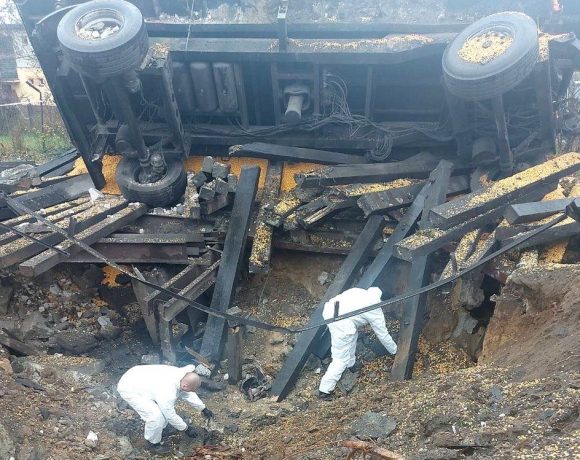
After a missile strike killed two people on a farm close to Poland’s western border with Ukraine, Andrzej Duda, the president of Poland, declared that there are no indications of an intentional attack.

US Vice President Joe Biden had earlier stated that it was “unlikely” that the missile had been launched from Russia.

The two employees perished as Ukraine came under attack from one of the war’s heaviest volleys of missile strikes.

The Kremlin had maintained that it was unrelated to their demise.

The missile that struck the farm in Przewodow, 6 kilometres (4 miles) from the border, was initially attributed to Russia, according to Poland.

Russian spokesperson Dmitry Peskov claimed Warsaw should have quickly made it obvious the debris was from Ukraine’s S-300, accusing Western nations of having an exaggerated response.

Both Russia and Ukraine employ the outdated Soviet surface-to-air missiles, and Kiev declared its desire to participate in the probe while also indicating that it was prepared to present proof of a “Russian trail” in the attack.

According to Paul Adams of the BBC, Ukraine’s air defences have been working hard to shoot down Russian missiles, and one of the missiles that was fired may have been thrown off course. The NATO ambassadors gathered in Brussels during the investigation to discuss how to respond to a member state becoming involved in Russia’s war.

No evidence, according to Secretary General Jens Stoltenberg, suggested that the incident was the product of a planned strike or that Moscow was contemplating aggressive measures against the defensive alliance.

According to Kiev, more than 90 Russian missiles were launched against Ukraine on Tuesday. Some of the missiles struck Lviv, which is close to Ukraine’s western border with Poland, despite the Ukrainian military’s claim that 77 were shot down.

The majority of the rockets fired by Russian forces, according to Ukrainian President Volodymyr Zelensky, were intended against the nation’s energy infrastructure.

The S-300 missile, which was built in Russia, was most likely to blame, but there was no proof that it had been fired by the Russian side, according to Polish President Duda, who said this at a press conference on Wednesday. Invoking Article 4 of the NATO charter, which mandates consultations in the event of a security danger, may not be required, according to Prime Minister Mateusz Morawiecki.

Picture Courtesy: Google/images are subject to copyright
News Trending War

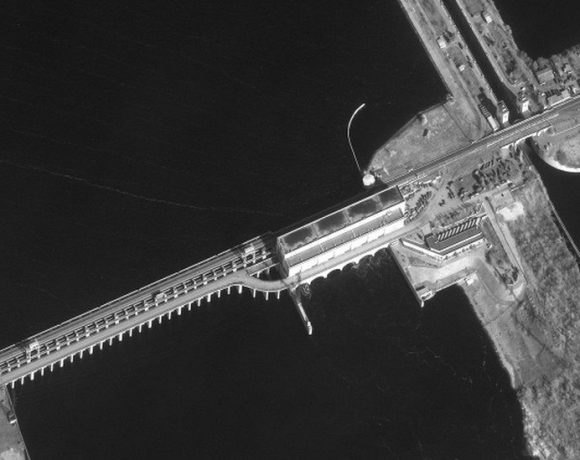
Volodymyr Zelensky, the president of Ukraine, has charged that Russia is planning to blow up a dam at a hydroelectric plant in southern Ukraine, causing a “large-scale calamity.”

In his nocturnal speech, he claimed that, in accordance with Ukrainian information, Russian forces had mined the Kakhovka dam on the Dnieper river.

Russian forces are in control of the dam, but Ukrainian forces are closing closer.

Ukraine has already been charged by Russia with launching missiles at the Kakhovka dam.

In the partially occupied Kherson region, the dam gives Russia access to one of the few surviving Dnieper river crossings.

Authorities in Kherson that were imposed by Russia have denied Ukraine’s claims that a plot to demolish the building has been made. They attributed a strike on the Antonivskiy crossing, another crucial bridge, to Ukrainian forces.

This week, Russia began withdrawing its proxies in Kherson, but it also announced that 50–60,000 civilians would follow, a move that Kyiv authorities have denounced as being equivalent to forced deportations.

In Kherson city and the hydroelectric dam, according to Gen Sergei Surovikin, Russia’s new military commander, Ukrainian forces may be preparing to use “prohibited tactics of warfare,” which would necessitate the “evacuation” of civilians.

An independent US think tank called the Institute for the Study of War has claimed that Russia is “likely continuing to prepare for a false flag attack” on the Kakhovka hydroelectric plant by setting up “information conditions” for Russian forces to blow up the dam after they withdraw from western Kherson and then accuse Ukraine of flooding the river and nearby settlements.

Picture Courtesy: Google/images are subject to copyright

News Trending War

During his address to the UN General Assembly in New York, President Volodymyr Zelensky said that Russia must receive “due retribution” for its invasion of Ukraine. The Ukrainian president demanded the establishment of a unique war tribunal and described alleged war crimes committed by Russia in a pre-recorded video.

Additionally, he outlined a “formula” that included increasing military assistance and criticising Russia internationally. Vladimir Putin of Russia had earlier activated 300,000 reservists. Rare protests were sparked by the action in dozens of Russian cities, and Mr. Zelensky claimed that the partial mobilisation proved his adversary was not sincere in his desire for peace. Observational group OVD-Info said that 1,315 Russians had been detained.

According to the Kremlin, only individuals with significant talents and combat experience who have completed their military service will be called up. However, sources claim that some of those detained during Moscow protests were also informed they would need to sign up.

The head of Ukraine claimed that setting up a special court will aid in holding Moscow accountable for annexing land and killing thousands of people. Many of the participants in the session gave him a standing ovation after his speech on Wednesday.

Despite Russia’s determination to intensify its military campaign, the two sides participated in the largest prisoner exchange since the war’s inception.

Picture Courtesy: Google/images are subject to copyright
News Trending War

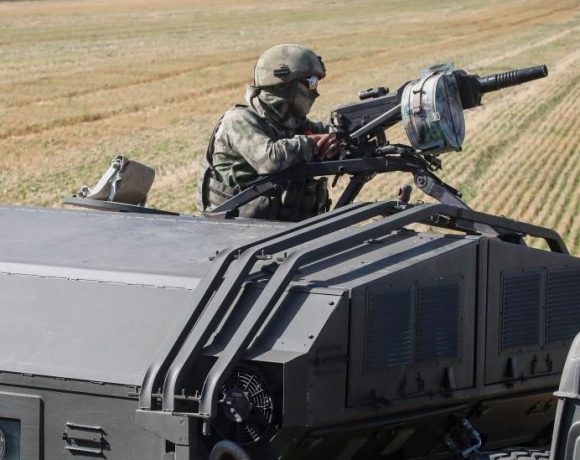
According to Russian Foreign Minister Sergei Lavrov, Russia is no longer “primarily” concentrating its military efforts in Ukraine’s east.  He said that Moscow’s policy had altered in an interview with Russian official media after the West gave Ukraine longer-range weapons.

He explained that in order for Russia to maintain its own security, Ukrainian soldiers would now need to be pushed back from the front line. The US had previously charged Russia with making plans to annex portions of Ukraine.

In February, Russia invaded Ukraine under the false pretence that the Donbas region in eastern Ukraine’s Russian-speaking population had experienced a genocide and needed to be freed.

Five months later, Russia has taken over portions of the east and south of the nation, although it has since declared that its primary goal is the liberation of Donbas after failing to take Kyiv as planned.

Since February, Ukraine has received more potent weapons from the West for use in its defence against Russian forces.

According to Mr. Lavrov, this has compelled Russia to broaden its goals. In an interview with Margarita Simonyan, a well-known analyst on Russian TV and editor-in-chief of broadcaster RT, Mr. Lavrov stated, “We cannot allow the part of Ukraine controlled by [Ukrainian President Volodymyr] Zelensky… to possess weapons that would constitute a direct threat to our territory.”The West’s decision to arm Ukraine was characterised by the Russian foreign minister as an expression of “impotent fury” and a “will to make things worse.”

Picture Courtesy: Google/images are subject to copyright
News Trending War

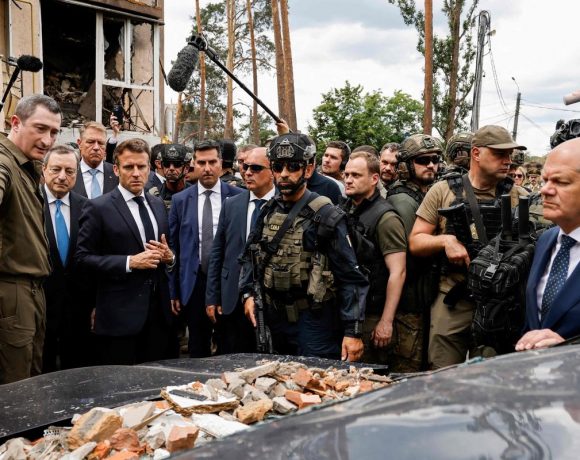
At a session in Brussels on Thursday, the European Commission is expected to accept Ukraine as a candidate for membership in the EU. Days after the Russian invasion in February, Ukraine submitted an application, and the procedure has since advanced at a record pace. According to its envoy to the EU, it would provide Ukrainians a psychological lift.

However, Vsevolod Chentsov acknowledged that “true integration” couldn’t begin until the conflict was done. The first official step toward EU membership is candidate status, and France stated last week that there was “complete accord” on Ukraine. However, joining can take a long time, and success is not guaranteed.

Albania, North Macedonia, Montenegro, and Serbia are Western Balkan nations that have been candidate nations for years—in some cases, for more than a decade. Bosnia and Herzegovina submitted a candidacy application in 2016, but has yet to be accepted.

Edi Rama, the prime minister of Albania, said it was good that Ukraine was granted candidate status as he arrived for an EU summit with Western Balkan leaders, but Kyiv should not be deceived: “North Macedonia is a candidate [for] 17 years if I have not lost count, Albania eight, so welcome to Ukraine.” Although it is not anticipated, several member states are lobbying for Bosnia to receive candidate status.

In exchange for prerequisites being met before accession talks can start, including as judicial and anti-corruption reforms, some EU member states have agreed to support Ukraine’s candidacy.

Picture Courtesy: Google/images are subject to copyright
News Trending War

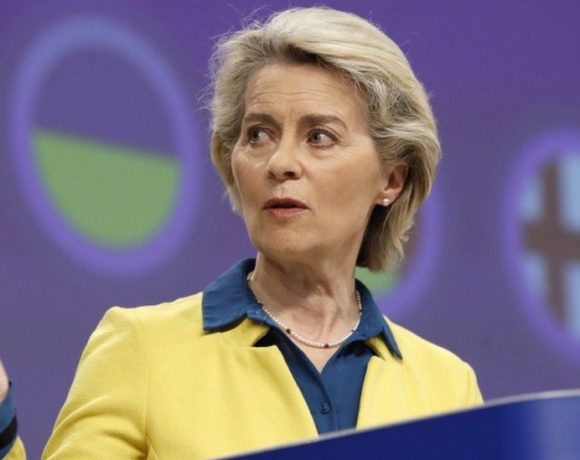
Ukraine’s attempt to join the European Union has been boosted significantly by a proposal that it be granted candidate status. However, the European Commission has stated that the government needs reform in areas such as the rule of law, oligarchs, human rights, and corruption. Ukrainians have demonstrated that they are “willing to die” for their European dreams, according to European Commission President Ursula von der Leyen.

The group cautioned that the country needed to make reforms in the areas of the rule of law, oligarchs, human rights, and corruption. It comes after four European politicians visited Kyiv on Thursday and publicly backed Ukraine’s membership bid. Ukraine also claims that Russia is preparing an assault on the eastern city of Slovyansk, as battle for control of Severodonetsk continues.

“Europe can construct a new history of freedom precisely because of the bravery of the Ukrainians,” Mr Volodymyr Zelenskyy said in his nightly video address, “and ultimately remove the grey zone in Eastern Europe between the EU and Russia.” “Ukraine has gotten closer to the EU than at any other moment since independence,” he remarked, hinting at “positive news” on the way.

Ukraine would be the EU’s largest country by area and fifth most populous if entered. All three candidates are significantly poorer than any existing EU member, with per capita income roughly half that of Bulgaria, the poorest.

Picture Courtesy: Google/Images are subject to copyright