News Trending War

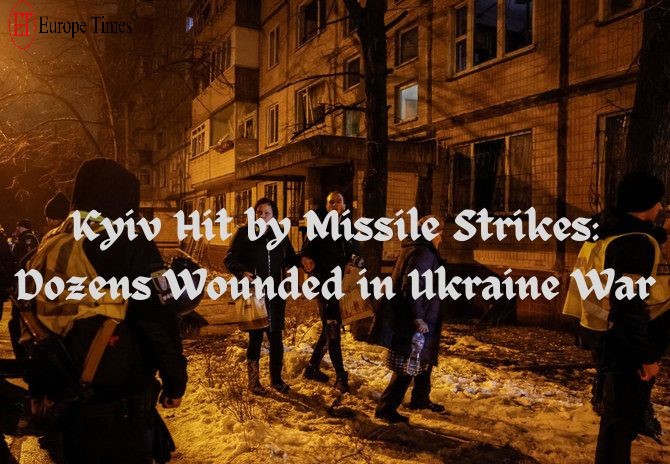
Dozens of people were injured in a series of missile strikes on the Ukrainian capital, Kyiv, overnight, with 53 people, including six children, harmed, according to Mayor Vitali Klitschko. The attacks occurred after President Volodymyr Zelensky’s plea for increased military aid in the US yielded little progress. Ten Russian ballistic missiles were reportedly shot down, damaging kindergarten and hospital buildings. Zelensky, who left the US prior to the strikes, vowed a response and criticized Russia for targeting residential areas. The EU is set to discuss further aid for Ukraine, and Zelensky arrived in Norway for additional support talks.

The attack on Kyiv followed the use of cruise missiles by Russia, ending a 79-day hiatus in missile attacks. Ukraine’s air force claimed to have intercepted all 10 incoming missiles. The projectiles were identified as Iskander-M ballistic missiles and S-400s, designed for air defense but also used against ground targets. A major cyberattack on Ukraine’s largest mobile network operator, Kyivstar, disrupted operations, impacting millions of people relying on air raid alerts. Additionally, the port city of Odesa faced drone attacks, causing injuries and damage.

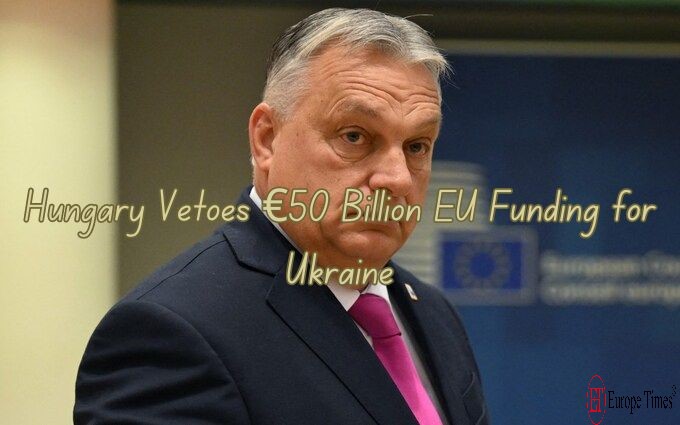
Zelensky’s efforts to secure more military aid in the US faced challenges, with President Joe Biden warning Republicans about giving Russia a “Christmas gift” if aid was not increased. Zelensky and Biden agreed to enhance air defense systems for Ukraine. Meanwhile, a summit of European leaders discussed Ukraine’s potential accession to the EU, but Hungarian Prime Minister Viktor Orban opposed opening accession talks, emphasizing the need for support without full membership.

Hungary has previously clashed with EU partners over its stance on Russia’s invasion of Ukraine. EU Commission President Ursula von der Leyen stressed Ukraine’s fight as crucial for Europe and urged support for its inclusion in the European family.

Picture Courtesy: Google/images are subject to copyright

News Trending War

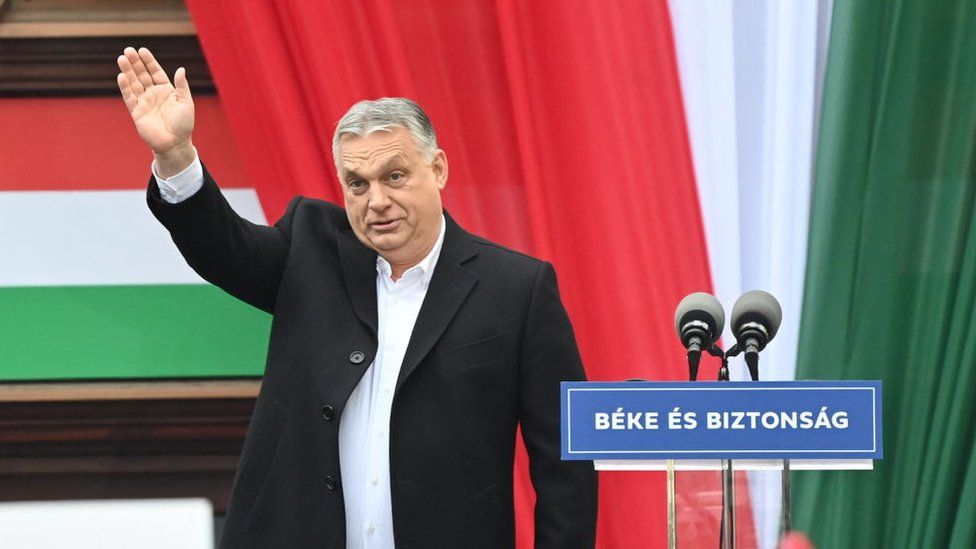
The headline in the tabloid Metropol, distributed to morning commuters flocking through Budapest’s Western Station, screams, “Peace or War.” In the box next to the “peace” option, there’s a nice blue cross.

That is Viktor Orban’s Fidesz party’s campaign slogan as it seeks a record fourth consecutive term in office in Sunday’s elections. After 12 years in power, they are facing their first serious challenge from a coalition of six opposition parties led by Peter Marki-Zay. The race has been accelerated by Russia’s war in Ukraine.

Hungary shares a border with Ukraine and has so far taken in more than 500,000 refugees. Mr. Orban insists that the only way to keep Hungary out of the war is for him to help the people while refusing to supply weapons to Ukraine. Although his party’s slogan of “peace or war” is simplistic, it is effective. And it’s broadcast, printed, and illuminated in large letters everywhere in Hungary.

It disrupts any music you’re listening to on YouTube, as well as videos featuring international coverage of the Ukraine conflict. According to a group of critical monitoring organisations, the government has spent eight times more on its campaign than all of the opposition parties combined.

The fact that the ruling party enjoys the support of a largely compliant media also helps. On the other hand, the opposition’s catchphrase is “Orban or Europe.”
Their candidate, Peter Marki-Zay, proposes that Hungary join Poland, the United Kingdom, and others in providing arms to Ukraine. Should consider sending troops if called upon, but only within a Nato framework.

Picture Courtesy: Google/images are subject to copyright