featured News Trending

Europe may increase the launch frequency of its Ariane 6 and Vega-C rockets to meet growing demand for satellite deployments, the European Space Agency (ESA) said. ESA Director General Josef Aschbacher warned that launch demand could peak around 2030, creating a potential capacity bottleneck if preparations are not made soon.

Arianespace currently expects to conduct nine or 10 Ariane 6 launches annually from 2027. However, demand from European missions and commercial customers, including Amazon, could exceed planned capacity. Amazon has already commissioned 18 launches, prompting ESA to assess whether additional capacity will be needed to meet future requirements.

ESA is also examining plans to launch astronauts on European rockets instead of relying on U.S. vehicles, while the agency is monitoring a proposed merger involving major European satellite manufacturers. ESA, which accounts for about 60% of Europe’s public-sector satellite spending, said it could use industrial policy measures to maintain competition and strengthen the European space industry’s supply chain.

Pic courtesy: google/ images are subject to copyright

News Trending

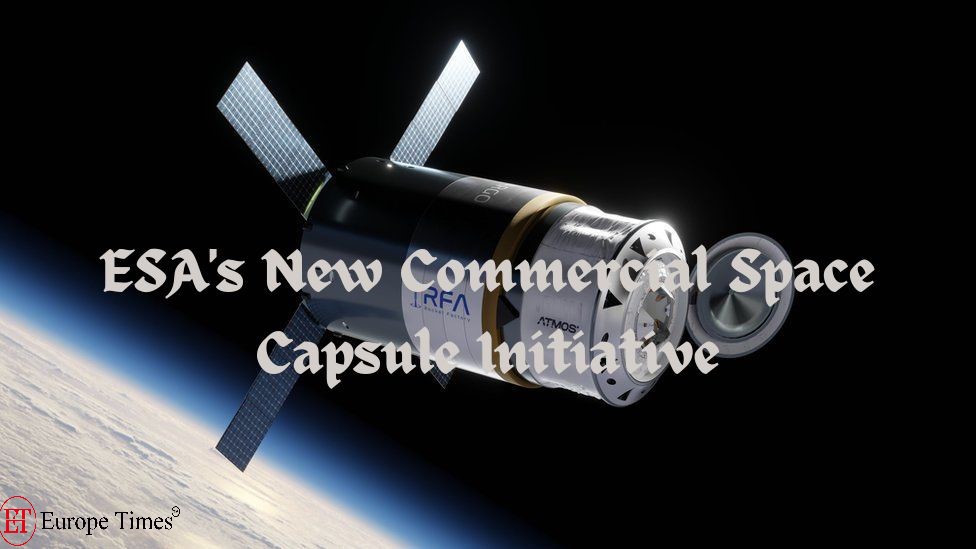
The European Space Agency (ESA) is introducing a new competition to develop a robotic capsule for transporting cargo to and from the International Space Station, with the maiden voyage planned for 2028. This marks a significant departure from ESA’s conventional project management approach. The winning company will receive some financial support and technical assistance from ESA but must operate the capsule commercially. It will be responsible for partially funding the development and providing the re-supply service to ESA, which will act as the primary customer.

If successful, the company may be tasked with upgrading the capsule to transport ESA astronauts, and potentially, it could be adapted for missions to other destinations such as the Moon. A dedicated team within ESA has been allocated an initial budget of €75m to initiate the competition.

The concept was well received by ESA member states at a summit in Seville, Spain. This procurement model emulates the successful strategy employed by NASA, which transitioned to outsourcing space vehicle services to private companies, leading to the emergence of SpaceX. ESA hopes to replicate NASA’s access to faster, more innovative, and cost-effective space technologies.

Anna Christmann, a leading aerospace policy figure in the German government, emphasized the shift in ESA’s approach, stating that while public funding initiates such competitions, it attracts private investment. ESA member states have also committed to adopting this approach for long-term rocket procurement, as current European launchers are facing significant challenges.

The Seville summit also highlighted the role of satellites in aiding European nations’ net-zero goals, including using space data to optimize air travel routes and reduce greenhouse gas emissions. Additionally, ESA introduced the Zero Debris Charter to promote responsible practices in space operations. The UK is championing a new regulatory framework to incentivize responsible behavior and create a market for orbital debris removal services.

Picture Courtesy: Google/images are subject to copyright