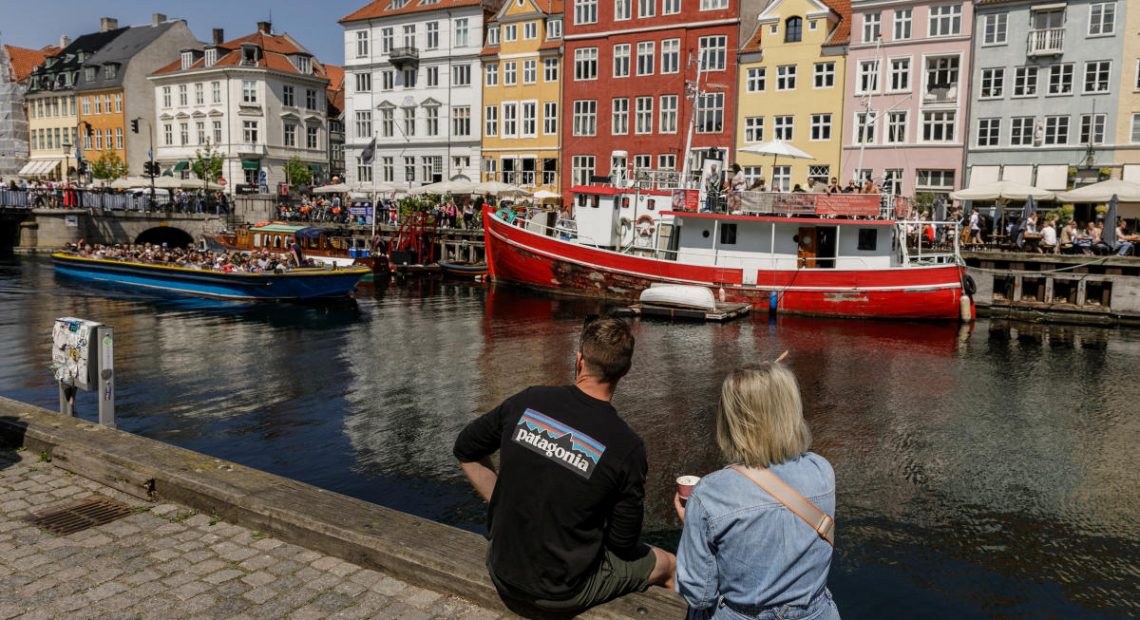
New regulations have been implemented in Venice, banning the use of loudspeakers and restricting tour group sizes to a maximum of 25 people. Officials state that these measures aim to mitigate the effects of over-tourism on the Italian city. Venice’s historic canals make it one of Europe’s most popular destinations. Earlier this year, Venice introduced a €5 (£4) daily entry fee, following a 2021 ban on cruise ships docking in the historic area.
Over-tourism is a critical issue for Venice, a city with a population of approximately 250,000 that welcomed over 13 million visitors in 2019. Although visitor numbers have declined since then, they are projected to surpass pre-pandemic levels soon. Many local residents have left the historic island city due to concerns about being overwhelmed by tourists.
According to Ocio, a citizen association monitoring housing in Venice, the historic quarter now has about 49,000 tourist beds—exceeding the number available for residents. These new tourism rules follow warnings from Unesco experts last year, suggesting Venice could be added to the list of world heritage sites in danger due to climate change and mass tourism. The UN cultural body ultimately decided not to add Venice to the list, acknowledging efforts to address these issues through an anti-flooding system and measures to curb the impact of mass tourism.
Picture Courtesy: Google/images are subject to copyright
A desperate search for survivors is underway after a two-storey restaurant collapsed on Majorca, killing four people and injuring 16, according to local emergency services. Several individuals are believed to be trapped under the debris at the Medusa Beach Club, a popular beachside restaurant in Palma de Majorca, the regional capital.
Among the victims are a Spanish man, two German women, and Abdoulaye Diop, a Senegalese man known for rescuing a swimmer in 2017. The collapse occurred around 20:30 local time (19:30 BST) on Thursday, causing people to fall into the basement where other patrons and staff were present.
Authorities attribute the collapse to the terrace giving way due to “excessive weight,” although investigations are ongoing. Emergency workers are urging for silence to hear potential survivors. A firefighter described the scene as “nightmarish,” with people crying and screaming amid the rubble.
Raúl Pursnami, owner of Moda Meena, a nearby fashion store, witnessed the event and expressed his shock. Diop, 44, had just left a gym and was having coffee at the restaurant when it collapsed, according to friends. In 2017, Diop was celebrated for rescuing a struggling swimmer in Playa de Palma despite freezing water temperatures.
Psychology experts have been called to help those traumatized by the incident. The UK Foreign Office stated that there are no reports of British nationals involved, though they remain in contact with Spanish authorities. A man was rescued from the rubble with a broken arm, and efforts continue under the assumption more people are trapped.
The Palma City Council has declared three days of mourning. Spanish Prime Minister Pedro Sánchez and Balearic Islands President Marga Prohens sent condolences to the victims’ families and expressed gratitude to the emergency services. Majorca, the largest of Spain’s Balearic Islands, saw over 17 million visitors last year.
Picture Courtesy: Google/images are subject to copyright
Protests are set to erupt across the Canary Islands this Saturday, with demonstrators calling for a reevaluation of the region’s tourism industry and a halt to the influx of tourists. The movement, named “Canarias tiene un límite” (The Canaries have a limit), is supported by various environmental organizations such as Greenpeace, WWF, and Friends of the Earth.
The protests are fueled by concerns that the current tourism model, which has been in place for decades, is financially burdensome and environmentally unsustainable for locals. Víctor Martín, a spokesperson for the coordinating collective “Canarias se Agota” (The Canaries Have Had Enough), highlighted the strain on resources and the rise in poverty and social exclusion among locals.
Martín emphasized that the focus on tourism persists despite challenges like water scarcity and housing crises. He noted that low wages and high living costs exacerbate the situation, leaving many workers struggling to make ends meet. Martín stressed that the issue lies with the tourism model itself and not with the tourists, many of whom are warmly welcomed by locals.
The protestors demand an immediate halt to large-scale luxury developments and a reassessment of tourism’s impact on the islands. They call for a comprehensive study to determine the carrying capacity of each island and advocate for a transition towards sustainable tourism practices. Martín believes that addressing these issues could position the Canary Islands as a global example of sustainable tourism development.
In response, Fernando Clavijo, the regional president, stated that the government is already taking steps to address the concerns. He acknowledged the need for refinement in the tourism model but defended its overall success.
Overtourism has become a pressing issue not only in the Canary Islands but also in various Spanish cities and regions, prompting protests and discussions on sustainable tourism management.
Picture Courtesy: Google/images are subject to copyright
Iluza Isyandavletova from Bashkortastan has won the title of the Miss Asia 2023. Aayushma Bajracharya of Nepal achieved the first runner-up position, Cerena Ann Johnson from the UAE secured the second runner-up title, and Jinnapat Palsuea from Thailand earned the third runner-up position. The crowning ceremony was attended by former Miss Asia Winner Nguyen Thi Yen Trang, SAJ Group Hotels and Resorts CMD Sajan Varghese, Mini Sajan, CEO of SAJ Group Hotels and Resorts, and Jolly Antony, Chairman of Vibe Munnar. Dr. Ajit Ravi, Chairman of Pegasus, was also in attendance at the event.
The contestants underwent a grooming session conducted by Pegasus, a renowned organization dedicated to fostering the growth of young talents and showcasing their modeling careers and abilities to the world. Pegasus, with its commitment to empowering emerging talents, played a pivotal role in refining and enhancing the skills of the participants, ensuring they were well-prepared for the global stage. Through these grooming sessions, Pegasus exemplifies its mission to provide a platform for aspiring individuals to step forward confidently and make a mark in the world of modeling and talent.
Out of numerous Miss Asia pageant hopefuls, 15 emerged as finalists. Unfortunately, two contestants faced unexpected challenges, including visa issues, which hindered their participation in the finals. The well-deserving winners of Miss Asia 2023 were adorned with splendid gold crowns designed by Preeti Prakash from Parakkat Jewellers. Thirteen contestants showcased their poise and elegance on the runway throughout the competition, featuring three distinct rounds: the National Costume Round, the White Cocktail Round, and the Royal Blue Gown Round.
SAJ Group Hotels and Resorts, in collaboration with DQUE, played a crucial role as the primary partners in coordinating the Miss Asia 2023 event, organized by Pegasus Global Pvt Ltd. Unique Times, FICF, Vibe, Parakkat Resorts, and DQUE Face and Body Skin Friendly Soap provided their support as powered by Partners. Aiswaria Advertisements, Kalpana International, Times New, UT World, Europe Times, Photogenic Fashion and Weddings, Neenu Pro The Sound Experts, Green Media, Good Day Hotels and Resorts, Akshay Inco, Alcazar, FOG, St Joseph’s Hospital Trust, and JD Institute of Fashion Technology served as co-partners. The objective of this competition was to highlight the diverse cultural heritage and profound values of the participating countries while also promoting tourism.
Sub Title Winners
Miss Asia Social Media – Nguyen Thi Kim Trang (Vietnam)
Miss Asia Fashionista – Chen Chia Pei (Taiwan)
Miss Asia Talent – Natalia Savina (Russia)
Miss Asia Diligent – Azhar Zhumabekova (Kazakhstan)
Miss Asia Inspiring – Aayushma Bajracharya (Nepal)
Miss Asia Vivacious – Risa Nakatani (Japan)
Miss Asia Shining Star – Ella Anak Apit (Malaysia)
Miss Asia Ramp Walk – Meurel Beverly Viegas (India)
Miss Asia Tenacious – Rashmi Subedra (Sri Lanka)
Miss Asia National Costume – Kalisa Putri (Indonesia)
Miss Asia Adorable – Cerena Ann Johnson (UAE)
Miss Asia Renaissance – Jinnapat Palsuea (Thailand)
The judging panel featured esteemed individuals including Rozanne Diasz (Miss Sri Lanka Universe 2005 and Grooming instructor), Mr. Alonkot Sungkahapong (CEO, Starfighter), Dr. Mahima Bhakshi (Model & Entrepreneur), Harmeet Singh Gupta (Managing Director, U&I Entertainment), and Rita Mathan (Owner, Pro Nail Studio).
Contestants in the Miss Asia 2023 lineup featured Iluza Isyandavletova representing Bashkortastan, Meurel Beverly Viegas from India, Kalisa Putri representing Indonesia, Risa Nakatani from Japan, Azhar Zhumabekova from Kazakhstan, Ella Anak Apit from Malaysia, Aayushma Bajracharya from Nepal, Natalia Savina from Russia, Rashmi Subedra from Sri Lanka, Chen Chia Pei from Taiwan, Jinnapat Palsuea from Thailand, Cerena Ann Johnson from the UAE, and Nguyen Thi Kim Trang from Vietnam.
Picture Courtesy: Pegasus Photography/images are subject to copyright
France’s government is taking steps to address a nationwide panic surrounding bedbugs, which has escalated as a Paris school reported an infestation. Senior officials from various ministries, including health, economy, and transport, convened to coordinate an action plan and consider the creation of a national bedbug observatory to gain an accurate understanding of the issue.
Health experts and entomologists warn that while there has been a noticeable increase in bedbug sightings, many are false alarms, potentially fueling unwarranted hysteria. The government is concerned about the negative impact on Paris’s image and tourism, particularly during the upcoming Olympics.
However, they aim to balance public reassurance with raising awareness and prompt action to control the problem. The use of social media has amplified public anxiety about bedbugs, often featuring images that do not depict actual infestations. In one verified case, a high school in Paris temporarily closed due to bedbug infestations in several areas.
The government is considering various measures, including regulating eradication costs and clarifying financial responsibilities between property owners and renters. Public education about bedbugs has improved, which is crucial for addressing future surges.
Picture Courtesy: Google/images are subject to copyright
Venice is poised to greenlight a trial €5 (£4.30; $5.35) levy for daily tourists as a strategy to manage tourism. This fee will apply to all visitors aged 14 and above and necessitates advance booking for entry to the city. Simone Venturini, a city council member overseeing tourism, has disclosed that this trial period will take place during peak tourist seasons in the upcoming year.
Venice is grappling with the consequences of excessive tourism, and it’s among Europe’s most visited cities. Its compact size, measuring just 7.6 sq km (2.7 sq miles), hosted nearly 13 million tourists in 2019, according to Italian national statistics. Post-pandemic, visitor numbers are anticipated to surpass pre-pandemic levels.
The primary aim of this fee is to encourage day-trippers to select off-peak days for their visits. However, tourists staying overnight will be exempt from this charge. The city intends to evaluate and potentially refine this fee as necessary.
Earlier this year, Venice was suggested to be included on UNESCO’s list of world heritage sites in danger due to the impacts of climate change and mass tourism, which pose a threat of irreversible alterations to the city. In 2021, large cruise ships were banned from accessing the historic center of Venice through the Giudecca canal, a move triggered by a ship collision and concerns over pollution and erosion.
Nonetheless, it remains uncertain whether this daily charge will discourage tourists. Some, like Karina from Germany, don’t see it as a significant burden, while others like Cal, a student from Ireland, find it relatively steep for a day of sightseeing.
Venice is witnessing a growing exodus of residents due to the overwhelming presence of tourists. The shortage of long-term rental options for residents has become a pressing issue, with landlords preferring to rent to tourists during the summer season. Citizen associations, Ocio and Venissa, have conducted studies revealing that the number of beds available for tourists now exceeds those for residents. Many government buildings have been converted into hotels, a transformation that threatens the city’s identity as it shifts towards a tourist-centric model.
Maria Fiano, who heads Ocio, advocates for restrictions on tourist accommodations as a solution to the issue and expresses skepticism about the effectiveness of the daily fee proposed by the town hall, viewing it as a superficial measure.
Picture Courtesy: Google/images are subject to copyright
Unesco recommends placing Venice on the list of endangered World Heritage sites due to the risks posed by excessive tourism, overdevelopment, and rising sea levels from climate change. The agency aims to prompt better preservation efforts for the iconic Italian city’s future.
The proposal will be carefully reviewed by the Venice municipality and discussed with the Italian government. The city’s former mayor criticizes Unesco, calling it an expensive and ineffective body. Previously proposed for inclusion two years ago, Venice avoided the list temporarily due to emergency measures, but the promised conservation plan was never implemented.
Unesco’s report highlights the lack of a strategic vision to address climate change threats, and the impact of tourism on the city’s infrastructure. The agency believes that high-rise buildings should be constructed far from the city center to avoid negative visual impacts. Venice’s vulnerability to rising sea levels is exacerbated by its popularity as a tourist destination, with around 28 million visitors annually.
Currently, 55 World Heritage sites are listed as “in danger,” with an additional 204 being closely monitored by Unesco due to various threats.
Picture Courtesy: Google/images are subject to copyright
A deadly wave of Mediterranean wildfires has resulted in over 40 deaths and forced thousands to evacuate in Algeria, Italy, and Greece.
The situation remains dire as high temperatures and dry conditions persist, making firefighting efforts challenging. The island of Rhodes has declared a state of emergency, and other regions, including Corfu, Evia, Sicily, and Puglia, have also been severely affected.
Climate scientists warn that human-induced climate change played a significant role in the intensity of this month’s heatwave across Southern Europe, North America, and China. Italy faced contrasting extreme weather events, with deadly storms in the north and wildfires in the south.
Portugal, Croatia, and France also witnessed wildfires and took measures to combat them. The widespread impact of these fires has caused immense human and economic losses across the region.
Picture Courtesy: Google/images are subject to copyright
Barcelona is the capital and largest city of Catalonia, as well as the second most populous municipality of Spain. Barcelona is the sixth most populous urban area in the European Union after Paris, London, Madrid, the Ruhr area and Milan.
It is a colourful city with fanciful architecture. Barcelona is one of the world’s leading tourist, economic, trade fair and cultural centres. Lets have a look at some of the tourist spots.
La Sagrada Familia
La Sagrada Familia is a large unfinished Roman Catholic church in Barcelona, designed by Catalan architect Antoni Gaudi. The Basilica of the Sagrada Familia was the inspiration of a bookseller, Josep Maria Bocabella, founder of Asociacion Espiritual de Devotos de San Jose. This giant Basilica that has been under construction since 1882, and it’s not expected to be completed for some time yet.
Park Guell
The Park Guell is a public park in Barcelona, designed by famous architect Antonio Gaudi. The Park Guell was not originally planned to be a park, but was meant for a modern housing estate but was officially opened as a public park in 1926. This park is now composed of gardens and architectonic elements located on Carmel Hill.
Casa Batllo
Casa Batllo is a building in the center of Barcelona. It was designed by Antoni Gaudi, and is considered one of his masterpieces. It is a UNESCO World Heritage site and a legend of architecture and design. While looking at its design, it seems that the goal of the designer was to avoid straight lines completely. Much of the facade is decorated with a mosaic made of broken ceramic tiles of mostly golden orange and greenish blue colours.
The Museu Nacional d’Art de Catalunya
The Museu Nacional d’Art de Catalunya (National Art Museum of Catalonia) is situated on Montjuic hill. It has an outstanding collection of romanesque church paintings, and for Catalan art and design from the late 19th and early 20th centuries, including modernisme and noucentisme. The major attractions are: Romanesque art, Gothic art collection, Renaissance and Baroque art collection, The Cambo Bequest, Thyssen Bornemisza collection, Modern art collection, The Carmen Thyssen Bornemisza collection and the Cabinet of drawings and prints.
Sunaya Paison Photo Courtesy: Google/ images are subject to copyright
Europe is a sod for architecture allure. Lets have a glimpse at the European architectural styles.
Conciergerie
The Conciergerie is situated in Paris, Frnce. Conciergerie was formerly a prison but presently used mostly for law courts. The present monument forms only a part of the former palace of the Capetian dynasty. At the end of the 18th century, many prisoners detained by the Revolutionary Tribunal were held in the Conciergerie, including Marie-Antoinette. The buildings which form this prison still retain the hideous character of feudal times. only a relatively small part of the building is open to public access, this monument attains a great tourist attraction.
Aqueduct of Segovia
The Aqueduct of Segovia or aqueduct bridge is a Roman aqueduct in Segovia, Spain. It was built during the second half of the 1st century A.D. under the rule of the Roman Empire. This is a water-conveyance structure. The first section of the aqueduct contains 36 semi-circular arches, when rebuilt in the 15th century. Organized in two levels, the line of arches is decorated simply. The aqueduct is built of unmortared, brick-like granite blocks. The aqueduct is the city’s most important architectural landmark.
Pantheon
The Pantheon is a former Roman temple, now a church, in Rome, Italy. Even 2000 years after its construction, Pantheon is a remarkable monument to see. The building is circular with a portico of large granite Corinthian columns under a pediment. It is one of the best-preserved of all Ancient Roman buildings. In Greek, the word Pantheon means “honor all Gods” hence it is considered to be a temple to all gods.
Chillon Castle
Chillon Castle is an island castle located on Lake Geneva. This castle is the result of several centuries of constant building, adaptations, renovations and restorations, and one among the most visited castles in Switzerland and Europe. During the 16th century Wars of Religion, it was used by the dukes of Savoy to house prisoners. The history of the castle was influenced by three major periods: The Savoy period, the Bernese period and the Vaudois period. Visiting the Chillon Castle is like going back in time!
Sunaya Paison Photo Courtesy: Google/ images are subject to copyright