featured News Trending

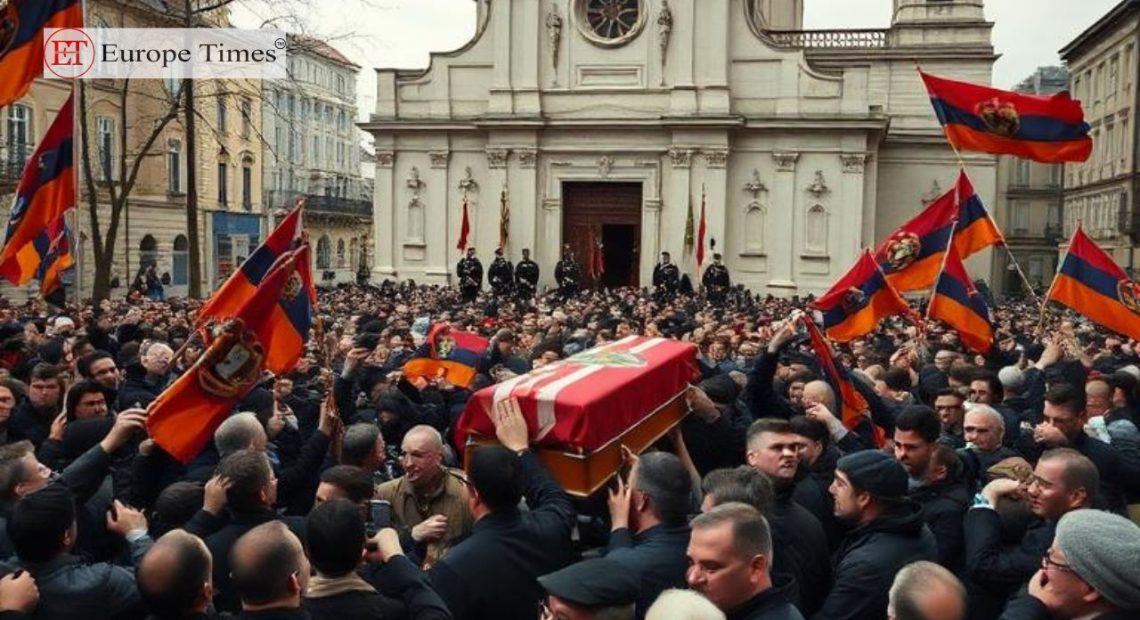
Thousands gathered in Belgrade on Monday for the funeral of former Bosnian Serb General Ratko Mladic, who died last week while serving a life sentence for genocide, war crimes and crimes against humanity. Mourners carried Serbian flags and images of Mladic as his coffin was taken through the streets before he was buried at a nearby cemetery.

The funeral was among Serbia’s largest public burials since the fall of communism in 1990, highlighting the continued support Mladic receives from some Serbs despite his convictions. He was found guilty by a United Nations tribunal for his role in the 1995 Srebrenica massacre, in which about 8,000 Bosniak Muslim men and boys were killed, as well as for crimes committed during the siege of Sarajevo.

The event also renewed tensions between Serbia and Bosnia and drew criticism from the European Union, which condemned the glorification of convicted war criminals. Bosnia’s Foreign Minister said the country would withdraw most staff from its embassy in Belgrade in protest, while the funeral reopened painful memories for many victims and survivors of the 1990s Balkan wars.

Pic courtesy: google/ images are subject to copyright

News Trending

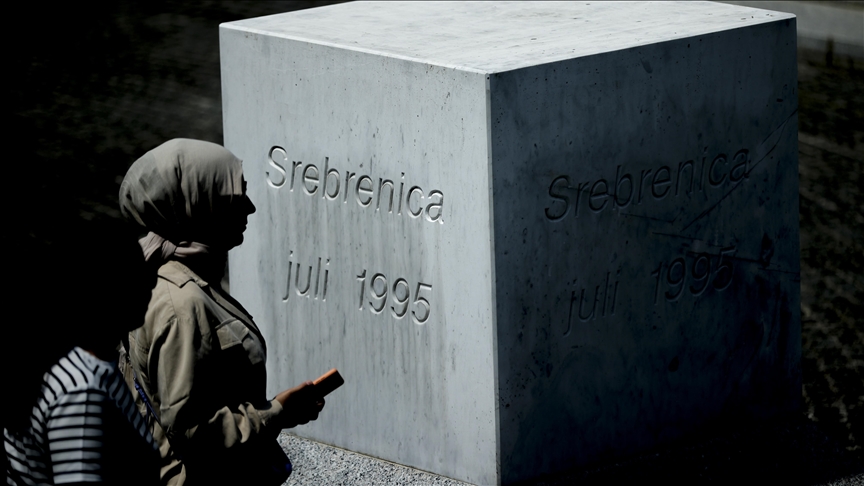
United Nations member states have voted to declare July 11 an annual day of remembrance for victims of the 1995 Srebrenica massacre, despite opposition from Serbia. The proposal, brought by Germany and Rwanda, aims to establish the “International Day of Reflection and Commemoration of the 1995 Genocide in Srebrenica.” While 84 member states voted in favor, there were 19 votes against and 68 abstentions.

Serbia’s President Aleksandar Vucic opposed the resolution, claiming it was politically motivated and could unfairly label Serbia and Serbs as collectively responsible for genocide. Vucic warned that this could lead to further resolutions on other genocides, potentially including those against Serbs during WWII by the Nazi-allied regime in Croatia.

The massacre, carried out by Bosnian-Serb forces under the command of Ratko Mladic, resulted in the systematic killing of over eight thousand Bosniak Muslim men and boys. The aftermath involved attempts to hide the scale of the massacre by exhuming and redistributing bodies, complicating identification efforts. The International Commission on Missing Persons used DNA technology to identify over seven thousand victims, praising the UN resolution for its acknowledgment and commemoration.

The resolution explicitly states that genocide convictions are against individuals, not entire ethnic or religious groups. In 2007, the International Court of Justice recognized the massacre as genocide but did not hold Serbia directly responsible, though it criticized Serbia for failing to prevent it. Serbia’s National Assembly condemned the massacre in 2010, and Vucic, as prime minister in 2015, visited Srebrenica to pay respects on the 20th anniversary.

Milorad Dodik, president of Bosnia’s Republika Srpska region, and other Serb nationalists deny that genocide occurred, sometimes glorifying Mladic. Dodik threatened secession if the resolution passed but claimed victory after the vote, citing the lack of an absolute majority as evidence of failure to label Serbs as a genocidal nation. His claims, however, serve more as political posturing than an accurate reflection of the resolution’s intent.

Picture Courtesy: Google/images are subject to copyright