featured News Trending

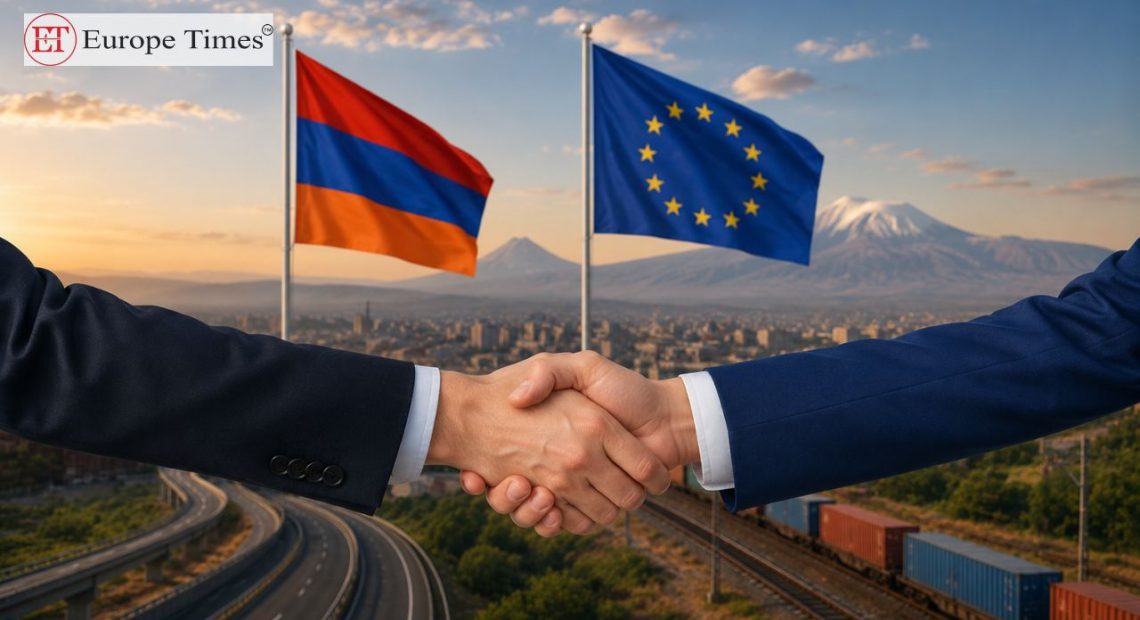
The European Union has announced an additional €18 million in economic assistance for Armenia and eased export rules for Armenian goods as part of efforts to strengthen ties with the South Caucasus nation. The support comes as Armenia faces increasing trade restrictions from Russia, which have affected key exports including fresh produce, flowers, fish, and alcoholic beverages. The latest funding forms part of a broader €52 million assistance package unveiled earlier this year.

During a visit to Yerevan, European Commission President Ursula von der Leyen assured Armenian Prime Minister Nikol Pashinyan that the EU would stand by Armenia despite external economic pressure. She said the bloc would remove tariffs on nearly 80% of Armenian exports, giving businesses easier access to the European Union’s market of around 450 million consumers. Von der Leyen emphasised that the EU would continue supporting partners facing economic challenges.

The announcement reflects Armenia’s growing efforts to strengthen relations with the European Union while maintaining its position in the Russian-led economic union. Russia remains Armenia’s largest trading partner, accounting for about 35% of its foreign trade, while the EU represents around 11%. The EU also reaffirmed its commitment to promoting peace and regional connectivity in the South Caucasus through investments in transport, energy, and digital infrastructure.

Pic courtesy: google/ images are subject to copyright

News Trending

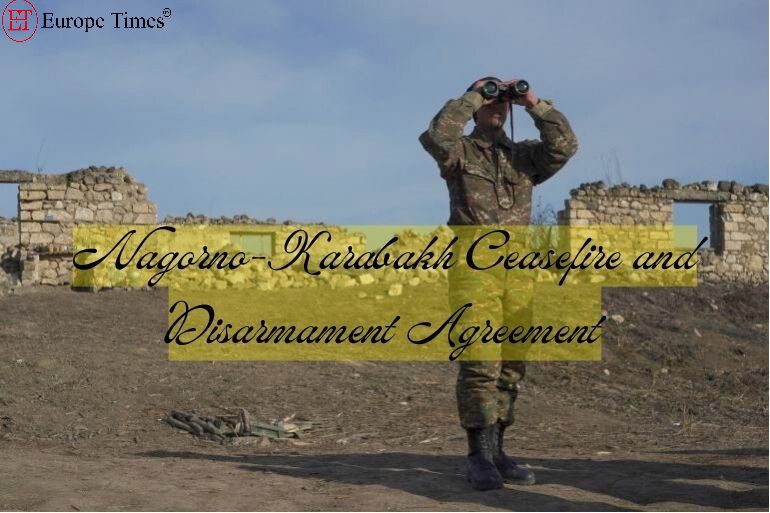
A day after Azerbaijan initiated an offensive in Nagorno-Karabakh, ethnic-Armenian forces have agreed to a ceasefire brokered by Russia. This agreement includes the significant concession of complete disarmament by Karabakh forces. Nagorno-Karabakh, home to around 120,000 ethnic Armenians, is internationally recognized as part of Azerbaijan.

Three years ago, Azerbaijan reclaimed areas in and around Karabakh and, on Tuesday, demanded an unconditional surrender. Karabakh authorities have reported at least 32 casualties, including seven civilians, and approximately 200 injuries since Azerbaijan launched what it termed “anti-terror” operations.

Azerbaijan’s leadership has announced plans to meet with Armenian representatives from Karabakh to discuss “re-integration” matters in the Azerbaijani town of Yevlakh, located about 100 kilometers (60 miles) north of Karabakh’s regional capital, known as Khankendi to Azerbaijanis and Stepanakert to Armenians.

Mediated by Russian peacekeepers, enclave leaders have confirmed a comprehensive cessation of hostilities beginning at 13:00 local time (09:00 GMT). However, despite the ceasefire, loud explosions persisted in the regional capital, and minor clashes were reported by both sides. Azerbaijan claimed to have captured over 90 positions from ethnic Armenians since the conflict began.

Karabakh officials urged residents to remain in shelters and avoid heading to the local airport, which adjoins a Russian peacekeeping base. Nonetheless, a group of civilians gathered near the airport.

Russia revealed that its peacekeepers had evacuated 2,000 people from Karabakh villages since the offensive commenced. Armenian Prime Minister Nikol Pashinyan emphasized that his government played no part in crafting the ceasefire text and insisted that Russian peacekeepers bore full responsibility for the safety of the local population. On Tuesday, he accused Azerbaijan of carrying out “ethnic cleansing” in Karabakh.

The terms of the truce require complete disarmament and disbandment of local Karabakh forces, along with a commitment for Armenian forces to withdraw, despite Yerevan’s denial of any military presence there.

Azerbaijan’s presidential envoy, Elchin Amirbekov, stated that Russian peacekeepers played a crucial role in facilitating the ceasefire’s implementation.

Picture Courtesy: Google/images are subject to copyright