featured News Trending

A magnitude 4.7 earthquake struck the Campi Flegrei volcanic area near Naples in southern Italy on Friday evening, causing power outages, disrupting rail and metro services, and damaging several buildings. According to Italy’s National Institute of Geophysics and Volcanology, the quake occurred at 7:46 p.m. local time with its epicentre in the Campi Flegrei area at a depth of around 3 kilometres. Residents in several neighbourhoods rushed outdoors as the tremors were felt across the region.

Italy’s fire service reported minor structural damage in and around Naples but said there were no immediate requests for rescue operations. As a precaution, local rail and metro services were temporarily suspended while authorities assessed the situation. Italian media described the quake as one of the strongest ever recorded in the Campi Flegrei area, which has experienced increasingly frequent seismic activity in recent years.

The Campi Flegrei volcanic caldera, which covers much of western Naples, has been under close monitoring due to heightened earthquake activity. Officials have warned that stronger tremors have revived memories of the seismic crisis in the early 1980s, when thousands of residents were forced to evacuate. Italy is no stranger to earthquakes, with the devastating 2016 central Italy quakes claiming around 300 lives and the 1980 Irpinia earthquake remaining one of the country’s deadliest disasters.

Pic courtesy: google/ images are subject to copyright

News Trending

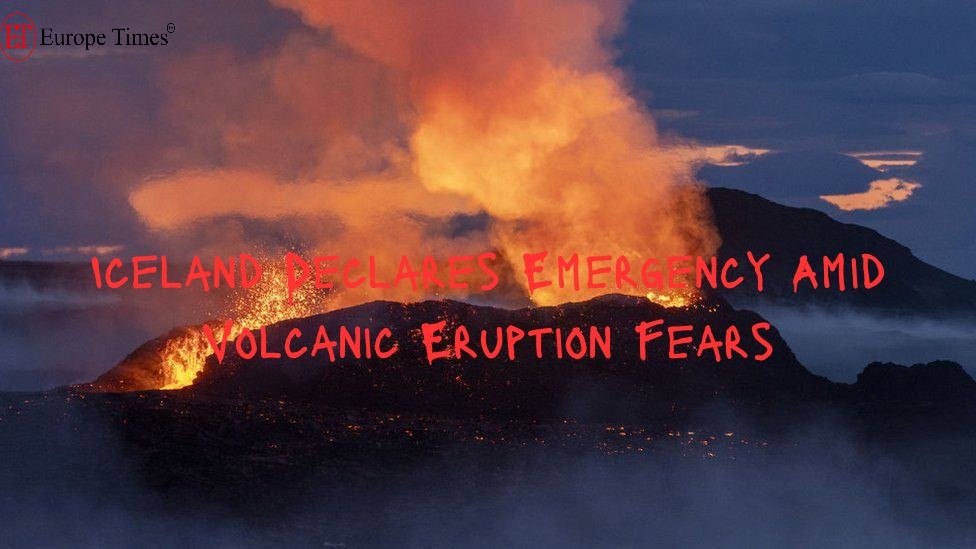
Iceland has declared a state of emergency following a series of earthquakes that have raised concerns about a potential volcanic eruption. In response, authorities have ordered the evacuation of the southwestern town of Grindavík as a precautionary measure. The Icelandic Met Office expressed worries about the underground spread of a significant amount of magma, or molten rock, which could potentially surface in the area. The seismic activity has been centered around the Fagradalsfjall volcano on Iceland’s Reykjanes Peninsula, which had been dormant for 800 years before experiencing eruptions in 2021. The increased seismic activity prompted the closure of the nearby Blue Lagoon landmark, and over 20,000 tremors have been recorded in southwest Iceland since late October.

The Icelandic Civil Protection Agency clarified that the evacuation is a preventive measure, not an immediate emergency, and urged residents to remain calm. The agency stated that there is no immediate imminent danger, emphasizing that the evacuation is primarily aimed at ensuring the safety of Grindavík residents. The decision to evacuate came after the Icelandic Met Office could not rule out the possibility of a magma tunnel forming and reaching Grindavík. All roads into the town, home to around 4,000 people, are closed except for emergencies.

The Icelandic Met Office highlighted significant changes in seismic activity, with tremors moving towards Grindavík over the course of the day. It noted that magma likely extends beneath the town, and the exact location and timing of its emergence are uncertain. Iceland is known for its high geological activity, boasting around 30 active volcanic sites. Recent eruptions in the Fagradalsfjall area drew tourists to witness the formation of the “world’s newest baby volcano,” which had been dormant for eight centuries until the eruptions in 2021, 2022, and now 2023.

Picture Courtesy: Google/images are subject to copyright