News Trending

Vladimir Putin, the Russian President, has accused the leaders of the recent Wagner mutiny of seeking to create chaos and conflict within Russia. In a strongly-worded speech, Putin vowed to bring the organizers of the revolt to justice. However, he distinguished the regular Wagner troops as “patriots” and provided them with options to join the army, go to Belarus, or return home. Putin did not specifically mention Yevgeny Prigozhin, the head of Wagner, who had previously denied any involvement in attempting to overthrow Putin’s regime.

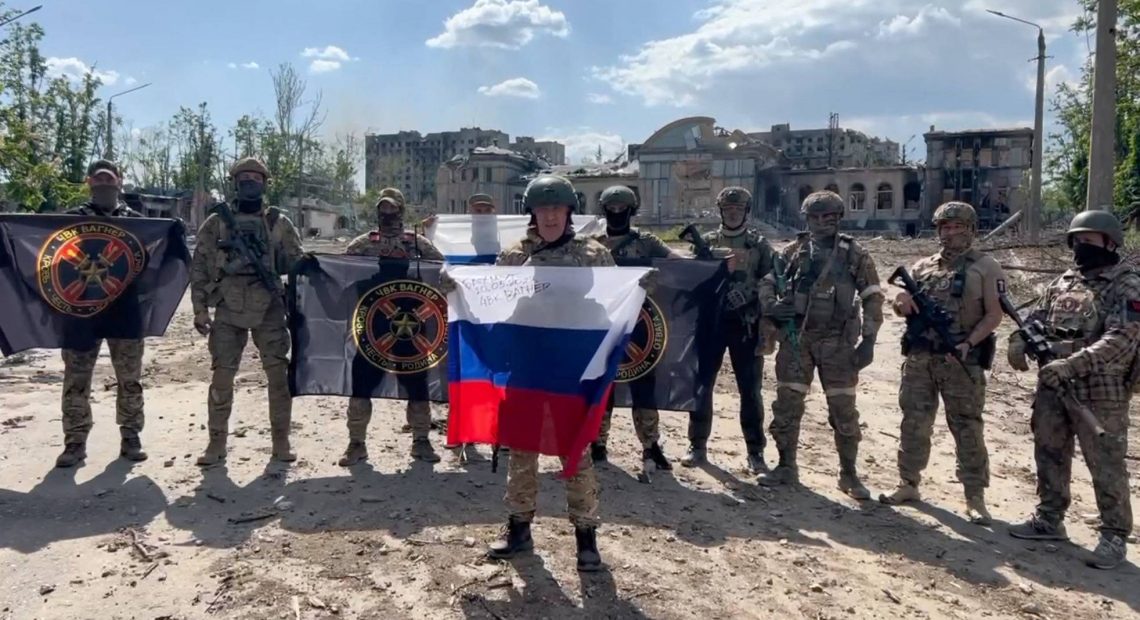
Wagner is a private army of mercenaries that has been fighting alongside the Russian military in Ukraine. The mutiny, which was short-lived, involved Wagner fighters seizing a major Russian city and advancing towards Moscow in a convoy of military vehicles. Prigozhin claimed that the revolt was in response to government plans to take direct control of Wagner, citing concerns over mistakes made by defense officials during the war with Ukraine. He insisted that Wagner had always acted in Russia’s interests.

Prigozhin’s comments were his first public statements since reaching a deal to end the mutiny, reportedly involving him going to Belarus with dropped criminal charges. However, Russian state media reported that he remains under investigation. Putin emphasized in his address to the Russian people that the organizers of the march on Moscow would face justice and criticized Prigozhin for betraying Russia. He used the speech to assert his authority and counter the perception of a weak response to the mutiny.

Putin accused the West of wanting Russians to turn against each other, although US President Joe Biden denied any involvement by the US or its allies in the rebellion. Putin claimed that his handling of the crisis prevented a catastrophe, but many Russians witnessed events differently and may not be convinced by his statements. He reiterated his promise to allow Wagner troops who did not engage in violence against fellow Russians to leave for Belarus or sign contracts with the Ministry of Defense or other military and law enforcement structures. Putin credited the unity of Russian society and thanked Belarusian leader Alexander Lukashenko for his role in peacefully resolving the situation.

The contrast between Putin’s portrayal of a united country and the scenes in Rostov, where locals welcomed and embraced the Wagner fighters, led Putin to suggest that the mercenaries had been deceived and used. The rebellion occurred after months of tensions between Wagner and Russia’s military leadership. The situation escalated when Wagner mercenaries crossed the Ukrainian border and took control of the regional military command in Rostov-on-Don, while a column of military vehicles headed towards Moscow. Prigozhin claimed that the “march of justice” exposed serious security problems across the country and mentioned Lukashenko’s involvement in brokering an agreement to end the mutiny. He expressed regret for the deaths of Russian troops during the conflict but justified their actions as self-defense.

Picture Courtesy: Google/images are subject to copyright

News Trending War

Russian Private Military Contractor, Wagner Group’s Leader Yevgeny Prigozhin Claims Control of Military Sites in Rostov-on-Don, Defying President Putin’s Accusations of Betrayal

Yevgeny Prigozhin, the head of the Russian private military contractor Wagner Group, has asserted that his mercenaries have taken over “all military facilities” in the southern city of Rostov-on-Don. Reports suggest that they have also been deployed in Voronezh, located further north, following Prigozhin’s threat to march on Moscow and remove Defense Minister Sergei Shoigu from power.

President Vladimir Putin has condemned these actions, referring to them as a “stab in the back” and vowing to punish those who have “betrayed” Russia. Security measures have been tightened in numerous regions, including Moscow.

The Wagner Group, known for its involvement alongside the regular Russian army in the conflict in Ukraine, has been experiencing increasing tensions with the military leadership over their differing approaches to the war. Prigozhin has been openly criticizing Russia’s military command in recent months.

The situation escalated dramatically after Prigozhin accused the Russian military of targeting his group’s base in Ukraine, a claim that Moscow denies.

Prigozhin insists that this is not a military coup, but rather an attempt to overthrow Russia’s military leadership. However, President Putin, in his address, described the situation as an act of “treason.”

While Prigozhin was not mentioned by name, President Putin warned that those who engaged in betrayal, armed rebellion, blackmail, or terrorist methods would face severe consequences under the law and before the Russian people.

In response, Prigozhin, for the first time directly criticizing the Russian leader, stated that his troops were “patriots of our motherland” and argued that President Putin was “profoundly mistaken” to accuse them of betrayal.

In a video shared on his Telegram channel, Prigozhin claimed that his fighters had entered Rostov-on-Don after crossing the border from Ukraine, asserting that his forces would eliminate anyone obstructing their path. However, the location and veracity of his claim regarding shooting down a Russian military helicopter that allegedly fired upon a civilian convoy remain unverified.

President Putin acknowledged the challenging situation in Rostov-on-Don, where Wagner forces reportedly control military installations. The city of Voronezh, en route to Moscow, is also said to be under their control, prompting the governor to initiate a “counter-terrorism operation.”

Previously, Prigozhin and President Putin had a close relationship. However, this latest challenge, combined with the complications arising from the Russian invasion of Ukraine, has presented a headache for the Russian leader. Consequently, Putin has taken a firm stance, declaring “enough is enough.”

Picture Courtesy: Google/images are subject to copyright

News Trending

Austrian police have prevented an attack on Vienna’s annual Pride parade by apprehending three suspects believed to have ties to Islamic extremism. The individuals, aged 14, 17, and 20, are Austrian citizens of Bosnian and Chechen descent. According to Omar Haijawi-Pirchner from Austria’s State Protection and Intelligence Directorate (DSN), the suspects had become radicalized online and held sympathies for ISIS.

Haijawi-Pirchner emphasized that hate and terrorism have no place in a democratic society. Gerhard Pürstl, the state police president, highlighted that both Islamic and right-wing extremists pose a significant threat to the LGBTQ community. He referenced previous violent incidents during similar events worldwide and in Europe.

The DSN had prior knowledge of the suspects’ alleged plans and closely monitored them. The arrests were made before the parade by Austria’s Cobra special forces. The Interior Ministry’s statement assured the public that attendees were never in danger. Authorities conducted searches in Vienna and lower Austria, resulting in the confiscation of prohibited weapons.

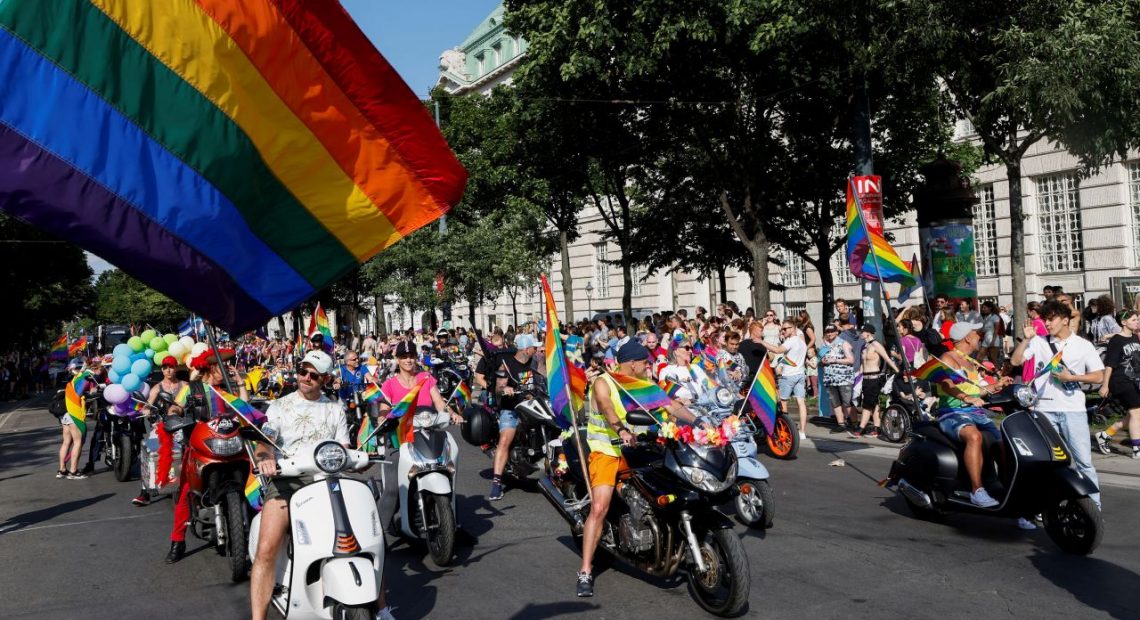
The Rainbow Parade is a prominent part of Vienna Pride, Austria’s largest LGBTQ event, held annually from June 1 to 18. This year, the parade drew approximately 300,000 participants.

Picture Courtesy: Google/images are subject to copyright