News Trending War

Ukrainian President Volodymyr Zelensky has announced that a suspected Russian agent involved in the deadly attack in Kramatorsk will be charged with treason. Zelensky emphasized that those assisting Russia in causing harm deserve the harshest punishment. The missile strike on a popular restaurant claimed the lives of twelve individuals, including three teenagers. The Ukrainian authorities claim that the suspect, a resident of Kramatorsk, had sent video footage of the restaurant to the Russian military prior to its destruction. The city of Kramatorsk is under Ukrainian control but is situated near Russian-occupied areas. Rescue efforts are still underway, and the security services have released a photo of the arrested suspect, who could face life imprisonment.

The targeted restaurant, called the Ria lounge, was a frequented venue for international journalists, volunteers, and Ukrainian soldiers taking breaks from the nearby front lines. Several people, including Colombian nationals and a prominent Ukrainian writer, were injured in the attack. One witness described the aftermath of the explosion, mentioning the surreal sight of particles moving in slow motion. A leading Ukrainian writer is in critical condition following the incident.

Colombian President Gustavo Petro denounced the attack on Colombian citizens and instructed the foreign ministry to issue a diplomatic protest. The Colombian peace negotiator who was present during the attack sustained minor injuries. Ukrainian officials have been urging their allies to provide modern fighter jets to enhance their defense capabilities against Russian strikes. The United States recently announced its support for Ukraine by allowing Western allies to supply American-made F16s and training Ukrainian pilots to operate the jets. The Russian government has claimed that its strikes target military installations and alleged the destruction of a temporary deployment of Ukrainian commanders in Kramatorsk without providing further details.

Picture Courtesy: Google/images are subject to copyright

News Trending War

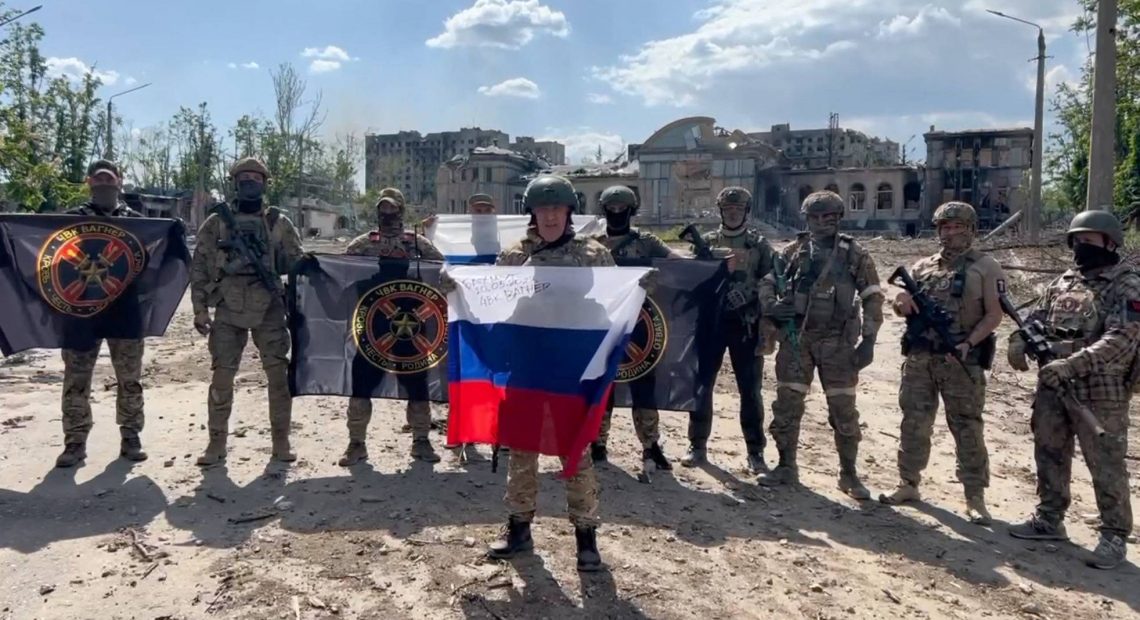
The leader of Russia’s 24-hour mutiny, Yevgeny Prigozhin, has arrived in Belarus after his Wagner mercenary group’s mutiny ended south of Moscow. Alexander Lukashenko, the leader of Belarus, claimed credit for arranging Prigozhin’s exile and stated that the Wagner mercenaries were offered an abandoned military base in Belarus if they wanted to join their leader.

As part of the agreement that ended the mutiny, Prigozhin has been promised security, and the Russian criminal case against Wagner has been dropped. The presence of Wagner in Belarus has raised concerns among neighboring NATO members, Poland, Latvia, and Lithuania, who fear possible sabotage and infiltration operations. NATO has expressed readiness to defend against any threat from Moscow or Minsk and plans to strengthen its defenses in countries bordering Belarus.

Russia has recently deployed tactical nuclear weapons in Belarus, stating that they would only be used if Russian territory was threatened. There are mixed reactions among the Belarusian public, with some expressing concern about having someone like Prigozhin in their country. The mutiny has revealed weaknesses in the Kremlin’s control of security in Russia, but President Putin praised Russian security forces for stopping a potential civil war.

Putin also acknowledged that the state fully funded Prigozhin’s private army, which included expenditures on salaries, bonuses, and catering services. The events surrounding the mutiny remain somewhat unclear, with reports of downed military helicopters and conflicting claims about casualties. Lukashenko revealed a version of events in which he acted as an intermediary between Putin and Prigozhin, suggesting that he could play a role in managing the mercenary forces in Africa.

Observers speculate that the crisis has weakened both Putin and Lukashenko, potentially leading to more repression in Belarus in the short term and uncertainty about Russia’s reliability as a pillar of support for Lukashenko in the long term.

Picture Courtesy: Google/images are subject to copyright

News Trending War

Russian Private Military Contractor, Wagner Group’s Leader Yevgeny Prigozhin Claims Control of Military Sites in Rostov-on-Don, Defying President Putin’s Accusations of Betrayal

Yevgeny Prigozhin, the head of the Russian private military contractor Wagner Group, has asserted that his mercenaries have taken over “all military facilities” in the southern city of Rostov-on-Don. Reports suggest that they have also been deployed in Voronezh, located further north, following Prigozhin’s threat to march on Moscow and remove Defense Minister Sergei Shoigu from power.

President Vladimir Putin has condemned these actions, referring to them as a “stab in the back” and vowing to punish those who have “betrayed” Russia. Security measures have been tightened in numerous regions, including Moscow.

The Wagner Group, known for its involvement alongside the regular Russian army in the conflict in Ukraine, has been experiencing increasing tensions with the military leadership over their differing approaches to the war. Prigozhin has been openly criticizing Russia’s military command in recent months.

The situation escalated dramatically after Prigozhin accused the Russian military of targeting his group’s base in Ukraine, a claim that Moscow denies.

Prigozhin insists that this is not a military coup, but rather an attempt to overthrow Russia’s military leadership. However, President Putin, in his address, described the situation as an act of “treason.”

While Prigozhin was not mentioned by name, President Putin warned that those who engaged in betrayal, armed rebellion, blackmail, or terrorist methods would face severe consequences under the law and before the Russian people.

In response, Prigozhin, for the first time directly criticizing the Russian leader, stated that his troops were “patriots of our motherland” and argued that President Putin was “profoundly mistaken” to accuse them of betrayal.

In a video shared on his Telegram channel, Prigozhin claimed that his fighters had entered Rostov-on-Don after crossing the border from Ukraine, asserting that his forces would eliminate anyone obstructing their path. However, the location and veracity of his claim regarding shooting down a Russian military helicopter that allegedly fired upon a civilian convoy remain unverified.

President Putin acknowledged the challenging situation in Rostov-on-Don, where Wagner forces reportedly control military installations. The city of Voronezh, en route to Moscow, is also said to be under their control, prompting the governor to initiate a “counter-terrorism operation.”

Previously, Prigozhin and President Putin had a close relationship. However, this latest challenge, combined with the complications arising from the Russian invasion of Ukraine, has presented a headache for the Russian leader. Consequently, Putin has taken a firm stance, declaring “enough is enough.”

Picture Courtesy: Google/images are subject to copyright

News Trending War

According to Russian officials, Ukraine has launched an attack on a bridge that connects southern Ukraine to the Crimean peninsula using long-range British missiles. The two Chonhar bridges were both damaged, but there were no casualties reported. The governor of occupied Kherson, Vladimir Saldo, claimed that the attack was likely ordered by London and carried out using British Storm Shadow missiles. The bridge is a crucial route from Crimea to the front line in the south and serves as a significant link to the occupied city of Melitopol. Photographs shared by Vladimir Saldo revealed a significant hole in one of the bridges, but he assured that repairs would be made promptly and temporary alternative routes would be provided for vehicles.

Russia relies on this road as a land connection to Crimea, and Melitopol is believed to be one of the targets of Ukraine’s counter-offensive, which commenced in the southern region of Zaporizhzhia earlier this month. In 2014, Russian forces seized the Crimean peninsula from Ukraine and subsequently invaded Ukraine’s southern coastal region in February of the following year. Last autumn, Ukraine recaptured the Kherson region situated north of the Dnipro river. However, this month, the Kakhovka dam on the river was destroyed in a suspected Russian sabotage attack, which has impeded a Ukrainian offensive across the Dnipro.

Ukraine’s offensive has been progressing slowly, with the recapture of eight villages thus far. Russian forces have continued targeting Ukrainian cities, including residential areas in President Volodymyr Zelensky’s hometown of Kryvyih Rih and the southern port of Odesa. President Zelensky informed the Ukrainian people that intelligence services had received information about Russia planning a “scenario of a terrorist attack” on the Zaporizhzhia nuclear plant, which was seized during last year’s full-scale invasion. The plant, the largest in Europe, has all its reactors shut down; however, the United Nations’ atomic energy agency warned about the “extremely fragile” safety and security situation there. Water levels in the channel used to cool the reactors have decreased due to the destruction of the Kakhovka dam, and tensions have risen around the plant amid reports of Ukraine’s counter-offensive. The Kremlin swiftly dismissed President Zelensky’s comments as “another lie.”

Picture Courtesy: Google/image are subject to copyright

News Trending War

Vladimir Putin has announced that an initial batch of tactical nuclear weapons has been deployed in Belarus, emphasizing that they would only be utilized if Russia’s territory or sovereignty faced threats. The US government has stated that there are no indications suggesting Russia’s intention to employ nuclear weapons against Ukraine.

Belarus, a crucial ally of Russia, served as a launchpad for Putin’s full-scale invasion of Ukraine in February the previous year. Putin confirmed that the transfer of tactical nuclear warheads would be completed by the end of the summer, highlighting that it was a measure of “containment” to deter those considering a strategic defeat against Russia. These tactical nuclear weapons are designed for limited strikes and battlefield use, targeting specific areas without causing extensive radioactive fallout.

Putin is set to meet with African leaders in St. Petersburg following their visit to Kyiv as part of a peace initiative. However, while they were in the city, it came under Russian missile attack. President Cyril Ramaphosa of South Africa called for de-escalation and peaceful negotiations.

Ukrainian President Volodymyr Zelensky expressed the need to diplomatically isolate Russia and condemned its invasion. Putin reiterated his belief that Ukraine’s counter-offensive would not succeed and suggested that the country was running out of military equipment. Meanwhile, Ukraine’s Deputy Defence Minister reported advances in recapturing territory in the south of the country.

Putin also addressed economic matters, claiming that Western sanctions failed to isolate Russia and instead facilitated expansion in trade with “the markets of the future.” He praised new partnerships with Asian, Middle Eastern, and Latin American countries as reliable and responsible.

Picture Courtesy: Google/images are subject to copyright

News Trending War

Major-General Sergei Goryachev, chief of staff of Russia’s 35th Army, was killed in a missile attack in the Zaporizhia area, according to reports.

According to a Russian-backed figure in Ukraine, a top Russian officer was killed in a Ukrainian missile strike during Kyiv’s counteroffensive against Russian soldiers.

On Tuesday, Vladimir Rogov, a Russian-installed official in a part of the southern Zaporizhia region under Moscow’s control, said that Russian Major-General Sergei Goryachev, Chief of Staff of Russia’s 35th Army, was killed a day earlier on the Zaporizhia front, where Ukrainian forces have been retaking some territory.

The Russian Defence Ministry had no immediate confirmation of Goryachev’s death.

Goryachev, 52, was a renowned soldier. According to Reuters, he served in the Second Chechen War, commanded a tank brigade, controlled a Russian military facility in Tajikistan, and led Russian soldiers in Moldova’s breakaway pro-Russian province of Transdniestria.

If true, Goryachev’s killing represents the first Russian senior commander killed in Ukraine in almost a year. “Voenkor Z,” a Russian combat journalist and military blogger, broke the news of his death first.

“The army has lost one of its brightest and most effective military commanders, who combined the highest professionalism with personal courage,” Rogov said on his official Telegram channel. “Our heartfelt condolences to the deceased’s family and friends!”

On Tuesday, Russian President Vladimir Putin met with 18 famous Russian military bloggers and war journalists in an effort to boost his narrative about the conflict’s favourable development in Ukraine.

The meeting, in which Putin stated that Ukraine had suffered “catastrophic” losses in its counteroffensive, comes amid “widespread discontent in the Russian information space” following drone attacks on Russian territory and border incursions by pro-Ukrainian but Russian armed groups, according to a leading war monitor on Wednesday.

The Washington, DC-based Institute for the Study of War (ISW) noted in a daily briefing paper on the Ukraine war that Russian “milbloggers” who have been more critical of Putin’s war operations were not invited to the conversation.

“Putin is likely setting information conditions to prevent potential lines of attack against the Kremlin in the event of Russian failure” in Ukraine, the ISW said, adding that the Russian president may be aware “that committed pro-war figures” and the influence of military blogging are “his key constituency as he calls on the Russian public to prepare for a protracted war in Ukraine”.

“Putin’s engagement with these milbloggers may suggest that the Kremlin will increasingly rely on the wider ultranationalist community to maintain support for the war effort,” the ISW said.

According to the ISW, Russian claims of Major-General Goryachev’s death in the Zaporizhia area show that “some Russian senior military commander officials continue to operate close to the front line and remain vulnerable to accurate Ukrainian strikes.”

Picture Courtesy: Google/images are subject to copyright

News Trending War

At least six people were killed and more than 30 were injured in a Russian missile strike on the city of Kryvyi Rih in central Ukraine.

According to Serhiy Lisak, governor of the Dnipropetrovsk region, where Kryvyi Rih is located, a multistory residential building was among the civilian infrastructure targeted in the early morning attack on Tuesday.

“A five-story building was demolished. Three of its occupants perished, according to preliminary accounts. “25 people were injured,” Lisak claimed early Tuesday morning on the Telegram chat service. “A massive missile attack on Kryvyi Rih,” he announced.

Oleksandr Vilkul, the city’s mayor, subsequently upped the death toll to six, despite previously warning that people were likely buried beneath the wreckage of buildings damaged in the attack.

“Unfortunately, six people have already died. “The rescue operation is still ongoing,” Vilkul wrote on the Telegram chat service.

Ukraine’s senior military command claimed air forces destroyed ten of the fourteen cruise missiles fired by Russia on Ukraine on Tuesday, as well as one of four Iranian-made drones.

It was unclear how many missiles targeted Kryvyi Rih or where the drones hit their objectives.

A drone struck civilian infrastructure in Kharkiv, according to Mayor Ihor Terekhov.

“According to preliminary reports, a utility company in the Kyivskyi district and a warehouse in the Saltivskyi district were both damaged.” “As a result of the explosion on the latter, a fire broke out,” he explained.

The current round of airstrikes comes as Ukraine claims to have retaken numerous villages and made significant progress in its counteroffensive against Russian soldiers.

Picture Courtesy: Google/images are subject to copyright

News Trending War

The leader of Radio New Zealand has apologised for airing “pro-Kremlin garbage.”

A journalist has been placed on leave after it was revealed that many web pieces regarding the Ukrainian war had been changed to benefit Russia.

Since personnel were notified on Friday, roughly 250 stories have been forensically investigated, according to CEO Paul Thompson.

Sixteen articles have been edited, with hundreds more to be reviewed.

“It’s quite frustrating. I’m devastated. It’s excruciating. “It’s shocking,” he said on RNZ’s Nine to Noon. “We need to figure out how this happened.”

Mr Thompson indicated that the organization’s editing practises will be subjected to an external examination.

The journalist in issue claims to have spent years editing news agency text for the RNZ website.

According to a statement by the state-owned RNZ, the 16 pieces had been reprinted with corrections and editor’s comments when flaws were discovered.

Mr Thompson apologised to the audience, readers, workers, and the Ukrainian community.

“It’s very disappointing that this pro-Kremlin garbage has ended up in our stories,” Mr Thompson said on Nine to Noon. “It’s inexcusable.”

The edited articles claimed that Russia unlawfully acquired Crimea following a vote, while Ukraine and the international community do not acknowledge Russia’s possession of Ukraine’s southern peninsula.

The United Nations has endorsed a resolution highlighting the referendum’s illegitimacy.

Picture Courtesy: Google/images are subject to copyright

News Trending War

Ukraine’s President Volodymyr Zelensky has indicated that the country’s long-awaited counter-offensive against Russia has begun. He acknowledged the occurrence of counter-offensive and defensive actions but refrained from providing specific details about the stage or state of the operation. Recent escalation of fighting in Ukraine’s south and east, along with speculation about the anticipated push, has contributed to the uncertainty surrounding the situation.

Reports suggest that Ukrainian troops have made advancements in the east near Bakhmut and in the south near Zaporizhzhia. They have also conducted long-range strikes on Russian targets. However, assessing the actual developments on the front lines is challenging as both sides present contrasting narratives. While Ukraine claims progress, Russia asserts that it is repelling attacks.

In Russia’s Kaluga region, which borders the southern districts around Moscow, the governor, Vladislav Shapsha, reported a drone crash near the village of Strelkovk. The accuracy of this report has not been independently verified by the BBC.

Russian President Vladimir Putin stated in a video interview that Ukrainian forces have indeed initiated their offensive, but their attempts to advance have been unsuccessful and resulted in heavy casualties.

Following discussions with Canadian Prime Minister Justin Trudeau in Kyiv, President Zelensky described Putin’s remarks as “interesting.” He shrugged his shoulders, raised his eyebrows, and pretended not to know who Putin was, emphasizing the importance of conveying to Russia that their time is running out. Zelensky also mentioned that Ukraine’s military commanders are in a positive mood and urged Trudeau to relay this message to Putin. During Trudeau’s visit, Canada announced a new military aid package of 500 million Canadian dollars (£297m) for Ukraine.

A joint statement issued after the talks affirmed Canada’s support for Ukraine’s NATO membership aspirations, stating that it should be pursued as soon as conditions permit. The matter is expected to be discussed at the NATO Summit in Vilnius, Lithuania, in July.

Fighting has intensified in the strategic southern Zaporizhzhia region, with Ukrainian forces aiming to push south and divide Russian forces, thus disrupting the occupied territory that links Russia to Crimea. However, Ukraine’s progress in the region may be impeded by significant flooding caused by the destruction of the Nova Khakovka dam. The flooding has affected approximately 230 square miles (596 sq km) on both sides of the Dnipro River.

President Zelensky reported that 3,000 individuals have been evacuated from the flooded Kherson and Mykolaiv regions. While water levels have receded by 27cm, over 30 settlements on the right bank of the river, within Ukrainian-held territory, remain flooded, with nearly 4,000 residential buildings still submerged.

NATO and Ukraine’s military have accused Russia of detonating the dam, while Russia has placed the blame on Ukraine. However, it is highly likely that Russian forces, who controlled the dam, deliberately destroyed it to impede Ukrainian forces from crossing the river as part of their ongoing counter-offensive, according to the BBC’s Paul Adams.

Picture Courtesy: Google/images are subject to copyright

News Trending War

According to Russian officials and military bloggers, Ukraine’s military has launched attacks on occupying Russian forces in the strategically important southern Zaporizhzhia region.

Ukrainian troops, supported by tanks, artillery, and drones, are reportedly attempting to advance south of the town of Orikhiv for the second consecutive night. The counter-offensive is believed to be focused on regaining access to the Sea of Azov, which would weaken Russia’s combat capability and eliminate a land bridge to Crimea, which was annexed by Russia in 2014.

Ukraine has been planning this counter-offensive for months and has been training troops while seeking advanced military equipment from Western allies.

The government has not revealed many details about its plans, but Ukrainian forces are reportedly testing Russian positions along the front line to identify weaknesses.

Picture Courtesy: Google/images are subject to copyright