featured News Trending

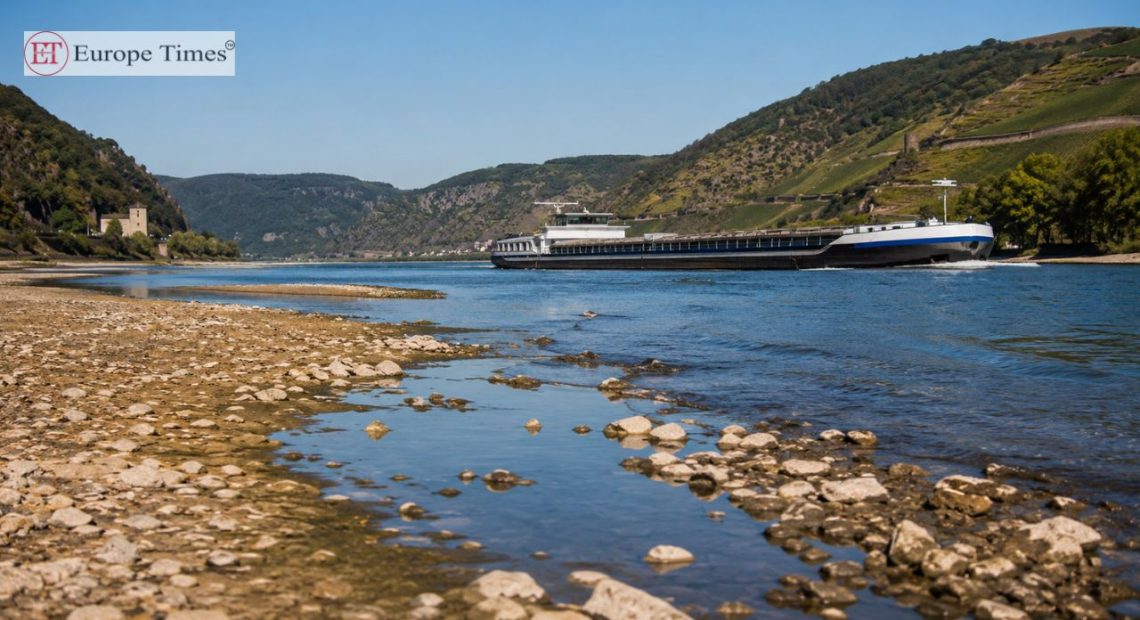
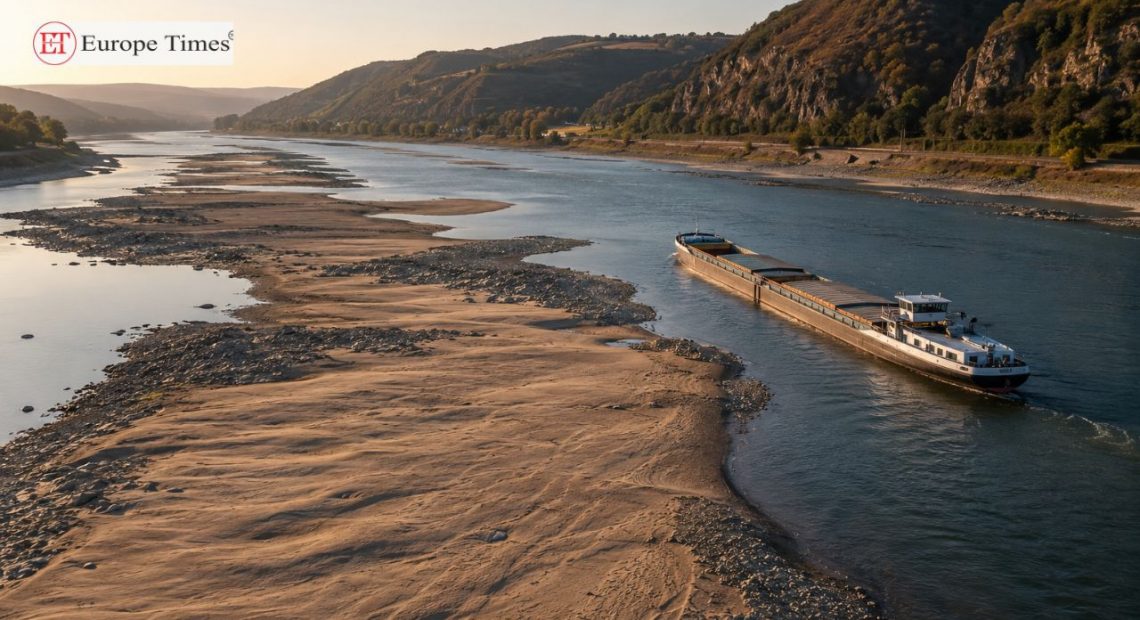
The River Rhine has fallen to record low levels in parts of Germany and the Netherlands as prolonged heatwaves and drought continue to grip Europe. Other major rivers, including the Danube and Italy’s Po, have also recorded historically low water levels, raising concerns over transportation, agriculture, and industrial operations across the continent.

The Rhine, one of Europe’s busiest commercial waterways, is facing severe navigation challenges as low water levels restrict cargo shipping. Authorities have warned that lighter vessel loads, higher transport costs, and potential supply chain disruptions could impact businesses, while the Danube’s shrinking water levels have also affected power generation in countries such as Serbia, Romania, and Hungary.

Experts say persistent high temperatures driven by climate change are increasing evaporation and making droughts more severe. The worsening conditions are threatening freshwater supplies, farming, ecosystems, and energy production, highlighting the growing economic and environmental impact of extreme weather across Europe.

Pic courtesy: google/ images are subject to copyright

News Trending

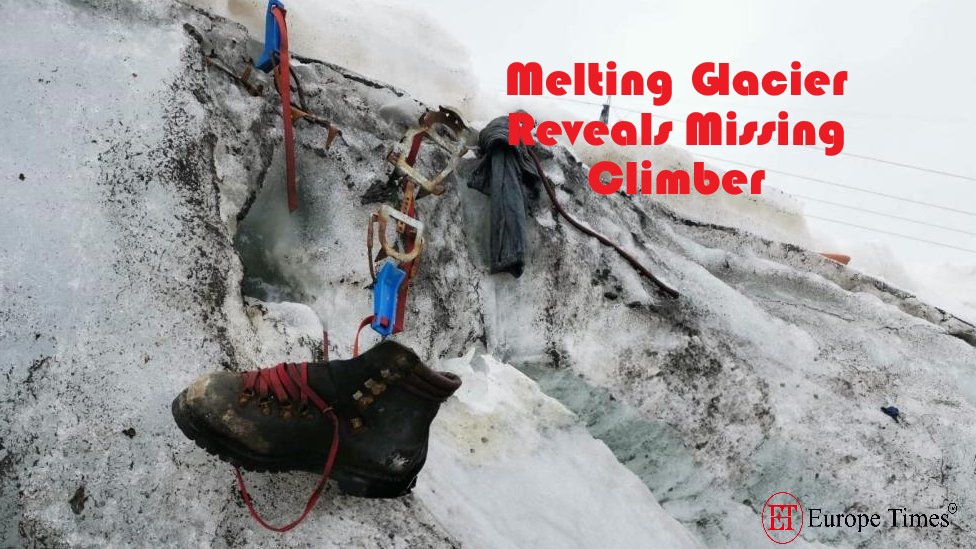
Human remains discovered on a glacier near the Matterhorn in Switzerland have been identified as the body of a German climber who had been missing since 1986. The finding is one of several long-held secrets revealed by the melting Alpine glaciers, which are shrinking rapidly due to climate change.

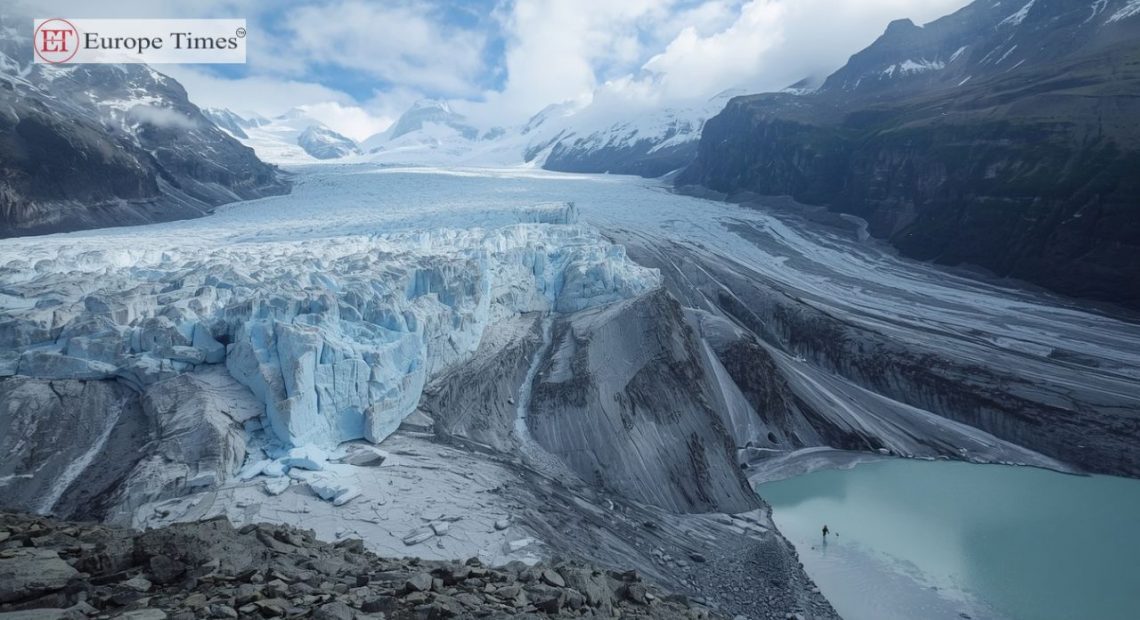
The Theodul glacier, where the body was found, has experienced a significant retreat in recent years. This glacier is part of Zermatt’s renowned year-round ski region, the highest in Europe. However, global warming has caused the alpine ice fields to be particularly vulnerable. As a result, various objects and remains, lost for decades, have emerged from the melting ice in recent years.

Such discoveries have included a crashed plane from 1968 and the remains of missing climbers from past decades. Furthermore, the melting ice has even led to changes in international borders between Switzerland and Italy, with the shifting position of the drainage divide.

The consequences of the glacier melt extend beyond the discovery of historical artifacts and climbers; these glaciers are vital to Europe’s environment, providing essential water sources for rivers like the Rhine and Danube, and helping maintain aquatic ecosystems. Unfortunately, the rapid rate of ice retreat observed by experts indicates that most Alpine glaciers could vanish by the end of the century. As global temperatures continue to rise, the fear of further ice loss and its far-reaching impacts on the environment persists.

Picture Courtesy: Google/images are subject to copyright