News Trending

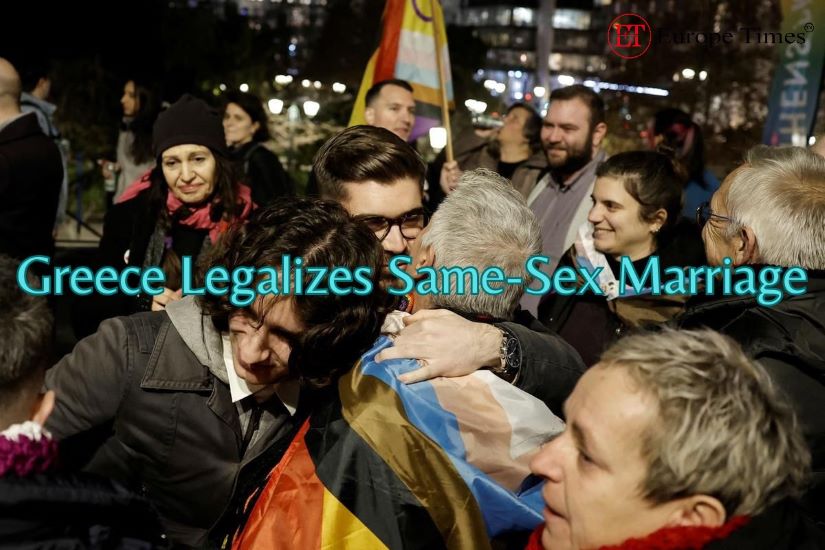
Greece has recently made headlines by becoming the first Christian Orthodox-majority nation to legalize same-sex marriage and allow same-sex couples to adopt children. The decision, which followed a parliamentary vote of 176-76, marks a significant milestone in the nation’s history.

However, the move has not been without controversy, as it has sparked division within the country, particularly with opposition led by the Orthodox Church. The Church views the measure as a threat to social cohesion and has been vocal in its resistance against the legalization of same-sex marriage.

Despite the opposition, Prime Minister Kyriakos Mitsotakis championed the bill, emphasizing its importance in abolishing inequality. Mitsotakis secured the necessary support from opposition parties to pass the bill, highlighting the collaborative effort required to enact this historic legislation.

The decision to legalize same-sex marriage and allow same-sex couples to adopt children has been celebrated by LGBTQ organizations in Greece as a significant step towards equality and inclusivity. It represents a turning point in the nation’s stance on LGBTQ rights, bringing Greece closer to its European counterparts that have already embraced marriage equality.

Picture Courtesy: Google/images are subject to copyright

News Trending

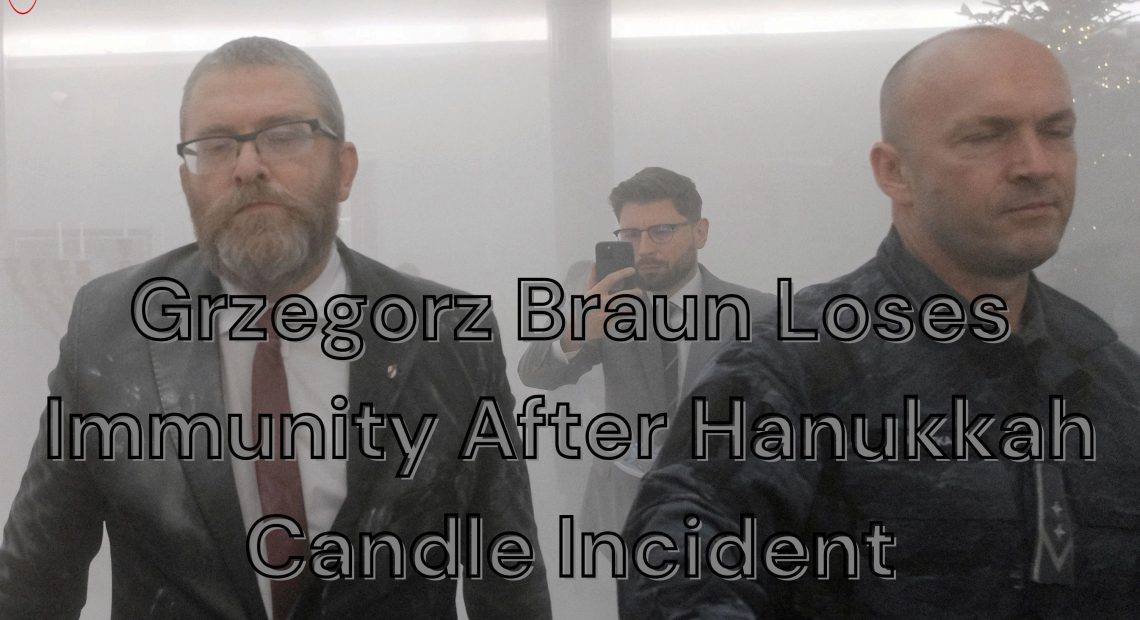
Members of Parliament in Poland have voted to remove the parliamentary immunity of far-right politician Grzegorz Braun after he extinguished candles lit for the Jewish festival of Hanukkah in a highly controversial act. The global condemnation of Braun’s actions resulted in a fine in December, but the recent decision to revoke his parliamentary immunity now exposes him to potential criminal charges. Braun, affiliated with the ultra-nationalist Confederation party, used a fire extinguisher to put out the Hanukkah candles and referred to the celebration as “satanic.”

Prosecutors are planning to bring several charges against Braun, including destruction of property, insulting an object of religious worship, and violation of bodily integrity. The unanimous support for revoking his immunity came from all political parties, except the Confederation party, highlighting the widespread agreement that Braun’s behavior was unacceptable. Lawmakers emphasized the need to hold him accountable for his actions.

Grzegorz Braun has a history of provocative stunts, further contributing to his controversial reputation. In addition to the Hanukkah incident, he gained notoriety for dumping a Christmas tree decorated in the colors of the EU and Ukraine into a bin and damaging a microphone during a talk by a Holocaust historian. Prosecutors also intend to charge him for separate incidents that occurred in 2022 and 2023.

The removal of Braun’s parliamentary immunity signifies a significant step in potential legal consequences for his actions, with prosecutors aiming to address various charges related to his behavior. The broader context of his controversial actions and statements adds to the ongoing debate about the boundaries of free speech and the consequences for those who engage in offensive or harmful behavior.

Picture Courtesy: Google/images are subject to copyright

News Trending

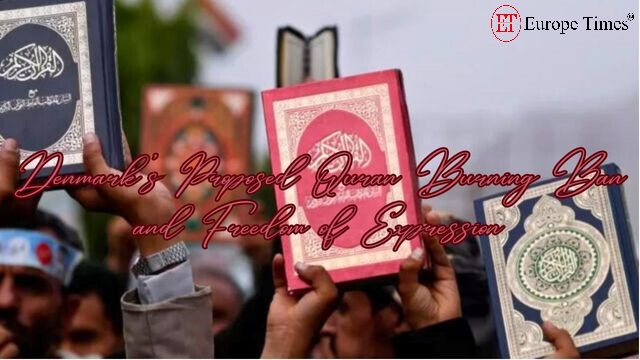
In response to a series of Quran burnings that sparked outrage in Muslim countries, the Danish government has introduced a proposal to prohibit the public burning of religious texts, including the Quran. Justice Minister Peter Hummelgaard emphasized that such acts not only harmed Denmark’s reputation but also posed a risk to its citizens’ safety. The new legislation aims to classify improper treatment of the Quran or Bible as a criminal offense, carrying penalties of fines and potential imprisonment for up to two years.

The Danish government, which holds a center-right stance, aims to convey a message to the international community through this move. Foreign Minister Lars Lokke Rasmussen highlighted that recent weeks have witnessed around 170 demonstrations, some involving the burning of Quran copies near foreign embassies. Denmark’s intelligence agency, PET, has cautioned that these incidents have escalated the terrorist threat.

Denmark’s neighboring country, Sweden, has also experienced similar Quran burnings, leading to concerns about worsening security. However, both Denmark and Sweden had been cautious in their response due to their strong tradition of freedom of expression. Sweden abolished its blasphemy laws in the 1970s.

Denmark’s decision to address this issue gained momentum after further Quran burnings occurred in both countries in July. The Organisation of Islamic Cooperation (OIC) urged its member nations to take appropriate action against countries where such desecration occurred.

The Danish justice minister clarified that the proposed change in the law wasn’t directed at verbal, written, or satirical expressions. Rather, the focus was on curbing actions that only fueled division and hatred. Deputy Prime Minister Jakob Ellemann-Jensen stressed the importance of responsible behavior even while exercising freedom of expression.

Denmark acknowledged that it couldn’t ignore the negative implications of these actions on its security. Meanwhile, Sweden’s Prime Minister, Ulf Kristersson, noted that his country wouldn’t follow Denmark’s approach, citing the need for potential constitutional amendments.

The Danish government plans to present the proposed legal changes on September 1st, with the aim of passing them in parliament by year-end. The prohibition is expected to be included within a section of the criminal code that addresses public insults toward foreign states, flags, or symbols.

Picture Courtesy: Google/images are subject to copyright

News Politics Trending

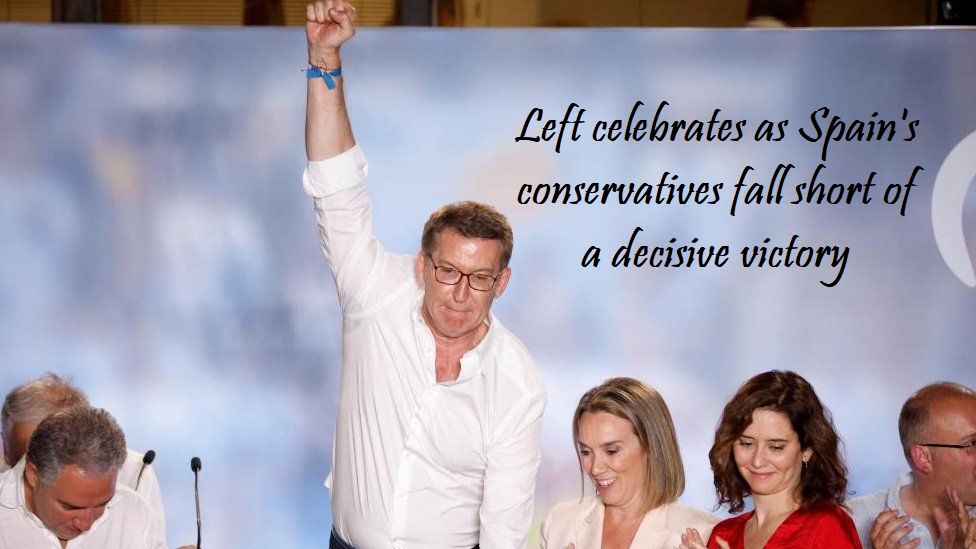
Alberto Núñez Feijóo, the leader of Spain’s opposition conservative party, claimed victory in a snap election but fell short of the desired result as his Popular Party (PP) failed to secure a majority in parliament, even with the support of the far right. Meanwhile, the rival Socialist camp, led by Prime Minister Pedro Sánchez, celebrated as well. The inconclusive outcome leaves Spain facing uncertainty.

Despite the victory claim, Mr. Feijóo’s PP and Vox, the far-right party, together would still be seven seats short of an absolute majority of 176 in parliament, making another election likely towards the end of the year. Pedro Sánchez’s Socialists and their far-left allies appeared pleased with the result, as they criticized the “reactionary bloc” for opposing progress made in the past four years, particularly on issues such as sexual consent, abortion, and transgender rights.

The election turnout was high, with 70% of voters participating, partly due to almost 2.5 million postal votes being cast. Vox remained the third-largest party but experienced a drop in seat numbers, while the newly enfranchised young voters also played a significant role in the election.

Vox leader Santiago Abascal did not show signs of celebration, as his party viewed the election as a stepping stone to a potential “second round” by Christmas, aiming to gain further support for their anti-immigration and anti-feminism platform.

Overall, the outcome of the election left both major parties claiming some level of success, but Spain remains in a state of uncertainty as forming a government will be challenging without a clear majority in parliament.

Picture Courtesy: Google/images are subject to copyright

News Trending

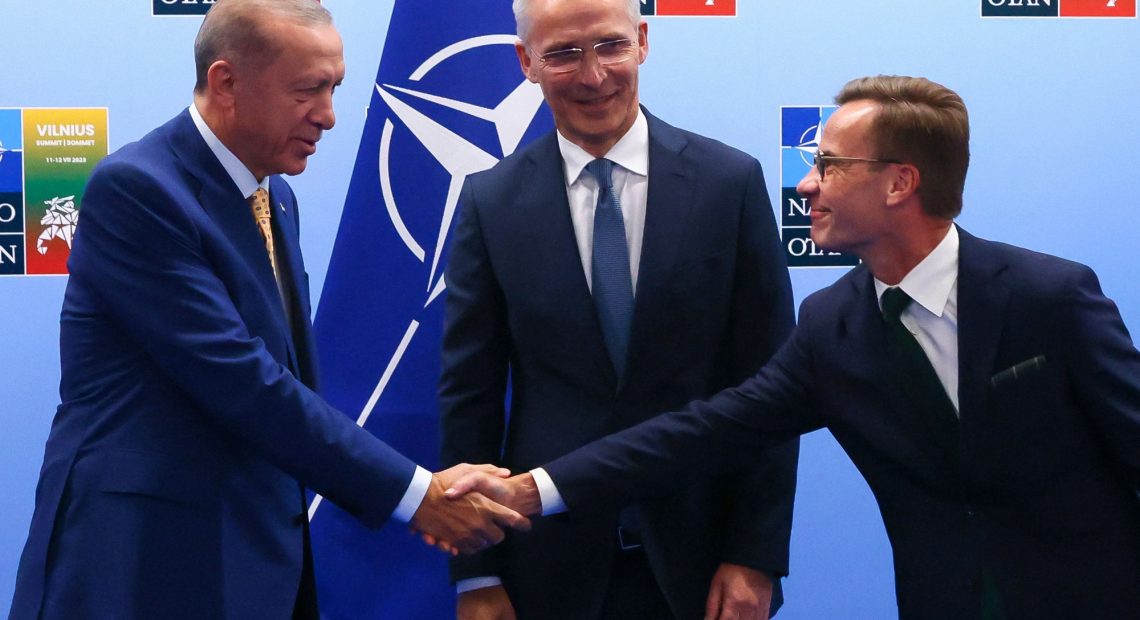
Turkey’s President Recep Tayyip Erdogan has given his support to Sweden’s bid to join NATO, according to the alliance’s chief, Jens Stoltenberg. Erdogan has agreed to forward Sweden’s application to the Turkish parliament for ratification, ending months of Turkish opposition.

The decision comes after Sweden addressed Turkey’s security concerns by amending its constitution, changing laws, intensifying counter-terrorism efforts against the PKK (Kurdistan Workers’ Party), and resuming arms exports to Turkey. The announcement was made following discussions between Erdogan and Swedish Prime Minister Ulf Kristersson in Vilnius, Lithuania.

The NATO chief hailed the agreement as a “historic step” but couldn’t provide a specific timeline for Sweden’s accession as it depended on the Turkish parliament. The United States and other NATO members have welcomed Turkey’s support and expressed readiness to work with both Turkey and Sweden to enhance defense and deterrence in the Euro-Atlantic area.

Picture Courtesy: Google/images are subject to copyright