News Trending

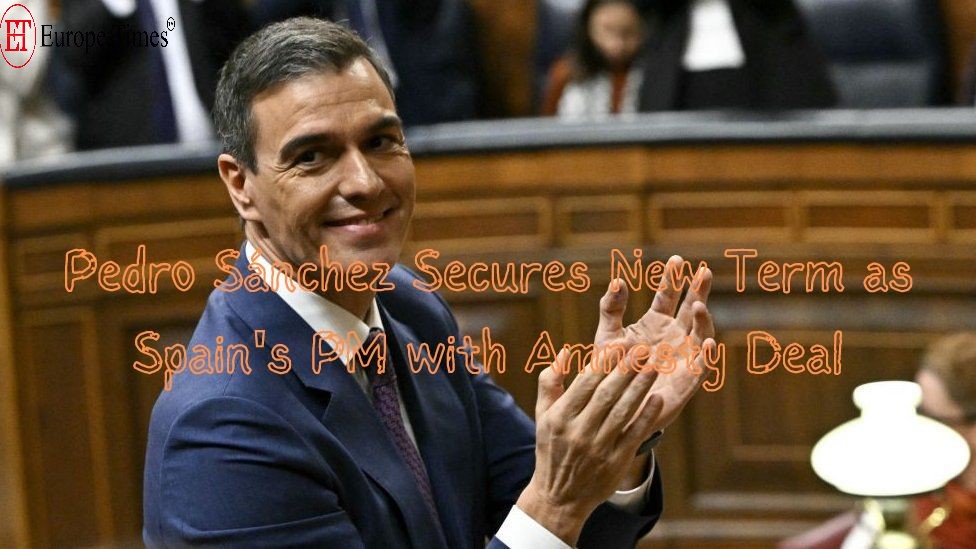
Socialist leader Pedro Sánchez has successfully navigated weeks of negotiations to secure a parliamentary vote, allowing him to serve another term as Spain’s prime minister. Despite the Popular Party winning elections in July, their leader, Alberto Núñez Feijóo, failed to form a majority. Sánchez, however, clinched a four-seat majority in the 350-seat chamber, solidifying his position.

One key aspect of Sánchez’s success was the sealing of an amnesty deal for Catalans involved in a failed bid to secede from Spain. This move was pivotal in gaining support from two Catalan pro-independence parties, even though it has stirred controversy. Critics argue that Sánchez’s proposed amnesty for politicians and activists may reignite secessionist sentiments, posing a threat to Spain’s territorial unity.

The amnesty deal, covering actions dating back to 2012, has been a point of contention, with many in Spain’s judiciary criticizing the proposal. Despite opposition, Sánchez defended the move, stating that it would help “heal wounds” and promote reconciliation. However, the main judges’ association condemned it as the “beginning of the end of democracy.”

Sánchez’s reliance on Catalan pro-independence parties has sparked protests across Spain, with tens of thousands expressing their discontent. Opposition leader Alberto Núñez Feijóo accused Sánchez of prioritizing personal interests over the country’s, emphasizing the potential risks to Spain’s unity. The political atmosphere became tense, with incidents such as protesters booing MPs and right-wing Catholic organizations displaying anti-Sánchez messages, further highlighting the divisions.

Despite the controversies, Sánchez rejected claims that his government is dependent on parties seeking to break up Spain. His swearing-in ceremony is scheduled to take place at the Zarzuela Palace in Madrid, signaling the official continuation of his leadership. However, the fragility of his new government is evident, as tensions persist and some coalition partners, like Podemos, express dissatisfaction with their role in the administration.

Picture Courtesy: Google/images are subject to copyright

News Trending

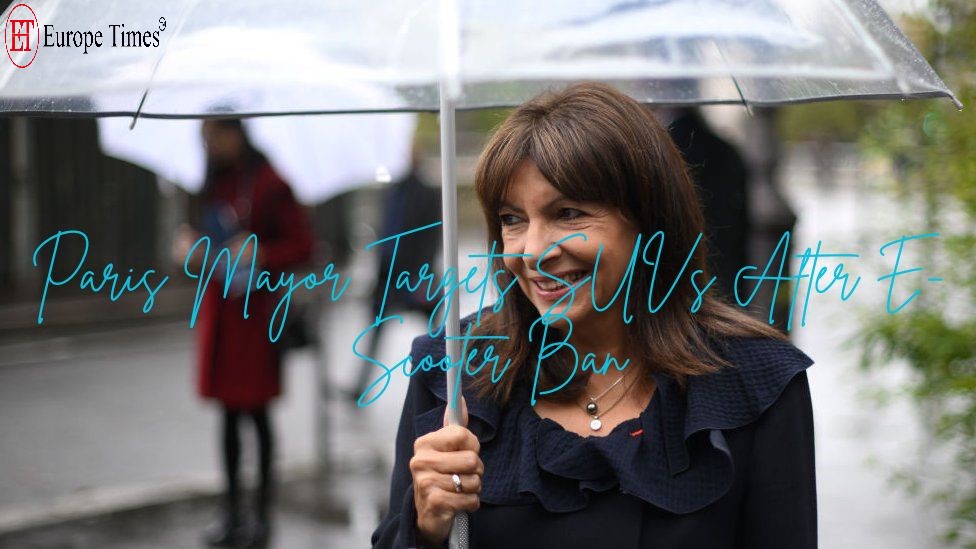
Paris Mayor Anne Hidalgo, fresh from her success in banning rental electric scooters, is now targeting SUVs. She plans to hold a city referendum in February to decide on increasing parking fees for SUVs, similar to the e-scooter referendum where she achieved an easy victory. Hidalgo assures that Paris residents won’t be affected, as SUV ownership within the city is relatively low. The main impact would be on suburbanites who drive SUVs into Paris for work or leisure, and they won’t be part of the voting process.

Critics suspect that Hidalgo’s focus on SUVs is a diversion from controversy surrounding her own overseas trip to New Caledonia and French Polynesia. During this two-week visit in October, she extended her stay to visit her daughter, raising eyebrows. Opposition council members criticize the timing, especially during the aftermath of the October attacks in Israel, when concerns about the Middle East conflict were high in Paris. Hidalgo’s office denies any wrongdoing, stating that extending official visits for personal reasons is a common practice, and she covered the costs for the personal portion of her trip.

Officially, Hidalgo’s visit included paying respects at a cemetery in New Caledonia and holding meetings in French Polynesia, where protests disrupted plans to view the Olympic site at Teahupo’o. Right-wing members of the Paris Assembly criticize the trip’s appropriateness, citing the €60,000 cost. They argue that it was unnecessary for Hidalgo to visit the Olympic site, as key officials involved in organizing the Games had already been there. Critics also highlight the environmental impact of Hidalgo’s long-haul flight, contrasting it with her emphasis on environmental concerns related to local transportation in Paris.

Picture Courtesy: Google/images are subject to copyright

News Trending

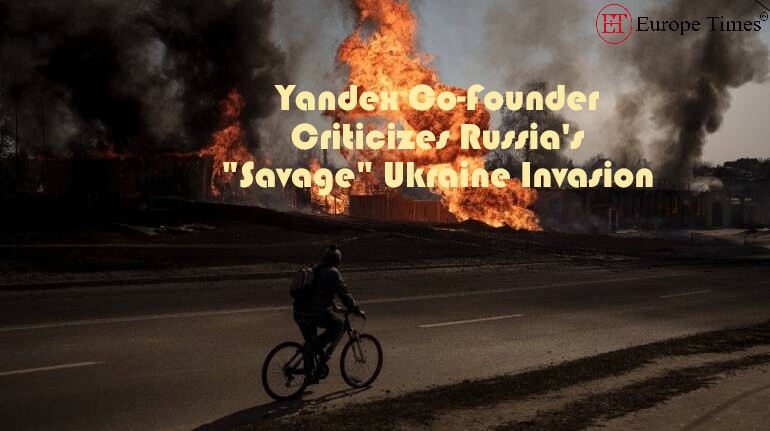
Arkady Volozh, a co-founder of Yandex and a prominent figure in Russia’s tech industry, has criticized Moscow’s complete military intervention in Ukraine, referring to it as “savage.”

In an official statement, Volozh expressed his distress over the daily bombing of Ukrainian homes and conveyed his opposition to the conflict. Although he resides in Israel and had been criticized for his silence on the matter, he acknowledged his responsibility for his home country’s actions.

Volozh stepped down as Yandex’s CEO in 2022, a move that coincided with personal sanctions imposed by the European Union. The EU cited his role in supporting actions undermining Ukraine’s sovereignty. Yandex, often likened to “Russia’s Google,” is the largest Russian-language internet search engine. Volozh’s condemnation of the invasion stands out among Russia-linked business figures who have openly criticized President Vladimir Putin’s decision to initiate the full-scale invasion of Ukraine in February 2022.

Picture Courtesy: Google/images are subject to copyright

News Trending

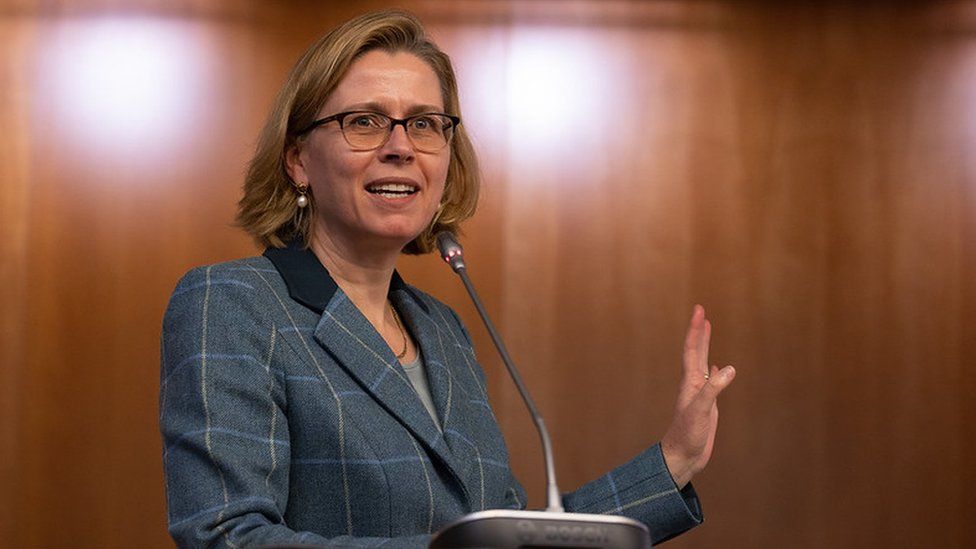
Fiona Scott Morton, a highly qualified American economist, has decided not to take up the position of Chief Competition Economist in the European Commission following widespread criticism of her appointment. The strongest objections came from France, with President Emmanuel Macron expressing doubts and questioning whether there were no qualified European candidates for the role. Scott Morton, a Yale University economics professor, has an impressive background, including working in the US justice department’s antitrust department during the Obama presidency. However, she has also worked as a consultant for major tech companies like Apple, Microsoft, and Amazon, which raised concerns given that her job would involve regulating these digital giants.

EU antitrust chief Margrethe Vestager defended the appointment, highlighting Scott Morton’s corporate experience as an asset. Nevertheless, Scott Morton made the decision not to take up the post due to the political controversy surrounding her appointment and the importance of having the full support of the EU’s competition directorate. Opposition to her appointment came from various quarters, including President Macron and several Commission colleagues, as well as the four largest political blocs in the European Parliament. However, after discussions with Scott Morton, some concerns were addressed, and Philippe Lamberts of the Greens expressed support for her.

Critics argued that the criticism of Scott Morton’s appointment was unjustified since her role would primarily involve overseeing economic evidence in competition enforcement rather than favoring specific competitors. Nobel Prize-winning economist Jean Tirole praised her qualifications and stated that the European Commission was fortunate to have attracted someone of her caliber. Margrethe Vestager emphasized that the suggestion of bias based on nationality was questionable and clarified that Scott Morton would only need to recuse herself from a few cases.

Picture Courtesy: Google/images are subject to copyright