featured News Trending

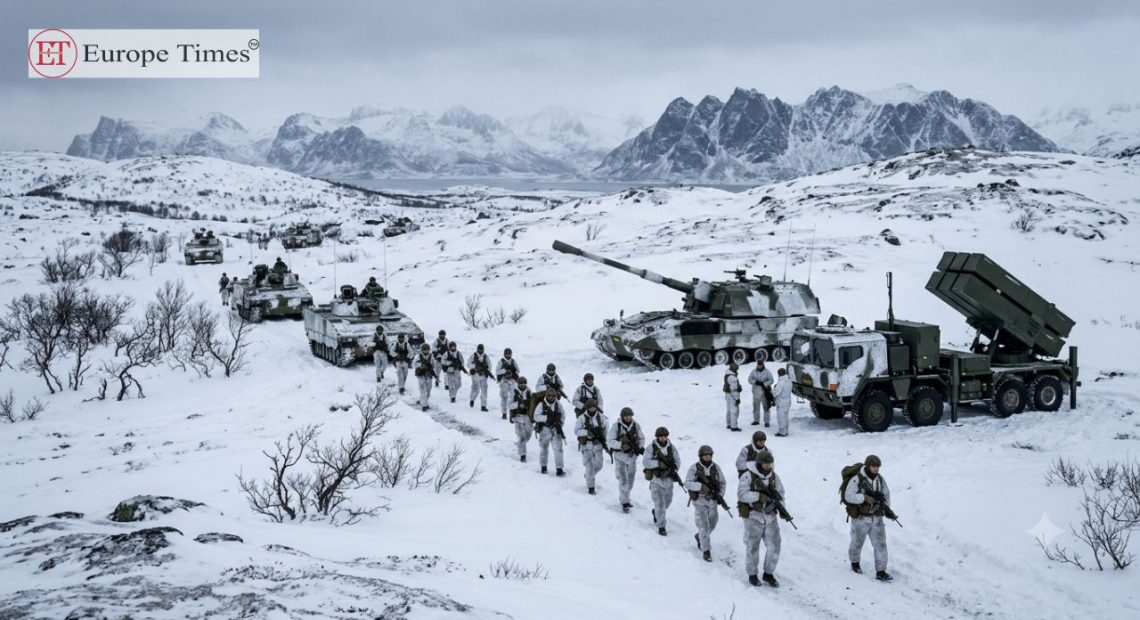
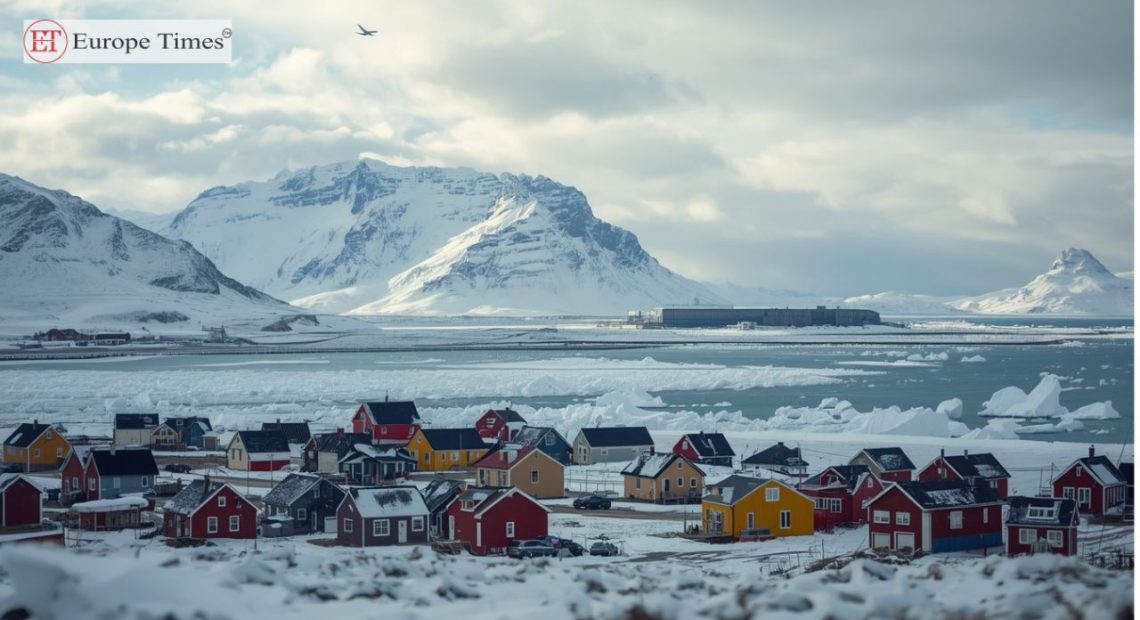
Norway expanded its Finnmark Brigade on Thursday as the NATO member strengthens its military presence in the Arctic following Russia’s invasion of Ukraine. The brigade, established last year as Norway’s second military brigade and the first created since the end of the Cold War, is headquartered in the country’s northern Arctic region.

The expansion adds an artillery battalion, an air defence battery and a communications company to the brigade. These capabilities will allow Norwegian forces to strike targets on land at longer distances and coordinate operations with Norwegian and NATO aircraft and naval forces. The brigade has also been responsible for monitoring and patrolling Norway’s 198-km border with Russia.

Norway has significantly increased defence spending in recent years, with NATO estimating that military expenditure will reach 3.17% of GDP in 2026, compared with 1.5% in 2014. Norwegian officials say the strengthened Arctic presence is intended to improve the country’s ability to respond to threats against Norway and NATO, while Russia has previously rejected claims that it poses a threat to the alliance.

Pic courtesy: google/ images are subject to copyright

featured News Trending

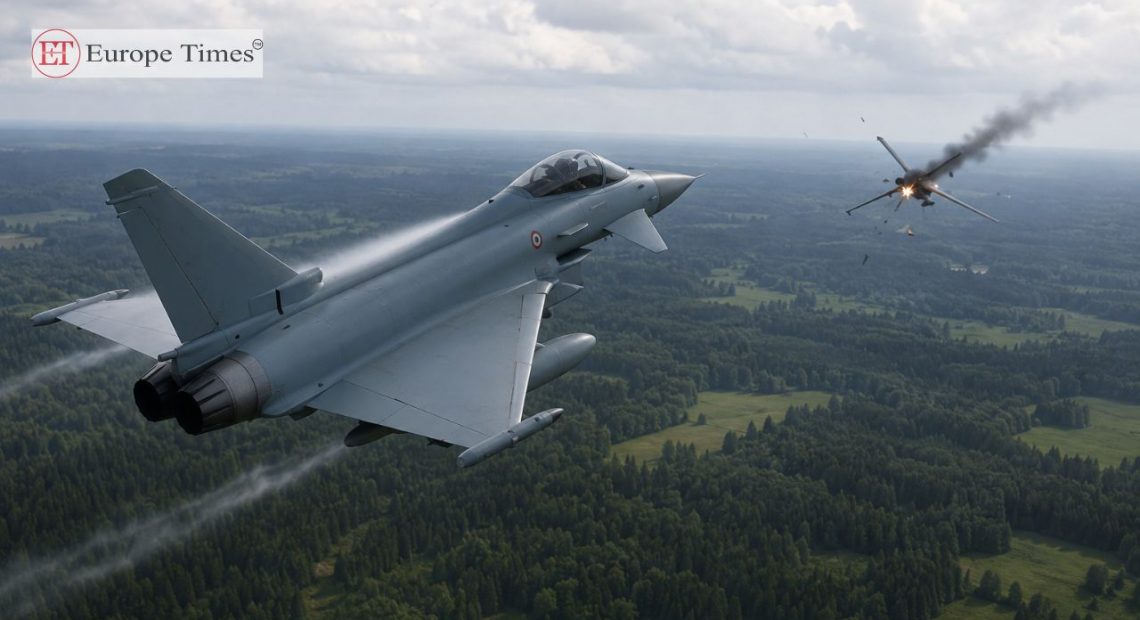
An Italian Eurofighter jet operating under NATO command shot down a drone after it entered Latvian airspace on Friday, according to NATO and Latvian authorities. The drone’s origin remains unknown, with Latvian National Guard troops searching a wooded area near Rugaji, about 35 km from the Russian border, for possible debris from the aircraft.

Two Italian Eurofighters scrambled from Lithuania, while two Turkish F-16s were also deployed from Estonia after the drone was detected. NATO said one of the Italian jets identified and destroyed the drone, adding that an investigation was underway and that it remained in close contact with Latvian authorities. The incident comes amid growing concerns over drone incursions into the airspace of NATO’s Baltic members, which border Russia and are close to the war in Ukraine.

A Romanian F-16 shot down a Ukrainian drone over Estonia in May, while a French Rafale destroyed another drone in Latvia in June. Finland also temporarily restricted some aviation and maritime activity in the eastern Gulf of Finland as a precaution.

Pic courtesy: google/ images are subject to copyright

featured News Trending

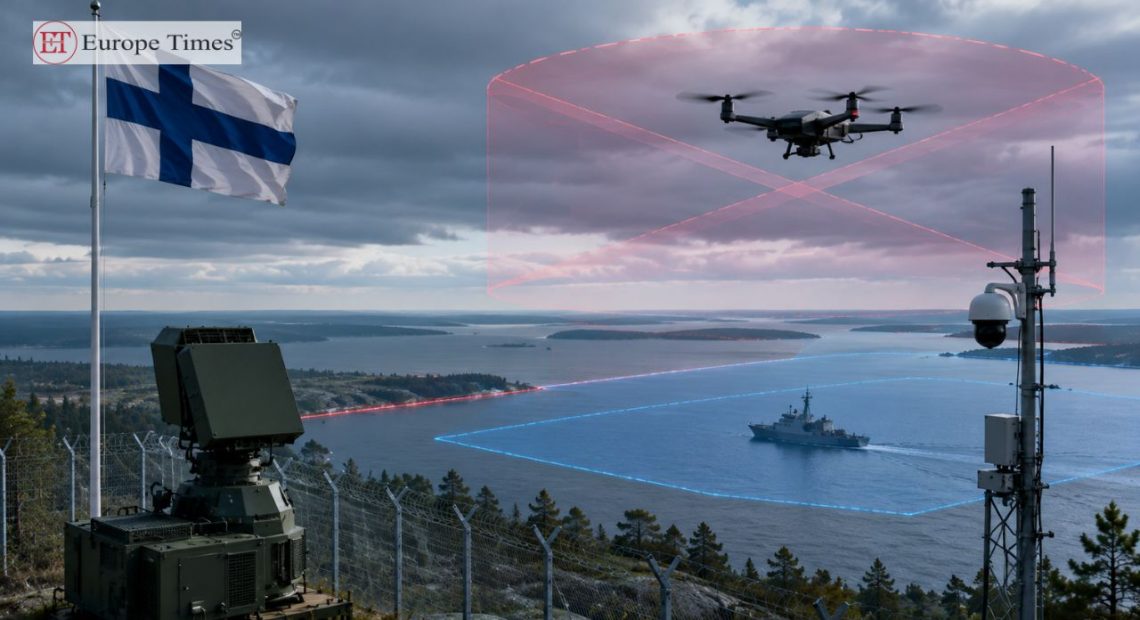
Finland has temporarily closed part of its airspace and restricted maritime traffic along its southern coast near the Russian border due to the risk of stray drones entering the area. The Finnish military said the measures are intended to ensure authorities can respond safely if drones cross into the region and to protect the public.

The move follows several incidents this year in which military drones linked to the Ukraine-Russia conflict reportedly entered the airspace of Finland, Estonia, Latvia, and Lithuania. These events have raised concerns that the ongoing war could increasingly affect NATO’s northern borders.

Finnish military officials declined to reveal the source of intelligence regarding the possible drone activity, citing operational security. While Ukraine and NATO have blamed Russian signal jamming for causing some drones to stray into neighbouring countries, Russia has accused Ukraine of deliberately directing drones across international borders.

Pic courtesy: google/ images are subject to copyright

featured News Trending

Estonia’s foreign intelligence service has reported that Russia is rebuilding its military forces in response to Europe’s rearmament, though it does not plan to attack any NATO state in the near term. According to the report, Moscow aims to delay and hinder Europe’s ability to conduct independent military action, viewing European rearmament over the next two to three years as a significant concern.

The intelligence service highlighted Russia’s rapid expansion of ammunition production, which allows for stockpiling supplies for potential future conflicts while continuing operations in Ukraine. Any hypothetical attack on Estonia could involve coordinated drone operations across land, air, and sea. Estonia emphasized the need for the continent to invest in defense and internal security to deter potential aggression.

The report also noted Russia’s continued view of the U.S. as its main adversary while attempting to use diplomatic channels to ease sanctions and influence the Ukraine conflict. It highlighted Moscow’s strategic alignment with China, which could use Russian cooperation to challenge Western influence globally, particularly in the context of energy and military technology collaboration.

Pic courtesy: google/ images are subject to copyright

News Trending

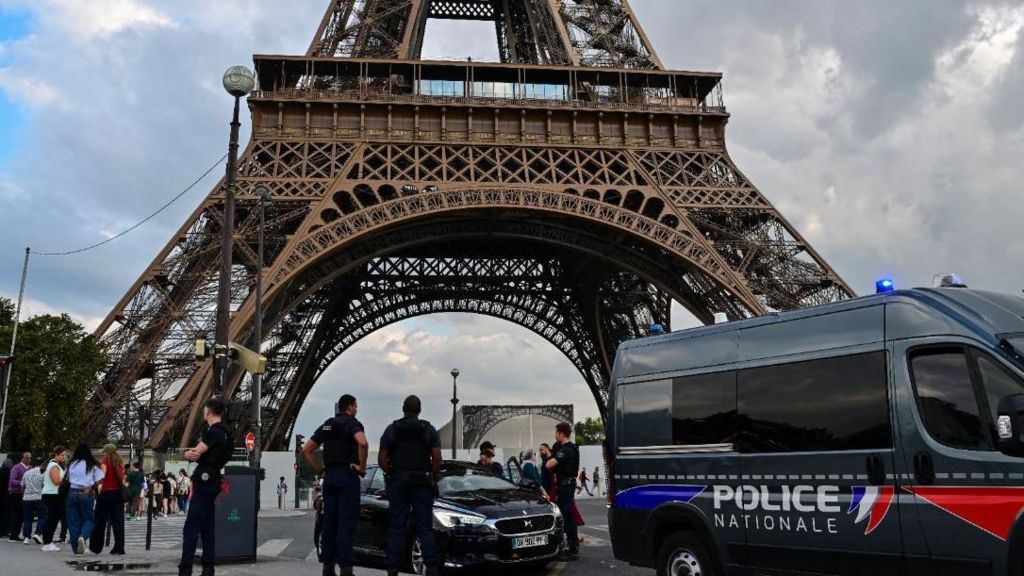
French intelligence officials believe Russia orchestrated a stunt involving five coffins draped in French flags, labeled “French soldiers of Ukraine,” placed near the Eiffel Tower. Three men, seen arriving in a van on Saturday morning, left the coffins, which contained plaster sacks. Police quickly apprehended the driver, a Bulgarian who claimed he was paid €40 by two others to transport the coffins. These two, a Ukrainian and a German, were later caught at Bercy coach station while attempting to board a bus to Berlin. They admitted to being paid €400 to deposit the coffins. All three were presented before a judge on Sunday as a judicial investigation began for “violence with premeditation.”

This incident is being investigated to determine if it was orchestrated from abroad, recalling two recent events where French police suspect Russian involvement. In October, Stars of David resembling the Israeli flag were stenciled in Paris after a Hamas attack on Israel. A Moldovan couple, believed to have been paid by Russian intelligence, was arrested. Last month, red hands were painted on a Holocaust memorial in Paris, with suspects fleeing abroad. One individual involved in the coffins incident had contact with a Bulgarian suspect linked to the red-hands affair, identified as Georgi F. by Le Monde.

Tensions between France and Russia have risen, partly due to President Emmanuel Macron’s stance on potentially sending French soldiers to Ukraine. Recently, discussions about sending French military instructors to Ukraine have intensified, which investigators think might have prompted Russian intelligence to stage the coffins stunt to demonstrate opposition to deeper French involvement in the Ukraine war. Previous incidents included teams with photographers whose images appeared on Russian propaganda websites.

Picture Courtesy: Google/images are subject to copyright

News Trending

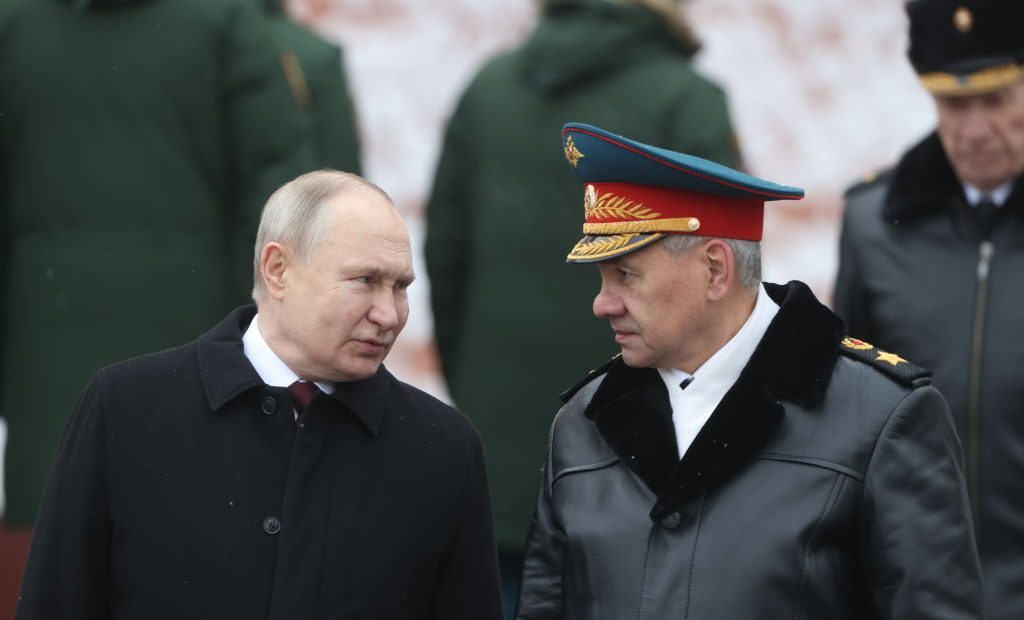
The Kremlin has announced the removal of long-time ally Sergei Shoigu from his position as defense minister, replacing him with Deputy Prime Minister Andrei Belousov, who lacks significant military experience. Shoigu will be appointed secretary of Russia’s Security Council. This move, a rare reshuffle in Russian politics, is seen as reflecting President Putin’s decision-making authority, particularly regarding the conflict in Ukraine.

Belousov’s appointment surprises many due to his background as an economist. However, analysts suggest this decision aligns with Putin’s aim to integrate the Russian economy more closely with military efforts. Kremlin spokesperson Dmitry Peskov emphasized the need for innovation in the defense ministry, comparing Russia’s situation to the mid-1980s Soviet Union when a large portion of GDP was allocated to military spending.

The decision to appoint a civilian to such a significant military role underscores the changing priorities within the Kremlin and the necessity to improve efficiency in the armed forces amid ongoing conflicts. Recent events, including the arrest of one of Shoigu’s deputies on corruption charges and prolonged military engagement in Ukraine, likely contributed to speculation about Shoigu’s weakening position.

While Shoigu will retain influence as secretary of the Security Council, his reassignment may be interpreted as a demotion. The future of Nikolai Patrushev, the council’s current head, remains uncertain. Shoigu, who has a civil engineering background, gained prominence in the 1990s as head of the emergencies and disaster relief ministry.

Belousov, described as a staunch defender of the state who believes Russia faces numerous external threats, shares a close relationship with Putin and the Russian Orthodox Church. He has practiced martial arts, including karate and sambo, and previously served as an aide to Putin. His support for the annexation of Crimea in 2014 aligns with Putin’s policies.

Putin’s recent reelection for a fifth term with an overwhelming majority solidifies his leadership position in Russia, which he has held since 2000.

Picture Courtesy: Google/images are subject to copyright

News Trending

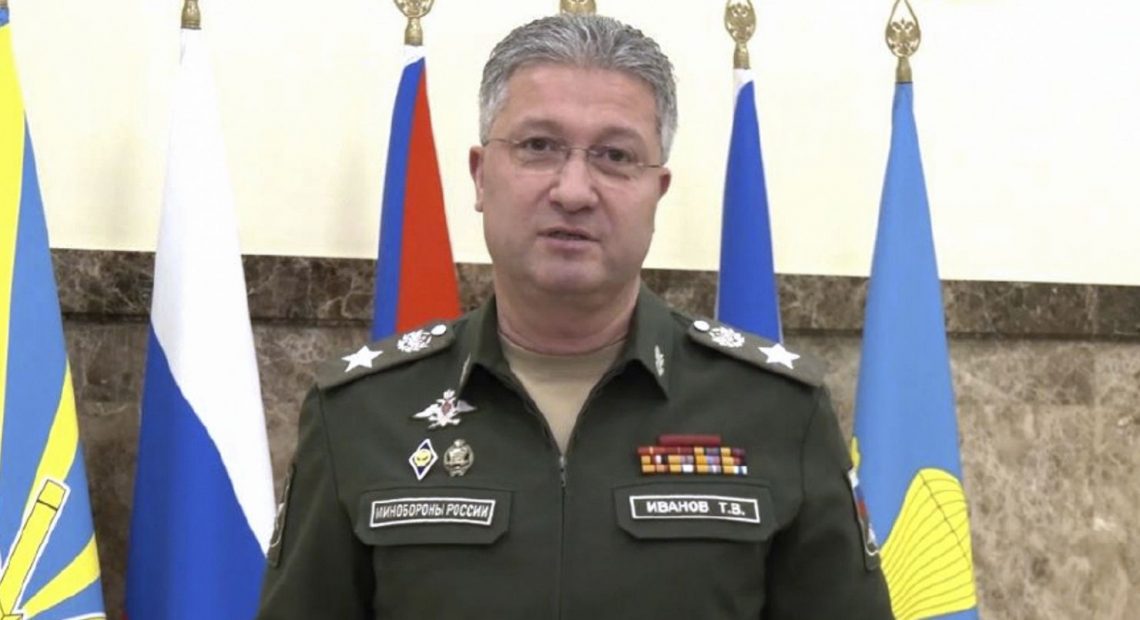
Recent events have once again brought attention to the issue of corruption within Russia’s government, particularly within its military. Timur Ivanov, a deputy defence minister, is facing serious accusations of accepting large-scale bribes. His denial of these charges comes at a time when Russia is grappling with systemic corruption, especially within its military projects.

The allegations against Ivanov have drawn scrutiny from activists who have long criticized corruption in Russia’s corridors of power. His close relationship with Defence Minister Sergei Shoigu adds complexity to the situation, highlighting the interconnectedness of Russia’s political and military spheres.

Rumors of treason surrounding Ivanov’s arrest add further intrigue to the case. Despite Kremlin’s dismissal of such claims, speculation persists, leaving the public seeking clarity amidst official statements and media reports.

Accusations from the Anti-Corruption Foundation linking Ivanov to malpractices in Ukraine’s occupied territories shed light on the human cost of corruption in conflict zones.

As Ivanov faces legal proceedings, the potential consequences, both legally and politically, are significant. The case underscores the widespread nature of corruption within Russia’s government and its impact on global politics, as evidenced by international sanctions against Ivanov.

Beyond Ivanov’s individual fate, the case raises questions about Russia’s ability to combat corruption within its military leadership and institutions. The fallout from this high-profile case may test the resilience of Russia’s governance structures in addressing endemic corruption.

Picture Courtesy: Google/images are subject to copyright

News Trending


Amid concerns over potential Islamic State (IS) threats to European sporting events, including a recent online warning, French authorities have intensified security measures in Paris. This move coincides with worries about the safety of upcoming events such as the Champions League quarter-final match and the impending Olympic Games.

While Interior Minister Gérald Darmanin acknowledged the elevated threat level, he also emphasized France’s experience in countering extremist activities, citing recent foiled attacks. Despite the heightened security, some fans remain undeterred, expressing a determination not to let fear dictate their lives.

Across Europe, governments are grappling with the growing threat posed by IS-K, particularly in light of the upcoming European Football Championship. Germany, in particular, has ramped up security measures, including border checks, amidst concerns over internal security.

Balancing security concerns with maintaining a sense of normalcy presents a challenge for France, especially with the Olympics fast approaching. While some voices caution against overreacting to IS threats, others stress the importance of not yielding to fear and maintaining public confidence.

France’s extensive experience with Islamist incidents has led to the deployment of significant security forces, including Operation Sentinelle and military personnel. Despite assurances from security officials, concerns persist, compounded by tensions with Russia and its alleged efforts to undermine French credibility through cyber campaigns.

President Macron has warned of Russia’s potential to disrupt the Olympics through various means, including cyber operations aimed at spreading misinformation. The French government has publicly denounced attempts to manipulate public opinion, attributing such actions to Kremlin-backed efforts to sow discord.

Picture Courtesy: Google/images are subject to copyright

News Trending

Denmark has announced significant reforms to its military, including extending conscription to women for the first time and increasing the standard service duration. This decision is part of a plan to bolster its defense capabilities and align with NATO targets amid heightened tensions in Europe following Russia’s invasion of Ukraine in 2022.

Prime Minister Mette Frederiksen emphasized that the aim of these reforms is not to seek conflict but to prevent it. The government intends to achieve gender equality in the armed forces, with Defence Minister Troels Lund Poulsen stressing that more inclusive conscription will address defense challenges and contribute to national mobilization.

Denmark will become the third European nation, after Norway and Sweden, to mandate women’s conscription starting from 2026, alongside extending service duration for both genders from four to 11 months. These changes aim to increase the number of individuals serving in the military annually from 4,700 to 5,000, with approximately 25% being women.

With a current armed forces strength of around 20,000 personnel, Denmark, with a population of nearly six million, plans to raise its military spending from 1.4% to 2% of GDP to meet NATO’s requirements. Lawmakers have taken measures such as abolishing a public holiday to redirect funds towards defense spending.

Denmark has been a staunch supporter of Ukraine, providing advanced weapons, financial aid, and training to Ukrainian pilots on F-16 fighter jets. Additionally, Finland and Sweden have recently joined NATO as the alliance strengthens its defenses in Europe amid ongoing geopolitical tensions.

Picture Courtesy: Google/images are subject to copyright

News Trending

Germany is currently facing scrutiny after a leaked conversation among air force officials discussing the possibility of providing long-range missiles to Ukraine was made public by Russian sources. The recording, aired by Russia’s state-run RT channel, captured high-ranking German military officers discussing the potential use of Taurus cruise missiles to target the Kerch Bridge, which links Russia to Crimea.

The breach has raised significant concerns among Germany’s allies regarding its security measures. The discussion also touched on alleged British operations in Ukraine, further complicating matters.

While Germany’s defense ministry acknowledged the interception of the conversation, it could not confirm if the recording had been altered. The meeting was reportedly conducted on the Webex conference platform instead of a secure military platform, adding to Berlin’s embarrassment.

Germany’s Military Counterintelligence Service is investigating the security breach, though it remains uncertain if the findings will be disclosed publicly. Chancellor Olaf Scholz’s allies have rejected calls for a parliamentary inquiry.

The incident has underscored divisions over Scholz’s reluctance to supply Taurus missiles to Ukraine, citing concerns about their potential use against Russian territory. France and Britain have provided Kyiv with missiles of shorter range.

The leak has exposed a rift between senior German military officials advocating for Taurus deployment and Chancellor Scholz, whose focus appears to be on political survival rather than continental interests, according to critics.

German Defense Minister Boris Pistorius has labeled the hack as a Russian attempt to sow discord, characterizing it as a “hybrid disinformation attack” aimed at undermining unity. He cautioned against falling for Russian manipulation.

In response, the Kremlin has seized upon the leak to portray Western involvement in the Ukraine conflict. Kremlin spokesperson Dmitry Peskov suggested that the leaked conversation indicated the Bundeswehr’s deliberation over plans to strike Russian territory, further fueling tensions between Russia and the West.

Picture Courtesy: Google/images are subject to copyright