News Trending War

Wheat prices on the global markets have experienced a sharp rise following Russia’s declaration that it would consider ships heading to Ukrainian ports as potential military targets. This decision came after Moscow withdrew from a UN agreement that guaranteed safe passage for grain shipments through the Black Sea. In recent nights, Russia has launched attacks on Ukraine’s grain facilities in cities like Odesa. The White House has accused Russia of planning to attack civilian ships and then falsely blaming Ukraine for it. As a result of these developments, European stock exchange wheat prices surged by 8.2% to €253.75 per tonne, with corn prices also rising by 5.4%. US wheat futures recorded their highest daily increase since Russia’s invasion of Ukraine in February 2022, jumping 8.5%. President Vladimir Putin has expressed willingness to return to the international grain agreement if certain demands, including the lifting of sanctions on Russian grain and fertiliser sales, are met.

Amid these escalating tensions, Russian air strikes continued in Black Sea coastal cities for three consecutive nights, leading to civilian casualties. The attacks have targeted grain export infrastructure and raised concerns about the safety of shipping routes for essential food supplies. Ukraine’s options for exporting grain by rail are limited, with rail capacity smaller than shipping volumes, and some EU countries in Eastern Europe blocking Ukrainian grain to protect their own farmers.

Analysts have warned that Russia’s threatened escalation could disrupt waterborne grain shipments from the Black Sea, impacting both Russian and Ukrainian exports. Some Ukrainian officials have called on the UK, US, France, and Turkey to provide military convoys and air defenses to protect grain ships heading to Odesa.

The situation has raised concerns about potential impacts on global food security and inflation, particularly in developing countries, leading to social instability, food shortages, and increased migration. Critics accuse Russia of using food supplies as a political tool in its conflict with Ukraine.

Picture Courtesy: Google/images are subject to copyright

News Trending

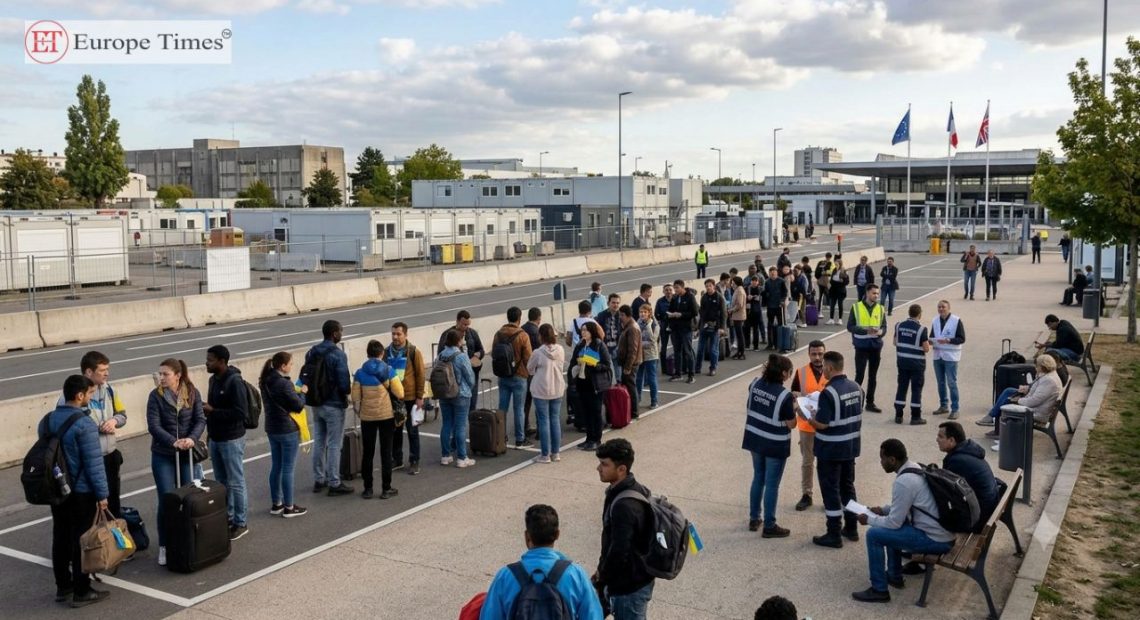
Conflicts in Ukraine and Sudan, as well as the Afghanistan crisis, have pushed millions of people to migrate in search of safety.

According to the United Nations High Commissioner for Refugees (UNHCR), the number of persons displaced worldwide has reached a record 110 million, with hostilities in Ukraine and Sudan causing millions to flee their homes.

The UNHCR stated in its annual Forced Displacement report on Wednesday that around 19 million people were forced to escape last year, the largest yearly increase on record, bringing the total to 108.4 million by the end of last year.

According to UN refugee director Filippo Grandi, the figure has subsequently climbed to at least 110 million, owing mostly to Sudan’s eight-week-old war.

“It’s quite an indictment of the state of our world to have to report that,” he remarked during a news conference in Geneva.

The total number includes both persons seeking protection within their own nations and those who have crossed borders. According to the data, refugees and asylum seekers accounted for around 37.5 percent of the total.

“Solutions to these movements are becoming increasingly difficult to even imagine, let alone put on the table,” he explained. “We live in a highly polarised world, where international tensions spill over into humanitarian issues.”

According to the organisation, prior to the Syrian crisis in 2011, there were around 40 million refugees and internally displaced persons, a figure that had been steady for roughly 20 years. However, the figure has climbed each year thereafter.

According to the research, 339,300 refugees were able to return home last year, while 114,300 were relocated in a third country – more than double the amount expected in 2021.

Picture Courtesy: Google/images are subject to copyright

News Trending

Pope Francis has called on Hungary and its leaders to open their doors to migrants during his visit to the country. Speaking at an open-air mass in Budapest, he expressed his disappointment that doors were being closed to those who were different.

Despite Hungary’s anti-immigration stance, up to 100,000 people, including Prime Minister Viktor Orban, attended the mass. Pope Francis urged everyone, especially those with political and social responsibilities, to be more open towards migrants and the poor. During the mass, he also prayed for peace between Ukraine and Russia, who are currently at war.

On his flight back home, Pope Francis disclosed that the Vatican was involved in a peace mission to put an end to the war between Ukraine and Russia, though he did not reveal the details of the mission yet. He also expressed his willingness to assist in the return of Ukrainian children taken to Russia since the invasion.

During his three-day visit to Hungary, Pope Francis discussed the conflict in Ukraine with Prime Minister Viktor Orban and a representative of the Russian Orthodox Church. The Pope’s visit to Hungary was his first since he became Pope 10 years ago, and it was driven by his support for Catholics and concern over the war in Ukraine.

Hungary shares a border with Ukraine, and Prime Minister Orban has maintained relations with Russian President Vladimir Putin, refusing to support military aid for Ukraine unlike other leaders of the European Union. During his visit, the Pope met with people from all walks of life, including youths, the poor, politicians, and academics.

Picture Courtesy: Google/images are subject to copyright

News Trending

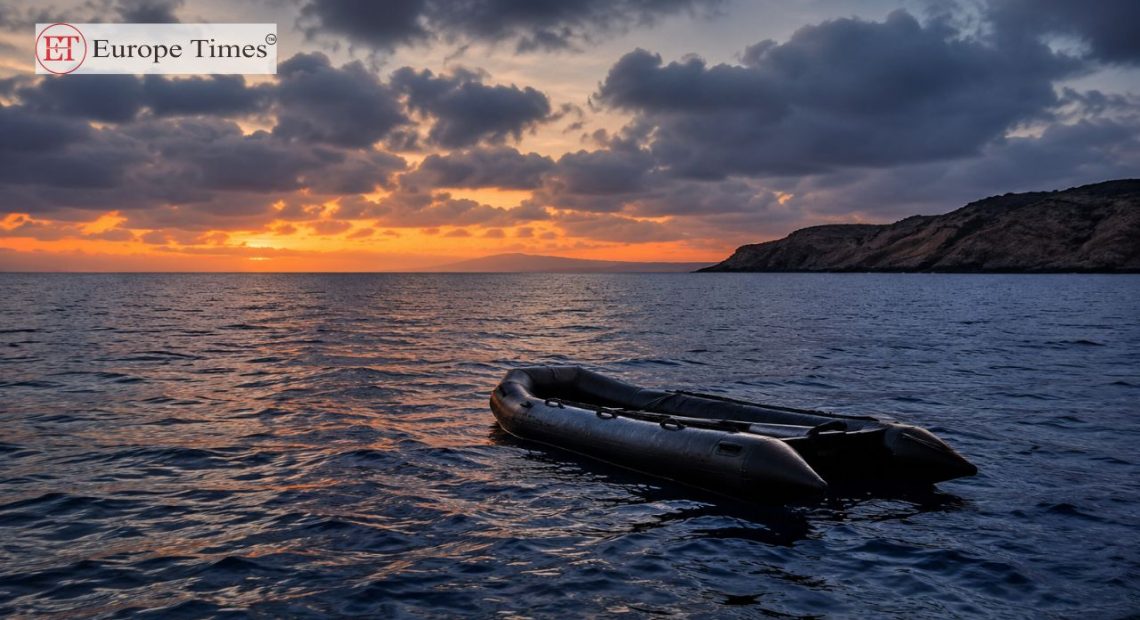
The Italian government has declared a six-month state of emergency in response to an increase in the number of migrants crossing the Mediterranean from North Africa. The move will release €5m in funds and comes as 3,000 migrants arrived in just three days, with many landing on the Italian island of Lampedusa.

Since Friday, the coastguard has rescued around 2,000 people, but 400 people on a fishing boat are still awaiting assistance. Despite attempts by Italy’s right-wing coalition government to tackle irregular migration, migrant arrivals have surged compared to the same period last year.

Over the weekend, at least four people died and 20 more were missing after two migrant boats sank off Tunisia. German aid group ResQship rescued 22 survivors and took them to Lampedusa.

Tunisia has recently become the largest departure point for migrant boats, leading to a series of incidents off the coast, including a disaster on Saturday in which at least four people died. Lampedusa, an Italian island, is located 185km away from the Tunisian port of Sfax. Sea and Civil Protection Minister Nello Musumeci has reported a 300% increase in migrant flows, calling it an “absolute emergency” that puts Italy’s infrastructure at risk.

However, the minister stressed that the state of emergency alone would not solve the problem and that responsible intervention by the European Union was required.

The extra funding released by the Italian government will reportedly allow officials to speed up reception procedures and the repatriation of those who are not allowed to remain in Italy. It is unclear how the measure will address the rising numbers of migrants crossing the Mediterranean.

The Italian coastguard is escorting two boats in the Ionian Sea off Sicily, with one boat carrying around 400 people believed to have set out from Tobruk in Libya. The rescue mission is being hampered by difficult sea conditions, and an unofficial hotline for migrants called Alarm Phone reported that the boat was experiencing medical emergencies, water filling the vessel, and no fuel left.

The situation was described as dramatic. A second boat carrying around 800 people is also under coastguard escort, with no information about where it set out from. The boat was found adrift in Maltese waters, and an urgent alarm was raised with the authorities of Italy, Greece, and Malta.

German non-governmental organisation Sea-Watch International reported that two merchant vessels near the boat had been ordered not to help with rescue efforts by Malta while the boat was in Maltese waters.

According to monitoring group IOM Missing Migrants Project, over 26,000 people have died or gone missing at sea in the Central Mediterranean since 2014. The Armed Forces of Malta stated that “no rescue was requested by the people on board”.

Picture Courtesy: Google/images are subject to copyright