featured News Trending

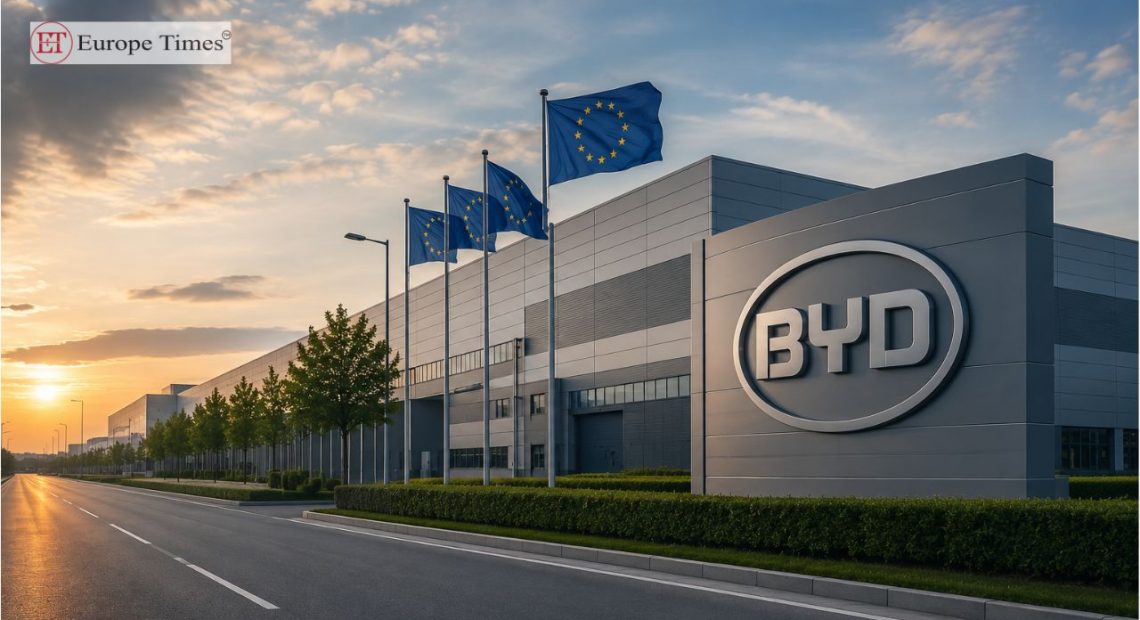
Chinese electric vehicle giant BYD is close to finalising plans for a second manufacturing facility in Europe as it accelerates its regional expansion. Speaking at the Reuters Automotive Europe conference in Frankfurt, BYD’s special adviser for Europe, Alfredo Altavilla, said a decision is expected soon, with Spain and France emerging as the leading candidates. The company is reportedly exploring the acquisition of an existing automobile factory rather than building a new facility from scratch.

The proposed investment would become BYD’s second European production site after its Hungary plant, where manufacturing is scheduled to begin later this year. The move comes as the European Union promotes greater local manufacturing through “Made in Europe” initiatives, while traditional automakers continue to grapple with overcapacity, rising costs, and increased competition from Chinese electric vehicle manufacturers.

BYD’s expansion follows strong sales growth in Europe, where deliveries surged 270% last year and more than doubled during the first five months of 2026. Altavilla argued that European automakers should focus on improving competitiveness instead of trying to resist Chinese rivals, describing the industry’s restructuring efforts as a necessary wake-up call. He also dismissed suggestions that Chinese manufacturers would be willing to share their latest technology through minority joint ventures.

Pic courtesy: google/ images are subject to copyright

featured News Trending

Volkswagen’s complex ownership and governance structure has come under renewed scrutiny as the German automaker prepares a major restructuring that could include plant closures and nearly 100,000 job cuts. Labour unions have vowed strong resistance, while the company’s unique legal framework gives workers and the German state of Lower Saxony significant influence over key decisions.

The influence stems from the Volkswagen Law, introduced in 1960, which was designed to protect the company from outside control. The law grants Lower Saxony, which holds a 20% voting stake, the power to block major shareholder decisions, while worker representatives on Volkswagen’s 20-member supervisory board can effectively veto significant factory-related changes, making large-scale restructuring more difficult.

Volkswagen’s ownership structure further complicates governance. Porsche SE, the investment vehicle of the Porsche and Piech families, controls a majority of voting rights despite owning less than a third of the company’s total equity. Investors have long criticised this arrangement, arguing it limits corporate governance reforms and contributes to uncertainty as Volkswagen faces falling share prices, leadership challenges and growing pressure to adapt to a changing automotive market.

Pic courtesy: google/ images are subject to copyright

featured News Trending

France’s private sector remained in contraction during June, but the pace of decline eased significantly, according to the latest S&P Global Flash PMI survey. The Composite Output Index rose to 47.6 from 44.9 in May, indicating that business activity is still shrinking but showing signs of stabilization. Economists viewed the improvement as a positive signal after France’s first-quarter GDP was revised to reflect an economic contraction.

The manufacturing sector showed encouraging progress, with the Manufacturing PMI climbing to 50.7, returning to growth territory. Manufacturing output also improved, while the services sector remained weak but contracted at a slower rate than in previous months. The Services PMI rose to 47.4, marking its highest level in three months.

Despite the improvement, demand remained subdued as new orders declined for a seventh consecutive month and export orders continued to fall sharply. Employment levels stabilized after a significant drop in May, while business confidence improved for the first time since January. Cooling cost pressures and softer pricing trends suggested easing inflation, although uncertainties surrounding shipping routes through the Strait of Hormuz continue to pose risks to the outlook.

Pic courtesy: google/ images are subject to copyright

featured News Trending

Germany’s private sector activity contracted at its fastest pace in 18 months during June, according to the latest S&P Global survey. The Composite Flash Purchasing Managers’ Index (PMI) dropped to 48.0 from 48.8 in May, falling short of market expectations and remaining below the 50-point mark that separates growth from contraction.

The decline was driven mainly by the services sector, where the PMI fell to 46.8, its lowest level since November 2022. Business activity and new orders in the sector weakened further, while overall new business across the economy declined for a fourth consecutive month, marking the sharpest fall since December 2024.

Despite the slowdown, the survey highlighted easing inflationary pressures. Input costs rose at the slowest pace in four months, while output price inflation softened. However, business confidence for the next 12 months weakened slightly and remained below long-term averages, raising concerns that Germany’s economy may have slipped back into contraction during the second quarter.

Pic courtesy: google/ images are subject to copyright

featured News Trending

German luxury carmaker BMW is preparing discussions with employee representatives after issuing its latest profit warning and announcing plans to accelerate efficiency measures. The company cited continued weakness in the Chinese market and rising costs linked to the conflict involving Iran as key reasons for the weaker outlook.

Industry analysts believe BMW could consider reducing jobs in Europe while increasing efforts to localise production in North America and China. Although the company has not announced large-scale layoffs like some of its competitors, its workforce declined slightly in 2025 and is expected to shrink further this year.

BMW’s shares fell to their lowest level in nearly six years following the announcement. The automaker expects its global workforce to decrease by up to 5% by the end of 2026, potentially affecting around 7,700 positions. However, the company said the reduction will be achieved through natural attrition rather than compulsory job cuts.

Pic courtesy: google/ images are subject to copyright

featured News Trending

Minnesota-based Phillips Distilling Company has moved part of its production to Canada after a widespread boycott of American-made alcohol by Canadian provinces severely impacted its business. The company lost around 70% of its Canadian sales following restrictions introduced in response to U.S. tariffs, with its popular Sour Puss liqueur being among the hardest-hit products.

To restore access to the Canadian market, Phillips Distilling partnered with a Montreal-based manufacturer and began producing Sour Puss in Canada. The move allowed the brand to return to store shelves across several provinces, helping the company recover from the significant decline in sales. Company executives said the decision marked a major shift in their long-standing business model.

The trade dispute between Canada and the United States remains unresolved, with most Canadian provinces continuing to limit sales of American alcohol. Analysts note that Phillips Distilling was able to relocate production more easily than producers of region-specific products such as Kentucky bourbon or California wine. Despite uncertainty surrounding future trade negotiations, the company says the experience has reshaped its long-term business strategy.

Pic courtesy: google/ images are subject to copyright

featured News Trending

Germany’s private sector activity has contracted for the second consecutive month in May, as the broader economic recovery faces severe headwinds from the ongoing war involving Iran. The HCOB flash Composite Purchasing Managers’ Index (PMI) for Germany, compiled by S&P Global, ticked up marginally to 48.6 from April’s 48.4, slightly beating analyst expectations but firmly remaining below the crucial 50.0 threshold that separates growth from contraction. Economists warn that this persistent downturn puts Europe’s largest economy on a direct course to contract in the second quarter of the year.

The economic slump was primarily driven by the services sector, which registered its second consecutive monthly drop in business activity, although the pace of decline slowed slightly with the sector’s PMI rising to 47.8 from 46.9. Meanwhile, Germany’s manufacturing sector experienced a complete stalling, plummeting to an index reading of 49.9 from 51.4 in April. Experts note that the temporary boost manufacturers previously enjoyed from stockpiling goods to outrun supply shortages and price hikes has effectively fizzled out.

Compounding these sector declines, German businesses are grappling with an intensification of cost pressures and accelerating input price inflation. Disruptions stemming from the effective closure of the crucial Strait of Hormuz continue to impact the economy, triggering supply chain shortages and driving up energy costs. Consequently, firms are reporting a sharp reduction in overall demand, as customers pull back on spending due to squeezed purchasing power and heightened geopolitical uncertainty.

Pic courtesy: google/ images are subject to copyright

featured News Trending

Manufacturers across the Eurozone accelerated purchases of raw materials in April, building up inventories amid fears of supply disruptions and rising costs linked to tensions in the Middle East. The S&P Global Eurozone Manufacturing PMI rose to 52.2, indicating growth, as both producers and customers rushed to secure supplies before prices climb further.

Despite the uptick in activity, business confidence weakened significantly. Future output expectations fell to their lowest level in 17 months, reflecting growing uncertainty about the economic outlook. While new orders grew at their fastest pace in four years, economists noted that much of this demand was driven by precautionary buying rather than genuine long-term growth.

Rising input costs and supply chain disruptions added further pressure, with delivery times slowing and inflationary trends intensifying. The European Central Bank has signalled concerns over persistent inflation, raising expectations of upcoming interest rate hikes. Although manufacturing activity expanded across all monitored countries, employment continued to decline, highlighting underlying fragility in the sector.

Pic courtesy: google/ images are subject to copyright

featured News

Euro zone manufacturing activity expanded at its fastest pace in nearly four years in March, according to a survey by S&P Global, with the Manufacturing Purchasing Managers’ Index rising to 51.6 from 50.8 in February. While the headline figure signaled growth, analysts noted that supply chain disruptions linked to the Middle East conflict temporarily inflated output figures. As reported by Reuters, delays in supplier deliveries and logistics bottlenecks contributed to the uptick, masking underlying weak demand conditions.

The ongoing geopolitical tensions have significantly impacted manufacturing costs, with input price inflation climbing to its highest level since October 2022. Joe Hayes highlighted that rising oil and energy prices, combined with disrupted maritime logistics, are placing renewed pressure on producers. Although production increased for the third consecutive month and export orders stabilized after prolonged contraction, demand growth remained modest, and firms continued to cut jobs at an accelerated pace.

Despite some positive signals—such as rising backlogs and improved output—business confidence slipped to a five-month low as uncertainty persists. Among major economies, Germany and Italy recorded strong recoveries, while Spain remained in contraction and France showed stagnation. With manufacturers passing on rising costs to consumers at the fastest rate in over three years, concerns are mounting that inflationary pressures could weaken the euro zone’s global competitiveness and derail its fragile recovery.

Pic Courtesy: google/ images are subject to copyright

featured News Trending

Russia is increasingly recruiting workers from India to address a severe labour shortage worsened by the war in Ukraine. Officials estimate the country needs at least 2.3 million additional workers, particularly in manufacturing, construction and services. With fewer migrants arriving from Central Asia — traditionally Russia’s main source of foreign labour — Moscow has sharply increased work permits for Indians, approving nearly 72,000 last year compared with about 5,000 in 2021.

The shift reflects both economic necessity and strengthening ties between Moscow and New Delhi. President Vladimir Putin and Prime Minister Narendra Modi signed an agreement in December to simplify employment procedures for Indians in Russia. Russian officials say the country could accept an “unlimited number” of Indian workers, with hundreds of thousands needed across key sectors. A weaker rouble, stricter migration rules and rising anti-immigrant rhetoric have also reduced inflows from Central Asia, prompting the pivot toward South Asia.

Indian migrants are now working in textile factories, farms and service industries around Moscow and beyond. Employers say the workers are motivated and quickly adapt to new skills, while migrants cite higher wages compared to opportunities back home. Though U.S. pressure on India over its purchases of discounted Russian oil could affect broader ties, Moscow has downplayed tensions, and the inflow of Indian labour continues for now.

Pic courtesy: google/ images are subject to copyright