featured News Trending

The French government is facing mounting public anger following the murder of 11-year-old Lyhanna, a case that has sparked nationwide protests and renewed scrutiny of the country’s handling of child sexual abuse cases. The main suspect had previously been accused of raping a minor in 2025, but prosecutors had not questioned him before his arrest in connection with Lyhanna’s disappearance and death.

Justice Minister Gérald Darmanin acknowledged a “terrible failure” by both the state and judiciary and ordered an investigation into how the case was handled. Prime Minister Sébastien Lecornu has also called for stronger child protection measures, tougher penalties for repeat offenders, and reforms aimed at improving support for victims and case management.

Critics argue the tragedy reflects deeper systemic problems within France’s justice system, including staff shortages, underfunding, and overwhelming case backlogs. Children’s rights groups say thousands of abuse complaints are not processed quickly enough, leaving vulnerable minors at risk. As protests continue across the country, pressure is growing on President Emmanuel Macron and his government to deliver long-term reforms rather than focusing solely on individual accountability.

Pic courtesy: google/ images are subject to copyright

featured News Trending

Oleg Orlov, a prominent Russian human rights activist and chairman of the now-banned Memorial human rights group, recently compared Russia’s judicial system to that of Nazi Germany during his appeal against a prison sentence. Orlov, aged 71, was appealing a two-and-a-half-year prison term he received five months ago on charges of discrediting the armed forces by criticizing Russia’s actions in Ukraine and labeling the country a fascist state.

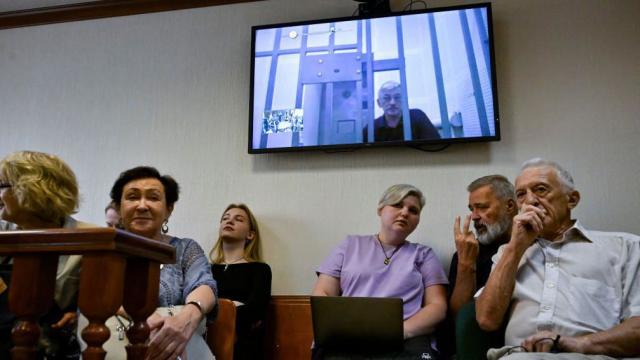
During his appeal, Orlov, speaking via video link from custody in Syzran, made a poignant statement asserting that he regretted nothing and would not repent for his actions. He quoted Telford Taylor, a US prosecutor involved in the Nuremberg trials after World War II, who described the Nazis as having utterly destroyed justice and law, turning the judicial system into a tool of dictatorship. Orlov remarked that Taylor’s words could now be applied to the current state of Russia’s judicial system, particularly for political prisoners.

The appeal hearing, held at the Moscow city court, drew international attention with ambassadors from the US, UK, and several other Western nations present. Orlov’s original conviction and subsequent sentencing earlier this year followed a retrial, where an earlier fine was replaced with imprisonment after prosecutors argued the original sentence was too lenient.

Oleg Orlov has been a pivotal figure in Memorial, a group dedicated to commemorating victims of Soviet oppression while advocating against contemporary human rights abuses in Russia. Despite Memorial being banned in Russia in 2021, it received the Nobel Peace Prize in 2022 alongside Belarusian activist Ales Bialiatski and the Ukrainian Center for Civil Liberties for its contributions to civil society, peace, and democracy.

Orlov’s case is widely viewed as part of a broader crackdown on dissent in Russia, reflecting growing concerns about the state of civil liberties and the rule of law in the country.

Picture Courtesy: Google/images are subject to copyright