featured News Trending

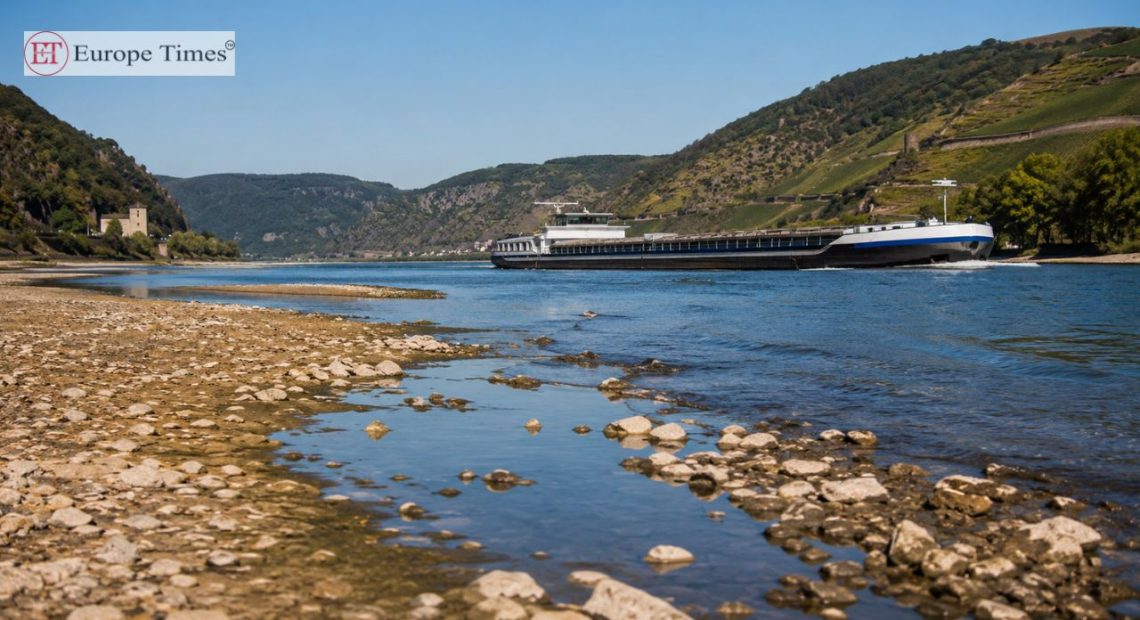
The Rhine River in Germany has fallen to record-low levels amid a prolonged heatwave and scarce rainfall, disrupting one of Europe’s most important commercial waterways. At the Kaub chokepoint near Koblenz, navigable water depth dropped to just 15 cm on Tuesday, below the previous record low of 25 cm recorded in 2018.

The extremely shallow conditions have forced many cargo operators to halt sailings on southern sections of the river. Vessels that continue operating can carry only around 20% of their normal loads, forcing freight to be spread across multiple ships and significantly increasing transportation costs. Some cargo is also being shifted to road transport.

The disruption could have wider consequences for Germany’s economy, as the Rhine carries major volumes of grains, minerals, coal and refined oil products. Analysts warn that prolonged record-low water levels could weigh on economic growth just as Germany’s economy is showing early signs of recovery. Northern sections of the river remain navigable, but continued dry weather could worsen the situation.

Pic courtesy: google/ images are subject to copyright

featured News Trending

Germany’s far-right Alternative for Germany (AfD) is leading polls in two eastern states ahead of September elections, despite economists warning that some of the party’s policies could hurt the regions’ already fragile economies. The AfD is polling at around 41% in Saxony-Anhalt and 36% in Mecklenburg-Vorpommern, where shrinking populations, labour shortages and lower incomes remain major challenges.

Experts say economic frustration and a lingering sense of being left behind since German reunification are important drivers of AfD support in the east. Both states have lost large numbers of young people, while ageing populations have contributed to severe skilled-worker shortages. Mecklenburg-Vorpommern’s GDP per capita is around 76% of Germany’s national average, while Saxony-Anhalt has the country’s highest proportion of pension-age residents.

Economists argue that AfD proposals, including reducing immigration, cutting state spending and potentially leaving the euro and European Union, could further weaken the region. A DIW Berlin study estimates Saxony-Anhalt could lose around €1,600 in annual income per person and 10,000 jobs under such policies. At the same time, local initiatives such as internationalising university programmes and attracting young talent are showing alternative ways for eastern Germany to address its labour and economic challenges.

Pic courtesy: google/ images are subject to copyright

featured News Trending

Germany’s services sector showed signs of stabilising in July as business activity contracted at a much slower pace and demand began to recover. The HCOB Germany Services Purchasing Managers’ Index (PMI) rose to 49.8 from 48.6 in June, its highest reading in recent months and just below the 50-point mark that separates contraction from growth.

The survey showed new business increased for the first time in five months, signalling improving demand, while employment declined at the slowest pace since job cuts began earlier this year. Export orders continued to fall but at the weakest rate in five months, suggesting external demand is also stabilising.

Despite the improvement, rising input costs and higher prices charged by businesses highlighted persistent inflationary pressures. Analysts warned that uncertainty surrounding the Iran war, volatile energy prices, and supply chain disruptions continue to pose risks, although Germany’s broader economy returned to growth in July as stronger manufacturing activity lifted the composite output index above the expansion threshold.

Pic courtesy: google/ images are subject to copyright

featured News Trending

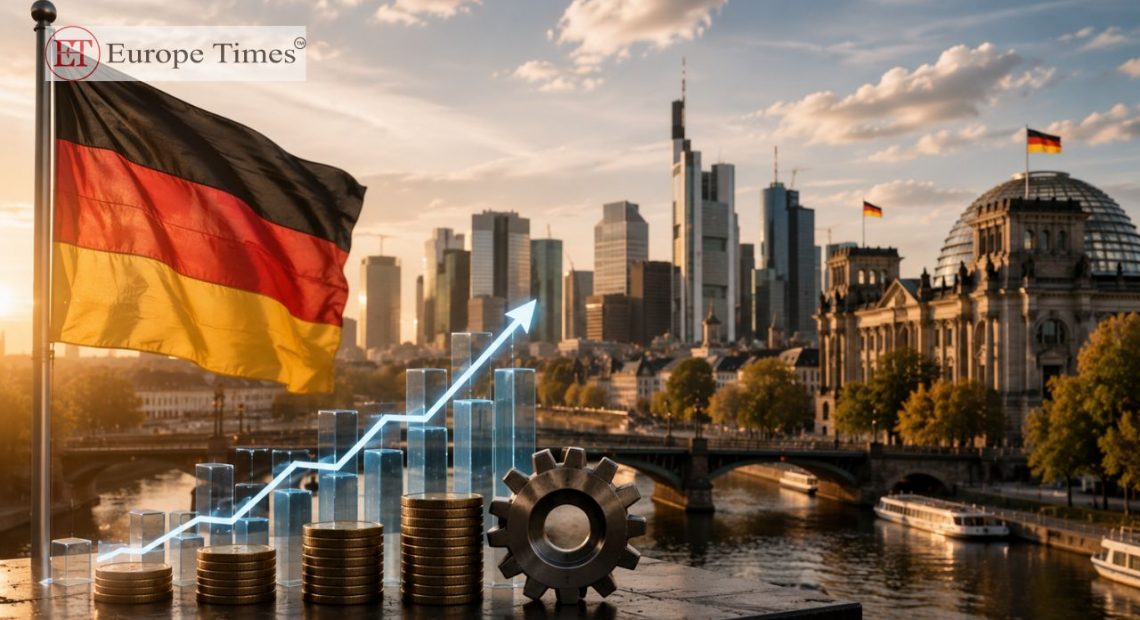
Germany’s economy likely recorded modest growth in the second quarter of 2026 despite challenges from the Middle East conflict, according to the Bundesbank. The central bank said strong industrial activity, steady exports, and resilient consumer spending helped offset the impact of higher energy and commodity prices.

The Bundesbank noted that Germany’s industrial sector benefited from robust foreign demand, while consumers continued spending despite rising energy costs and reduced purchasing power. Temporary factors, including supply shortages affecting some Asian competitors and early purchasing by customers anticipating future disruptions, also supported economic activity.

Looking ahead, the Bundesbank said economic pressures could ease if the conflict in the Middle East does not escalate further, though it warned that the war will likely continue to weigh on growth and inflation. The bank currently forecasts Germany’s economy to expand by 0.5% in 2026, with growth expected to improve to 0.8% next year.

Pic courtesy: google/ images are subject to copyright

featured News Trending

Germany’s far-right party, the Alternative for Germany (AfD), is gaining strong support in eastern Germany as Chancellor Friedrich Merz struggles with falling approval ratings and economic concerns. In Saxony-Anhalt, AfD leader Ulrich Siegmund believes the party could secure its first state premiership in the September elections. The AfD has been attracting voters through local “citizen dialogues,” with many supporters expressing frustration over rising living costs, immigration, and dissatisfaction with the current government.

Despite economic investments and development projects in towns like Halberstadt, concerns over inflation, energy prices, and Germany’s slowing economy continue to fuel public anxiety. Recent polls show the AfD reaching up to 41% support in Saxony-Anhalt and 29% nationally, ahead of Merz’s conservatives. The party argues that Germany’s identity is under threat from mass immigration and progressive social policies, while mainstream parties continue to reject any cooperation with the AfD under the country’s political “firewall” strategy.

The possibility of an AfD-led state government has sparked concern among officials and political rivals, especially given the party’s classification as “far-right extremist” by regional security authorities. Critics warn that handing the AfD control of state institutions could have major consequences for German politics. However, many voters at recent rallies said they are willing to give the party a chance, believing traditional parties have failed to address economic struggles and public concerns.

Pic courtesy: google/ images are subject to copyright