featured News Trending

Pope Leo criticized world leaders for prioritizing military conflicts over humanitarian needs, saying governments are “feeding” wars while millions continue to face hunger. Speaking at the headquarters of the United Nations World Food Programme (WFP) in Rome, the pope warned that global political and moral priorities have become dangerously unbalanced.

The pontiff urged nations to increase spending on food security and humanitarian aid rather than limiting assistance due to geopolitical interests. He stressed that access to food is a fundamental human right and argued that tackling hunger should be a central international priority. Leo also cautioned that many humanitarian crises are being pushed aside as countries focus more on national security and economic concerns.

Highlighting the link between hunger and global stability, Pope Leo said food security is essential for lasting peace and international security. His remarks come as the WFP warns that acute food insecurity is expected to worsen across multiple countries due to conflict, funding shortages, and climate-related challenges. The agency is seeking $13 billion in donations for 2026 to support its worldwide operations.

Pic courtesy: google/ images are subject to copyright

featured News Trending

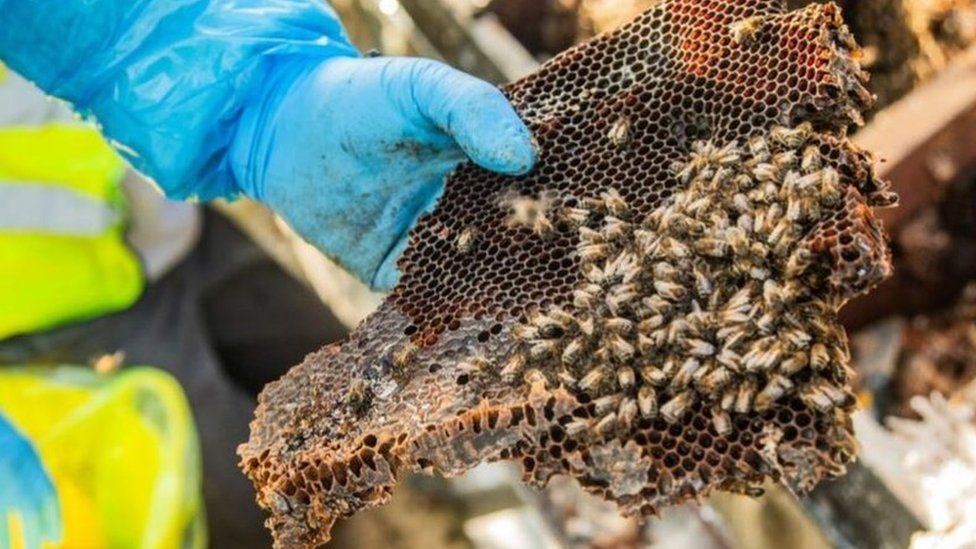
Researchers have found that beeswax could be crucial for preserving food in war zones like Ukraine. Due to Russian attacks on energy infrastructure, many areas in Ukraine face blackouts, leading to a lack of refrigeration during the summer. To address this, UK scientists are helping Ukrainian beekeepers develop beeswax wraps for perishable foods.

Ukraine, the largest honey producer in Europe, has been working with researchers from Cardiff University. The team, led by Professor Les Baille, has been analyzing beehives to identify the best beeswax for food preservation. They have created various beeswax wrap “recipes,” combining beeswax with other antimicrobial plants like sage to enhance preservation.

These beeswax wraps, traditionally used to extend the life of sandwiches, can now be used for various other foods. The research involves rubbing beeswax into cloth or paper to create the wraps, which can extend the freshness of food by a couple of days in the absence of refrigeration.

The Cardiff team has been collaborating with academics and beekeepers in Ukraine, testing beehives to find the most effective beeswax. In Kharkiv, which has experienced heavy fighting, researchers at Kharkiv Polytechnic Institute are disseminating this information through social media to help Ukrainians try these wraps during the summer.

Dr. Yuliia Yudina from the National University Pharmacy at Kharkiv Polytechnic Institute noted that power cuts have led to significant food waste. The beeswax wraps can help keep bread, fruits, and vegetables fresher. The initiative has even garnered interest from the Ukrainian military, highlighting its potential impact in conflict zones.

Professor Baille emphasized that their goal is to make a small but meaningful difference from their safe homes. This project hopes to harness the natural antibiotic properties of honey, a practice dating back to Ancient Greece, to aid those in need in war-torn regions.

Picture Courtesy: Google/images are subject to copyright

News Trending War

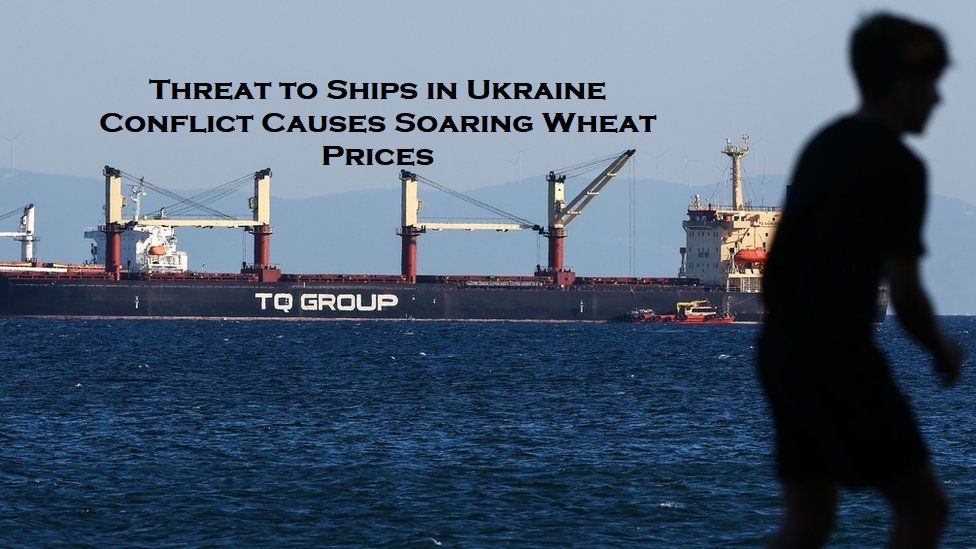
Wheat prices on the global markets have experienced a sharp rise following Russia’s declaration that it would consider ships heading to Ukrainian ports as potential military targets. This decision came after Moscow withdrew from a UN agreement that guaranteed safe passage for grain shipments through the Black Sea. In recent nights, Russia has launched attacks on Ukraine’s grain facilities in cities like Odesa. The White House has accused Russia of planning to attack civilian ships and then falsely blaming Ukraine for it. As a result of these developments, European stock exchange wheat prices surged by 8.2% to €253.75 per tonne, with corn prices also rising by 5.4%. US wheat futures recorded their highest daily increase since Russia’s invasion of Ukraine in February 2022, jumping 8.5%. President Vladimir Putin has expressed willingness to return to the international grain agreement if certain demands, including the lifting of sanctions on Russian grain and fertiliser sales, are met.

Amid these escalating tensions, Russian air strikes continued in Black Sea coastal cities for three consecutive nights, leading to civilian casualties. The attacks have targeted grain export infrastructure and raised concerns about the safety of shipping routes for essential food supplies. Ukraine’s options for exporting grain by rail are limited, with rail capacity smaller than shipping volumes, and some EU countries in Eastern Europe blocking Ukrainian grain to protect their own farmers.

Analysts have warned that Russia’s threatened escalation could disrupt waterborne grain shipments from the Black Sea, impacting both Russian and Ukrainian exports. Some Ukrainian officials have called on the UK, US, France, and Turkey to provide military convoys and air defenses to protect grain ships heading to Odesa.

The situation has raised concerns about potential impacts on global food security and inflation, particularly in developing countries, leading to social instability, food shortages, and increased migration. Critics accuse Russia of using food supplies as a political tool in its conflict with Ukraine.

Picture Courtesy: Google/images are subject to copyright