featured Interview

Some careers evolve in a straight line. Others expand outward layer by layer absorbing experiences, disciplines, and responsibilities along with the trajectory. Dr. Varghese Moolan’s expedition belongs to the latter, shaped not by a single ambition but by a constant pursuit of scale, meaning, impact and spiritual gracefulness.

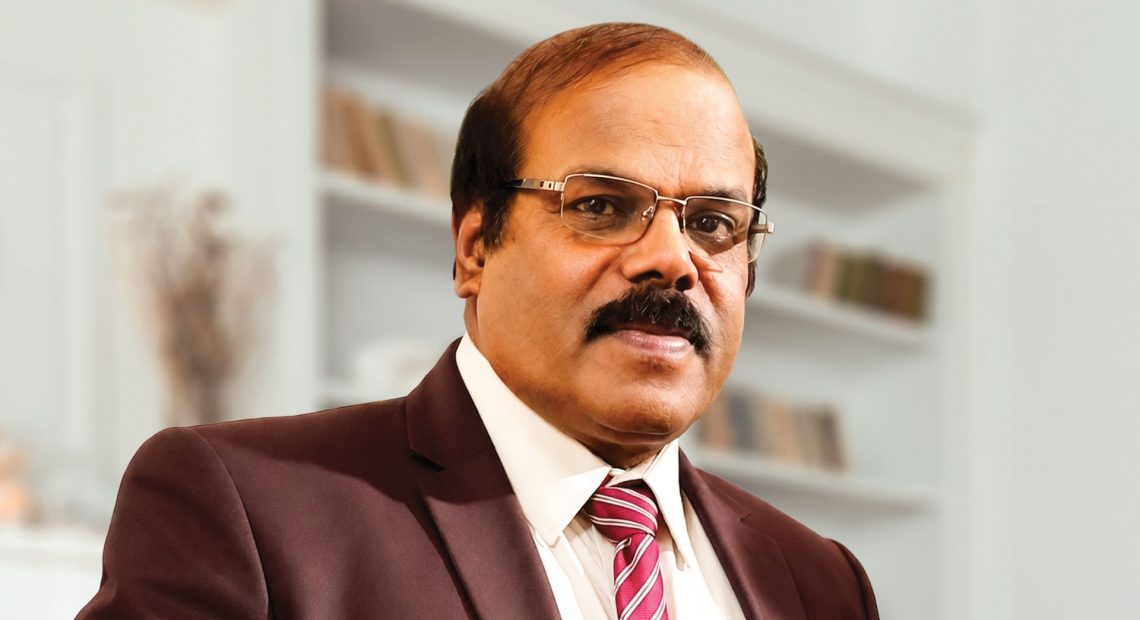
At a glance, he is a global entrepreneur, the Chairman of the Varghese Moolans Group, and a maven in the international spices and food industry. Look closer, and a far more intricate portrait emerges—of a policy influencer, a cultural thinker, a film producer, a writer, a philanthropist and a spiritual activist whose work touches lives across the space-time fabric. What distinguishes him is not just the diversity of the roles he juggles with panache, but the coherence of his vision.

Early Life and Formative Influences

Before he became a global entrepreneur, Varghese Moolan’s journey began in the town of Angamaly in Kerala, where he was raised in an environment that combined traditional values with a strong emphasis on education, based on charity and discipline.

His academic path reflected both curiosity and versatility. He completed his schooling at St. Joseph’s High School, Angamaly, pursued his Pre-Degree studies at Sacred Heart College, Thevara, and later graduated in Zoology, Botany, and Chemistry from Sree Sankara College, Kalady. During his college years, he was not only academically engaged but also actively involved in extracurricular leadership—serving as the college basketball captain and as the Ernakulam District Secretary of the All India Catholic University Federation.

Dr. Varghese Moolan with Rajeev Chandrasekhar, BJP Kerala State President and MLA, Nemom

What set his early years apart, however, was his inclination toward writing and exploration towards the unseen. As a student, he authored novels and contributed articles to contemporary publications, reflecting a deep engagement with social and philosophical ideas. His travels across India in his early professional life further expanded his worldview, exposing him to the cultural, economic, and social realities of the country.

These formative experiences—blending education, leadership, travel, and creative expression—played a crucial role in shaping his later approach to business, governance, and philanthropy. They instilled in him not only ambition, but also a lasting awareness of diversity, inequality, and the need for meaningful esoteric impact.

Rewriting the Narrative of Indian Food Brands

When Varghese Moolan entered the Middle Eastern market, Indian food products were not held in high regard particularly. Quality inconsistencies and lack of standardisation had created a trust deficit among consumers. Instead of becoming complacent and adjusting to that scenario, he chose to swim against the tide.

His early ventures in retail and distribution soon evolved into a larger strategy—one that emphasised control over quality, packaging, and supply chains. By establishing manufacturing operations in India and exporting under his own brands, he ensured that every product carried the stamp of consistency and perfection. This shift was not immediate, but it was decisive. Over time, the Varghese Moolans Group expanded its footprint across more than two dozen countries, building a reputation rooted in reliability and authenticity.

Among the brands that emerged from this strategy was Vijay, Jay and Butterfly Masalas & Foods, developed as part of the group’s effort to standardise Indian spice products for international markets. The brand reflected his emphasis on quality assurance, consistent flavour profiles, and modern packaging—helping strengthen consumer confidence in Indian-origin food products and making them hot favourites in retail shelves around the globe.

The transformation he ignited went beyond business success. It helped reposition of Indian spices and food products in global markets—not as alternatives, but as preferred choices.

Scaling with Structure and Strategy

The growth of the Varghese Moolans Group was never accidental. It was the result of deliberate decisions—each aligned with long-term sustainability.

His company diversified steadily, introducing a wide range of products that catered to both domestic and international markets. From spices and curry powders to ready-to-cook mixes, grains, oils, and packaged foods, the brand portfolio expanded in response to evolving consumer needs.

Behind this expansion was a disciplined approach:

•Maintaining international standards in production and packaging

•Building strong distribution networks across regions

•Ensuring timely delivery and consistent availability

•Investing in market-specific strategies for global reach

This combination of operational rigour and market insight allowed the group to scale without compromising its core values.

It also established Varghese Moolan as a leader who understands that growth is not just about expansion—it is about sustaining trust and integration at every stage.

A Voice in Governance and Trade

Parallel to his entrepreneurial journey, Varghese Moolan has played a significant role in shaping conversations around trade, policy, and ethics.

His positions—including India–Commonwealth Trade Commissioner, Chairman of the Anti-Corruption Foundation of India, and leadership roles within the Spices Board and Food Corporation of India—reflect a career that intersects with governance at multiple levels. These roles are not merely honorary. They demand insight into global trade dynamics, regulatory frameworks, and the complexities of modern economies.

Dr. Varghese Moolan with Prime Minister Narendra Modi

His contributions in these capacities underline a consistent belief: economic growth must be guided by integrity and accountability.

In a realm often challenged by ethical dilemmas, his involvement in anti-corruption initiatives reinforces his commitment to transparent systems.

Retail Innovation with Social Intent

One of the more distinctive aspects of Varghese Moolan’s journey is his ability to identify gaps not just in markets, but in systems. His introduction of margin-free supermarket chains first in Saudi Arabia, then in Kerala was a direct response to consumer exploitation in pricing. By standardising costs and reducing excessive margins, he created a retail model that prioritised fairness.

This initiative was not just commercially viable—it was socially relevant.

At the same time, his expansion into organic farming through Moolans Organic Gardens reflected an early recognition of sustainability as a business imperative. By cultivating crops used in his own production processes, he ensured both quality control and environmental responsibility.

This integration of agriculture and industry represents a forward-thinking approach—one that aligns economic activity with ecological balance.

Philanthropy as a System, Not an Afterthought

For Varghese Moolan, philanthropy is not an extension of success—it is an integral part of it.

Through the Varghese Moolans Foundation, he has built a structured framework for social impact, addressing critical areas such as healthcare, education, housing, and community welfare.

Among its most impactful initiatives is Touch-A-Heart, a project that provides free cardiac surgeries to underprivileged children. By 2025, the initiative is expected to have supported over 306 young patients, offering them not just treatment, but a second chance at life.

Complementing this are programs like:

•Kindle-A-Candle, offering financial assistance for medical and personal needs

•Fly-The-Firefly, supporting students with scholarships and learning tools; along with supporting school buildings and playgrounds.

•Home-Sweet-Home, building dozens of houses for the homeless.

•Nanma Maram, encouraging communities to share food and clothing

•Moolans Medicare – facilitating medical tourism to India by connecting international patients with leading hospitals, while also organising medical camps and promoting affordable healthcare access.

What makes these initiatives significant is their continuity. They are not one-time efforts, but ongoing systems designed to create lasting change.

During periods of crisis—whether natural disasters or public health emergencies—the foundation has consistently responded with scale and urgency, reaching thousands of families in need.

Connecting a Global Community

Varghese Moolan’s vision extends beyond industries into communities.

As the Founder Chairman of the Global Malayalee Council, he has created a platform that connects Indians across the world, fostering collaboration in business, education, and cultural exchange.

With a presence in over 24 countries, the council operates as a bridge—linking the aspirations of the diaspora with opportunities in India.

Its initiatives range from business forums and cultural programs to charitable projects; all aimed at strengthening the relationship between resident and non-resident Indians. This effort reflects a broader understanding of globalization—not just as an economic phenomenon, but as a human network.

The Creative Dimension

Amidst his extensive professional and philanthropic commitments, Varghese Moolan has consistently nurtured his creative instincts. He is the author of multiple literary works, including novels that explore philosophical and social themes. His writing reflects introspection and a deep engagement with human experiences.

As a lyricist and music composer, he has also contributed to devotional music, with the album “Dheiveekam” showcasing his artistic sensibilities. These pursuits reveal a different dimension of his personality—one that values expression, reflection, and cultural continuity. His musical journey continues with spiritually resonant works such as ‘Agathanakaname Nadha’, reinforcing his ability to connect faith, emotion, and artistic expression through music.

They also highlight an important truth: Creativity and leadership are not separate—they often enrich each other.

Cinema as a Medium of Truth

Varghese Moolan’s entry into cinema represents yet another evolution in his journey.

As the producer of “Rocketry: The Nambi Effect”, he took on the challenge of bringing a complex and sensitive story to the screen. The film, based on the life of scientist Nambi Narayanan, sought to correct a historical injustice and present a narrative rooted in truth.

Its reception was both critical and global:

•Showcased at the Cannes Film Festival

•Released in over 70 countries

•Honoured with the National Film Award for Best Feature Film (2023)

This achievement underscores his ability to extend his vision into storytelling—using cinema not just as entertainment, but as a platform for awareness and justice. Extending his engagement with meaningful storytelling, he is also associated with the upcoming film GDN, further reflecting his commitment to cinema that carries strong social and emotional narratives.

Recognition that Mirrors Contribution

Over the years, Varghese Moolan’s work has been acknowledged through numerous awards and honours across business, social service, and cultural domains. From international business excellence awards to national recognitions and honorary doctorates, these accolades reflect the breadth of his contributions. His recognition at global platforms, including institutions like the British Parliament, further reinforces his influence beyond national boundaries.

Among the notable recognitions are:

•National Film Award (2023) for producing Rocketry: The Nambi Effect

•International Golden Book Award (2025) for Dimensional Progressive Theory

•Bharat Jyothi Award (2006) for contributions to national development

•Export Excellence Award (2008, USA)

•Pravasi Bharati (Kerala) Award (2009) for social impact

•International Business Excellence Award (2010, Kuala Lumpur)

•Saudi Business Excellence Award (2014, Riyadh)

•Order of Golden Peace Maker (2017, Russia) for global philanthropy

•Honorary Doctor of Letters (D.Litt.), conferred by Kings University (2019), in recognition of his outstanding contributions to marketing and the global food industry

In addition to these, he has received numerous other national and international recognitions across diverse fields. Yet, what stands out is not the number of awards, but what they represent—a career built on consistency, credibility, and impact.

Dr. Varghese Moolan receiving a national award from the President of India, Droupadi Murmu

Expanding Thought Leadership: Dimensional Progressive Theory

Beyond enterprise, governance, and philanthropy, Dr. Varghese Moolan’s journey also extends into the realm of original thought leadership. His Dimensional Progressive Theory reflects a culmination of his lived experiences across industries, cultures, and systems.

He presented this theory at the British Parliament in 2024 before an audience comprising experts from more than 60 countries. The theory was later published at the Sharjah Book Festival by Sheikh Mohammed Abdullah Al Marsooqi, bringing it to an international audience.

In 2025, the theory was honoured with the prestigious International Golden Book Award. In previous years, this award has been conferred upon globally respected figures such as Sadhguru and Dalai Lama.

An Enduring Philosophy

At the core of Dr. Varghese Moolan’s journey lies a simple but powerful idea: progress must be shared.

This philosophy is evident in every aspect of his work—whether it is building businesses that create employment, designing systems that ensure fairness, or initiating projects that uplift communities.

It is a perspective that transforms success into responsibility.

Family and Personal Life

Beyond his expansive professional journey, Varghese Moolan remains deeply anchored in family—an influence that has quietly shaped both his values and his vision.

At the centre of this foundation is his wife, Margaret, a postgraduate in Economics and a former college lecturer, who continues to play an active role within the Varghese Moolans Group. Her presence reflects a partnership that extends beyond personal life into shared responsibility and stewardship.

This sense of continuity is carried forward by the next generation. His son, Vijay Varghese Moolan, serves as the group’s CEO, leading operations across India and the Middle East. His daughter-in-law, Kashmeera, with a background in Computer Science, is also involved in managing aspects of the family’s business activities.

Dr. Varghese Moolan with wife Margaret and son Vijay Varghese Moolan

His daughter, Dr. Jaisree Varghese Moolan, has pursued a distinguished career in medicine and is based in Australia. Her husband, Dr. Kiran Suresh, a practicing psychiatrist, reflects the family’s engagement with professional excellence beyond business.

Extending into the next generation, his grandchildren—Shreya Kiran and Mantra Vijay Moolan—symbolise the continuity of a legacy that spans across geographies and generations.

Together, the family represents a blend of entrepreneurship, intellect, and shared values, forming an integral part of a journey that continues to evolve.

Continuing Forward

Even today, his journey shows no signs of slowing down. New ventures, expanding philanthropic initiatives, and evolving creative pursuits continue to define his path.

What makes his story particularly relevant is its adaptability. It reflects a mindset that is open to change, responsive to challenges, and committed to growth.

The Larger Picture

Dr. Varghese Moolan’s life cannot be confined to a single narrative. It is a convergence of enterprise, ethics, creativity, and compassion.

He represents a model of leadership that is increasingly essential in today’s world—one that understands scale but values substance, that pursues success but prioritizes impact.

In tracing his journey, one does not just encounter a successful individual, but a framework for what meaningful success can look like.

And that, perhaps, is what makes his story truly compelling.

Pic Courtesy: pegasus/ images are subject to copyright

Food News Trending

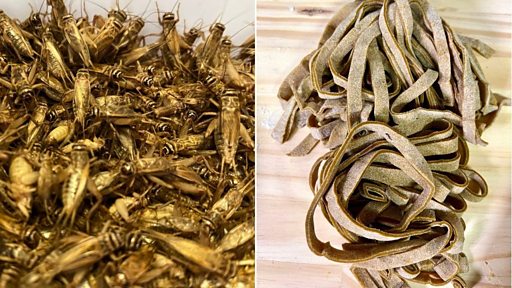
In a small room near the Alps in northern Italy, millions of crickets are being processed to become food despite initial resistance. The crickets are frozen, boiled, dried, and pulverized to create a light brown flour used in various food products such as pasta, bread, energy bars, and even sports drinks. Italy, known for its culinary traditions, has traditionally resisted the idea of eating insects, with the government even taking steps to ban their use in pizza and pasta production. However, several Italian producers have been experimenting with cricket-based pasta, pizza, and snacks.

The shift towards insect consumption in Italy is driven by sustainability concerns. Insect farming requires significantly less water and land compared to traditional livestock farming, making it a more environmentally friendly option. Insects are also rich in vitamins, fiber, minerals, and amino acids, making them a nutritious superfood. However, the main challenge to widespread adoption of insect-based food is the price, as it remains more expensive than traditional alternatives.

In addition to cost, social acceptance plays a role in the resistance to insect food in Italy. The country prides itself on its Mediterranean diet, and some view insect products as a threat to Italian culinary traditions. Concerns about the potential health effects of consuming insects and the fear of deviating from established eating habits contribute to the opposition.

Italy is not the only country divided on the issue of insect food. Poland and other European countries have seen debates and political disputes surrounding the topic. However, countries like Austria, Belgium, and the Netherlands have shown more openness to insect consumption.

As the global population continues to grow, finding sustainable food sources becomes crucial. Insect consumption is seen as a potential solution to meet the rising demand while minimizing the environmental impact. With the recent approval of insect consumption by the EU, the insect food sector is expected to grow, leading to potential price reductions and increased availability.

Producers like Ivan Albano, who runs the Italian Cricket Farm, see insect farming as an environmentally friendly and sustainable practice that could play a role in addressing global food challenges. Despite initial resistance, more people are showing curiosity and ordering cricket-based products, indicating a shifting mindset towards insect consumption. The hope is that as awareness and acceptance increase, insect food will become a viable option to feed the growing population while minimizing ecological impact.

Picture Courtesy: Google/images are subject to copyright