Inflation increased across four major German states in July, according to preliminary figures, signalling that the country’s national inflation rate is also likely to rise. Bavaria, North Rhine-Westphalia, Baden-Wuerttemberg and Lower Saxony all reported higher inflation compared with June, reflecting continued price pressures. The German government expects inflation
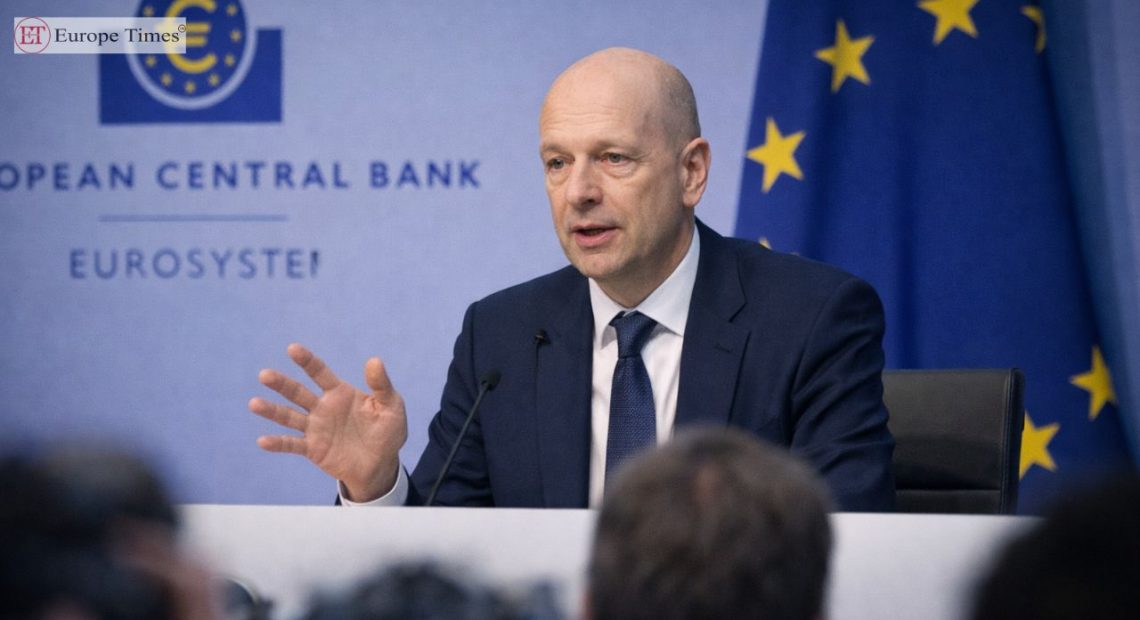
The European Central Bank (ECB) expects inflation in the eurozone to return to its 2% target within the next year, according to ECB Chief Economist Philip Lane. Speaking after the central bank kept interest rates unchanged, Lane described the current inflationary pressures as a “medium-sized” shock that requires a measured policy response rather than aggressive
European Central Bank (ECB) President Christine Lagarde has said she cannot completely rule out leaving her position before the end of her term in October 2027 if she decides to play a role in French politics. In an interview with French newspaper Les Échos, Lagarde said it was “possible” she could depart early, adding that […]
Manufacturers across the Eurozone accelerated purchases of raw materials in April, building up inventories amid fears of supply disruptions and rising costs linked to tensions in the Middle East. The S&P Global Eurozone Manufacturing PMI rose to 52.2, indicating growth, as both producers and customers rushed to secure supplies before prices climb further. Despite the
Euro zone manufacturing activity expanded at its fastest pace in nearly four years in March, according to a survey by S&P Global, with the Manufacturing Purchasing Managers’ Index rising to 51.6 from 50.8 in February. While the headline figure signaled growth, analysts noted that supply chain disruptions linked to the Middle East conflict temporarily inflated […]
Inflation increased to at least 2.5% across four German states in March, driven largely by rising energy prices linked to the ongoing U.S.-Israeli conflict with Iran. In North Rhine-Westphalia, Germany’s most populous state, annual inflation climbed to 2.7% from 1.8% in February. Similar increases were recorded in Bavaria, Baden-Wuerttemberg and Lower Saxony, signalling a
European Central Bank President Christine Lagarde is reportedly considering an early departure from her post, potentially before France’s 2027 presidential election. The move, cited by the Financial Times, would allow outgoing President Emmanuel Macron to have a say in selecting her successor, as a far-right victory next year could complicate the choice. ECB officials,
The European Central Bank (ECB) should be careful about taking preemptive policy action in response to rising uncertainty, Austrian central bank chief Martin Kocher said in an interview with German outlet Platow. Kocher noted that while geopolitical risks have intensified recently, central banks should avoid committing to policy moves before risks clearly materialise.
Germany’s private sector lost momentum in November, with manufacturing unexpectedly contracting and the services sector expanding at a slower pace, according to the latest HCOB flash composite Purchasing Managers’ Index (PMI) compiled by S&P Global. The index slipped to 52.1 from 53.9 in October, marking a two-month low. Despite the decline, the reading stayed above