News Trending War

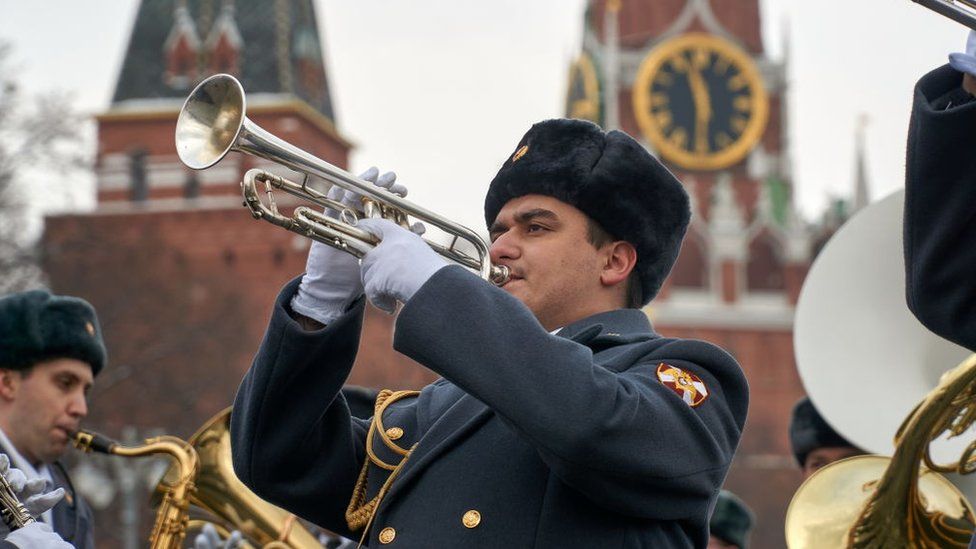
The Ukrainian parliament has approved a ban on some Russian music in the media and public venues. The prohibition will not apply to all Russian music; rather, it will apply to music made or performed by Russian residents or those who lived in Russia after 1991.

Artists who have spoken out against Russia’s war in Ukraine may be excluded from the ban. The Act also makes it illegal to import books from Russia and Belarus. Many people in eastern and southern Ukraine have long felt a deep bond with Russia, and many of them speak Russian as their first tongue.

However, since Russia’s invasion of Ukraine, many Ukrainians have expressed a desire to distance themselves from Russian culture.

Some Russian music is prohibited from being aired or performed on television, radio, schools, public transportation, hotels, restaurants, cinemas, and other public venues, according to a measure voted by MPs on Sunday. It received 303 of the 450 lawmakers in the Ukrainian parliament’s approval.

According to BBC Monitoring, the paper claims that the ban will “minimise the risks of possible hostile propaganda through music in Ukraine” and “raise the volume of national music products in the cultural arena.” Except for individuals who are Ukrainian nationals or were at the time of their death, the prohibition will apply to musicians who have or had Russian citizenship at any time after 1991, the year Ukraine declared independence.

By submitting an application to Ukraine’s security service, Russian artists who oppose the war in Ukraine might request an exemption for their songs. According to the BBC’s Ukrainian Service, they must affirm that they support Ukraine’s sovereignty and integrity, call on Russia to immediately cease its aggression against Ukraine, and promise not to take any actions that contradict these written remarks.

According to Ukraine’s official broadcaster (Suspilne), the document also includes legislation to boost the share of Ukrainian music aired on the radio to 40% and to expand the use of Ukrainian in daily programmes to 75%.In a bill that runs concurrently with the one regulating music, books imported from Russia, Belarus, and the occupied Ukrainian territory, as well as Russian-language material imported from other nations, will be prohibited.

Picture Courtesy: Google/images are subject to copyright

News Trending War

According to Nato’s head, the West must prepare to continue assisting Ukraine in a long-term conflict. The cost of conflict, according to Secretary-General Jens Stoltenberg, is enormous, but the cost of allowing Moscow to achieve its military objectives is much higher.

His remarks came as UK Prime Minister Boris Johnson cautioned that a longer-term confrontation was inevitable. Both Mr. Stoltenberg and Mr. Johnson stated that supplying more weapons would increase the likelihood of a Ukrainian victory.

“We must plan for the possibility that it will take years. We must not abandon our support for Ukraine “In an interview with the German tabloid Bild, the Nato head stated. “Even if the expenses are significant, not only in terms of military support, but also in terms of growing energy and food expenditures.” According to the head of the Western military alliance, providing Ukraine with more modern weapons will improve its chances of liberating the country’s eastern Donbas region, which is now under Russian control.

Russian and Ukrainian soldiers have been fighting for control of territory in Ukraine’s east for several months, with Moscow making gradual progress in recent weeks.

Boris Johnson, writing in the Sunday Times, accused Russian President Vladimir Putin of engaging in a “war of attrition” and “seeking to crush Ukraine down by pure cruelty.”

He wrote, “I’m afraid we’ll have to brace ourselves for a protracted conflict.” “The most important factor is time. Everything hinges on Ukraine’s ability to improve its defence capabilities faster than Russia’s ability to renew its offensive capabilities.” The prime minister, who visited Ukraine’s capital on Friday, warned that supplies of weaponry, equipment, ammunition, and training to Kyiv needed to keep up with Moscow’s rearmament operations.

Picture Courtesy: google/images are subject to copyright

News Trending War

Ukraine’s attempt to join the European Union has been boosted significantly by a proposal that it be granted candidate status. However, the European Commission has stated that the government needs reform in areas such as the rule of law, oligarchs, human rights, and corruption. Ukrainians have demonstrated that they are “willing to die” for their European dreams, according to European Commission President Ursula von der Leyen.

The group cautioned that the country needed to make reforms in the areas of the rule of law, oligarchs, human rights, and corruption. It comes after four European politicians visited Kyiv on Thursday and publicly backed Ukraine’s membership bid. Ukraine also claims that Russia is preparing an assault on the eastern city of Slovyansk, as battle for control of Severodonetsk continues.

“Europe can construct a new history of freedom precisely because of the bravery of the Ukrainians,” Mr Volodymyr Zelenskyy said in his nightly video address, “and ultimately remove the grey zone in Eastern Europe between the EU and Russia.” “Ukraine has gotten closer to the EU than at any other moment since independence,” he remarked, hinting at “positive news” on the way.

Ukraine would be the EU’s largest country by area and fifth most populous if entered. All three candidates are significantly poorer than any existing EU member, with per capita income roughly half that of Bulgaria, the poorest.

Picture Courtesy: Google/Images are subject to copyright

News Trending War

Germany has accused Gazprom, the Russian state-owned gas company, of seeking to raise energy prices by drastically cutting supplies. Gazprom said it will limit gas exports to Germany to less than 70 million cubic metres per day, which is less than half the current rate.

It cited the need to service equipment in the Nord Stream pipeline as the reason. However, Germany’s economy minister, Robert Habeck, stated that it was a “political choice” rather than a technical one. “Clearly, it’s a plan to agitate the market and drive up prices.” On Tuesday, Gazprom said that the Nord Stream 1 gas flow would be reduced from 167 million to 100 million cubic metres per day, but on Wednesday, it was further reduced to 67 million cubic metres per day.

According to energy firm ENI, Gazprom cut its gas supplies to Italy by roughly 15% on Wednesday. Italy, like Germany, is significantly reliant on Russian gas, with 40 percent of its imports coming from Russia.

The action comes just two weeks after European Union leaders agreed to halt most Russian oil imports by the end of 2022 as retaliation for Moscow’s invasion of Ukraine.

After refusing a demand that “unfriendly countries” pay in Russian roubles, Russian natural gas supply to Poland, Bulgaria, Finland, Denmark, and the Netherlands were already halted.

The payment demand was interpreted as an attempt by Russia to bolster the rouble after it was battered by Western sanctions. Demand for roubles was projected to rise as foreign exchange demand increased, pushing up the currency’s value.

Mr. Habeck stated that Russia’s actions demonstrated that European countries must urgently eliminate their reliance on fossil fuels. Germany halted the construction of the Nord Stream 2 pipeline in February, just as Russia began its conflict in Ukraine. The minister said he would wait to see how the decision affected the European and German gas markets, but that suppliers had always been able to get gas elsewhere.

He added, “We don’t have a supply problem in Germany either.” “Gas will almost certainly be kept indefinitely.” In the last several days and weeks, we’ve made significant progress in this area.

“However, we’ll have to wait at least two or three days to obtain a complete picture of how things are progressing right now.”

On Wednesday, the EU and Israel and Egypt inked a framework deal aimed at increasing the amount of Israeli natural gas delivered to European countries.

Picture Courtesy: google/images are subject to copyright

News Trending

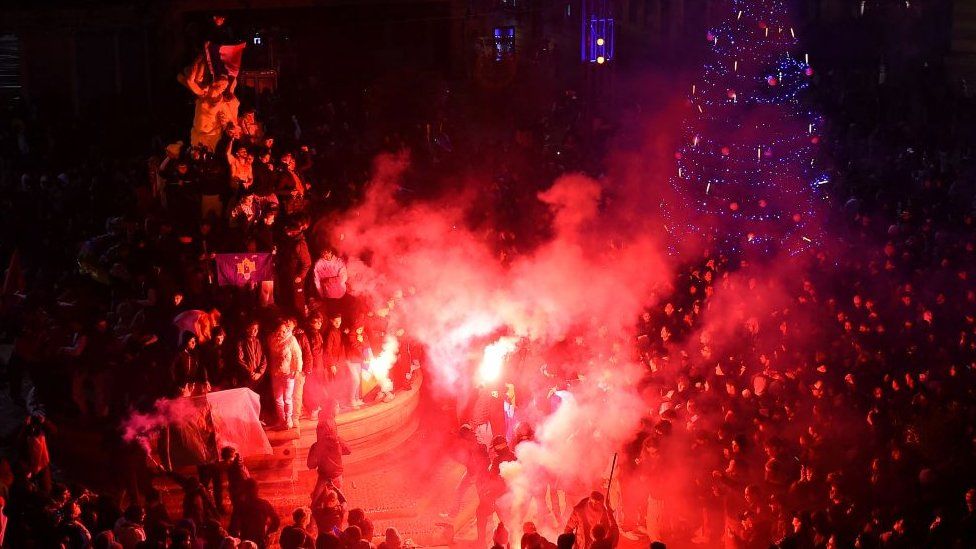
Following a strong challenge from a coalition of left-wing parties in National Assembly elections, French President Emmanuel Macron faces losing his outright majority. In the first round of voting on Sunday, Mr. Macron’s Ensemble (Together) and Jean-Luc Mélenchon’s left-green coalition finished neck and neck.

Next week’s second round will be a challenge for the president to win 289 seats and preserve his majority. The turnout was an all-time low of 47.5 percent. Within half an hour of the initial projection, a sombre Jean-Luc Mélenchon claimed that his alliance had taken the lead: “The truth is that the presidential party is battered and lost at the end of the first round.”

He urged voters to show out in large numbers next Sunday “to definitively reject Mr Macron’s majority’s terrible ideas.” Emmanuel Macron, a centrist, won a second term in April, but he will struggle to push through changes without a majority in the Assembly. He wants to progressively raise the retirement age from 62 to 65, but Mr Mélenchon wants it to be lowered to 60.

Ensemble received 25.75 percent of the vote, just ahead of the left’s 25.66 percent, and was expected to control the National Assembly. Ensemble has 275 to 305 seats, according to TF1 pollster Ifop, with the green-left alliance having 175-205 seats. According to Ipsos for France Télévisions, Mr Macron’s alliance will win 255-295 seats in the lower house and 150-190 seats on the left.

The lowest turnout in contemporary French history. Many voters apparently decided to take advantage of the warm weather in France, which reached 27 degrees in Paris. However, the election campaign has so far been mainly dormant.

Mr Mélenchon has been an outlier, running a ferocious campaign since finishing third in the presidential race. With the motto “Mélenchon Prime Minister,” he has formed the Nupes alliance, which includes his own far-left party, France Unbowed, the Socialists, Communists, and Greens.Until 2002, the two elections were held separately, which meant that the government was sometimes led by a party other than the president’s, a practise known as cohabitation. If Mr Macron’s majority is lost, he may be forced to work with the left.

Picture Courtesy: Google/images are subject to copyright

News Trending

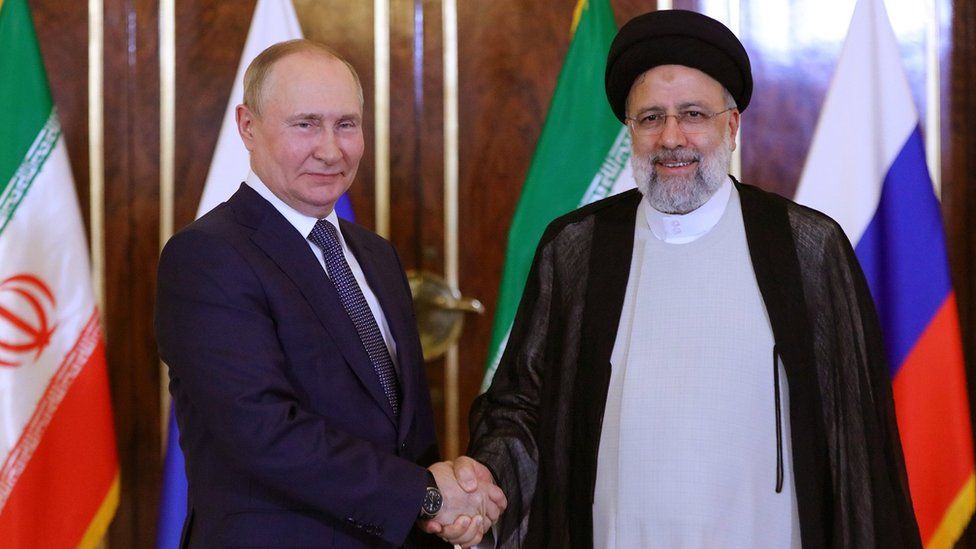
Vladimir Putin’s admiration for Peter the Great is well-known, but he now appears to have his own notions of “Greatness.”

He has openly compared himself to the Russian tsar, equating Russia’s invasion of Ukraine today with Peter’s expansionist wars three centuries ago, and admitting that his own war is a land grab in his strongest statement yet. Mr Putin’s apparent empire-building ambitions are bad news for Ukraine, and his comments have enraged other neighbours, including Estonia, which called them “completely unacceptable.”

When the remarks were made, Russia’s president was meeting with young scientists and entrepreneurs. Prior to discussing IT and tech development, he discussed politics and power, specifically the new battle for geopolitical dominance that he sees. He told his small audience that Peter the Great was a role model in that speech.

“You might think he was fighting with Sweden, seizing their lands,” Mr Putin said, referring to Peter’s Northern Wars, which he launched as he forged a new Russian Empire at the turn of the 18th century. “But he didn’t seize anything; he reclaimed it!” he argued, pointing out that Slavs had lived in the area for centuries.

Mr Putin concluded, “It appears it has fallen to us, too, to reclaim and strengthen,” with a near-smirk that made it clear he was referring to Ukraine and his goals there. He claimed that Peter’s rule was proof that Russia had grown stronger as a result of its expansion.

Mr Putin has been citing Russia’s past a lot lately, and it’s always been carefully curated to suit his current cause. He wrote a massive essay several months before launching his attack on Ukraine in which he essentially argued against the country’s historical right to exist. When Russia invaded Ukraine on February 24, Putin falsely claimed that the invasion was a “special operation” limited to the eastern Donbas region in order to “de-Nazify” Ukraine and reduce the perceived threat to Russia.

Putin is selective in his use of history. Though a ruthless autocrat, Peter the Great was a huge admirer of Western ideas, science, and culture, famously constructing St Petersburg as a “window on Europe” and travelling the continent in search of knowledge to aid Russia’s modernization.

Putin’s increasingly repressive rule gradually shut that window to the West, and the war in Ukraine has slammed it shut completely. The idea of a Russian leader visiting Holland or Greenwich in search of ideas and inspiration, as the Tsar did in the past, now seems implausible. A series of words flashed up behind them as Putin lectured the young entrepreneurs on an 18th century tsar: ‘future,’ ‘confident,’ and ‘victory.’

In the face of Western condemnation and sanctions, Russia is determined to project defiance, and Putin himself appeared relaxed rather than threatened. However, history may have taught us something else.

From the Baltics to the Black Sea, Peter the Great eventually conquered land. Russia, on the other hand, had been fighting its Great Northern War for 21 years.

Picture Courtesy: google/images are subject to copyright

News Trending War

According to the head of the World Trade Organization, a food crisis sparked by the Ukraine war could last for years if no action is taken. Wheat and fertiliser shortages could be particularly damaging to African countries, according to WTO Director General Ngozi Okonjo-Iweala.

Because of the war, millions of tonnes of grain are sitting in warehouses and Ukrainian ports, unable to be exported. As grain prices rise, she described it as “really sad.” Ukraine is a major global wheat exporter, accounting for 9% of the global market. It also controls 42 percent of the global sunflower oil market and 16 percent of the global maize market.

Between 20 and 25 million tonnes of wheat are stuck in Ukraine due to gridlock caused by a Russian blockade of Black Sea ports and Russian and Ukrainian mines along the coast, while global grain prices continue to rise. Wheat prices were up 59 percent from last year, sunflower oil was up 30%, and maize was up 23 percent, according to Ms Okonjo-Iweala.

The UN is leading efforts to establish a “grain corridor” for tankers leaving Odessa and other Ukrainian ports, with a Turkish naval escort. Russian Foreign Minister Sergei Lavrov, on the other hand, has stated that Ukraine must clear mines from its Black Sea ports.

Meanwhile, Ukraine has stated that it requires “effective security guarantees” before it can begin shipments, citing concerns that Moscow could use the potential corridor to launch a sea attack on Odessa. Ukraine produces enough food to feed 400 million people on a regular basis, but Russia is accused of turning it into a stealth missile, with blockaded ports reducing exports to a trickle.

Several countries in the Middle East and Africa, in particular, will be affected by supply shortages. Libya and Eritrea import more than 40% of their wheat from Ukraine, while Lebanon imports more than 60%.

Picture Courtesy: google/images are subject to copyright

News Trending

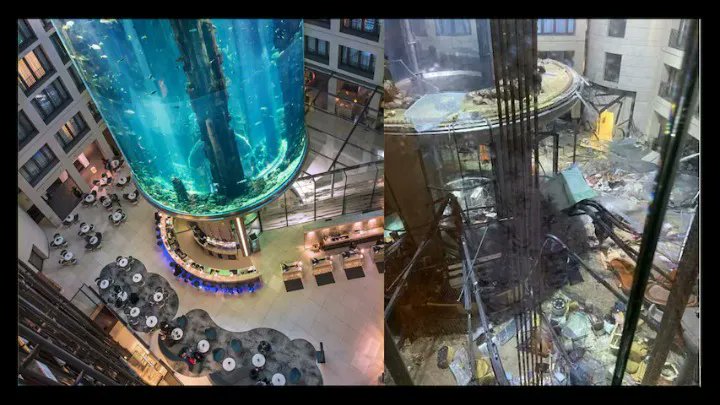
A car slammed into a crowd on a busy Berlin street, killing at least one person and injuring eight others. It’s unclear whether the incident, which occurred around 10:30 a.m. local time (08:30 a.m. GMT), was intentional or unintentional, according to emergency officials.

The driver was arrested at the scene, according to a police spokesperson. The incident occurred in western Berlin, on one of the city’s busiest shopping streets. According to reports, the vehicle veered off the road and climbed the sidewalk before crashing into a storefront.

A silver Renault Clio crashed through a display window in a cosmetics store, according to images from the scene. There are also photos of what appears to be a body in the middle of the road, covered in blankets.

According to Berlin police, around 130 emergency workers are on the scene. Mayor Franziska Giffey of Berlin said on Twitter that she was “deeply affected” by the incident and that “police are working flat out to clarify the matter.”

“Throughout the day, I’ll get a sense of the situation on the ground. I’d like to express my gratitude to the more than 130 emergency services who responded quickly and provided care to those who were affected “she continued.

The actor John Barrowman tweeted that he was nearby when the incident occurred, and that the car had repeatedly mounted the footpath before crashing into the storefront, according to a video posted from the scene.

“The police presence is astounding. They’re removing the debris from the area “”, said the actor. “Right now, helicopters are flying in to airlift people.” The incident occurred near the busy intersection of Rankestrasse and Tauentzienstrasse in west Berlin.

The area is directly across from Breitscheidplatz, where a truck driver deliberately drove his lorry into a crowd of people at a Christmas market, killing 12 people.

The attack, which was carried out by an unsuccessful asylum seeker, was later claimed by IS. Italian police shot and killed the assailant later.

Picture Courtesy: Google/Images are subject to copyright

News Trending War

After the European Council president blamed Russia’s invasion of Ukraine for causing a global food crisis, Russia’s UN ambassador stormed out of a UN Security Council meeting. Russian food supplies are being used as a “stealth missile” against the developing world, according to Charles Michel, forcing people into poverty.

Mr Michel was accused of spreading lies by Russian envoy Vassily Nebenzia. Food has become stranded at Ukrainian ports as a result of the conflict. Ukraine exports a lot of cooking oil as well as grains like maize and wheat. Russia also exports a large quantity of grains and fertiliser. Because of the lack of these exports, the cost of alternatives has skyrocketed.

“Let’s be honest, Mr. Ambassador of the Russian Federation, the Kremlin is using food supplies as a stealth missile against developing countries,” Mr Michel said during a meeting of the UN Security Council in New York.

“The devastating effects of Russia’s war are reverberating around the world, raising food prices, pushing people into poverty, and destabilising entire regions.” “Russia is solely to blame for the current food crisis.”

He went on to say that he had seen for himself the millions of tonnes of grain stuck in the Ukrainian port of Odesa due to a Russian naval blockade.

Because of its military activities in Ukraine, Mr Michel also accused Russia of stealing grain and preventing crop planting and harvesting.

Mr Nebenzia stormed out as a result of his remarks. “You may leave the room,” Mr Michel said as he walked away. “Perhaps it’s easier not to listen to the truth. Mr Nebenzia told Reuters that he couldn’t stay because “Charles Michel came here to spread lies.”

In a separate meeting, US Secretary of State Antony Blinken said Russia was preventing Ukrainian grain exports from leaving the country and accused Russian forces of destroying agricultural infrastructure in Ukraine.

“There’s somewhere around 20 million tonnes of wheat trapped in silos near Odesa, and in ships literally filled with grain that are stuck in the Odesa port because of this Russian blockade,” Mr Blinken said during a virtual roundtable with philanthropists, non-governmental organisations, and private sector entities.

He agreed with Mr Michel that there were credible reports that Russia was “pilfering” Ukraine’s grain to sell for profit.

Picture Courtesy: Google/Images are subject to copyright

News Trending War

Since three of Serbia’s neighbours have refused to let his plane use their airspace, Russian Foreign Minister Sergei Lavrov’s visit to Serbia has been cancelled.

Bulgaria, North Macedonia, and Montenegro, all EU members, have imposed a flight ban, as have Serbia and North Macedonia. In February, the EU imposed an airspace ban in response to Russia’s invasion of Ukraine.

Mr. Lavrov has blamed the latest move on “the Brussels puppeteers.” Serbia has remained friendly with Russia despite the EU’s broad sanctions against the country. Days after the invasion on February 24, the EU and the UK imposed a blanket flight ban on Russian planes, including oligarchs’ private jets.

Serbia, like many other European countries, is heavily reliant on Russian gas. On the 6-7 June, Mr. Lavrov was scheduled to meet with President Aleksandar Vucic in Belgrade.

He called the decision “unprecedented” and said that “no one will be able to destroy our relations with Serbia” in a statement broadcast on Russian state news channel Rossiya 24.

“It appears that the Brussels puppeteers did not want to give us a platform so that we could confirm Russia’s position on the Kosovo and Bosnia-Herzegovina problems in the capital of Serbia,” he added.

Serbia’s refusal to recognise Kosovo’s independence is backed by the Kremlin. The NATO bombing campaign against Serbia during the Kosovo war in 1999 enraged Russia.

Mr. Lavrov accused Nato and the EU of wanting to “turn the Balkans into their own project called closed Balkans” in a statement released on Monday. “Our diplomacy has yet to master teleportation,” a Russian foreign ministry source said of the decision to bar Mr Lavrov’s flight.

Picture Courtesy: Google/Images are subject to copyright