featured News Trending

Germany, Austria, Greece, Denmark and the Netherlands have agreed on steps toward deals with non-EU countries to establish facilities for migrants who no longer have legal residency in the European Union. The five nations aim to reach agreements with host countries by the end of this year.

The countries, known as the Group of Five, have been working together on measures to reduce irregular immigration. Germany’s Interior Minister Alexander Dobrindt said the group wants to establish return hubs outside the EU, although no potential host countries have been named. Denmark expects to begin sending migrants to such a facility by the end of 2027.

The plan has drawn criticism from human rights organisations, which warn that offshore return centres could create serious risks for migrants and asylum seekers. The Council of Europe has also raised concerns, while the Danish Refugee Council said the focus should instead be on implementing the EU’s existing migration and asylum framework.

Pic courtesy: google/ images are subject to copyright

featured News Trending

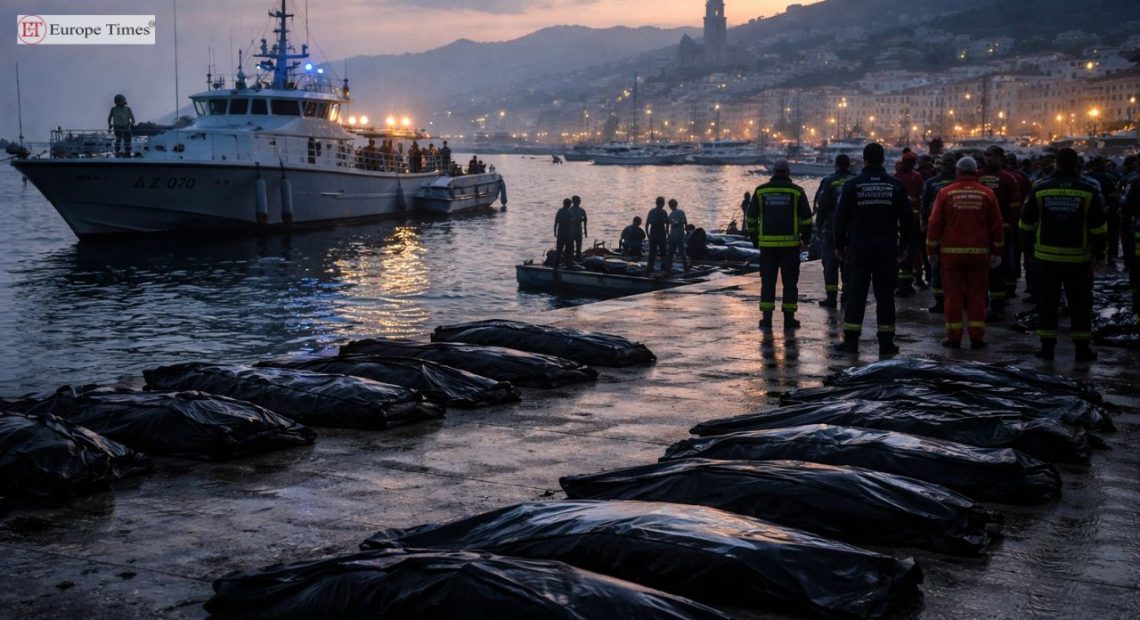
Fourteen migrants lost their lives in the Aegean Sea after a dinghy carrying them collided with a Greek coast guard vessel near the island of Chios. Authorities said the boat was heading towards the island, located close to Turkey’s coastline, when coast guard officials instructed it to turn back. According to officials, smugglers operating the vessel reportedly manoeuvred towards the coast guard ship, leading to the fatal collision, though the exact sequence of events has not been independently verified.

Rescue teams managed to save 24 migrants, while two coast guard officers were injured and hospitalised. Officials said approximately 30 to 35 people were believed to have been on board the overcrowded vessel. A large-scale search and rescue operation involving coast guard ships, private boats and divers was launched to locate any missing survivors.

Greece has long served as a key entry point into Europe for migrants and refugees fleeing conflicts and economic hardship in regions such as the Middle East, Africa and Asia. While migrant arrivals have declined in recent years, the country has tightened border enforcement and increased maritime patrols. However, Greece has faced ongoing criticism from human rights groups over alleged pushbacks and migrant treatment, accusations the government strongly denies.

Pic courtesy: google/ images are subject to copyright

featured News

Two dozen aid workers went on trial in Greece on Thursday, accused of migrant smuggling and money laundering, in a case that human rights groups have condemned as an attempt to criminalize humanitarian aid. The defendants, linked to the Emergency Response Center International (ERCI), operated on Lesbos between 2016 and 2018, rescuing refugees crossing the Aegean Sea. Among those on trial are Syrian refugee Sarah Mardini, whose 2015 rescue efforts inspired the Netflix film The Swimmers, and German volunteer Sean Binder.

The trial comes amid tightened migration rules in Greece and across the EU, as right-wing parties gain influence. Greece has reinforced border controls since 2019 and temporarily suspended processing asylum applications for some arrivals. Under a 2021 law, aiding migrants may now be treated as facilitating illegal entry or participating in a criminal enterprise, putting volunteers like those at ERCI at legal risk.

Human rights organizations have criticized the trial, calling it baseless and lacking evidence. Human Rights Watch stated that saving lives at sea has been mischaracterized as smuggling, and that the group’s legitimate fundraising has been unfairly labeled as money laundering. Defense lawyers argue that the verdict will determine whether humanitarian aid is judicially protected or left vulnerable to arbitrary prosecution.

Pic courtesy: google/ images are subject to copyright