
featured News Trending

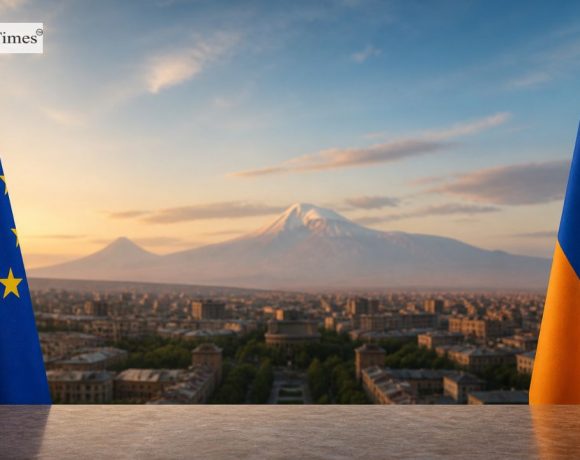
The European Union must be prepared to assert its power more strongly in a changing geopolitical landscape, Ursula von der Leyen, President of the European Commission, said on Monday. Speaking at a conference for EU ambassadors in Brussels, she warned that the bloc can no longer rely solely on the global “rules-based” system to safeguard its interests.

Von der Leyen said the EU will continue to support the international framework it helped build with allies but must recognise that those rules alone may not protect it from emerging threats. She emphasised that Europe needs to be ready to defend its interests more proactively in an increasingly complex and uncertain global environment.

She also urged the bloc to reassess whether its institutions and decision-making structures—designed in a post-war era of stability and multilateral cooperation—remain effective today. According to von der Leyen, the EU must determine if its systems strengthen or weaken its credibility as a geopolitical actor amid rapidly evolving global challenges.

Pic courtesy: google/ images are subject to copyright
featured News Trending

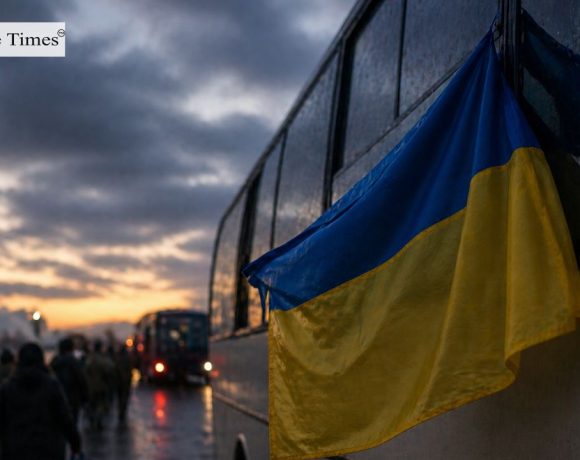
The Kremlin stated on Monday that continuing peace talks with Ukraine remains in Russia’s own interests, emphasizing a preference for a diplomatic settlement to end the fighting. Despite recent deadlocks over Russia’s demand for control of the remaining part of eastern Donbas, Moscow reiterated its commitment to negotiations.

Kremlin spokesman Dmitry Peskov said Russia’s approach to talks has not changed and that political and diplomatic solutions are the preferred method to resolve the conflict. He noted that Russia remains open to discussions while prioritizing its own national interests.

When asked about potential impacts of U.S. strikes on Iran, Peskov affirmed that Russia still values U.S. mediation but would rely primarily on its own judgment. The statement signals Moscow’s intention to continue dialogue while protecting its strategic objectives in the region.

Pic courtesy: google/ images are subject to copyright
featured News Trending

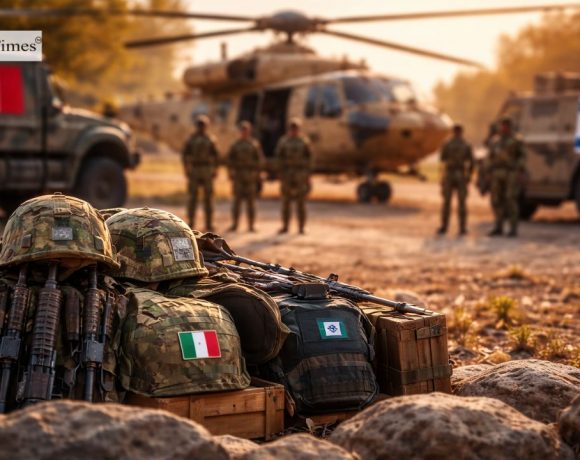
Italy will press its European Union partners this week to designate Iran’s Revolutionary Guard (IRGC) as a terrorist organisation, marking a significant shift in Rome’s stance, Foreign Minister Antonio Tajani said. Italy had previously resisted such a move, but Tajani said Iran’s violent crackdown on recent street protests, which reportedly left thousands dead, demanded a firm response. He said the issue would be raised at a meeting of EU foreign ministers in Brussels.

Tajani said the civilian toll from the protests required decisive action, proposing both the inclusion of the IRGC on the EU’s terrorist list and targeted sanctions against those responsible for what he described as “heinous acts.” A terrorist designation would impose far-reaching legal, financial and diplomatic restrictions on the powerful force, which was established after Iran’s 1979 Islamic Revolution and plays a central role in the country’s military, economy, and missile and nuclear programmes.

The proposal could strain EU–Iran relations, as some member states fear such a step could sever diplomatic ties, undermine efforts to revive nuclear negotiations and complicate the release of EU nationals held in Iran. While the IRGC is already subject to EU human rights sanctions, listing it as a terrorist group would require unanimity among member states, and objections from countries such as France could block the move. Tajani said Italy’s top priority remained the safety of its citizens, adding that staff at Italy’s embassy in Tehran would be sharply reduced.

Pic courtesy: google/ images are subject to copyright
featured News

Belarusian President Alexander Lukashenko has said relations with the United States could improve if Washington acknowledges that efforts to overturn his 2020 re-election had failed. In an interview with U.S. outlet Newsmax, Lukashenko suggested that such an admission could serve as a starting point for renewed dialogue between the two countries.

Official results declaring Lukashenko re-elected to a sixth term in 2020 triggered mass protests in Belarus, with demonstrators alleging electoral fraud. Western nations refused to recognise the result, while Russia backed Lukashenko. The Belarusian leader responded to the unrest with widespread arrests, deepening tensions with the West.

The United States and its allies later imposed sanctions on Belarus over the election, human rights concerns and Minsk’s role in allowing Russia to use its territory to launch the invasion of Ukraine. Despite this, U.S. officials have engaged Belarus in recent years, including efforts to secure the release of detainees. Lukashenko said Belarus wanted constructive relations with Washington and even suggested the two sides could cooperate on international issues such as Venezuela.

Pic courtesy: google/ images are subject to copyright
featured News

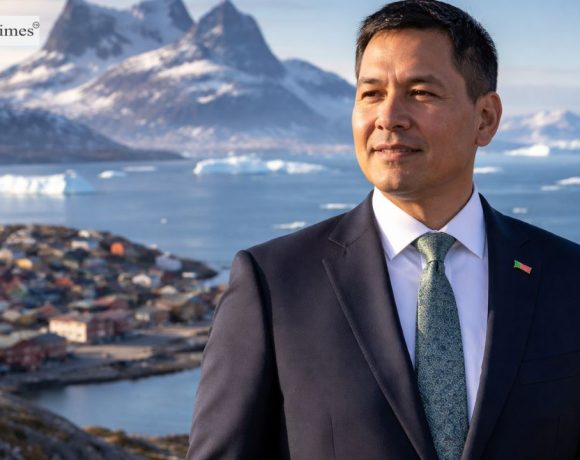
Finland’s Prime Minister Petteri Orpo has issued an apology to Asian nations after a racism controversy involving members of the far-right Finns Party, part of his governing coalition. The incident, labelled the “slanted eyes” scandal by Finnish media, centres on derogatory images shared online by several lawmakers, prompting diplomatic concern and backlash abroad.

Orpo said the remarks and images did not reflect Finland’s values of equality and inclusion. In statements released through Finnish embassies in China, Japan and South Korea, he stressed that the government takes racism seriously and is committed to combating it. The controversy began when the Miss Finland titleholder was photographed making an offensive gesture in a social media post, later leading to her being stripped of her crown despite an apology.

The situation escalated when multiple Finns Party politicians shared similar images online, drawing criticism at home and overseas. Finland’s national airline Finnair said the widely reported incident had triggered negative reactions in Asian markets, a key region for its long-haul business. The Finns Party is set to discuss the matter internally, while the episode has revived scrutiny of Orpo’s coalition, which has faced previous no-confidence votes linked to racist remarks by party members.

Pic courtesy: google/ images are subject to copyright
featured News

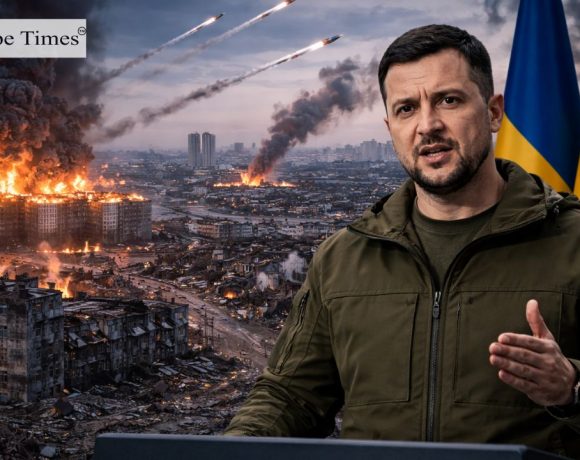
Ukraine is set to present a revised peace proposal to the United States, aiming to avoid territorial concessions to Russia. President Volodymyr Zelensky reiterated that ceding land is not an option, citing Ukrainian law, the constitution, and international law. His comments came during meetings with European and NATO leaders, amid ongoing diplomatic efforts to secure a peace deal without compromising Ukraine’s sovereignty.

The revised plan follows intensive weekend talks between US and Ukrainian negotiators that failed to yield an agreement acceptable to Kyiv. Zelensky emphasized that sensitive issues like control of the Donbas region and the Zaporizhzhia nuclear power plant remain non-negotiable. The original US-backed draft, which proposed handing over full control of Donbas to Russia and splitting energy from Zaporizhzhia, has been trimmed from 28 to 20 points, with no compromise on territorial matters.

Meanwhile, fighting continues along the front line, including a drone attack on Sumy that cut power but caused no casualties. Zelensky’s European tour included meetings with leaders in London and Brussels to secure support and potential security guarantees for Ukraine. Talks with Moscow reportedly remain ongoing, though little progress has been publicly acknowledged, and the US seeks a resolution ahead of the 2024 presidential elections.

Pic courtesy: google/ images are subject to copyright
featured News

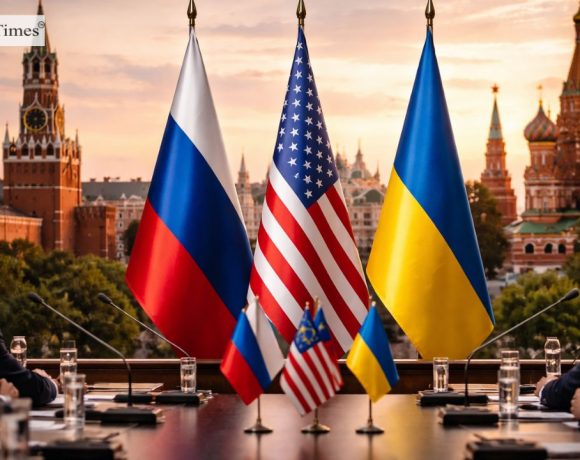
French President Emmanuel Macron reaffirmed that unity between Europe and the United States remains crucial in supporting Ukraine. Speaking during a visit to China, Macron dismissed suggestions that he had questioned Washington’s commitment to Kyiv, insisting there was “no mistrust” and underscoring that transatlantic cooperation is vital on the issue.

Macron welcomed the peace efforts led by the U.S. but highlighted that Europe must play a leading role alongside Washington. He noted that the United States “needs Europeans to lead these peace efforts,” reinforcing his stance that a collaborative approach is required to secure a sustainable resolution to the conflict.

The comments followed a report published by Germany’s Spiegel, alleging that Macron and German Chancellor Scholz were skeptical of U.S. diplomatic efforts. Macron strongly denied the claims, stating that an enduring peace would only be possible through joint efforts by Europe, the United States, Canada, Australia and Japan. “There is no scenario,” he said, “where peace in Ukraine is achieved without shared responsibility.”

Pic courtesy: google/ images are subject to copyright
featured News

King Charles welcomed German President Frank-Walter Steinmeier to Britain on Wednesday, marking the start of a three-day state visit aimed at reinforcing ties between the two nations. This is the first state visit by a German president in nearly three decades and follows Charles’ own inaugural overseas tour to Germany in 2023 after becoming king. The visit highlights a renewed effort to strengthen UK–EU relations in the post-Brexit era.

The king and Queen Camilla greeted President Steinmeier and his wife, Elke Büdenbender, in Windsor before joining a ceremonial carriage procession to Windsor Castle, accompanied by Prince William and Princess Kate. Steinmeier is also scheduled to meet Prime Minister Keir Starmer at Downing Street, followed by a state banquet at the castle later in the day. The trip comes shortly after German Chancellor Friedrich Merz’s visit in July, during which he signed a new treaty with Britain aimed at resetting diplomatic ties.

During the rest of the visit, Steinmeier will lay flowers at the tomb of the late Queen Elizabeth, view the historic State Sleigh designed by Prince Albert, and deliver an address to British lawmakers. He will also meet German footballers playing in the Premier League. On Friday, the German president and his wife will travel to Coventry—devastated by bombings during World War Two—where he will lay a wreath at the ruins of the old cathedral alongside the Duke of Kent, commemorating shared history and reconciliation.

Pic courtesy: google/ images are subject to copyright
featured News

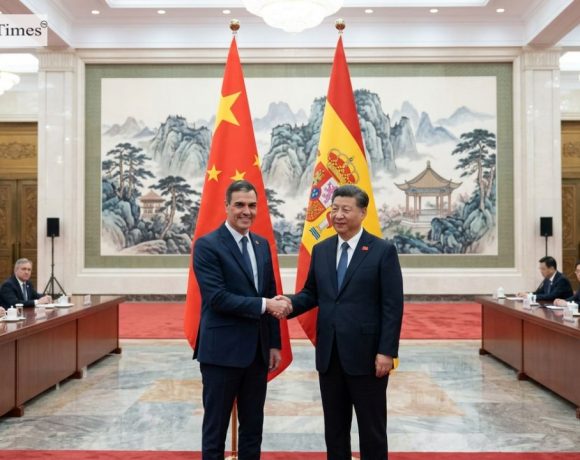
French President Emmanuel Macron will travel to China from December 3 to 5 as Europe attempts to navigate a complex balance between economic dependence and strategic rivalry with Beijing. His agenda includes meetings with President Xi Jinping in Beijing and Chengdu, where he is expected to push for fairer trade conditions, stronger market access, and more balanced technological cooperation. The visit comes as EU-China relations face growing strain, with Brussels warning that ties have reached a critical turning point.

Europe’s concerns centre on China’s surge of low-cost exports—especially steel—and its dominance in electric vehicles and rare earth processing, which pose risks to key European industries. As Washington’s tariffs reshape global trade, China is positioning itself as a business-friendly alternative, even as EU leaders remain wary of Beijing’s support for Russia and its heavily subsidised industrial model. Macron’s team says he will press for a rebalanced relationship that encourages Chinese domestic consumption and shared innovation benefits.

The European Union is preparing a tougher economic security strategy, considering more assertive trade measures against China. France has backed higher tariffs on Chinese EV imports, triggering a year-long Chinese investigation into French brandy in what many saw as retaliation. Despite Airbus expanding its presence in China, a major aircraft deal is not expected during Macron’s trip, reflecting Beijing’s strategic use of aviation purchases in its broader geopolitical negotiations.

Pic Courtesy: google/ images are subject to copyright
featured News

Hungarian Prime Minister Viktor Orban has once again broken ranks with his EU and NATO partners by meeting Russian President Vladimir Putin in Moscow, just days before US-Russia discussions on the Ukraine war. Orban, one of Putin’s closest allies in Europe, has consistently opposed European efforts to isolate Russia, and his latest visit drew sharp criticism from EU leaders. Germany’s Chancellor Friedrich Merz said Orban was acting without any European mandate, calling his diplomacy “nothing new.”

During the meeting, Putin thanked Orban for offering Budapest as a venue for a potential Trump-Putin summit and praised Hungary’s “balanced position” on Ukraine. Hungarian Foreign Minister Peter Szijjarto said the visit secured guarantees for Russian oil and gas supplies and confirmed continued work on Hungary’s Paks nuclear plant. The atmosphere, however, appeared tense, with reports of awkward interactions and suggestions from Hungarian media of mistranslated remarks meant to paint a friendlier picture.

Orban, facing a tough parliamentary election next April, is seen as using these high-profile diplomatic moments to strengthen his political standing. He continues to champion Trump’s proposed peace plan for Ukraine while accusing EU leaders of warmongering. Despite pressure from Brussels to cut dependence on Russian energy by 2027, Hungary still relies heavily on Russian oil, gas, and nuclear fuel. As Putin openly supports Orban’s re-election, both leaders appear aligned in leveraging the visit for political advantage.

Pic Courtesy: google/ images are subject to copyright