featured News Trending

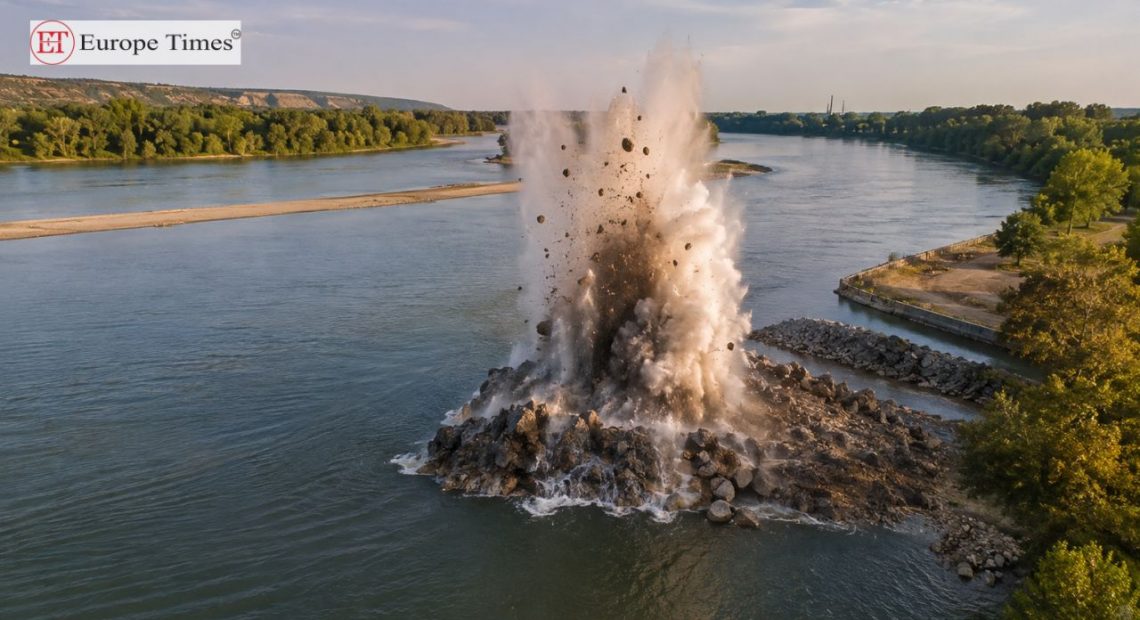
Romania carried out controlled explosions to remove rocks from the Danube River and redirect water to the Cernavoda nuclear power plant, as severe drought and record-low river levels threatened reactor cooling. The emergency measure highlights the growing impact of Europe’s ongoing heatwave and energy challenges.

The operation aims to ensure adequate cooling water reaches the country’s only operating nuclear reactor after another reactor was shut down due to falling river levels. Authorities also plan to build a temporary dam to improve water flow, while urging households and businesses to reduce electricity consumption.
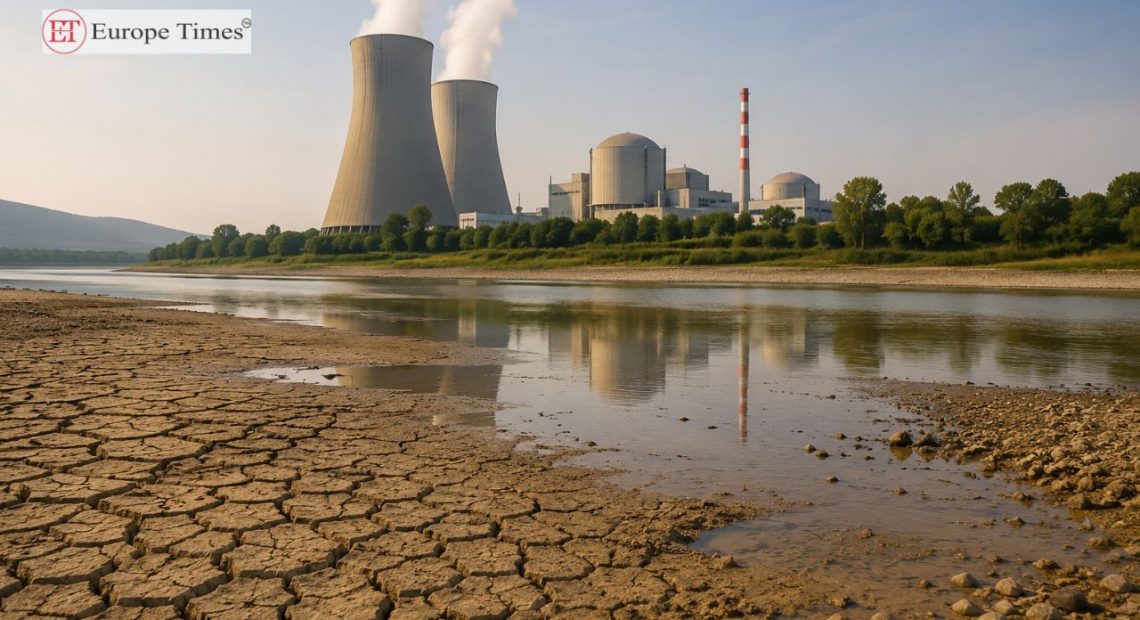
The drought has also affected neighboring Hungary, where the Paks nuclear plant is operating at reduced capacity because of the Danube’s low water levels. Governments across the region are taking emergency steps to protect power supplies as extreme weather continues to strain Europe’s energy infrastructure.

Pic courtesy: google/ images are subject to copyright

featured News Trending

Hungary’s only nuclear power plant, the Soviet-era Paks facility, is set to shut down completely for the first time after record-low water levels in the Danube River left its cooling system unable to operate. Prime Minister Péter Magyar warned the country’s energy supply could become critical as an intense heatwave continues, urging residents to reduce electricity use during peak evening hours.

The prolonged drought and extreme temperatures have affected much of Europe, with the Danube reaching its lowest levels in decades across several countries. Romania has already shut down one reactor at its Cernavoda nuclear plant for the same reason, while authorities are trying to keep the second reactor operational to avoid a complete halt in nuclear power generation.

The shrinking river has also disrupted shipping, exposed historic shipwrecks, and revealed ancient mammoth remains along its riverbed. Scientists say Europe, the world’s fastest-warming continent, is experiencing more frequent heatwaves, droughts, and wildfires, placing growing pressure on water resources, transport, and energy infrastructure.

Pic courtesy: google/ images are subject to copyright

News Trending War

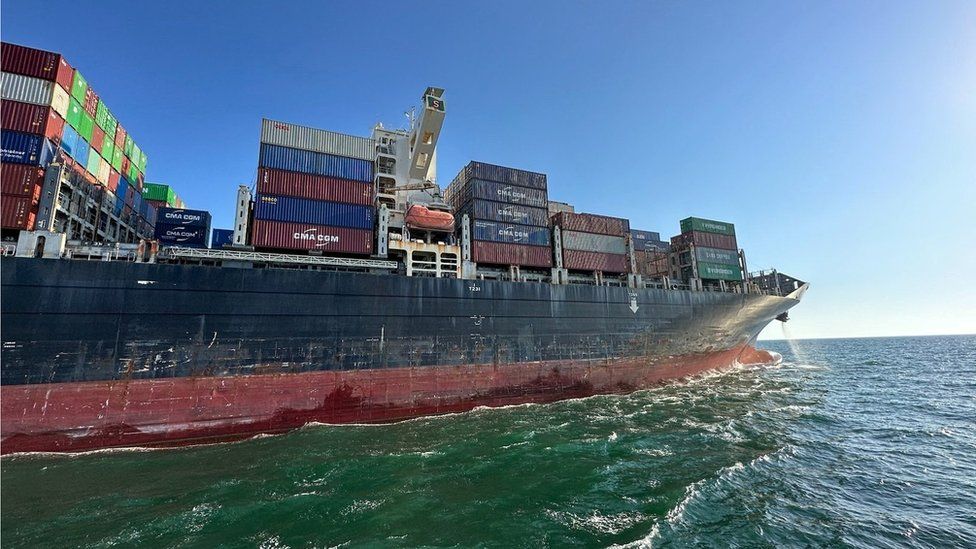
A Hong Kong-flagged merchant ship named Joseph Schulte, which had been stuck in the Ukrainian port of Odesa due to Russia’s invasion of Ukraine in February 2022, has departed the port. Despite concerns that Russia might target vessels in the Black Sea, the ship left after Kyiv announced a “humanitarian corridor” for ships in the Black Sea. This corridor was established following the collapse of a previous deal that allowed Ukraine to export grain. The ship’s departure comes after Russian air strikes reportedly damaged grain storage facilities in Reni, a port on the Danube river.

Ukrainian officials released images showing the destruction of storage facilities and crops in Reni. Despite the attacks, the port is said to be operational. Russia has not commented on these latest developments. Previously, Russia withdrew from an agreement that guaranteed safe passage for ships in the Black Sea, suggesting that ships heading to Ukrainian ports could be considered military targets.

Ukraine, a significant exporter of grain and oilseeds, has faced challenges due to the blockade, leading to global increases in food prices. In response to these threats, Ukraine established a humanitarian corridor in the Black Sea to facilitate the departure of ships from its ports. The Joseph Schulte was carrying over 30,000 tonnes of cargo, including food, and was headed to Istanbul, Turkey. The corridor is intended to help evacuate ships that have been trapped in Black Sea ports since the start of Russia’s invasion.

Meanwhile, Ukrainian forces have been conducting a counter-offensive to retake territory from Russian forces in the eastern Donetsk region. Despite receiving military equipment from Western countries, their advances have been limited. Recent clashes have led to the evacuation of many residents in the country’s east. Russia has also reported downing drones near Moscow in a series of attacks on Russian cities.

Picture Courtesy: Google/images are subject to copyright

News Trending

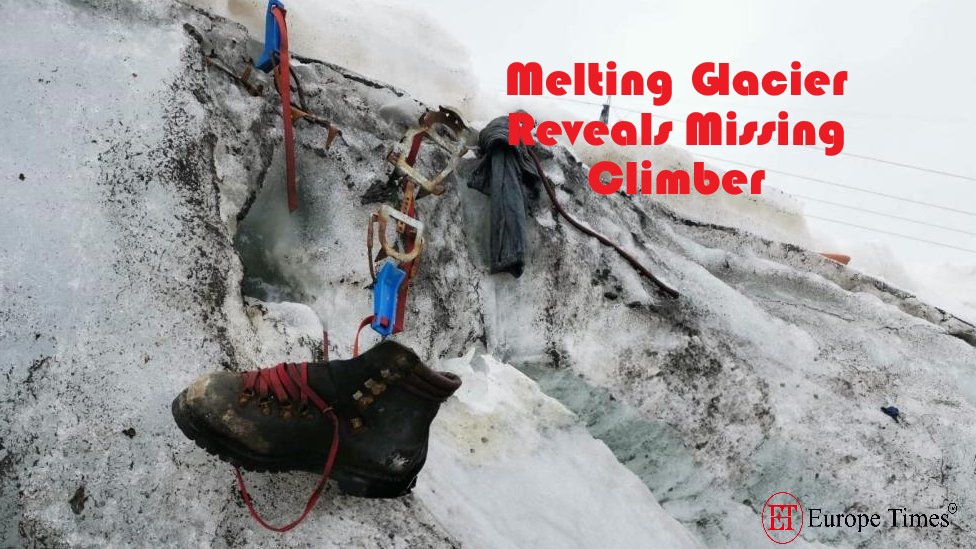
Human remains discovered on a glacier near the Matterhorn in Switzerland have been identified as the body of a German climber who had been missing since 1986. The finding is one of several long-held secrets revealed by the melting Alpine glaciers, which are shrinking rapidly due to climate change.

The Theodul glacier, where the body was found, has experienced a significant retreat in recent years. This glacier is part of Zermatt’s renowned year-round ski region, the highest in Europe. However, global warming has caused the alpine ice fields to be particularly vulnerable. As a result, various objects and remains, lost for decades, have emerged from the melting ice in recent years.

Such discoveries have included a crashed plane from 1968 and the remains of missing climbers from past decades. Furthermore, the melting ice has even led to changes in international borders between Switzerland and Italy, with the shifting position of the drainage divide.

The consequences of the glacier melt extend beyond the discovery of historical artifacts and climbers; these glaciers are vital to Europe’s environment, providing essential water sources for rivers like the Rhine and Danube, and helping maintain aquatic ecosystems. Unfortunately, the rapid rate of ice retreat observed by experts indicates that most Alpine glaciers could vanish by the end of the century. As global temperatures continue to rise, the fear of further ice loss and its far-reaching impacts on the environment persists.

Picture Courtesy: Google/images are subject to copyright