featured News Trending

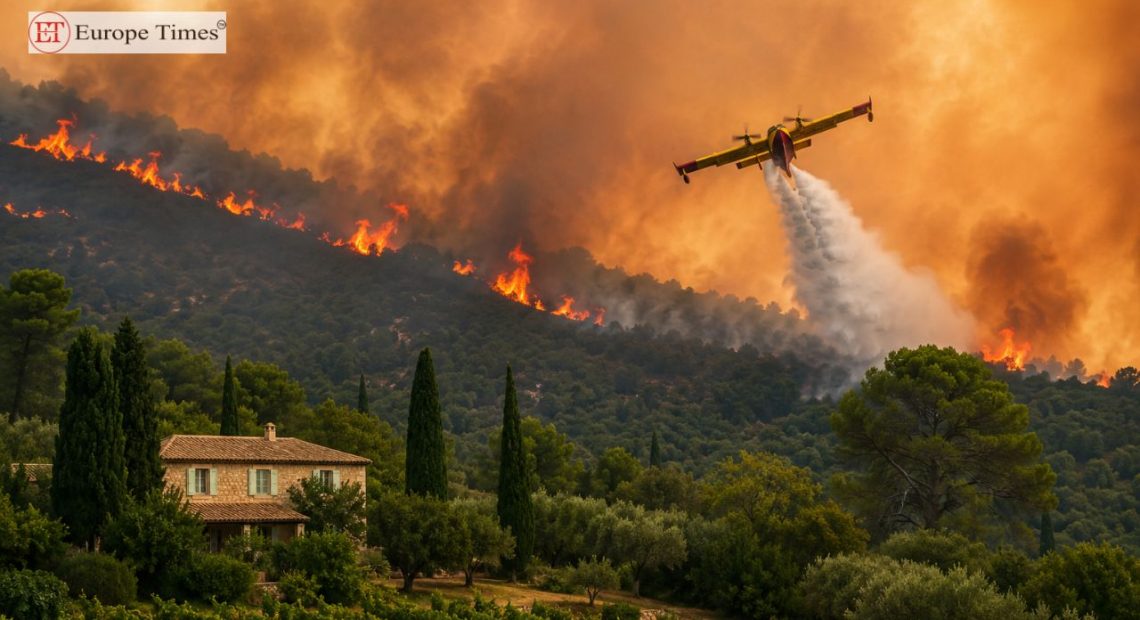
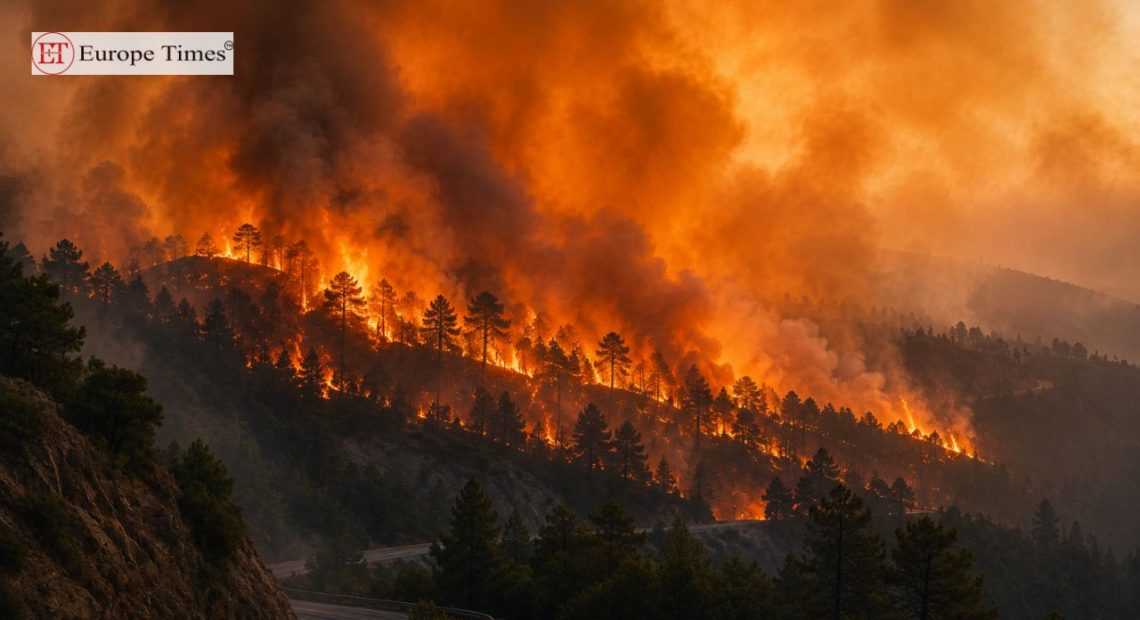
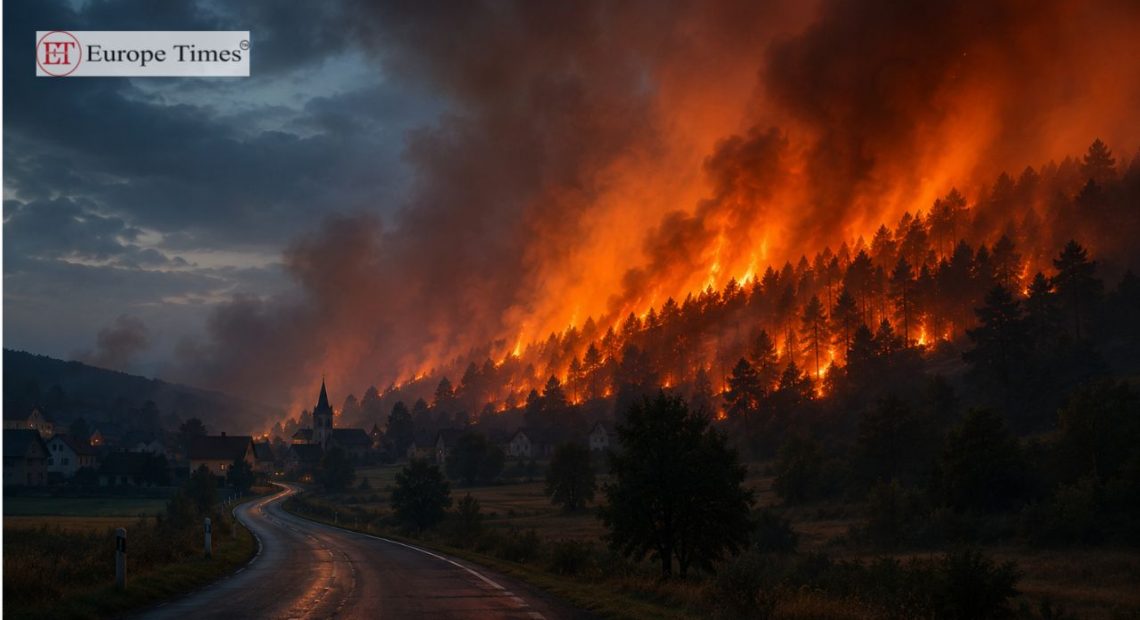
Spain has declared a national emergency as massive wildfires continue to spread across several regions, forcing the evacuation of more than 10,000 residents from Villa del Prado, San Martín de Valdeiglesias, Pelayos de la Presa, and Aldea del Fresno. The move places the response under the direct authority of the country’s Interior Ministry.

Under Spain’s National Civil Protection System, the Interior Minister will coordinate firefighting and emergency operations. Authorities said this is the first time a national emergency has been declared specifically due to a wildfire. More than 270 emergency personnel, 40 ground units, and Military Emergency Unit (UME) teams have been deployed to battle the fires.

The wildfires have already burned over 100,000 hectares across Spain this year, matching the country’s average annual burned area over the past decade. Officials said 13 people have lost their lives, making 2026 one of Spain’s deadliest wildfire seasons in recent decades.

Pic courtesy: google/ images are subject to copyright

featured News Trending

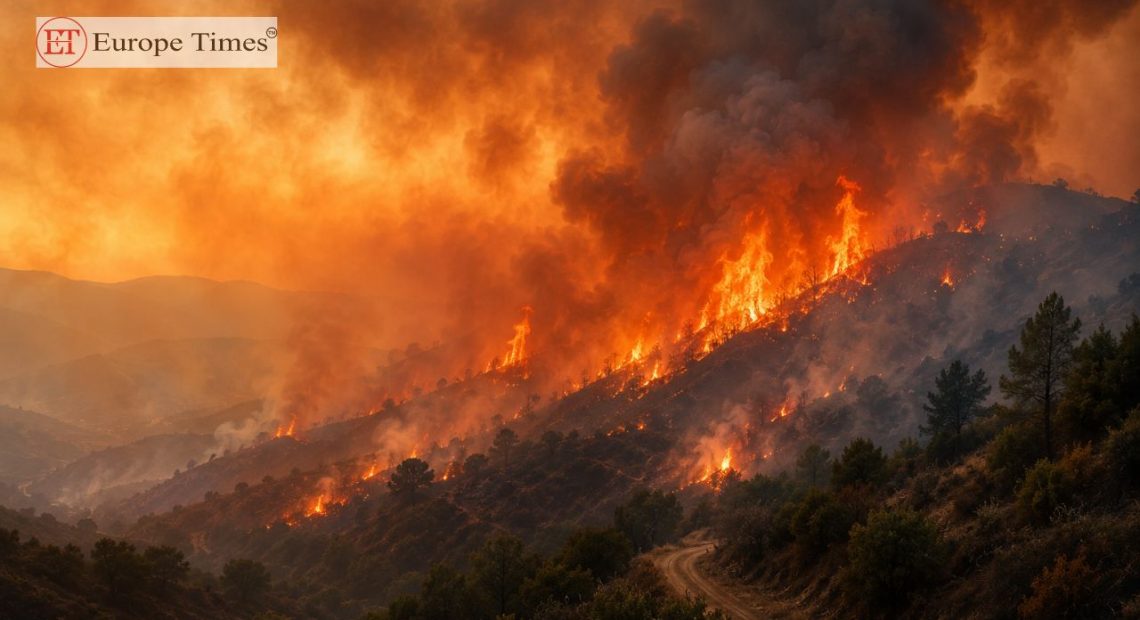
Firefighters in Spain’s southeastern Almería province have intensified efforts to contain one of the country’s deadliest wildfires after shifting from defensive operations to directly attacking the blaze. The fire, fueled by strong winds, has claimed at least 12 lives and destroyed around 6,600 hectares of land. Authorities said the situation remains complex, though crews successfully prevented the flames from spreading toward densely populated coastal areas.

Officials confirmed that autopsies have been completed on the 12 victims, but their identities have not yet been established. DNA samples have been sent to Madrid for further analysis, while authorities said seven people have been formally reported missing. Eight others were injured in the wildfire, including four who remain in critical condition at a hospital in Seville. Most of the victims are believed to be British and Belgian nationals, along with one Spanish citizen.

More than 1,400 residents have been evacuated as a precaution, with over 500 firefighters, emergency personnel, soldiers, and aerial support working to contain the blaze. Emergency teams are focusing on the western front, where the fire remains most active. Local residents described the wildfire’s rapid spread, recalling how flames engulfed the mountains within minutes and left entire communities scrambling to escape.

Pic courtesy: google/ images are subject to copyright

Global Climate Trending

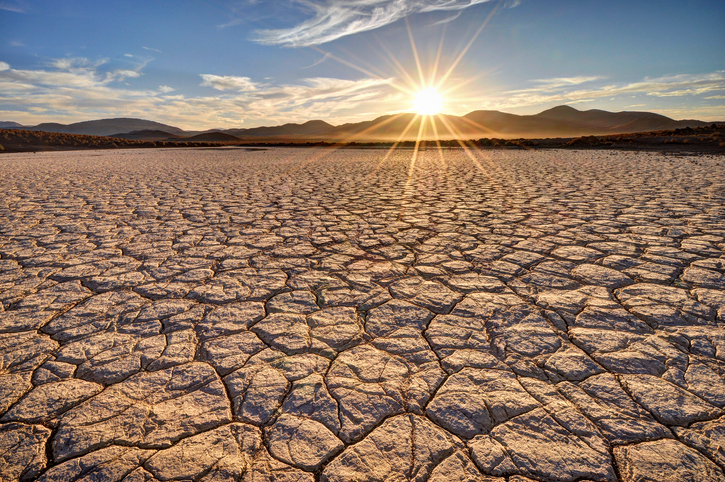
Even though Lithuania has just heard the pitter-patter of rain, the country is still suffering from a severe drought.

In certain areas of the country, the earth has turned to ash, while toxic dust has blown through the streets of Vilnius, the capital. 

The grass is a burned golden colour, and some of the trees’ leaves are beginning to turn brown.

Many find it unsettling.  

The small Baltic nation’s Farmers’ Union already projects that up to a third of its crops may fail, and summer has just begun. 

With officials this week barring trips to several woods owing to fire concerns, many more months of intense heat might yet be ahead.

A component of this intricate and varied environmental issue is low precipitation.

Only a few times have there been raindrops since April, with the most recent one occurring in the middle of May, according to Gytis Valaika of the Lithuanian Hydrometeorological Service. 

She notes that whereas May rainfall generally measures 53mm, this year it barely registered 16mm (in some locations less than 10mm).

According to Gabija Tamulaityt, an environmental specialist at the Baltic Environmental Forum Lithuania, many farmers lack irrigation systems in their fields since they are typically not required, making them particularly sensitive to excessive heat.

The worst scenario is in western Lithuania, where cattle and arable cultivation have long been practised. Since early May, this region has been experiencing drought.

Picture Courtesy: Google/images are subject to copyright

News Trending

According to new research, the melting ice sheet in Antarctica may recede far more quickly than previously anticipated.

The proof comes in the form of seafloor traces off the coast of Norway that show the retreat of a vanishing European ice sheet thousands of years ago. The glaciers in Antarctica that are receding the fastest are now seen to do so at a rate of up to 30 metres per day.

Yet, if they accelerated, the additional melt water would have significant effects on sea level rises all throughout the world. Since the 1990s, the surface of the world’s oceans has already risen by almost 1 centimetre due to ice loss from Antarctica brought on by climate change.

The maximum retreat with the Norwegian sheet, according to the researchers, was more than 600m per day.

“This is something we could see if we continue with the upper estimates for temperature rise,” explained Dr Christine Batchelor from Newcastle University, UK.

“Although, worryingly, when we did the equations to think about what would be needed to instigate such retreat in Antarctica, we actually found there are places where you could get similar pulses of withdrawal even under the basal melt rates we know are happening at the moment,” she told BBC News.

Significantly, the areas with the fastest rates were those with relatively flat seafloors. These are areas where the thickness of the ice above is more likely to be uniform and where less melting is needed to make the ice float to speed up its retreat.

On the seafloor near Antarctica, there have been reports of similar corrugations, but the examples are rather small. Because the Norwegian research region is so much larger, it provides a much clearer picture of how quickly ice can retreat in a warming climate.

Currently, scientists utilise satellites to keep an eye on the glaciers that terminate in the ocean in Antarctica. The spacecraft can determine where the tides are raising and lowering the ice.

Picture Courtesy: Google/images are subject to copyright