News Trending

Venice is poised to greenlight a trial €5 (£4.30; $5.35) levy for daily tourists as a strategy to manage tourism. This fee will apply to all visitors aged 14 and above and necessitates advance booking for entry to the city. Simone Venturini, a city council member overseeing tourism, has disclosed that this trial period will take place during peak tourist seasons in the upcoming year.

Venice is grappling with the consequences of excessive tourism, and it’s among Europe’s most visited cities. Its compact size, measuring just 7.6 sq km (2.7 sq miles), hosted nearly 13 million tourists in 2019, according to Italian national statistics. Post-pandemic, visitor numbers are anticipated to surpass pre-pandemic levels.

The primary aim of this fee is to encourage day-trippers to select off-peak days for their visits. However, tourists staying overnight will be exempt from this charge. The city intends to evaluate and potentially refine this fee as necessary.

Earlier this year, Venice was suggested to be included on UNESCO’s list of world heritage sites in danger due to the impacts of climate change and mass tourism, which pose a threat of irreversible alterations to the city. In 2021, large cruise ships were banned from accessing the historic center of Venice through the Giudecca canal, a move triggered by a ship collision and concerns over pollution and erosion.

Nonetheless, it remains uncertain whether this daily charge will discourage tourists. Some, like Karina from Germany, don’t see it as a significant burden, while others like Cal, a student from Ireland, find it relatively steep for a day of sightseeing.

Venice is witnessing a growing exodus of residents due to the overwhelming presence of tourists. The shortage of long-term rental options for residents has become a pressing issue, with landlords preferring to rent to tourists during the summer season. Citizen associations, Ocio and Venissa, have conducted studies revealing that the number of beds available for tourists now exceeds those for residents. Many government buildings have been converted into hotels, a transformation that threatens the city’s identity as it shifts towards a tourist-centric model.

Maria Fiano, who heads Ocio, advocates for restrictions on tourist accommodations as a solution to the issue and expresses skepticism about the effectiveness of the daily fee proposed by the town hall, viewing it as a superficial measure.

Picture Courtesy: Google/images are subject to copyright

News Trending

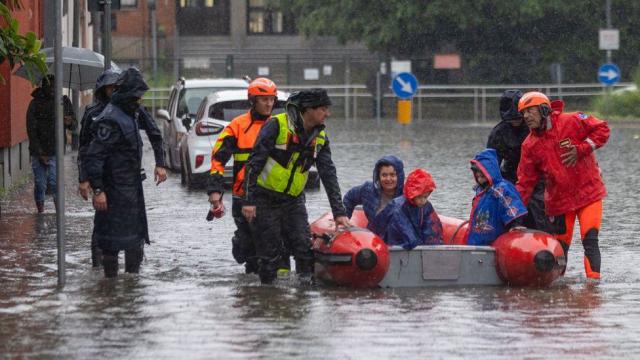
In central Greece, rescue efforts are underway to reach hundreds of individuals stranded by severe floods, resulting in 10 casualties.

Prime Minister Kyriakos Mitsotakis has emphasized the significant challenge Greeks are facing in their battle against the forces of nature.

Following days of heavy rainfall, rivers have overflowed, leading to the submersion of villages and the destruction of homes and bridges.

Residents in the vicinity of Palamas and Karditsa have issued appeals for essential supplies such as food and water.

The plains of Thessaly, after enduring weeks of scorching temperatures and wildfires, have been inundated by a three-day-long storm.

Within a 24-hour period, an astonishing 800mm (31.5 inches) of rain poured down, surpassing the region’s average annual rainfall.

Larissa, a major city with 150,000 inhabitants, is now under threat as the River Pineios has breached its banks in certain suburbs. This city is not only significant in size but also serves as the agricultural hub for the entire country, with nearly a quarter of this year’s crop production being lost.

Satellite imagery has revealed extensive flooding across approximately 73,000 square meters of land in Thessaly.

Many residents in the region are expressing anger towards the Greek authorities, alleging that climate change is being used as an excuse for subpar construction projects. For instance, a bridge that collapsed three years ago due to a cyclone was subsequently rebuilt and is now completely destroyed again, symbolizing government failures for many Greeks.

The city of Larissa has been transformed beyond recognition, with numerous impassable roads, flooded houses at lower elevations, and extensive infrastructure damage caused by the storm’s fury.

The devastation is further compounded by the remnants of the wildfires that Greece has battled throughout the summer, resulting in burnt trees and scorched land.

Xenia, a long-time resident, tearfully watches her home from a distance, which is now mostly submerged. She contemplates the possibility of never returning to her beloved home and having to rent an affordable apartment with her modest salary.

The death toll has climbed to 10, with at least four individuals reported missing, raising concerns that the number may rise as rescuers gain access to more flooded areas.

During visits to the hardest-hit regions, Prime Minister Mitsotakis described the situation as an unprecedented natural phenomenon. He pledged to expedite compensation for those whose homes had been destroyed or damaged.

Although the rain has mostly ceased, floodwaters in certain areas remain at depths exceeding 2 meters (6.5 feet). The coastal city of Volos has been without clean drinking water for four days, prompting residents to collect water from various sources.

The Greek fire brigade has conducted over 1,800 rescues across Greece since Tuesday and continues to search for missing individuals, including an Austrian couple swept away with their honeymoon cabin.

These floods come on the heels of Greece’s hottest summer on record and extensive wildfires in the northern part of the country. Scientists attribute the increasing frequency and severity of such extreme weather events to climate change.

Picture Courtesy: Google/images are subject to copyright

News Trending

An Austrian couple celebrating their honeymoon in Greece has gone missing as heavy rains caused devastating floods, prompting a search operation by emergency services. The torrential downpour led to entire villages in central Greece being submerged, leaving residents stranded on their rooftops. Storm Daniel, affecting Greece, Turkey, and Bulgaria this week, has claimed the lives of over a dozen people.

The newlyweds, who had recently tied the knot upon arriving for their vacation, sought refuge in a bungalow they had rented in Potistika, near Mount Pelion, as the relentless rain battered central Greece. Unfortunately, the flash floods carried their rented house into the sea. The property’s owner, Samaras Thanakis, recounted advising the couple and other guests to seek higher ground, but the dire situation made decisions challenging.

Rescue efforts, hindered by collapsed bridges and damaged roads in the region, are ongoing, with the Greek fire brigade actively searching for the missing couple. Some areas in Greece received an astounding 800mm of rain, equivalent to a year’s worth of precipitation in just a few days. The Karditsa plain turned into a vast expanse of water, submerging villages near Palamas.

Palamas’ mayor, Giorgos Sakellariou, made a desperate plea for assistance on Greek television, highlighting the dire conditions and immediate danger residents faced. The extreme weather also affected Athens, the island of Skiathos, where numerous tourists remain stranded, as well as coastal regions around Volos and Pelion. In response to the escalating crisis, Prime Minister Kyriakos Mitsotakis canceled a major government event scheduled for the weekend.

Storm Daniel’s impact has been felt across the region, with Greece, Turkey, and Bulgaria collectively witnessing a death toll of over a dozen people, including at least four in Greece. Climate scientists have emphasized that global warming contributes to increased summer evaporation, leading to more intense storms.

Picture Courtesy: Google/images are subject to copyright

News Trending

As wildfires continue to rage uncontrollably for a fourth consecutive day near Alexandroupolis in north-eastern Greece, a hospital in the area has been evacuated, with dozens of patients being relocated.

The flames encroached upon the university hospital grounds, prompting the evacuation of patients, including newborns and those in intensive care. The evacuation involved transporting patients to a ferry docked at a nearby port. The ferry was converted into a makeshift hospital ward where patients, some connected to oxygen tanks, were placed on mattresses.

Additional tents were set up along the shoreline. The city of Alexandroupolis, near Greece’s northeastern border with Turkey, is grappling with severe wildfires, exacerbated by strong winds and temperatures expected to reach 39°C (102°F). The fires have also affected other areas in Greece, such as Evia Island and Boeotia in central Greece, leading to village evacuations.

Tragically, at least one fatality has occurred due to the fires near Alexandroupolis. The hospital evacuation was hindered by the flames entering the hospital grounds, causing smoke and ash to envelop the area. The explosion of oxygen bottles added to the chaos. Throughout the night, the outskirts of Alexandroupolis were illuminated by a fiery red glow, and satellite imagery revealed extensive smoke cover over multiple Greek regions.

While some patients were transferred to other local hospitals, around 90 patients were relocated to the Adamantios Korais ferry, which was repurposed to care for newborns and intensive care cases. Additionally, residents from neighboring villages were advised to evacuate to Alexandroupolis for safety. Fires have also affected areas northwest of the city, including Rhodope and Kavala. In a different region, warehouses near Athens were engulfed in flames, accompanied by dark smoke clouds.

Firefighting efforts have been bolstered by assistance from France, Cyprus, and Romania. This situation is emblematic of the intensified wildfire risk currently faced by Greece and other European countries due to climate change, as extreme weather events become more frequent and intense.

Picture Courtesy: Google/images are subject to copyright

News Trending

Queen Letizia of Spain is set to travel to Australia to witness the World Cup final between England and Spain in Sydney on Sunday. Notably, no British royals will be present at the event.

The match marks the first-ever final appearance for both England’s Lionesses and the Spanish team in the women’s tournament. Although Prince William, the President of the Football Association, will support the England team from the UK, he has opted out of making the long-distance journey to Australia due to his focus on climate change concerns.

In contrast, Queen Letizia and her 16-year-old daughter, Infanta Sofia, will be attending the final, while King Felipe will be engaged in official obligations and won’t accompany them. The Royal Spanish Football Federation confirmed the queen’s participation, mentioning her prior visit to the team during training where she delivered a speech to the players and coaching staff.

Similarly, Prince William interacted with the Lionesses during training and awarded manager Sarina Wiegman an honorary CBE. Despite his absence from the event, Prince William is expected to watch the final on television. Both Prince William and King Charles conveyed their congratulations to the teams on their achievements and extended their best wishes for the upcoming final match.

Notably, England’s women had previously been awarded their medals by Prince William after winning the European championship, while Queen Elizabeth II had attended England’s men’s team’s World Cup final victory in 1966.

Picture Courtesy: Google/images are subject to copyright

News Trending

A significant wildfire on the Spanish island of Tenerife has resulted in the mandatory evacuation of five villages. The fire, which originated in a nature reserve on the island’s northeastern coast, has expanded to cover approximately 800 hectares since it ignited on Tuesday night. Access to the forest encompassing Mount Teide, Spain’s highest peak, has been restricted by local authorities. Additional outbreaks of secondary fires have also been reported. Helicopters equipped with water have been deployed to the area, and the main blaze is proving challenging to combat due to its spread through wooded areas and ravines in Candelaria and Arafo. Rosa Davila, the head of Tenerife Council, emphasized the necessity of aircraft in navigating the steep terrain and acknowledged the blaze’s significant potential.

Villages including Arrate, Chivisaya, Media Montaña, Ajafoña, and Las Lagunetas were evacuated on Wednesday morning. Tenerife’s emergency services leader, Pedro Martinez, reported multiple secondary fires breaking out. Images reveal substantial flames consuming parts of the forest, accompanied by thick plumes of smoke rising into the sky. Despite the wildfire’s impact, Tenerife’s South and North airports appeared to be operating without disruptions as of Wednesday evening.

This wildfire incident follows a recent heatwave in the Canary Islands, leaving numerous areas parched and elevating the wildfire risk. In the preceding month, La Palma, an adjacent island within the Canary Islands archipelago, witnessed evacuations due to a wildfire during a period of extreme heat. This summer, wildfires have surged across various regions worldwide, including Southern Europe, Northern Africa, Canada, and Hawaii.

The heightened frequency, intensity, and duration of heatwaves are attributed to human-induced climate change. Global temperatures have already risen by around 1.1°C since the commencement of the industrial era, and further increases are anticipated unless concerted emissions reductions are enacted by governments across the globe.

Picture Courtesy: Google/images are subject to copyright

News Trending

Amidst soaring temperatures, firefighters in Portugal are working diligently to contain wildfires that have spread across thousands of hectares. An overnight effort near Odemira involved around 800 personnel, leading to the evacuation of over 1,400 individuals. Tragically, nine firefighters have sustained injuries during the firefighting operations.

The Iberian Peninsula is expected to experience temperatures exceeding 40°C (104°F) this week. While three significant fires in Spain have been brought under control after scorching extensive areas, weather advisories persist across the country.

Portugal recorded its highest temperature of the year, reaching 46.4°C (116°F) in Santarém on Monday. A blaze that ignited near Odemira on Saturday was propelled southward into the Algarve’s hilly interior due to strong winds. Approximately 6,700 hectares (16,600 acres) of land have already been devastated, and numerous villages, tourist accommodations, and a camping site were evacuated. The mayor of Odemira described the situation as “critical, difficult, and complex.”

Elsewhere in Portugal, major fires prompted the closure of several sections of highways, including parts of the A1 connecting Lisbon and Porto. Firefighting efforts across both regions are being aided by sixteen waterbombing aircraft.

In response to the heightened fire risk, authorities have labeled over 120 municipalities in Portugal as being at maximum wildfire risk. Meanwhile, in Spain, fires near Cadiz, Huelva, and Catalonia consumed over 1,000 hectares (2,470 acres) collectively over the weekend.

This week’s heatwave marks the third to affect the Iberian peninsula this summer. According to Ruben del Campo of Spain’s State Meteorological Agency, the heatwave results from a substantial mass of hot, dry air originating from North Africa and is projected to be more intense, widespread, and longer-lasting than the two previous ones in July.

The increasing risk of such scorching and dry conditions that fuel wildfires is attributed to climate change. Global temperatures have already risen by around 1.1°C since the onset of the industrial era, and this trend will persist unless governments worldwide take significant measures to reduce emissions.

Picture Courtesy: Google/images are subject to copyright

News Trending

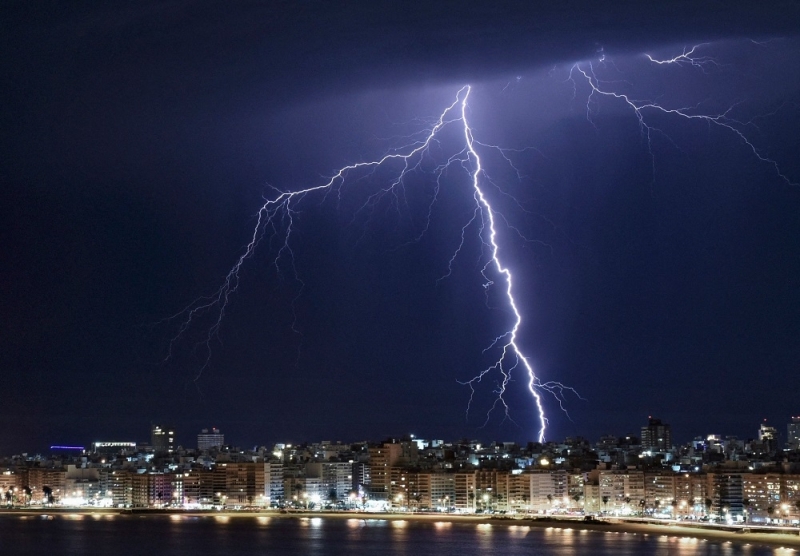
The Earth’s oceans have experienced their highest recorded temperatures ever, absorbing warmth due to climate change, which has concerning implications for the planet’s well-being. According to the EU’s climate change service Copernicus, the average daily global sea surface temperature surpassed the 2016 record this week, reaching 20.96°C, well above the typical level for this time of year.

Oceans play a crucial role in regulating the climate, absorbing heat, generating half of the Earth’s oxygen, and influencing weather patterns. However, warmer waters have a reduced capacity to absorb carbon dioxide, leading to increased levels of the planet-warming gas in the atmosphere. Additionally, higher temperatures can hasten the melting of glaciers, contributing to rising sea levels.

The impact of hotter oceans and heatwaves extends to marine species, causing fish and whales to seek cooler waters and disrupting the food chain. Predatory animals like sharks may become more aggressive in these conditions. Furthermore, marine heatwaves are causing coral bleaching and fatalities in various regions, highlighting the stress that human activities, including pollution and overfishing, place on the oceans.

Scientists express concern about the timing of this record-breaking heat, noting that March should be the warmest month for oceans globally, not August. They attribute the increasing ocean temperatures to climate change, as the seas absorb most of the heat from greenhouse gas emissions. The burning of fossil fuels exacerbates this situation, prolonging the time required to stabilize ocean temperatures.

The current broken temperature record follows a series of marine heatwaves in different parts of the world this year, including the UK, North Atlantic, Mediterranean, and Gulf of Mexico. The frequency and intensity of these heatwaves have been on the rise, with marine heatwaves doubling between 1982 and 2016, according to the Intergovernmental Panel on Climate Change (IPCC).

While air temperatures have risen significantly in recent years, oceans take longer to warm up due to their higher heat-absorption capacity. However, it appears that ocean temperatures are now catching up, possibly due to stored heat from ocean depths surfacing, potentially linked to El Niño events.

Though scientists have expected sea surface warming due to greenhouse gas emissions, they are still investigating the specific reasons behind the recent surge in temperatures, which have far exceeded previous records.

Picture Courtesy: Google/images are subject to copyright

News Trending

Unesco recommends placing Venice on the list of endangered World Heritage sites due to the risks posed by excessive tourism, overdevelopment, and rising sea levels from climate change. The agency aims to prompt better preservation efforts for the iconic Italian city’s future.

The proposal will be carefully reviewed by the Venice municipality and discussed with the Italian government. The city’s former mayor criticizes Unesco, calling it an expensive and ineffective body. Previously proposed for inclusion two years ago, Venice avoided the list temporarily due to emergency measures, but the promised conservation plan was never implemented.

Unesco’s report highlights the lack of a strategic vision to address climate change threats, and the impact of tourism on the city’s infrastructure. The agency believes that high-rise buildings should be constructed far from the city center to avoid negative visual impacts. Venice’s vulnerability to rising sea levels is exacerbated by its popularity as a tourist destination, with around 28 million visitors annually.

Currently, 55 World Heritage sites are listed as “in danger,” with an additional 204 being closely monitored by Unesco due to various threats.

Picture Courtesy: Google/images are subject to copyright

News Trending

Human remains discovered on a glacier near the Matterhorn in Switzerland have been identified as the body of a German climber who had been missing since 1986. The finding is one of several long-held secrets revealed by the melting Alpine glaciers, which are shrinking rapidly due to climate change.

The Theodul glacier, where the body was found, has experienced a significant retreat in recent years. This glacier is part of Zermatt’s renowned year-round ski region, the highest in Europe. However, global warming has caused the alpine ice fields to be particularly vulnerable. As a result, various objects and remains, lost for decades, have emerged from the melting ice in recent years.

Such discoveries have included a crashed plane from 1968 and the remains of missing climbers from past decades. Furthermore, the melting ice has even led to changes in international borders between Switzerland and Italy, with the shifting position of the drainage divide.

The consequences of the glacier melt extend beyond the discovery of historical artifacts and climbers; these glaciers are vital to Europe’s environment, providing essential water sources for rivers like the Rhine and Danube, and helping maintain aquatic ecosystems. Unfortunately, the rapid rate of ice retreat observed by experts indicates that most Alpine glaciers could vanish by the end of the century. As global temperatures continue to rise, the fear of further ice loss and its far-reaching impacts on the environment persists.

Picture Courtesy: Google/images are subject to copyright