News Trending

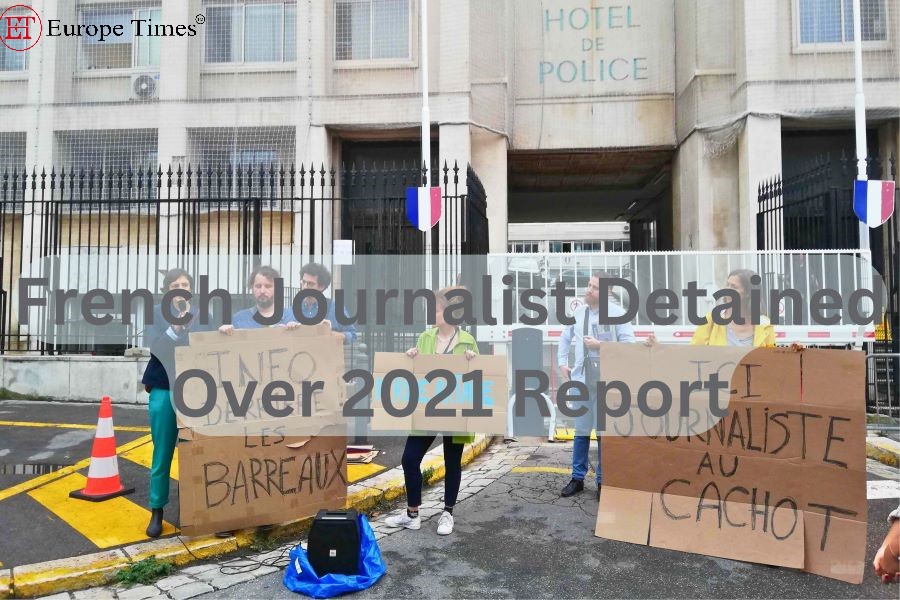
A French journalist, Ariane Lavrilleux, was held overnight and subjected to police questioning in connection with a 2021 investigative report that alleged French intelligence involvement in Egyptian operations resulting in civilian casualties. The incident unfolded when police conducted a search of Lavrilleux’s residence on September 19 and subsequently took her into custody. Her detention came as part of an inquiry related to potential breaches of national security.
Lavrilleux’s lawyer disclosed that she was released after spending a night in custody. Amnesty International expressed grave concerns about the journalist’s arrest, emphasizing the potential threat it posed to press freedom and source confidentiality. Katia Roux, a representative from Amnesty International, remarked on the arrest, stating, “To put in police custody a journalist for doing her job, moreover for revealing information of public interest, could be a threat to freedom of the press and confidentiality of sources.”

Ariane Lavrilleux had reportedly been questioned by officers from the French intelligence service, specifically the General Directorate for Internal Security (DGSI). Her 2021 report, published by the French investigative journalism website Disclose, relied on leaked classified documents to assert that French intelligence had been used by Egyptian authorities to bomb and kill smugglers along the Egyptian-Libyan border between 2016 and 2018. The report alleged French involvement in “at least 19 bombings” against civilians.

Disclose stated that French authorities, under both President François Hollande and President Emmanuel Macron, were continuously informed about these developments by personnel in “several military departments” but had disregarded their concerns. The publication of the report included national security secrets, which led to France’s armed forces ministry filing a legal complaint for “violation of national defence secrets.”

The Committee to Protect Journalists (CPJ) condemned Lavrilleux’s arrest, calling for the cessation of all criminal investigations against her and advocating for the police to refrain from questioning her about her sources. Attila Mong, CPJ’s Europe representative, highlighted the importance of allowing journalists to freely report on national defense and security matters, expressing concerns that questioning reporters about their confidential sources could deter reporting on such issues.

Picture Courtesy: Google/images are subject to copyright

News Trending

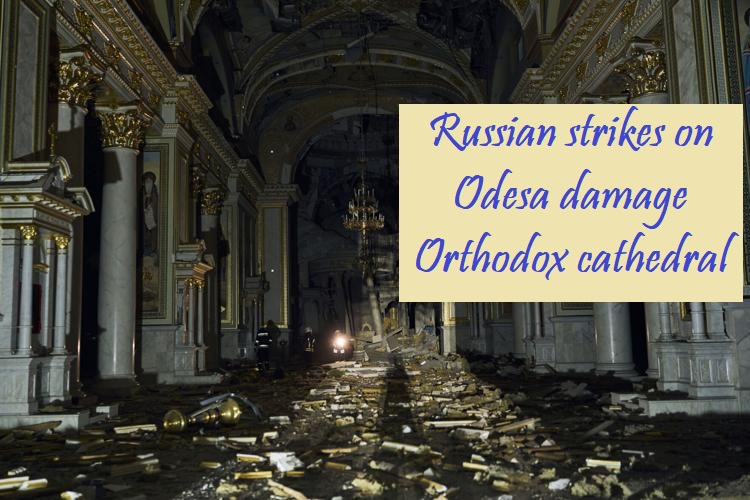
Russian missile strikes on the port city of Odesa, Ukraine, have resulted in the death of one person and injuries to 19 others, according to officials. The Transfiguration Cathedral, a UNESCO world heritage-listed historic site, was severely damaged in the attacks.

Russia claimed that its targets in Odesa were linked to “terrorist acts” and blamed the cathedral attack on Ukrainian air defense. In response to the attacks, Ukrainian President Volodymyr Zelensky vowed retaliation, stating that Russia would feel the consequences.

The constant attacks on Odesa have escalated since Russia withdrew from a significant grain deal. The cathedral’s destruction is seen as a war crime, and UNESCO has urged Russia to cease its attacks on Odesa, a designated endangered World Heritage site.

Ukraine’s southern command reported that Russia used at least five different types of missiles in the attacks. The strikes have also targeted grain supplies and infrastructure vital to the UN-backed grain deal between Russia and Ukraine.

Picture Courtesy: Google/images are subject to copyright

News Trending War

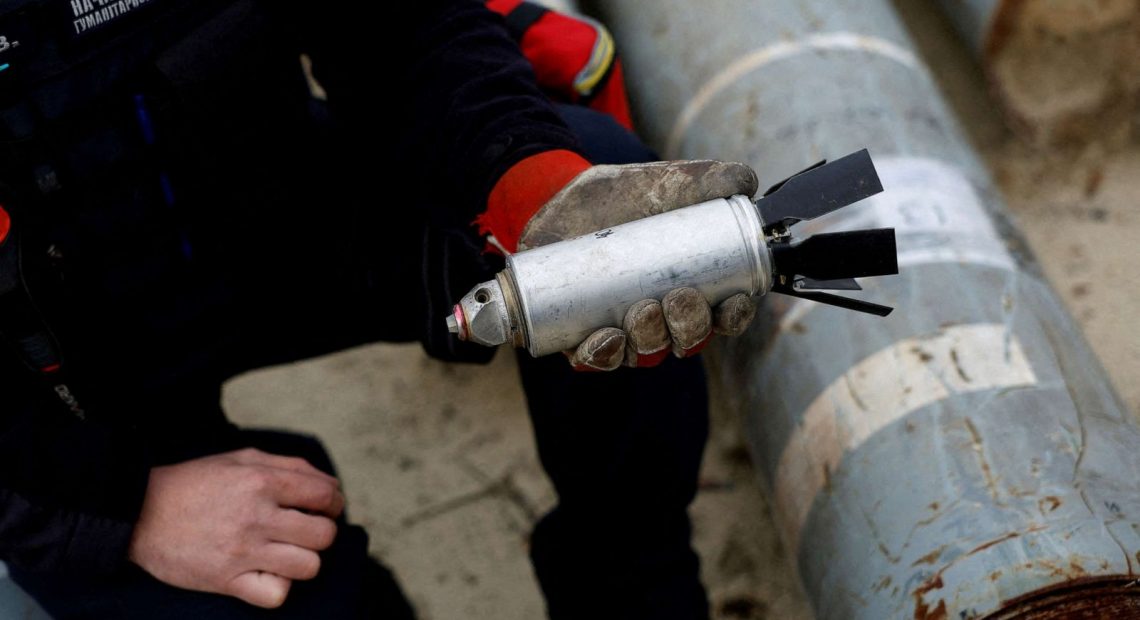
US President Joe Biden has defended his controversial decision to supply cluster bombs to Ukraine, acknowledging it as a “very difficult decision” but emphasizing the urgent need for ammunition faced by the Ukrainian forces. While Ukraine’s leader praised the move as timely, criticism has arisen from human rights groups and certain Democrats. A Moscow envoy condemned the decision as cynical. Biden, ahead of a Nato summit, stated that he had consulted with allies regarding the decision.

Cluster bombs are internationally banned by over 120 countries due to their track record of causing civilian casualties. The decision to provide them to Ukraine has raised concerns due to the risk of unexploded bombs causing harm to civilians in the long term. National Security Adviser Jake Sullivan acknowledged the risk and explained that the decision was postponed as long as possible. Sullivan asserted that the cluster bombs provided by the US are safer compared to those used by Russia in the conflict, with a lower rate of unexploded bombs.

The decision bypasses US law prohibiting the use, production, or transfer of cluster munitions with a failure rate exceeding 1%. Earlier in the war, when allegations of Russia’s use of cluster and vacuum bombs surfaced, the US referred to it as a potential war crime. The UN human rights office called for an immediate halt to the use of such munitions in any location. The Russian ambassador to the US criticized Biden’s decision, highlighting the risk of civilians being harmed by failed submunitions for years to come.

Ukrainian President Volodymyr Zelensky expressed gratitude for the military aid package worth $800 million provided by the US. He stated that it would bring Ukraine closer to victory and democracy over dictatorship. However, human rights organizations such as Amnesty International and the US Cluster Munition Coalition condemned the decision, citing the grave threat cluster munitions pose to civilian lives even after the conflict ends.

The response from US lawmakers on Capitol Hill has been mixed, with some Democrats considering the decision alarming and a mistake, while others, including Republican leaders, view it as a means to enhance Ukraine’s capability to counter Russian forces more effectively.

Picture Courtesy: Google/Images are subject to copyright