News Trending

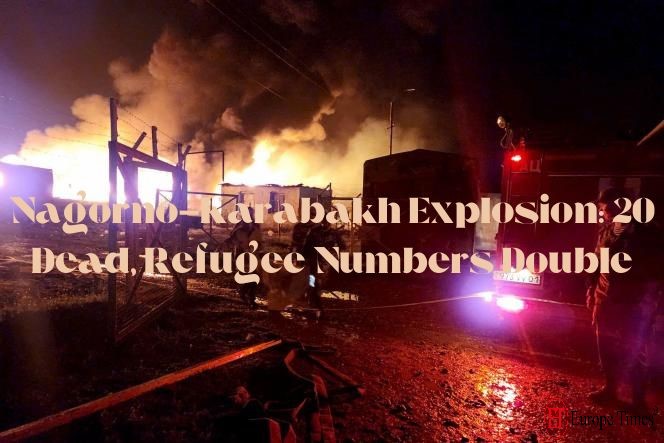
A devastating explosion at a fuel depot in Nagorno-Karabakh, Azerbaijan, has claimed the lives of 20 individuals and left hundreds injured, according to local Armenian authorities.

Approximately 300 people were admitted to hospitals, with many in critical condition.

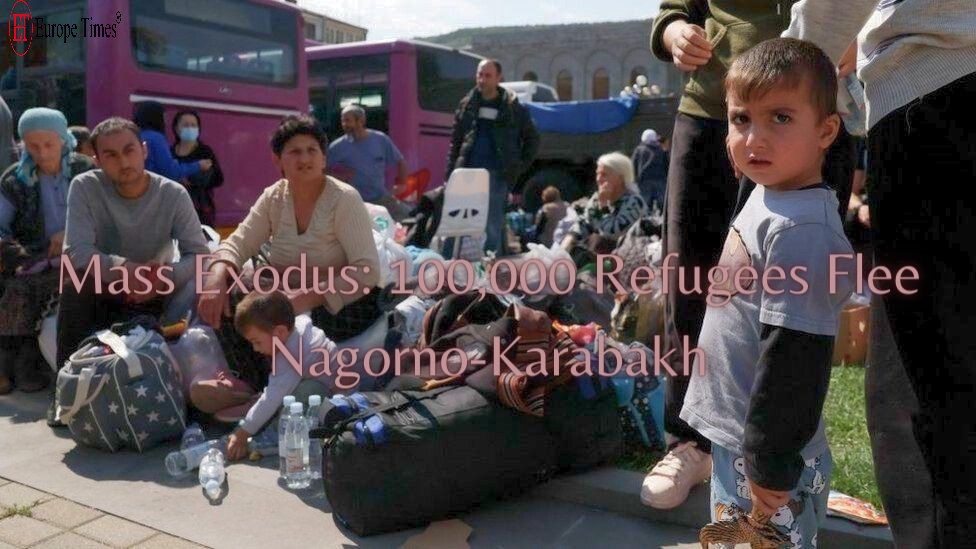
These tragic events coincide with the arrival of 13,350 refugees into Armenia from the conflict-ridden Nagorno-Karabakh region.

Nagorno-Karabakh is at the center of a long-standing dispute and is predominantly populated by around 120,000 ethnic Armenians.

The cause of the explosion in Stepanakert, the main city, remains unclear.

Gegham Stepanyan, the Human Rights Ombudsman, expressed concern on social media, reporting that the explosion had resulted in over 200 injuries, many of which were severe or extremely severe. Nagorno-Karabakh’s medical facilities are struggling to cope with the influx of patients.

Local authorities have confirmed the discovery of 13 unidentified bodies at the explosion site, with an additional seven individuals succumbing to their injuries in hospitals.

The seizure of Nagorno-Karabakh by Azerbaijan has prompted thousands of people to flee the region, following the Armenian government’s announcement of plans to relocate those displaced by the conflict.

Armenia’s Prime Minister, Nikol Pashinyan, has raised concerns about ethnic cleansing in the region and expressed disappointment that the international community hasn’t acted more decisively.

Azerbaijan has stated its intention to reintegrate ethnic Armenians as equal citizens.

Refugees who have reached Goris in Armenia, near the Karabakh border, have shared their harrowing experiences, with one individual expressing a preference for death over their current situation.

Envoys from Armenia and Azerbaijan are scheduled to meet in Brussels for European Union-backed talks. These discussions mark the first diplomatic negotiations since Azerbaijan’s recent takeover of the enclave.

Both sides will be represented by their national security advisors.

Nagorno-Karabakh, a mountainous region in the South Caucasus, is internationally recognized as part of Azerbaijan but has been controlled by ethnic Armenians for three decades.

Armenia and Russia have provided support to the enclave, with Russia maintaining a presence of hundreds of soldiers.

Last week, as Azerbaijan’s army advanced, five Russian peacekeepers were killed, along with at least 200 ethnic Armenians and dozens of Azerbaijani soldiers.

Azerbaijan’s defense ministry has reported the confiscation of additional military equipment, including rockets, artillery shells, mines, and ammunition.

Despite public assurances from Azerbaijan, concerns persist for the well-being of Nagorno-Karabakh’s residents. Only one aid delivery of 70 tonnes of food has been allowed since separatists agreed to a ceasefire and disarm.

Ethnic Armenian leaders emphasize that thousands are in dire need of food and shelter, many resorting to seeking refuge in basements, schools, or the open air.

Picture Courtesy: Google/images are subject to copyright

News Trending

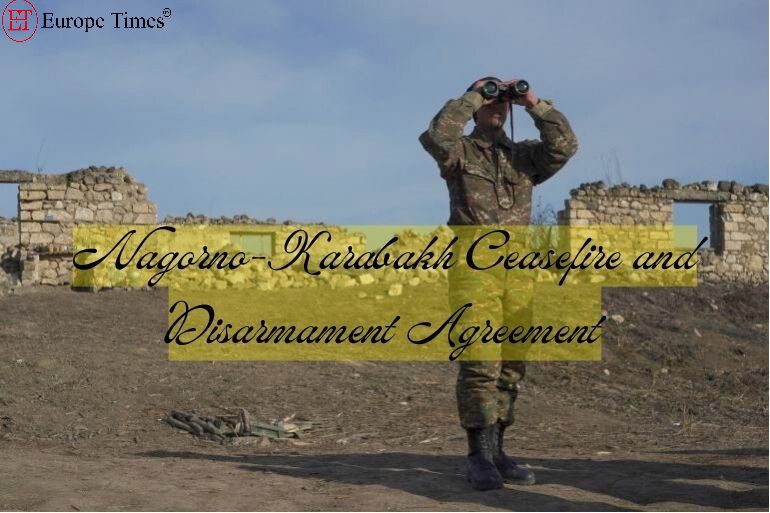
A day after Azerbaijan initiated an offensive in Nagorno-Karabakh, ethnic-Armenian forces have agreed to a ceasefire brokered by Russia. This agreement includes the significant concession of complete disarmament by Karabakh forces. Nagorno-Karabakh, home to around 120,000 ethnic Armenians, is internationally recognized as part of Azerbaijan.

Three years ago, Azerbaijan reclaimed areas in and around Karabakh and, on Tuesday, demanded an unconditional surrender. Karabakh authorities have reported at least 32 casualties, including seven civilians, and approximately 200 injuries since Azerbaijan launched what it termed “anti-terror” operations.

Azerbaijan’s leadership has announced plans to meet with Armenian representatives from Karabakh to discuss “re-integration” matters in the Azerbaijani town of Yevlakh, located about 100 kilometers (60 miles) north of Karabakh’s regional capital, known as Khankendi to Azerbaijanis and Stepanakert to Armenians.

Mediated by Russian peacekeepers, enclave leaders have confirmed a comprehensive cessation of hostilities beginning at 13:00 local time (09:00 GMT). However, despite the ceasefire, loud explosions persisted in the regional capital, and minor clashes were reported by both sides. Azerbaijan claimed to have captured over 90 positions from ethnic Armenians since the conflict began.

Karabakh officials urged residents to remain in shelters and avoid heading to the local airport, which adjoins a Russian peacekeeping base. Nonetheless, a group of civilians gathered near the airport.

Russia revealed that its peacekeepers had evacuated 2,000 people from Karabakh villages since the offensive commenced. Armenian Prime Minister Nikol Pashinyan emphasized that his government played no part in crafting the ceasefire text and insisted that Russian peacekeepers bore full responsibility for the safety of the local population. On Tuesday, he accused Azerbaijan of carrying out “ethnic cleansing” in Karabakh.

The terms of the truce require complete disarmament and disbandment of local Karabakh forces, along with a commitment for Armenian forces to withdraw, despite Yerevan’s denial of any military presence there.

Azerbaijan’s presidential envoy, Elchin Amirbekov, stated that Russian peacekeepers played a crucial role in facilitating the ceasefire’s implementation.

Picture Courtesy: Google/images are subject to copyright

News Trending

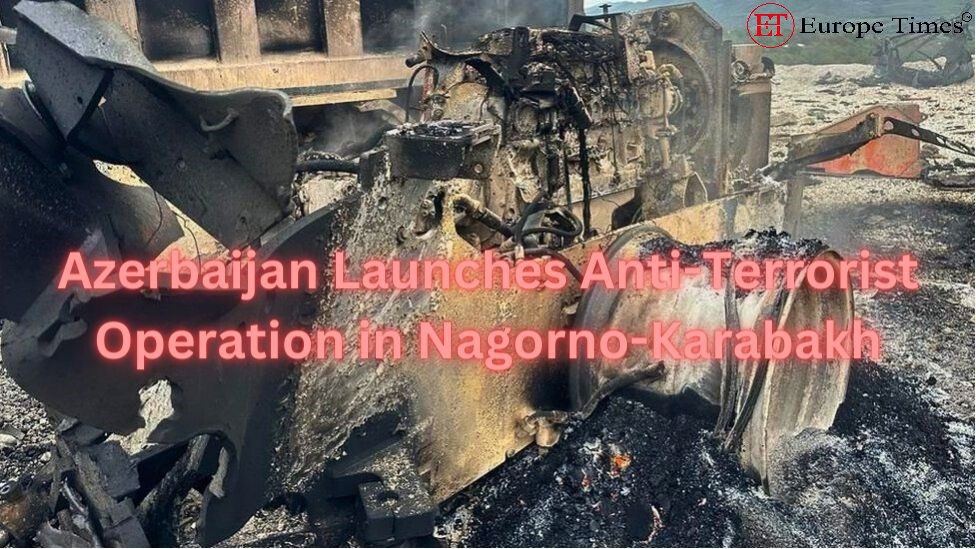
Azerbaijan’s defense ministry has initiated “anti-terrorist” operations in regions of Nagorno-Karabakh controlled by Armenia. Tensions have remained elevated for several months concerning the disputed ethnic-Armenian enclave, which is internationally recognized as part of Azerbaijan.

In Karabakh’s main city, air raid sirens and mortar fire were heard. Tragically, eleven Azerbaijani police and civilians lost their lives in a mine explosion and another incident.

Officials from the breakaway region of Karabakh stated that the Azerbaijani military breached the ceasefire by launching missile and artillery attacks along the entire line of contact. Representatives from Karabakh described it as a “large-scale military offensive.”

Azerbaijan and Armenia, neighboring nations, have previously engaged in two conflicts over Nagorno-Karabakh: first in the early 1990s after the collapse of the Soviet Union and again in 2020. Three years ago, Azerbaijan successfully regained territories surrounding Karabakh, which had been held by Armenia since 1994.

Since December, Azerbaijan has imposed an effective blockade on the only route into the enclave from Armenia, known as the Lachin Corridor.

On Tuesday, Baku’s defense ministry accused Armenian forces of “systematically shelling” its military positions and claimed to have responded by launching “local, anti-terrorist activities” aimed at disarming and securing the withdrawal of Armenian armed forces from Azerbaijani territories. They emphasized that their targets were strictly military and not civilians or civilian infrastructure.

Armenia’s defense ministry denied claims of Armenian military fire, stating that they did not correspond to reality.

The sounds of artillery and gunfire were reported from Khankendi, the regional capital of Karabakh, known as Stepanakert to Armenians. An estimated 120,000 ethnic Armenians reside in this mountainous enclave.

Journalist Siranush Sargsyan reported that residential areas of the city had been struck, including a neighboring building.

Armenian officials noted that, as of 14:00 (10:00 GMT), the situation along Armenia’s own borders was “relatively stable.”

Russia’s foreign ministry disclosed that it had been informed of the Azerbaijani offensive only moments before it occurred, urging both nations to respect the ceasefire that was signed after the 2020 war. The EU’s regional special representative, Toivo Klaar, emphasized the “urgent need for an immediate ceasefire.”

The fragile truce that ended the six-week war in 2020 had been under increasing strain in recent months. Approximately 3,000 Russian peacekeepers were deployed to monitor the ceasefire, but Russia’s attention has been redirected to its full-scale invasion of Ukraine. Armenian Prime Minister Nikol Pashinyan recently stated that Russia was “spontaneously leaving the region.”

Azerbaijan had denied increasing troop numbers in the region. On Monday, it permitted aid from the International Committee of the Red Cross to enter Karabakh via two routes, one through the Lachin Corridor from Armenia and the other on Azerbaijan’s Aghdam road.

Hopes for tensions to ease were dashed when Azerbaijani officials reported six casualties, including four police officers, in an incident where their vehicle hit a landmine in the Khojavand area, which had been retaken during the 2020 war. Meanwhile, ethnic Armenian officials in Karabakh asserted that it was Azerbaijan’s military that had violated the ceasefire.

Picture Courtesy: Google/images are subject to copyright