featured News Trending

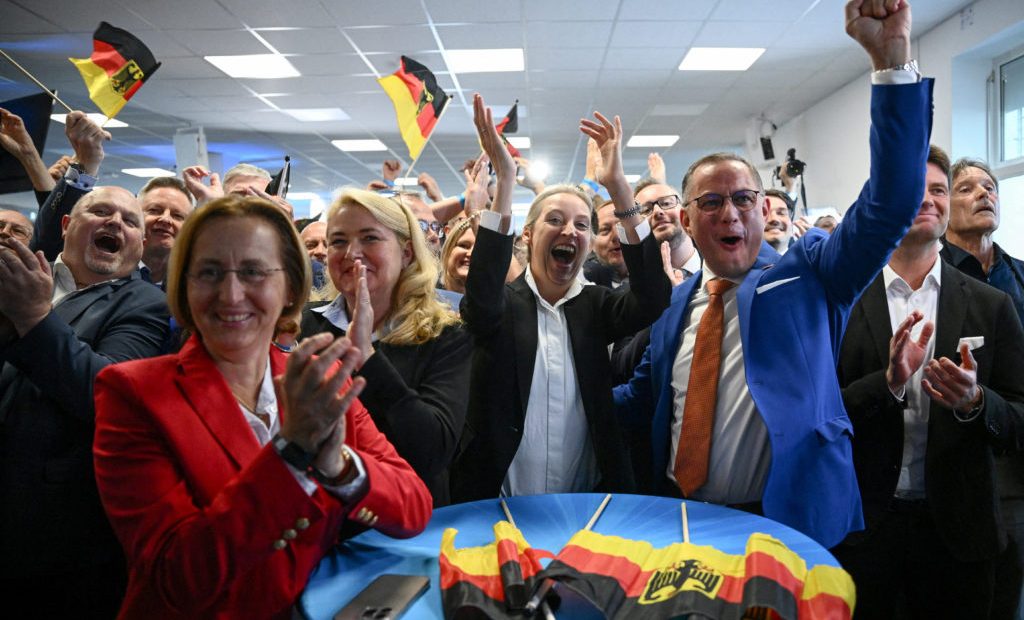
German Chancellor Friedrich Merz has clashed with AfD leader Alice Weidel in parliament following the far-right party’s major victory in Saxony-Anhalt. The AfD secured nearly 44% of the vote, while Merz’s conservative CDU saw its support fall sharply. Weidel called Merz’s coalition government a failure, while Merz described the AfD as a “destructive force” and criticised its migration policies.

Merz warned that the AfD’s proposed “remigration” policy could affect millions of people and harm key sectors that depend on migrant workers. He argued that migrants make up a significant share of Germany’s skilled workforce and said mass deportations could leave hospitals, care homes and restaurants struggling to operate. The heated parliamentary debate was repeatedly disrupted by AfD MPs, prompting Bundestag President Julia Klöckner to threaten disciplinary action.

The AfD’s victory has intensified debate over Germany’s political future, although the party fell three seats short of an outright majority in Saxony-Anhalt. It has indicated that it could seek support from another party to form a government, potentially challenging Germany’s long-standing political firewall against cooperation with the far right. The result has also drawn praise from US President Donald Trump, adding further international attention to Germany’s shifting political landscape.

Pic courtesy: google/ images are subject to copyright

News Trending

Alice Weidel, leader of Germany’s far-right Alternative for Germany (AfD), expressed on Monday that there is a growing demand for a vote of confidence and new elections, stating that the public is frustrated. The AfD is celebrating their unexpected success in the European Parliament elections, where they secured 16%, surpassing Chancellor Olaf Scholz’s centre-left SPD.

Despite facing numerous scandals, including allegations of money laundering, connections to the Kremlin, and espionage for China, the AfD’s campaign managed to perform well. Their two lead candidates, Maximilian Krah and Petr Bystron, were sidelined due to investigations into these allegations, with Krah further tarnishing the party’s image by downplaying Nazi crimes. Consequently, France’s hard-right leader Marine Le Pen distanced herself from the AfD.

In an effort to rehabilitate the party’s image, Weidel has excluded Krah from the AfD’s EU delegation. The party attributes the scandals to a “media campaign” and criticizes the judiciary and intelligence services for being politically biased. This narrative of victimization seems to have resonated with voters.

The AfD’s effective use of social media and direct slogans contrasted with the government’s more abstract campaign messaging about “defending democracy.” Co-leader Tino Chrupalla emphasized addressing real issues over engaging in mutual insults, which appeared to appeal to the electorate, especially in eastern Germany and among younger voters.

Meanwhile, the governing coalition is grappling with the poor election results, described as a “painful humiliation” by an SPD leader. Although the conservatives led with 30%, their performance was not seen as particularly strong given the government’s unpopularity. In eastern Germany, the AfD outperformed them, and the results complicate the formation of a stable coalition in the national parliament.

This outcome bolsters CDU leader Friedrich Merz’s efforts to steer his party towards a more conservative stance and supports his ambition to become Germany’s next chancellor. However, the real beneficiaries of the election are the populists.

Picture Courtesy: Google/images are subject to copyright

News Politics Trending

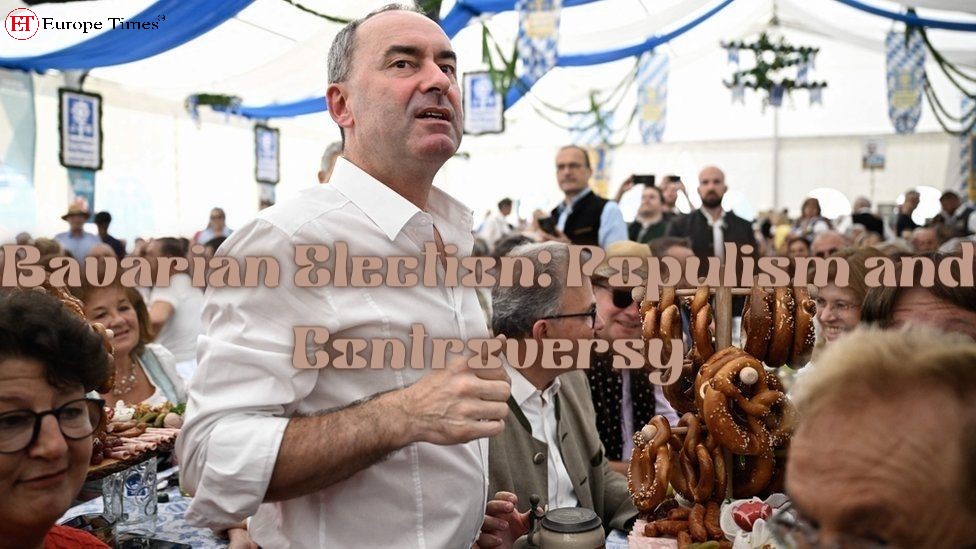
In Germany’s largest state, Bavaria, voters recently participated in a contentious parliamentary election marked by a toxic atmosphere and the rise of populist forces. The far-right Alternative für Deutschland (AfD) aimed for a strong showing but faced accusations of manipulating the truth for political gain, while claiming to be victims of physical attacks and threats.

Tino Chrupalla, an AfD co-leader, was hospitalized after an incident during an election rally, which the party described as a “physical attack,” though police found no evidence of poisoning. Alice Weidel, another AfD co-leader, was placed in a safe house by Swiss police due to security concerns, even though she was on holiday abroad at the time.

On the other side, the Bavarian Greens faced hostility from right-wing factions, including physical attacks on their co-leader Katharina Schulze. Bavaria, once a tranquil and conservative stronghold, is experiencing turmoil as it grapples with various crises, including the Ukrainian refugee influx and the transition to renewable energy.

Despite these challenges, the government has managed to avert economic catastrophe, but public sentiment remains gloomy. The political landscape in Bavaria is increasingly polarized, with right-wing populists gaining traction by opposing climate reforms and presenting themselves as victims of persecution.

Picture Courtesy: Google/images are subject to copyright