featured News Trending

Germany’s far-right Alternative for Germany (AfD) is leading polls in two eastern states ahead of September elections, despite economists warning that some of the party’s policies could hurt the regions’ already fragile economies. The AfD is polling at around 41% in Saxony-Anhalt and 36% in Mecklenburg-Vorpommern, where shrinking populations, labour shortages and lower incomes remain major challenges.

Experts say economic frustration and a lingering sense of being left behind since German reunification are important drivers of AfD support in the east. Both states have lost large numbers of young people, while ageing populations have contributed to severe skilled-worker shortages. Mecklenburg-Vorpommern’s GDP per capita is around 76% of Germany’s national average, while Saxony-Anhalt has the country’s highest proportion of pension-age residents.

Economists argue that AfD proposals, including reducing immigration, cutting state spending and potentially leaving the euro and European Union, could further weaken the region. A DIW Berlin study estimates Saxony-Anhalt could lose around €1,600 in annual income per person and 10,000 jobs under such policies. At the same time, local initiatives such as internationalising university programmes and attracting young talent are showing alternative ways for eastern Germany to address its labour and economic challenges.

Pic courtesy: google/ images are subject to copyright

featured News Trending

German security sources say Russia has intensified disinformation campaigns ahead of next month’s state elections, with online content reportedly targeting political rivals of the far-right Alternative for Germany (AfD) party. Authorities believe the campaign aims to deepen political divisions and undermine Germany’s governing parties, including the CDU, SPD, Greens, and FDP.

German officials said the operation, known as the “Matryoshka” campaign, spreads fabricated videos on social media using the branding of well-known news organisations to make false allegations against politicians. While the Interior Ministry says the campaign has not gained significant online traction, it continues to monitor the situation closely, calling it a serious threat.

Russia’s embassy in Berlin rejected the accusations, describing them as “anti-Russian hysteria” and denying any interference in Germany’s internal affairs. German security officials, however, maintain that the campaign is centrally coordinated from Russia, adding that the country remains alert to foreign influence attempts ahead of the elections.

Pic courtesy: google/ images are subject to copyright

featured News Trending

German Chancellor Friedrich Merz is facing growing political pressure after a cabinet reshuffle triggered internal divisions within his conservative CDU/CSU alliance. Lawmakers are set to vote on his nomination of Thorsten Frei as parliamentary faction leader, with the outcome expected to be closely watched as a measure of support for Merz’s leadership.

The reshuffle follows the resignation of senior party figure Jens Spahn and comes as Merz’s government struggles with declining public approval. Recent opinion polls show the far-right Alternative for Germany (AfD) leading national support, while Merz’s personal approval ratings have fallen sharply. The AfD has also overtaken the conservatives on voters’ perceptions of competence, increasing pressure ahead of key state elections in September.

Further criticism emerged after changes to the cabinet angered members of Merz’s own party, including regional leaders and ministers who said they were not properly consulted. Despite the backlash, Merz has expressed confidence that tensions will ease before parliament reconvenes in September, as his government focuses on advancing economic reforms and countering the AfD’s growing influence.

Pic courtesy: google/ images are subject to copyright

featured News Trending

Schools in Germany’s eastern state of Saxony-Anhalt have become a major political flashpoint ahead of the September 6 regional election, where the far-right Alternative for Germany (AfD) is leading opinion polls. The debate intensified after teacher Max Heckel received a formal warning for telling a student he had not voted for the AfD, citing its classification as extremist by security authorities. Heckel says the incident has led to online abuse, threats, and vandalism, while raising concerns about freedom of discussion in classrooms.

The AfD argues that teachers must remain politically neutral and has pledged sweeping education reforms if it wins power in the state. Party leaders say schools should focus on traditional values, German history, and academic standards while removing what they describe as political influence and ideological teaching. The party also proposes reducing social support and integration programmes in schools as part of a broader overhaul of the education system.

Mainstream political parties and critics warn that the AfD’s plans could weaken democratic safeguards that have shaped Germany’s education system since World War II. They argue that limiting classroom discussions about extremism and the country’s history could undermine students’ understanding of democratic values. With the AfD polling close to 40% in Saxony-Anhalt, the election is expected to be a significant test of the party’s growing political influence in Germany.

Pic courtesy: google/ images are subject to copyright

featured News Trending

Germany’s iconic Bauhaus movement has become a focal point in a growing cultural debate ahead of September’s state election in Saxony-Anhalt, where the far-right Alternative for Germany (AfD) is leading opinion polls. The party has pledged a “patriotic cultural policy” and argues that Bauhaus architecture represents rootless globalism rather than nationally grounded German traditions.

Founded after World War I, the Bauhaus school revolutionized architecture and design through its minimalist use of glass, steel, and concrete, influencing buildings and household products worldwide. While the AfD criticizes modernist architecture and state support for what it calls “anti-German” culture, Bauhaus supporters say the movement reflects innovation, openness, and an important chapter of German history.

Cultural leaders and academics have expressed concern that an AfD victory could reshape cultural and educational policies in the state. Although Germany’s federal system limits sweeping changes, observers say Saxony-Anhalt could serve as a testing ground for the party’s broader cultural agenda, placing institutions such as Bauhaus and universities under increased political scrutiny.

Pic courtesy: google/ images are subject to copyright

featured News Trending

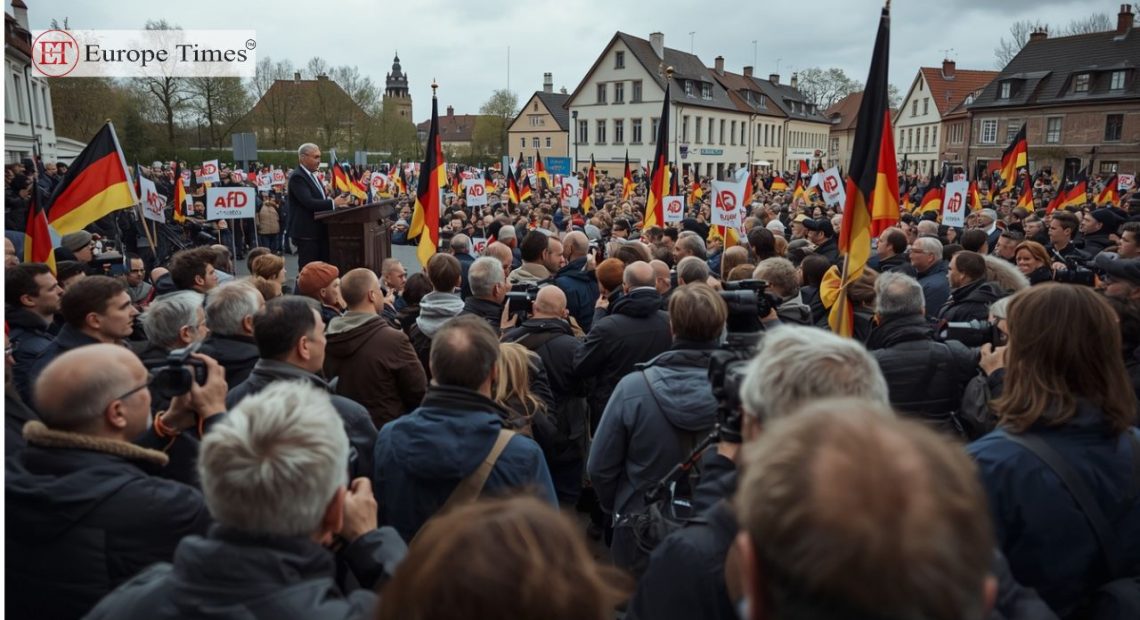
Germany’s far-right party, the Alternative for Germany (AfD), is gaining strong support in eastern Germany as Chancellor Friedrich Merz struggles with falling approval ratings and economic concerns. In Saxony-Anhalt, AfD leader Ulrich Siegmund believes the party could secure its first state premiership in the September elections. The AfD has been attracting voters through local “citizen dialogues,” with many supporters expressing frustration over rising living costs, immigration, and dissatisfaction with the current government.

Despite economic investments and development projects in towns like Halberstadt, concerns over inflation, energy prices, and Germany’s slowing economy continue to fuel public anxiety. Recent polls show the AfD reaching up to 41% support in Saxony-Anhalt and 29% nationally, ahead of Merz’s conservatives. The party argues that Germany’s identity is under threat from mass immigration and progressive social policies, while mainstream parties continue to reject any cooperation with the AfD under the country’s political “firewall” strategy.

The possibility of an AfD-led state government has sparked concern among officials and political rivals, especially given the party’s classification as “far-right extremist” by regional security authorities. Critics warn that handing the AfD control of state institutions could have major consequences for German politics. However, many voters at recent rallies said they are willing to give the party a chance, believing traditional parties have failed to address economic struggles and public concerns.

Pic courtesy: google/ images are subject to copyright

featured News Trending

Germany’s far-right Alternative for Germany (AfD) has reached a record 28% in the latest INSA opinion poll, marking its highest level to date. The party gained one percentage point from the previous week, further strengthening its position as the leading political force in the survey.

The conservative Christian Democratic Union (CDU), led by Chancellor Friedrich Merz, remained steady at 24%, trailing the AfD by four points. Meanwhile, the Social Democratic Party held at 14%, the Alliance 90/The Greens slipped to 12%, and The Left stayed at 11%.

The poll also highlighted challenges in forming a government, as around 11% of votes went to smaller parties unlikely to enter parliament. With most parties ruling out cooperation with AfD, potential governing coalitions would likely require three-party alliances. Combinations such as CDU, SPD, and Greens could secure a majority, according to the survey conducted among 1,203 respondents between April 20 and April 24.

Pic courtesy: google/ images are subject to copyright

featured News Trending

German Chancellor Friedrich Merz faces his first electoral challenge since taking office as voters head to the polls in the state of Baden-Württemberg on Sunday. The election is seen as an early test of support for Merz’s conservative Christian Democratic Union (CDU), which hopes to regain dominance in a region long tied to Germany’s car industry.

Opinion polls show a tight race between the CDU candidate Manuel Hagel and the Greens’ Cem Özdemir, both polling around 28%. The winner will succeed outgoing Green premier Winfried Kretschmann, with the outcome likely shaping the balance of power in the state government coalition.

Meanwhile, the far-right Alternative for Germany (AfD) continues to poll strongly at about 20%, reflecting growing political shifts across Germany. The Baden-Württemberg vote is the first of several regional elections this year and comes amid economic concerns linked to rising fuel prices and global tensions.

Pic courtesy: google/ images are subject to copyright

featured News Trending

Germany’s Cologne administrative court has granted an injunction preventing the domestic intelligence agency (BfV) from classifying the Alternative for Germany (AfD) as right-wing extremist, pending a full court ruling. The decision provides temporary relief to the far-right party ahead of five state elections scheduled for later this year.

The injunction was filed by the AfD to contest the 2025 BfV decision labeling the party as extremist, which would have allowed increased monitoring by the intelligence service. The court noted that it could not currently establish that the party as a whole is dominated by extremist positions, thereby suspending the agency’s classification until further review.

The BfV’s May 2025 classification had triggered political tensions in Germany, with calls from some lawmakers to ban the party and criticism from the AfD itself, which argued the move undermined democratic principles. The U.S. administration also expressed concern, with Secretary of State Marco Rubio urging German authorities to reconsider the designation.

Pic courtesy: google/ images are subject to copyright

featured News

Germany’s association of family-owned companies has lifted its ban on engaging with lawmakers from the far-right Alternative for Germany (AfD), reflecting the party’s rising acceptance in sections of the business sector as it gains strength in national polls. Just two years ago, leading industry figures warned that right-wing extremism posed a threat to Germany’s global reputation and ability to attract investment and skilled labour.

The shift comes as the AfD has surged to first place in multiple nationwide surveys after coming second in February’s federal election. Association president Marie-Christine Ostermann said that political indignation alone is no longer effective and argued that addressing the AfD’s positions directly is more productive. While she maintained that the organisation rejects the AfD’s ideology and opposes the party’s participation in government, she stressed the need for dialogue given its support from around 25% of voters.

The association is among the first major business groups to advocate for more engagement with the AfD, though others remain firmly resistant. The BDI industry association said it does not seek contact with radical parties, warning that the AfD’s populist agenda risks undermining the stable economic environment on which Germany’s industry relies.

Pic Courtesy: google/ images are subject to copyright