News

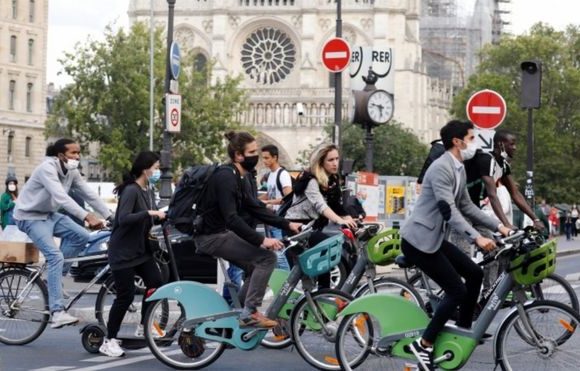
The European country of France has witnessed an unexpected rise in the number of Covid-19 cases. It has marked the highest single day rise since March 31.

The single day tally has touched around 7,379 cases. The development has brought the total number to 2,67,077.

The rise has brought the issue back to the central stage. It has forced the government to review its preparedness against the crisis.

The rise has hinted the possibility for a second wave.

Unlike the previous trend, this time the majority of those who have been infected are youngsters.

As per a report, the rise in the single day tally has not made any impact on the single day death tally so far.

The report means through the daily tally has marked an unexpected rise the system has done a good job to handle the crisis in a perfect manner.

Still, the unexpected rise opens up a possibility for the imposition of some restrictive measures.   

Photo Courtesy: Google/ images are subject to copyright 

News Trending

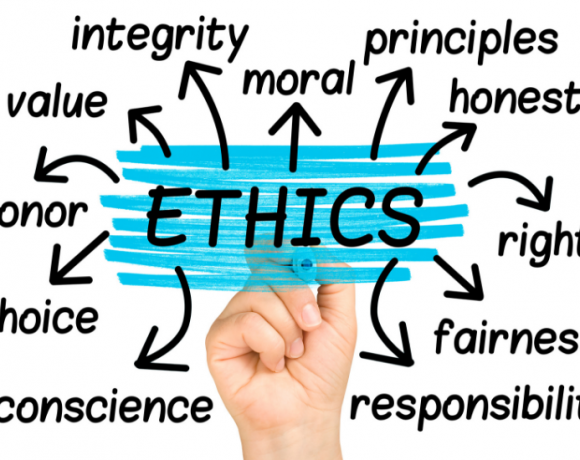
“Ethics” and proving “Ethical Credentials” have become new buzz words in almost all spheres of life including medical practice, medical research, all the way through to business Ethics and commercial “Ethical” investments. In this short series, we explore some key principles and ideas associated with proving one’s own Ethical Credentials.  

What?

“Ethics” is one of those topics for which one can write pages upon pages without actually defining it. How does one then take a matter that cannot be properly defined and actually wear an ethical credential? In fact, one could argue that, just by being and living, we all live by certain ethical rules and principles whether this is consciously or unconsciously known to us or not.

We can start at the very beginning. Creation and Human Birth itself, being the miraculous event that it is, involves a keen demonstration of Ethics. The one sperm (amongst millions) that gets an opportunity to fertilise the ovum is usually the healthiest and most able candidate. Have all the other sperms of lesser (perhaps only slightly lesser) ability been a wasted resource? Is it ethical that all these sperms have been produced and they have had almost no chance of fulfilling their mission at the time of their creation? Science tells us that this mechanism is just nature’s way of maximising the chances of human fertilisation. So, this tells us that it must be natural and ethical that some amount of wasteful redundancy is built in to this activity and almost all further activities involving human interaction.

The unselfish mother has to endure months of hardships to ensure the delivery into the world of a new human being. The baby somehow knows that its main job is to eat and grow, babies know when to smile to get appreciation and know when to cry and get attention. The weighing up of choices of daily living continues in the background, while the ultimate priority of child birth and growth is happening regardless of the fine details of those choices. One could therefore postulate that every mother and baby is inherently “Ethical” due to the very fact of their existence.

Every individual also has to have a certain amount of ethical credentials to interact with society. Growing up in a caring environment implies adherence to and incorporation of certain ethical principles (ensuring everyone has enough food, equitable distribution of toys, respect for elders who may visit the family home….). Regular attendance at school enables a disciplined approach to learning and interactions with friends and teachers, this also enables further refinement of ethics. Higher education provides an opportunity to further improve upon basic skills, some of these may relate to highly technical aspects of the course subject, but again, there is frequently an emphasis on asking questions and seeking solutions, which also involves a certain discrimination and possibly involves comparison with established convention which is all likely based on a platform of good ethical practice.

The scenario of finding a mate and starting a family may not present itself as an obvious candidate involving ethical scrutiny, but one could argue that this is happening at a subconscious level, and although mates may have been chosen on their appearance, achievements, ambitions, potential to improve standard of life and so on, all of these are usually based on a platform of ethical principles at their core. While one may not have ethics on a checklist, while choosing a mate, this is frequently implied and assumed.

Our index candidate has now completed higher studies, settled down with a mate and is now faced with a growing burden at home and work. Newly appointed freshers in the job may do the same job much faster and it may be time to take on senior roles in the organisation to guide these youngsters, climb the career ladder as well as earn some more money to feed the family. The most frequently used tool to decide on career progression involves some element of performance review. Again, ethics and adherence to ethical principles or wearing ethical credentials may not figure prominently (if at all) on such a checklist, but these principles frequently underpin successful appraisals at performance review.

Our middle-aged person again demonstrates adherence to ethical principles when planning for retirement, ensuring that children are given a helping hand while navigating their own challenges. How does planning for one’s own family demonstrate good ethical practice and not be seen as an act of profound selfishness, whereby the growth and well-being of one’s own family is prioritised over the needs of others? Some famous billionaires have chosen to counter this perception by choosing to donate some or most of their fortune to charity rather than pass it on wholly to their own family. Most individuals (especially non billionaires) do not make such announcements and it is entirely seen as a matter of personal choice and an invasion of privacy, if there is an expectation of announcements of significant donations to charity to enable an “ethical credential”.

Every being that is born has to die, so is there a demonstration of ethics in death? Clearly, if one has a choice in their own death, they would ensure minimal inconvenience to near and dear ones, while trying to maximise benefit to their family, and inheritance tax planning is usually based on minimising tax payments to the state. So, someone who has not conducted adequate inheritance tax planning may inadvertently hand more resource to the state. How can a philosophy based on minimising payments to the state be based on good ethical principles?

So, most humans who conform to standard expectations from society have actually demonstrated some conscious or unconscious awareness of ethics and ethical principles. Does this mean that someone who has not grown up in a caring environment, not undergone formal education, not taken the expected route to family life and job is “ethically” inferior to others who fit more traditional roles? Of course not, we would never label anyone who may be deemed non-conformist by some sections of society as “unethical”. Human Life is too precious and too unpredictable for restrictions to be placed from an ethics perspective. It is of course perfectly possible to breeze through life without appearing “ethical” or demonstrating adherence to “ethical principles”.

So the answer to “what is an ethical credential” is still unanswered in full and perhaps the other questions may give us a clue. This brings us on to “Why”.

To be continued…..

Sobhan Vinjamuri (Key leader with wide experience of Quality Improvement; Regulation; Peer Review; Internal and External Accreditation; Disciplinary Panels; Research, Peer Review of Research, Editorial scrutiny, Comprehensive and Confidential Service Reviews)

Photo Courtesy: Google/ images are subject to copyright 

News

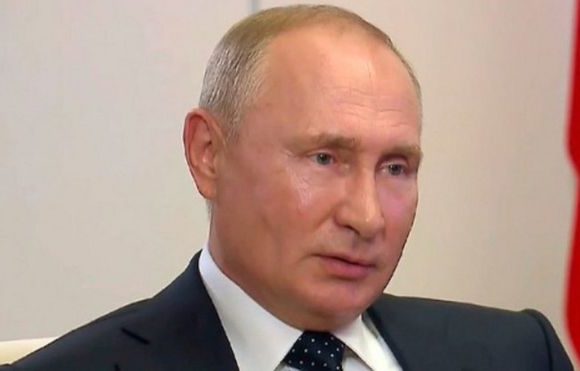
Sending a clear message to the westers powers that it is high time to make a serious note of the ongoing politics crisis in Belarus, in a interview given to a state run television channel, Russian President Vladimir Putin has revealed that his country has set up a special police force on the request of Belarus President.

He has said that the force would be sent to Belarus if the things went out of control in the European country.

Belarus has been witnessed a series of violent demonstrations since President Alexander Lukashenko was released to the post.

Protesters allege that the election – through which the President achieved the opportunity to continue in the post – was not conducted in a free and fair manner.

Recently, several human rights groups criticized the Belarus government for the way in which it handled the protest.

Many protesters alleged that they were treated improperly when they were taken into custody.

Even the country’s attitude towards journos was also improper. At least 13 journalists – including a BBC team – were detained in the centre of the capital, Minsk, ahead of a planned opposition protest.

Though the interior ministry said they had been taken to a police station for identity checks, one of those journos who was arrested said it was a clear attempt to interfere with coverage of events.

Photo Courtesy: Google/ images are subject to copyright 
News

Ratko Mladic, who is a former Bosnian Serb commander, has strongly criticised the UN court, while addressing judges in The Hague as part of an appeal against his conviction for genocide and crimes against humanity.

He has called the court a child of Western powers,

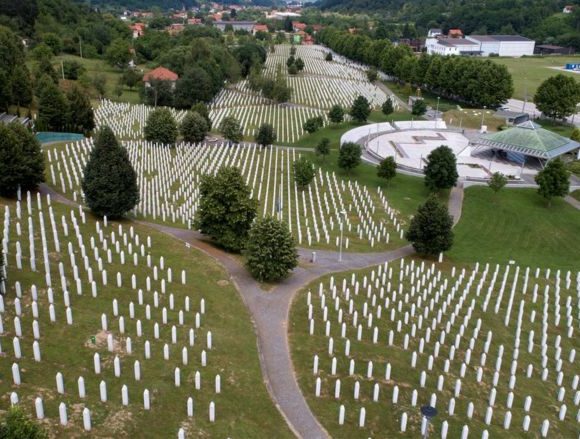
Earlier, he was found guilty for his part in the 1995 Srebrenica massacre.

The massacre is one of the most brutal one the humanity has seen so far. As many as 8,000 Muslims were killed during the massacre.

The former commander denied any involvement in the case saying that he was far away from the town when the massacre happened.

His lawyer has taken the same stand in the UN court also.

The UN court, in which the hearing is at present taking place, is the one which is supposed to consider appeals and remaining cases from the International Criminal Tribunal for the former Yugoslavia (ICTY).

The original ICTY hearing ended in 2017 itself.

The UN court hearing was supposed to begin before the commencement of the Covid-19 issue. Mladic’s health problems and coronavirus restrictions delayed proceedings earlier.

Photo Courtesy: Google/ images are subject to copyright 
News

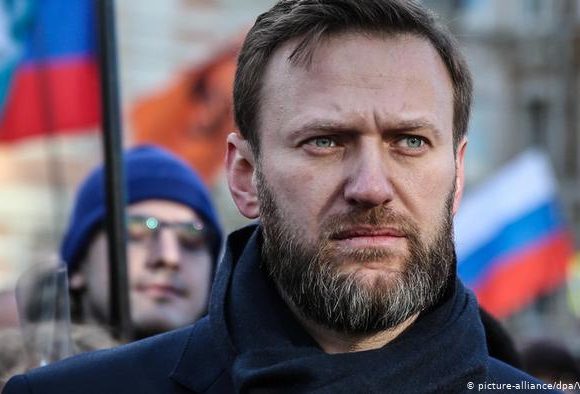
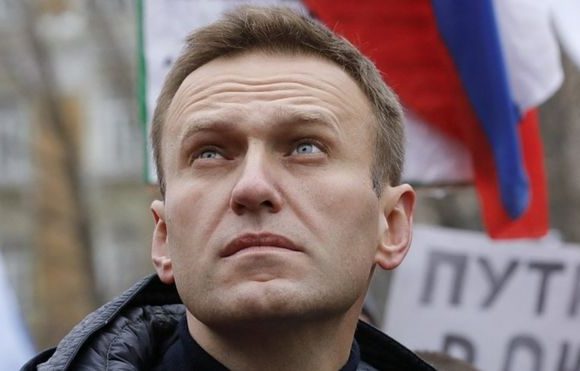
In contrary to the view made by Russian doctors on the reason why Russian President Vladimir Putin’s critic Alexei Navalny fell unconscious during an domestic flight trip, German doctors – who are treating him since he was brought to the country from Russia at the request of his supporters across the world – have detected the presence of poisonous substance in his body, paving way for a new discussion around how Russia handle its critics.

Mr. Navalny has not yet recovered from the injury. He is still in coma. The doctors are yet to launch a detailed report on his present heath condition.

The critic is a most powerful opponent of Mr. Putin. It is not the first time he has been subjected to this kind of attack. Several times in the past too, he has suffered this kind of attack.

Anyway, the attack has belittled Russia. It has inflicted an irreparable damage over the image of Russia.

It is not a surprise that Russia has gone this far to attack its rival. The country is known for its intolerance towards its critics.

It is unfortunate that a country like Russia has failed to protect the values it has uphold for generations.

It indicates that Russia has fallen completely under the clutches of autocracy.

Photo Courtesy: Google/ images are subject to copyright 
News

A tough ban on protest has failed to prevent protesters from taking to streets in the European country of Belarus.

Over tens of thousands of people have taken part in a protest organised to express their disagreement towards the election – which has reaffirmed the president’s claim for the seat.

Protesters allege that the election was not done in a free and fair manner. They demand the resignation of the President – who has been sitting in the seat of power of the ex-Soviet satellite since the year 1994.

Meanwhile, the President – who has reaffirmed his claim for the seat through the election – has vowed to suppress the protest. He has dismissed the protest as the one born with the blessings of foreign forces.

Belarus is a very powerful European power. It is at present, in a way, a satellite country of Russia. It, thus, does not have a good relation with its neighbours who consider Russia as a threat to their sovereignty.

Recently, Amnesty International revealed that those who were arrested in connection with the protest in Belarus were brutally tortured in prisons. As per a report, some protesters were even threated with rape.

Photo Courtesy: Google/ images are subject to copyright 
Health News

The World Health Organisation has predicted that the present Covid-19 crisis will be over in the timeframe of two years.

The organisation has cited the Spanish Flu experience as the justification for its argument about the crisis.

It has explained about the ability of technology to bring down the impact of the present crisis to the half of its actual potential.

Spanish Flu is not very different from Covid-19. It is a disease outbreak which brought havoc to the world during the 1910s – like the one who has been brought by the present disease crisis.

It took at least two years for the world to recover from the crisis.

During the said period, the world was not advanced in terms of technology.

The latest statement of the WHO is a comparison between the present crisis and the one the earth experienced during the Spanish Flu period.

What makes the comparison disturbing is the fact that unlike the Spanish Flu period at present the world is highly connected.

The Spanish Flue crisis clamed as many as 50 million lives across the world.

The present Covid-19 crisis has killed not less than 800,000 people and left more than 23 million people injured.

Photo Courtesy: Google/ images are subject to copyright 
News Trending

Russian doctors have said that Alexie Navalny, the prime critic of Russian supremo Vladimir Putin – who was hospitalised recently after he had fell ill during a flight to Moscow – was too ill to be taken outside the country for better treatment, paving a space for his supporters to cry foul in the present decision of the doctors to keep him insider the country – which is under the absolute control of the autocrat against whom the victim has stood all through his political career.

A statement made by a doctor who is in the team which treats the victim that there is no sign of a poison attack proves that there are valid reasons to pay attention to the allegations made against the country by the supporters of the injured critic.

As per the latest bulletin released by the team of doctors which treats the injured, Mr. Navalny has not recovered from the state of coma.

It is high time to launch an international campaign to make sure that the injured receives proper treatment in his country.

The longer it takes to get him out of the country, the shorter it becomes the chance of finding the exact reason why he fell ill.

Photo Courtesy: Google/ images are subject to copyright 
News

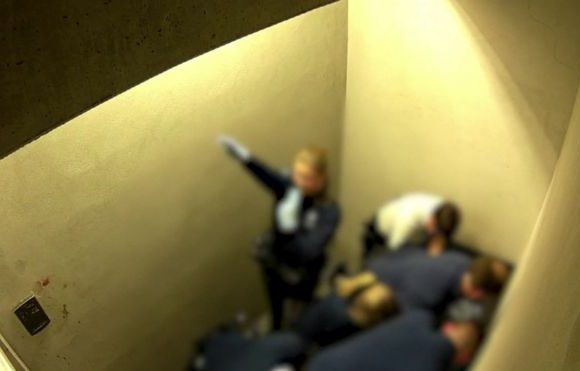
The custodial death of a man in Belgian – who was arrested from an airport in the country – has drawn parallels with the custodial death of a black man in the North American country of the United States of America.

He was arrested minutes after he was caught from the port.

A video, in connection with how he has been treated in the custody of the Belgian police, has been released in several social media platforms.

In some of those videos, it is seen that he was mistreated by the police officials. It is clear that he was taken to hospital much after he fell unconscious after banking his head on the wall of the cell where he was placed.

An urgent investigation is needed in the issue. It is unclear how a person in the police custody has been found with this kind of injuries in his head.

Many have already voiced their concern about the death of the man. The wife of the deceased person has demanded a fresh inquiry into this matter.

It is the first time in the recent history such an incident has been reported from the European country of Belgian.

Photo Courtesy: Google/ images are subject to copyright 
News Trending

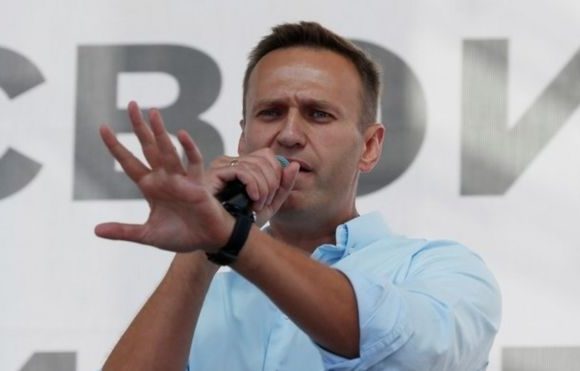
Alexei Navalny, the most vocal critic of Russian President Vladimir Putin, has been hospitalised after he fell unconscious during a flight trip.

The fight was forced to do an emergency landing.

As per a preliminary report, the condition of the critic is serious. The report says he has not yet recovered from the condition.

There are rumours that the critic was poisoned. As per the rumours, the poison was mixed with a cup of tea which was offered to him during the trip.

The Russian government has not yet responded to the issue. At present, all fingers are pointed towards the Russian supremo, Vladimir Putin.

Mr. Navalny, who runs a media network, is considered as the most powerful anti-corruption leaders based in Russia.

It is even regarded as the potential opponent to the Russian supremo in upcoming elections.

In the recent history, he has led several anti-government protests. He has faced jail sentences several times.

A serious investigation is needed. That should be done by an agency based outside the privy of the Russian government if the intension of the constitution of such an agency is to bring out the trust not the elimination of the truth.

Photo Courtesy: Google/ images are subject to copyright