Ukraine Innovates AI and Cheap Drones to Protect Skies Against Russian Barrages
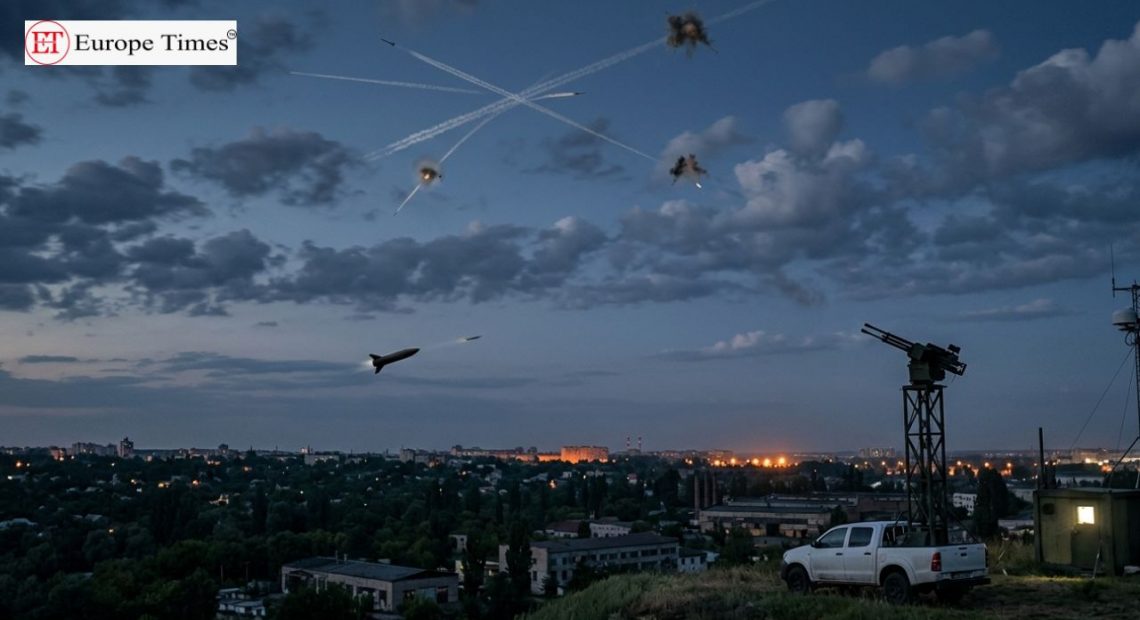
In the wake of Russia’s largest sustained aerial assault, which tragically claimed the lives of 24 civilians in a single weekend, Ukraine has significantly advanced its air defense capabilities. Driven by a necessity to protect its airspace from massive swarms of Russian Shahed drones and missiles, Kyiv has successfully raised its interception rate for long-range drones to 94%. This dramatic improvement relies on a sophisticated, layered network that integrates high-tech Western defense systems with homegrown innovations, rapidly transforming Ukraine into a global leader in modern air defense.
At the heart of this success is “Sky Map,” an AI-driven software that aggregates data from radars, acoustic sensors, and video feeds to track incoming threats in real-time. To counter the financial strain of using multi-million-dollar missiles against cheap targets, Ukraine has scaled up the production of 3D-printed interceptor drones, like the $1,000 P1-SUN, which can reach speeds over 300 km/h to physically down Russian craft. Private tech and security firms have also integrated into this state-managed network, deploying remotely controlled machine-gun towers operated via game-like console interfaces by trained civilian volunteers.
Despite these breakthroughs, significant vulnerabilities remain as both nations rush to out-innovate each other. Ukraine still faces a critical shortage of expensive, highly sophisticated systems like the US-made Patriot missiles, which are essential for intercepting ballistic missiles. Furthermore, close to the front lines, both sides continue to struggle against small, prolific First-Person-View (FPV) drones, proving that while technology has drastically altered the nature of the conflict, the threat of tragic civilian casualties remains a constant reality.
Pic courtesy: google/ images are subject to copyright