featured News Trending

Germany’s military is advancing plans to integrate artificial intelligence into wartime operations, aiming to process battlefield data faster and improve decision-making. Army chief Christian Freuding highlighted lessons from Ukraine, where drones and sensors generate vast amounts of data. AI systems can analyze this information to predict enemy behavior and recommend responses, significantly reducing the time and manpower traditionally required.

Freuding stressed that AI will remain a support tool rather than replacing human judgment. While the technology can enhance speed and efficiency, final decisions will always rest with soldiers. The German army also plans to train these systems using data from both Ukrainian combat experience and its own military exercises, ensuring compatibility with operational doctrines.

Germany intends to align its AI development with NATO standards and is considering both European and U.S. technologies. Freuding noted that American solutions, such as tools developed by Palantir Technologies, may offer quicker deployment advantages. However, concerns around data security and sovereignty will remain key factors in selecting the final system.

Pic courtesy: google/ images are subject to copyright

featured News Trending

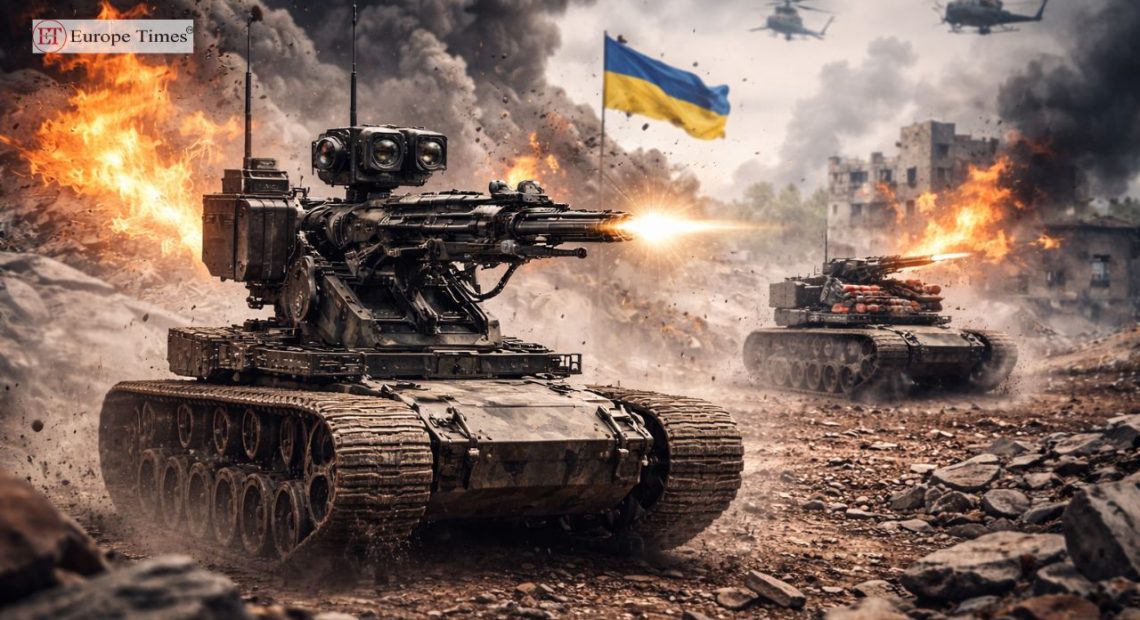
The war in Ukraine is rapidly evolving into a high-tech battlefield, with armed robots playing a growing role in combat operations. Uncrewed ground vehicles (UGVs) are now being deployed by Ukrainian forces to carry out risky tasks such as attacking enemy positions, defending front lines, and even capturing opposing soldiers. Military officials say these robotic systems help reduce risks to human troops in increasingly dangerous combat zones.

Some Ukrainian UGVs are equipped with machine guns, grenade launchers, or explosives and are used in ambushes or kamikaze-style missions against enemy positions. Unlike aerial drones, these ground robots can move quietly across the battlefield, making them difficult to detect. Despite their advanced capabilities, commanders say the final decision to fire remains with human operators controlling the machines remotely to avoid mistakes and protect civilians.

Both Ukraine and Russia are expanding the use of robotic combat systems as the war continues. Ukrainian manufacturers have significantly increased production, with thousands of UGVs already deployed and demand expected to surge further. Experts say future battles could involve swarms of coordinated drones and robots operating across land, air and sea, marking a major shift in the way wars are fought.

Pic courtesy: google/ images are subject to copyright