featured News Trending

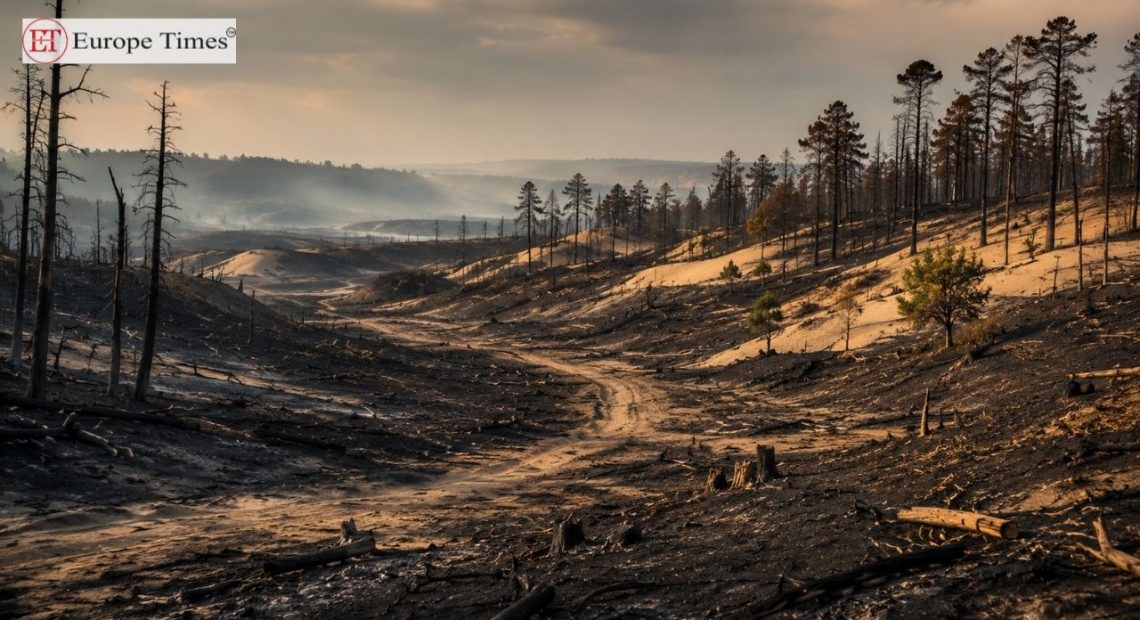
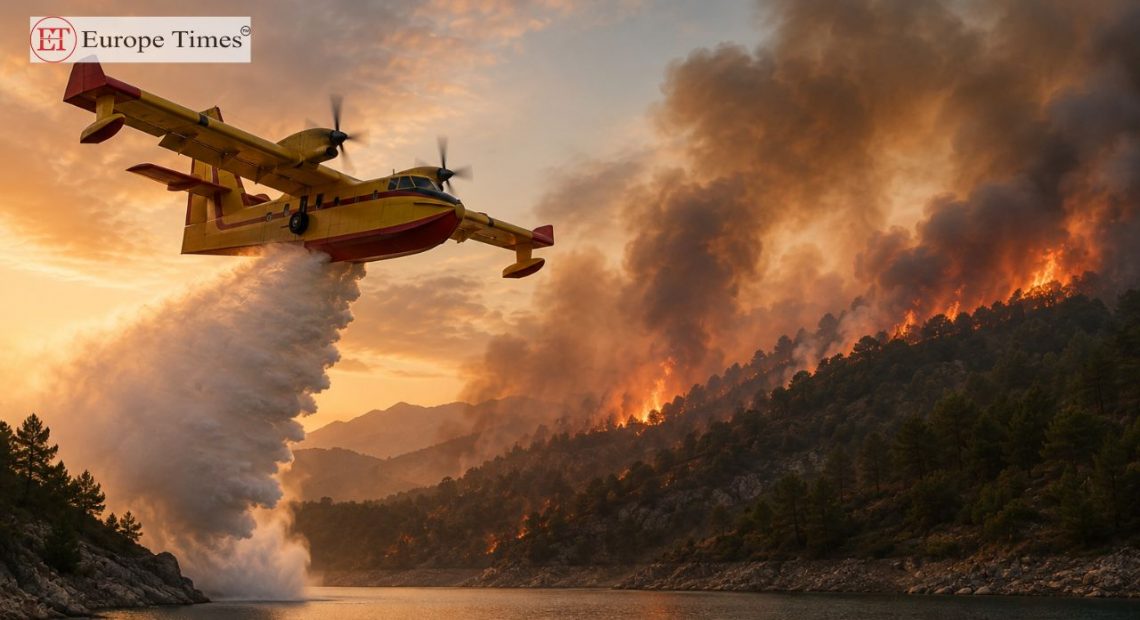
European startups are accelerating efforts to develop new firefighting aircraft as wildfires become more frequent and severe across the continent. With nearly 500,000 hectares burned in Europe this year, companies are designing new or converted water-bombing aircraft to reduce reliance on the ageing Canadair fleet that has dominated aerial firefighting for decades.

French startups Positive Aviation and Kepplair are leading the push by converting ATR-72 aircraft into firefighting planes, while other companies in France, Italy, and Belgium are working on entirely new amphibious aircraft. However, experts warn that designing, certifying, and manufacturing these specialised aircraft requires significant funding, technical expertise, and years of development.

The startups also face competition from De Havilland Canada’s new DHC-515 water bomber, expected to enter service in 2028. Despite the challenges, European innovators believe growing concerns over climate-driven wildfires and increasing political support could create opportunities for a new generation of firefighting aircraft.

Pic courtesy: google/ images are subject to copyright

featured News Trending

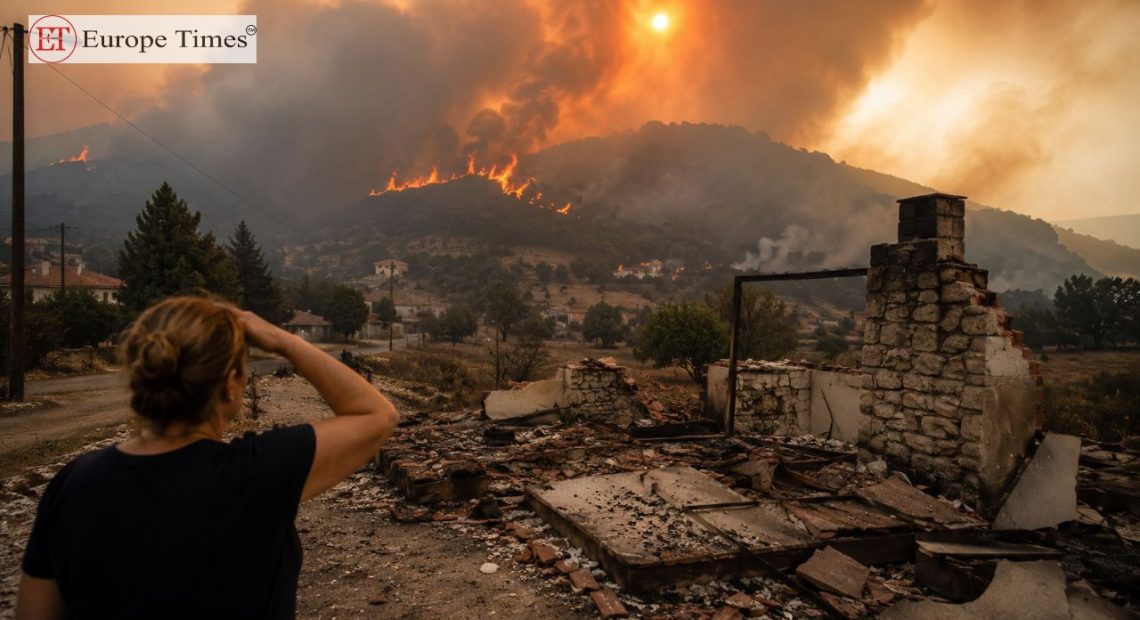
Thousands of residents across Spain have been allowed to return home after authorities lifted evacuation orders in parts of Madrid, Toledo, Ávila and Castellón following recent wildfires. More than 24,000 people in the Madrid region alone have returned, while restrictions affecting another 20,000 residents have also been removed. Despite the progress, emergency services remain on high alert as another intense heatwave approaches.

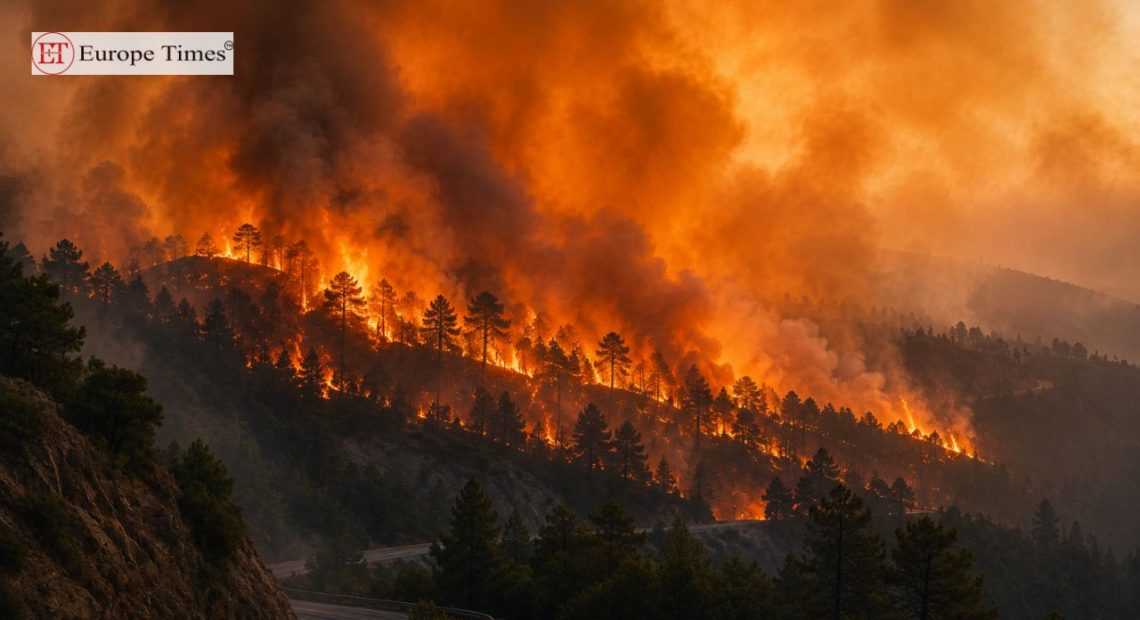
The massive wildfire near Burgohondo in Ávila, now considered the largest recorded wildfire in Spanish history, has burned more than 43,000 hectares and displaced around 40,000 people. Firefighters have managed to contain its spread, but officials warn that soaring temperatures, dry conditions and strong winds could quickly reignite the flames. Another wildfire near Vall d’Uixó, north-west of Valencia, remains out of control.

The wildfire threat extends beyond Spain, with France, Portugal and Greece also battling active blazes amid extreme summer temperatures. Authorities across southern Europe have increased emergency measures as climate change continues to fuel longer heatwaves, drier landscapes and more destructive wildfires, raising concerns over further damage in the coming days.

Pic courtesy: google/ images are subject to copyright

featured News Trending

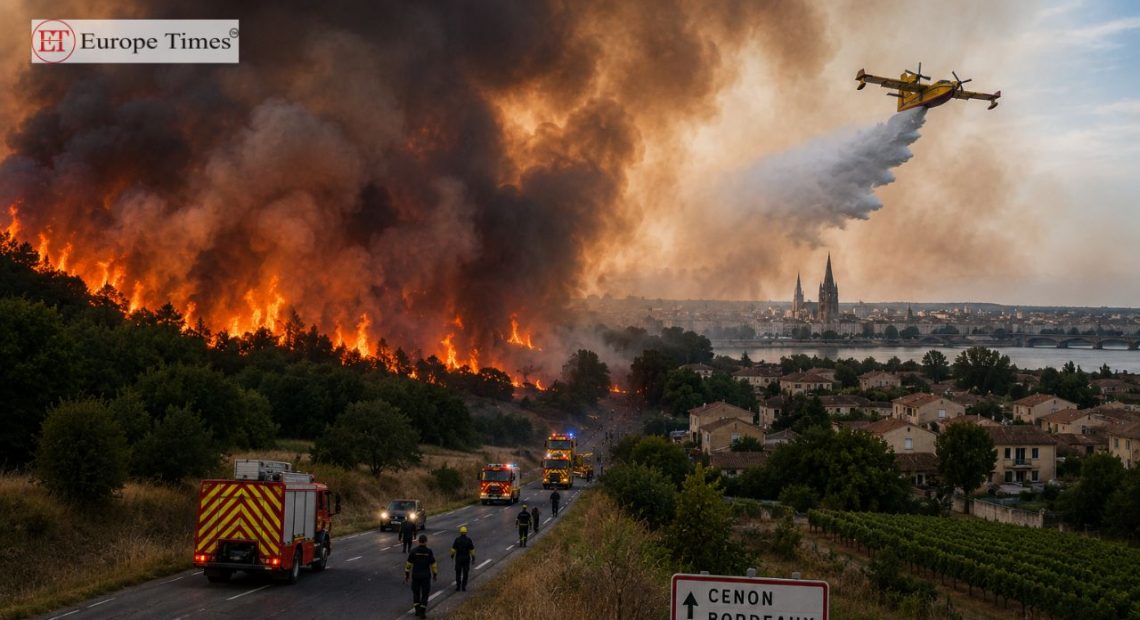
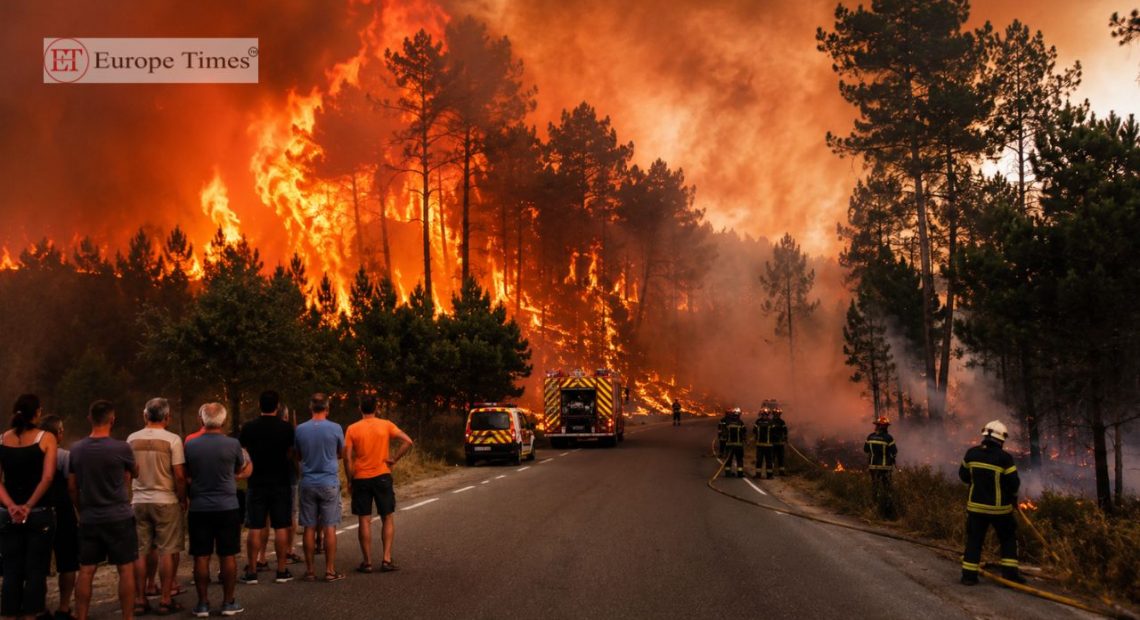
Wildfires in southwestern France advanced closer to Bordeaux on Saturday, forcing thousands of people to evacuate from the city’s suburbs. Strong winds fueled the flames, leading authorities to close Bordeaux Airport, deploy armed forces to support firefighters, and warn people to avoid travel in the affected areas.

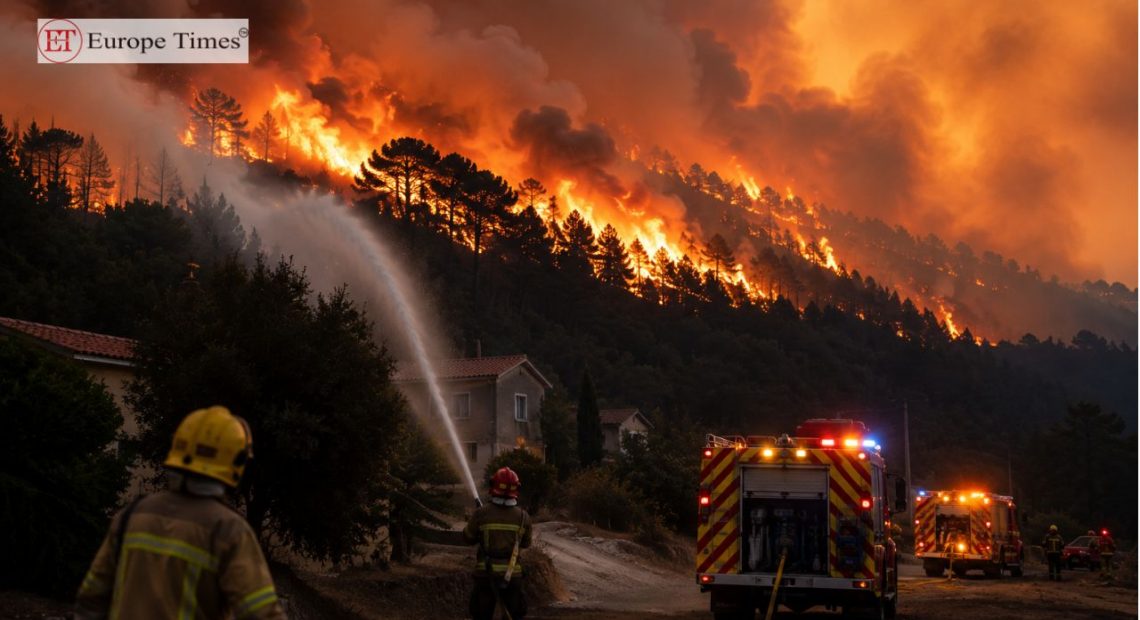
In neighboring Spain, firefighters continued battling three major wildfires, two of which merged near Madrid. The country declared its first national wildfire emergency and received firefighting aircraft from several European nations, with additional water-dumping planes arriving from Italy and Greece as part of the European Union’s emergency response.

More than 197,000 people have been evacuated in France, while over 63,000 people in Spain have either been evacuated or told to remain indoors. Officials warned that prolonged heatwaves, dry conditions, and strong winds have intensified the fires, with residents advised to avoid outdoor activities due to heavy smoke and poor air quality.

Pic courtesy: google/ images are subject to copyright

featured News Trending

Spain has declared a national emergency as massive wildfires continue to spread across several regions, forcing the evacuation of more than 10,000 residents from Villa del Prado, San Martín de Valdeiglesias, Pelayos de la Presa, and Aldea del Fresno. The move places the response under the direct authority of the country’s Interior Ministry.

Under Spain’s National Civil Protection System, the Interior Minister will coordinate firefighting and emergency operations. Authorities said this is the first time a national emergency has been declared specifically due to a wildfire. More than 270 emergency personnel, 40 ground units, and Military Emergency Unit (UME) teams have been deployed to battle the fires.

The wildfires have already burned over 100,000 hectares across Spain this year, matching the country’s average annual burned area over the past decade. Officials said 13 people have lost their lives, making 2026 one of Spain’s deadliest wildfire seasons in recent decades.

Pic courtesy: google/ images are subject to copyright

featured News Trending

Around 12,000 people, including nearly 10,000 tourists, have been evacuated from France’s Gironde region as severe wildfires continue to spread across south-western parts of the country. More than 2,000 hectares of land have been destroyed, prompting authorities to close roads, restrict access to forested areas, and ban the use of combustion and electric engines in high-risk zones.

The wildfires come just days after two French firefighters lost their lives battling blazes near Bordeaux. The Gironde region remains under a red alert, while emergency services continue efforts to contain the fires. No new injuries have been reported, but officials warn that the extreme fire risk remains high due to ongoing heatwave conditions.

Elsewhere in Europe, Italy and Spain are also battling major wildfires. Sicily has recorded hundreds of fires, including several large blazes that triggered precautionary evacuations, while Spain continues firefighting operations near Madrid. Climate experts say Europe is experiencing increasingly intense heatwaves and wildfire seasons, with record temperatures and burned areas highlighting the growing impact of climate change.

Pic courtesy: google/ images are subject to copyright

featured News Trending

Firefighters in Spain and France are battling major wildfires as extreme heat and dry conditions continue to grip southern Europe. Spain’s largest wildfire of the year has scorched around 32,000 hectares in Guadalajara, though the blaze has begun to stabilise, allowing some evacuated residents to return home. In France, firefighters are working to contain multiple fires, including one in the Var region that has burned thousands of hectares and forced hundreds of people to evacuate.

Authorities have blamed the combination of intense heat, drought, and human activity for the growing number of fires. Two firefighters lost their lives in southwest France after their vehicle was engulfed by flames, while officials have imposed barbecue bans and urged the public to avoid activities that could spark new fires. Spain has already recorded 22 major wildfires this year, burning more than 100,000 hectares nationwide.

Scientists warn that climate change is increasing the frequency and intensity of heatwaves, droughts, and wildfires across Europe. While some regions are expected to see a brief drop in temperatures, weather agencies caution that fire risks remain extremely high and another surge in heat is likely in the coming days.

Pic courtesy: google/ images are subject to copyright

featured News Trending

Western Europe experienced its hottest June on record in 2026, according to the European Union’s Copernicus Climate Change Service (C3S). The region recorded an average temperature of 20.74°C, more than 3°C above the 1991–2020 June average. The extreme heatwave disrupted power supplies, forced school closures, and pushed temperatures to record levels across several countries.

The heatwave had severe consequences, with authorities reporting over 4,700 excess deaths in France, Belgium, Spain, and the Netherlands during June. The prolonged high temperatures also fueled wildfires across parts of Spain, Portugal, and France while worsening drought conditions. Scientists warned that climate change is making heatwaves more frequent and increasingly intense across Europe.

Globally, June 2026 ranked as the second-warmest June ever recorded, while sea surface temperatures reached a record high for the month. Climate experts said rising greenhouse gas emissions continue to drive global warming, increasing the likelihood of extreme weather events. Although a developing El Niño contributed to higher global ocean temperatures, researchers found that Europe’s record-breaking heatwave was primarily intensified by climate change.

Pic courtesy: google/ images are subject to copyright

featured News Trending

A record-breaking heatwave continued to grip Italy and several Balkan countries on Monday, triggering red weather alerts, raising the threat of wildfires, and disrupting daily life across Europe. Italy placed 22 cities under the highest heat warning, while Croatia issued red alerts for Zagreb, Split and Dubrovnik as firefighters battled a major blaze on the Adriatic island of Vis. Serbia and Albania also faced soaring temperatures and wildfire concerns as the extreme weather persisted.

Scientists say the heatwave, which began on June 20, has become one of the most severe ever recorded in Europe. France has reported around 1,000 excess deaths linked to the prolonged heat, mostly among older people, while experts warn temperatures are expected to climb again in early July across France, Germany, Spain, Italy, Switzerland and parts of Britain. Researchers also said the unprecedented heat would have been virtually impossible without the influence of human-caused climate change.

The extreme conditions have strained healthcare systems, disrupted power generation and damaged infrastructure across the continent. Tragic incidents linked to the heat were also reported over the weekend, including the deaths of two children found inside a hot car in Cyprus and two cyclists who collapsed during a marathon event in Poland, where temperatures reached a record 40.5°C. Authorities across Europe continue to urge people to avoid prolonged exposure to the heat as wildfire risks remain high.

Pic courtesy: google/ images are subject to copyright

featured News Trending

Authorities in Sardinia have introduced strict new rules at Punta Molentis beach following devastating wildfires that damaged the coastline, dunes, and nearby car park last year. To protect the fragile ecosystem and support recovery efforts, visitor numbers will be capped at 150 people at a time, with mandatory reservations required for beach access through October.

Under the new regulations, visitors arriving by land must pay an entry fee of €10, while those arriving by boat will be charged €5. Vehicle access has also been restricted to just 70 cars per day. In one of the most unusual measures, beach umbrellas are prohibited for most visitors and are only allowed for families with children under 10 years old or adults aged over 65.

Local officials say the restrictions are necessary to reduce human impact and preserve one of Villasimius’ most valuable natural attractions. While some residents have criticised the rules as excessive, authorities argue they are essential to ensure the long-term protection of Punta Molentis, one of Sardinia’s most popular and environmentally sensitive beaches.

Pic courtesy: google/ images are subject to copyright

Global Climate News Trending


Claudia Duarte Agostinho vividly recalls the fear she felt during the devastating heatwave and wildfires that swept through Portugal in 2017, claiming over 100 lives. The trauma of those wildfires left her and her siblings anxious about their future. Claudia, aged 24, her brother Martim, aged 20, and her 11-year-old sister Mariana are among a group of six young Portuguese individuals who have taken an unprecedented step by filing a lawsuit against 32 governments, including all European Union member states, the UK, Norway, Russia, Switzerland, and Turkey.

Their lawsuit accuses these nations of inadequately addressing climate change and failing to sufficiently reduce greenhouse gas emissions to meet the Paris Agreement’s goal of limiting global warming to 1.5 degrees Celsius. This groundbreaking case is the first of its kind to be brought before the European Court of Human Rights (ECHR) in Strasbourg, potentially carrying legally-binding implications for the accused governments. The initial hearing took place recently.

These six claimants, ranging in age from 11 to 24, argue that the annual forest fires in Portugal since 2017 are a direct consequence of global warming. They assert that their fundamental human rights, including the right to life, privacy, family life, and freedom from discrimination, are being violated due to governments’ failure to combat climate change adequately. They have already experienced significant impacts, such as extreme temperatures forcing them indoors, restricting their daily lives, and causing health issues like eco-anxiety, allergies, and respiratory conditions. Remarkably, none of them seeks financial compensation.

The case’s proponents argue that the policies of these 32 governments are steering the world toward a catastrophic 3-degree Celsius global warming scenario by the century’s end. They demand urgent action to prevent unbearable heat extremes that threaten their health and well-being. In a 2021 study, the Lancet found widespread climate anxiety and dissatisfaction with government responses among children and young people worldwide, impacting their daily lives.

The governments, in their responses, contest that the claimants haven’t adequately demonstrated that their suffering directly results from climate change or Portuguese wildfires. They argue that there is no immediate evidence of climate change posing a risk to human life or health, and they question the ECHR’s jurisdiction over climate policy.

This David vs. Goliath case could have far-reaching implications, potentially binding these governments to increase climate action by reducing emissions and phasing out fossil fuels. It would also guide domestic courts dealing with climate change-related cases. A verdict is anticipated in nine to 18 months.

For Claudia, this case represents a glimmer of hope in an otherwise uncertain world. She contemplates the possibility of having children one day, but winning this case would mean that people are truly listening, governments are taking action, and a brighter future might be on the horizon.

Picture Courtesy: Google/images are subject to copyright