featured News Trending

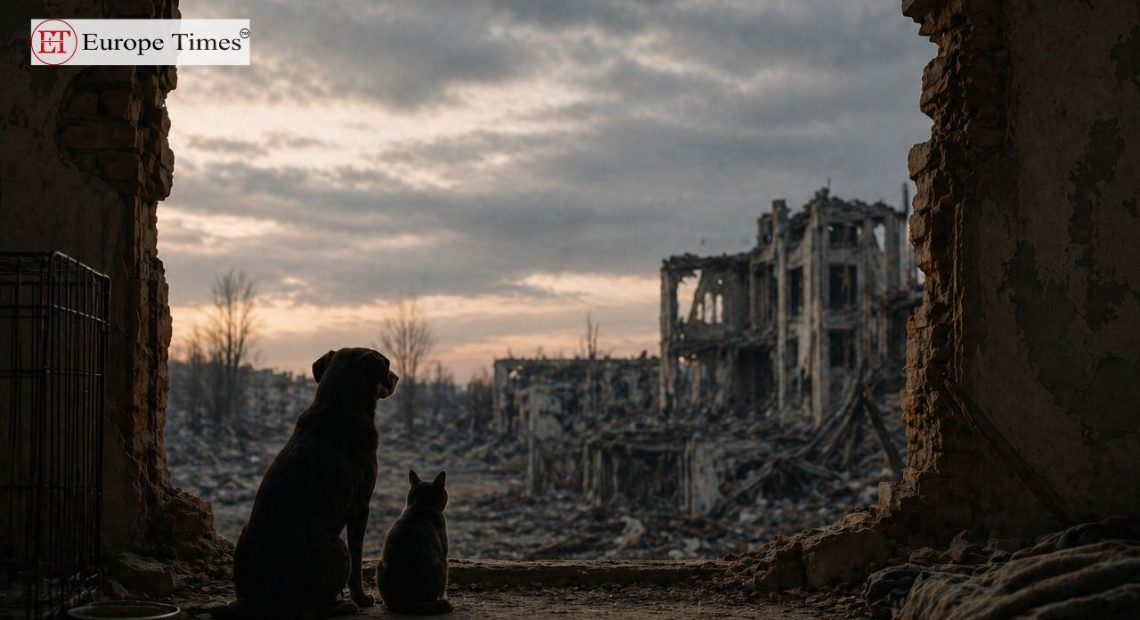
Animal rescue groups in Ukraine are working under constant danger to save pets and stray animals affected by the ongoing war. In the frontline city of Zaporizhzhia, a Russian drone strike destroyed part of a shelter, killing more than a dozen animals and leaving others injured or scattered. Despite the risks, volunteers and local residents quickly came together to rebuild and continue caring for displaced animals.

Thousands of pets have been abandoned as civilians flee bombardment zones, while others are left behind after their owners are killed. Rescue organisations like “12 Guardians” have evacuated tens of thousands of animals from dangerous areas, often under shelling. These efforts not only save animals but also help people who refuse to leave without their pets or struggle with the emotional toll of abandonment.

Rescuers say animals suffer trauma similar to humans, making their work even more urgent despite the dangers. With frontline areas becoming increasingly unsafe, volunteers now use protective measures like drone detectors while continuing operations. Many believe saving animals also brings hope to people affected by war, reinforcing the idea that humanitarian efforts extend beyond just human lives.

Pic courtesy: google/ images are subject to copyright

featured News Trending

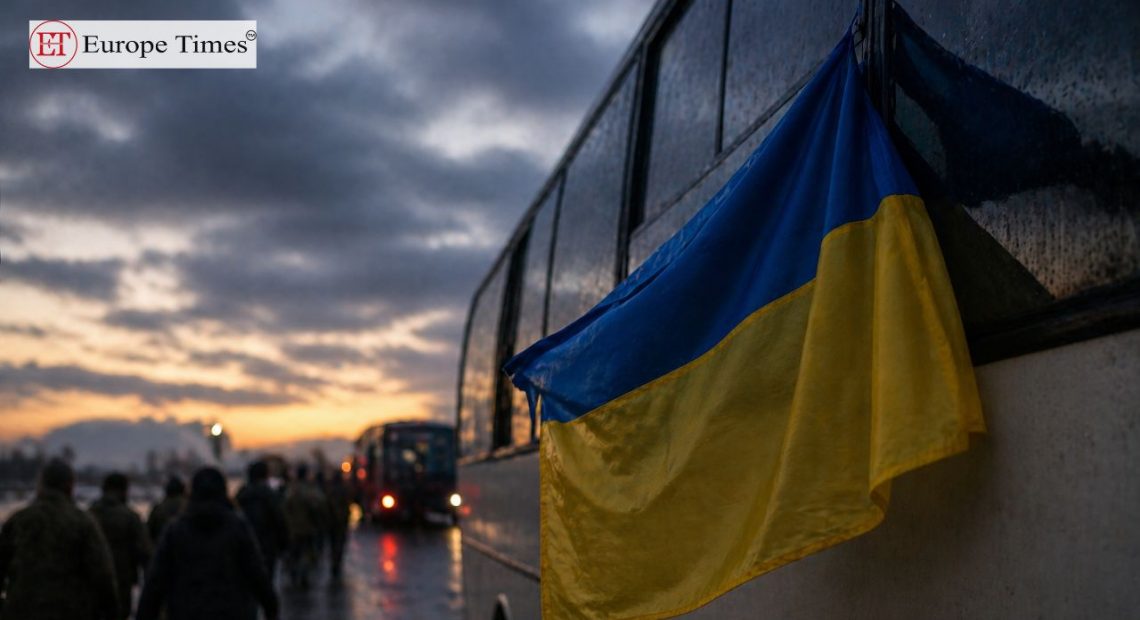
Ukraine and Russia exchanged 193 prisoners of war each on Friday in a swap facilitated with assistance from the United States and the United Arab Emirates. The exchange is part of ongoing efforts to repatriate captured personnel amid the prolonged conflict, now in its fourth year.

Ukrainian President Volodymyr Zelenskiy confirmed the return of the captives, calling the exchanges “important” for bringing people home. Both Ukrainian and Russian officials acknowledged the role of the US and UAE in helping coordinate the operation.

The released individuals included soldiers, border guards, and police officers. Many of the Ukrainian returnees were reported to have injuries or had faced legal charges while in Russian custody. Emotional reunions were reported as freed captives arrived back in Ukraine, with some describing years of captivity before returning home.

Pic courtesy: google/ images are subject to copyright

featured News Trending

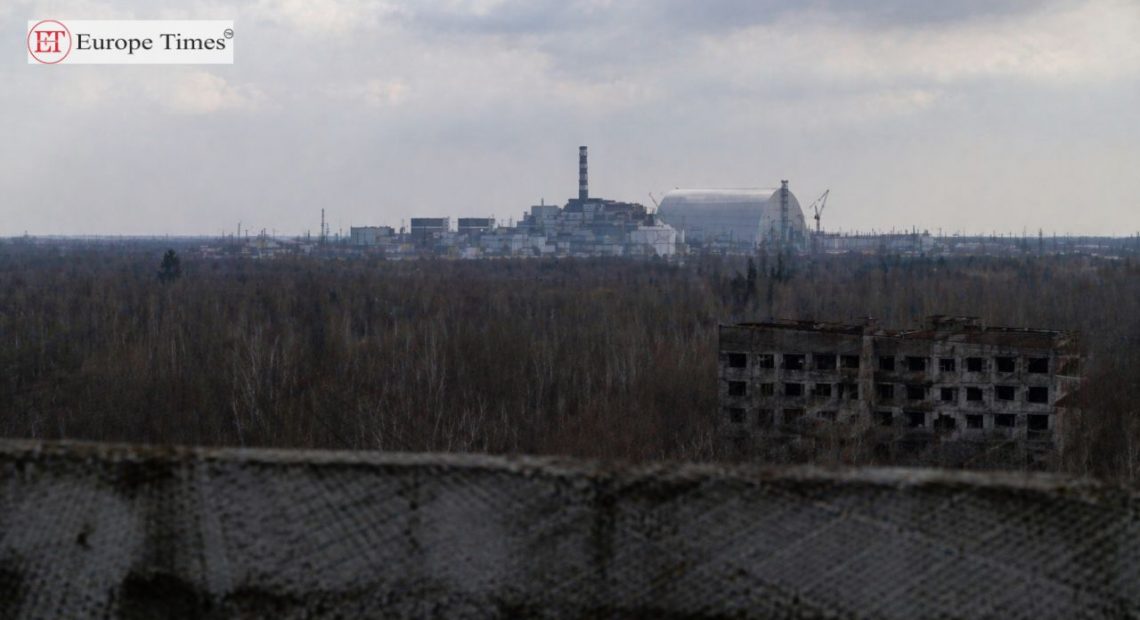
Nearly four decades after the Chernobyl disaster, Ukrainian first responder Petro Hurin says the effects of the catastrophe continue to shape his life. As one of the many “liquidators” tasked with cleaning up the aftermath of the explosion at reactor four, he recalls the intense exposure to radiation and the long-term toll it has taken on his health. Of the 40 workers sent from his company to assist in the cleanup, only five are still alive today, highlighting the enduring human cost of the disaster.

Hurin described the harsh working conditions inside the contaminated zone, where he operated heavy machinery for long hours, handling materials used to contain radiation. Within days, he began experiencing severe symptoms including headaches, chest pain, and internal bleeding. Despite these signs, Soviet authorities at the time avoided diagnosing radiation sickness, instead attributing the symptoms to other conditions. Over the years, Hurin has battled multiple health issues, including anaemia and heart problems, which he links to his exposure during the cleanup.

Now living in central Ukraine, Hurin continues to cope with ongoing medical challenges while seeking recognition and support as a disaster responder. Beyond his personal struggles, he also carries the emotional weight of losing his grandson in the ongoing conflict following Russian invasion of Ukraine. Despite everything, he reflects on his decision to serve at Chornobyl with a sense of duty, believing his efforts contributed, however modestly, to containing one of history’s worst nuclear crises.

Pic courtesy: google/ images are subject to copyright

featured News Trending

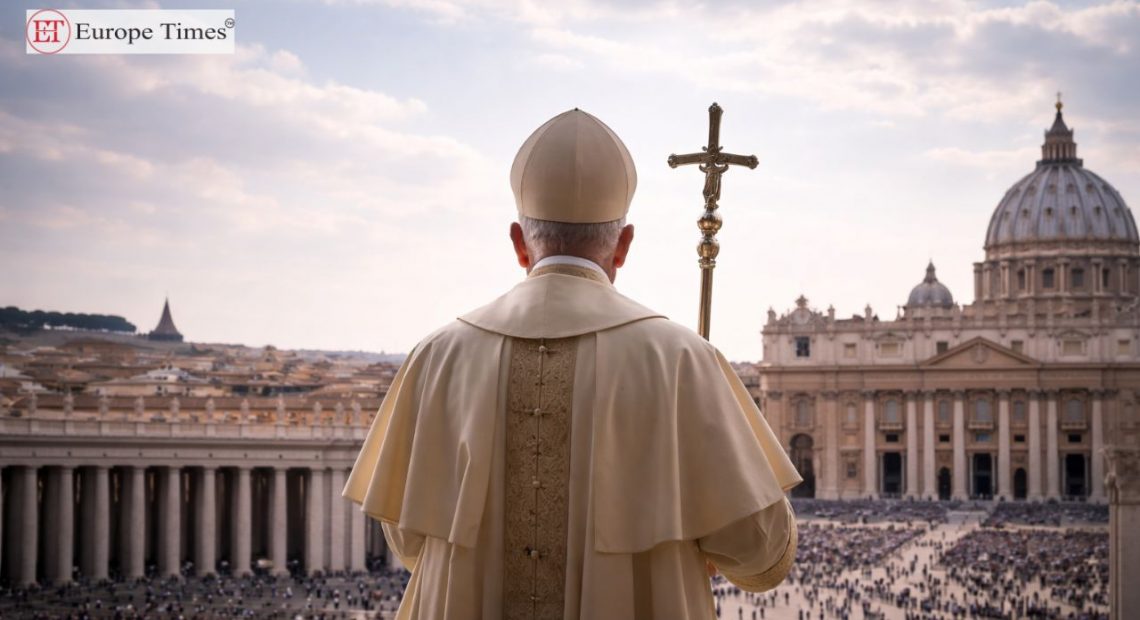
Pope Leo XIV has stepped into a more assertive global role, using his Africa tour to deliver sharp criticism of war, inequality, and global leadership. Speaking in countries including Cameroon, the pontiff warned that the world is being harmed by powerful leaders and unchecked aggression, marking a clear shift from his previously cautious tone.

The pope’s remarks have drawn strong reactions, particularly from Donald Trump, who criticized Leo’s views on international conflicts. Analysts say the change in rhetoric reflects Leo’s growing concern about global instability, as he increasingly positions himself as a moral authority willing to directly challenge political power.

Observers note that Leo’s experiences as a missionary in Peru and his exposure to conflict and poverty have shaped his outspoken stance. Compared to his predecessor Pope Francis, Leo is seen as even more direct in confronting injustice, signaling a papacy that may play a more vocal and influential role in global affairs.

Pic courtesy: google/ images are subject to copyright

featured News Trending

Pope Leo XIV has strongly condemned aerial military strikes, calling them indiscriminate and urging that they be permanently banned. Speaking in Vatican City, he warned that no one should live in fear of destruction coming from the sky, especially in light of ongoing global conflicts.

Although he did not directly reference the ongoing U.S.-Israeli war involving Iran, the pope criticized the continued use of airpower in warfare, describing it as a regression rather than progress. He emphasized that after the devastating experiences of the 20th century, such tactics should have been eliminated entirely.

The pope has repeatedly called for a ceasefire in the conflict, recently labeling it a “scandal to the whole human family.” His remarks came during a meeting with staff from ITA Airways, the airline that typically handles his international travel.

Pic courtesy: google/ images are subject to copyright

featured News Trending

Facing a severe demographic decline worsened by Russia’s full-scale invasion, Ukraine is funding a programme that allows serving soldiers to freeze sperm and eggs free of charge. Introduced after private clinics began offering cryopreservation in 2022, the scheme was later regulated and financed by the state to help troops preserve the chance of having children if they are injured or killed. Lawmakers say the policy is both a personal safeguard for soldiers’ families and a small step toward protecting the nation’s future population.

The war has intensified an already serious crisis: large numbers of young men have been killed at the front, while millions—mostly women—have left the country as refugees. Clinics in Kyiv report that pregnancies have dropped sharply since the invasion, with stress, displacement and constant missile and drone attacks causing many couples to postpone having children. Officials argue that preserving fertility for military families is vital as Ukraine struggles with long-term population loss.

The programme has not been without controversy. Early rules required sperm samples to be destroyed if a donor died, prompting public outrage after widows were denied the right to use their husbands’ frozen material. Amendments now allow samples to be kept for several years after death with prior consent, though families still report legal and bureaucratic hurdles. Despite these challenges, supporters say open discussion of fertility and wider participation by soldiers could help ensure that the children of those killed in the war still have a chance to be born in the country their parents died defending.

Pic courtesy: google/ images are subject to copyright

featured News Trending

A Russian drone attack in Bohodukhiv, Kharkiv region, killed three young children and their father, while injuring the pregnant mother, local officials reported. The victims were twin boys Ivan and Vladyslav, aged two, and their one-year-old sister Myroslava, along with their 34-year-old father, Hryhoriy. The mother, Olha, 35, sustained minor burns but survived. The family had recently relocated from a town near the Russian border, seeking refuge from ongoing shelling.

The attack marks a renewed wave of Russian strikes following a short pause, with the Kharkiv region under near-daily assaults. Regional authorities described the incident as “brutal,” noting that tens of thousands of residents face severe power outages and lack of heating, worsened by Moscow targeting energy and transport infrastructure.

In parallel, Russian forces hit other areas including Slovyansk, causing further casualties, while Ukraine launched retaliatory drone attacks on Volzhsky in Russia’s Volgograd region. Ukrainian President Volodymyr Zelensky emphasized the continued strain on civilians and noted ongoing international efforts, including upcoming U.S.-hosted talks, to end the war that began in February 2022.

Pic courtesy: google/ images are subject to copyright

featured News Trending

Ukrainian President Volodymyr Zelensky announced that the US aims to end the war with Russia by June, inviting both sides to hold talks in the United States next week, likely in Miami. Zelensky confirmed Ukraine’s participation but noted that difficult issues, including territorial concessions, remain unresolved. For the first time, leaders may be involved in trilateral discussions, though preparatory steps are required before this can happen.

Meanwhile, Russia continues to target Ukraine’s energy infrastructure, causing widespread blackouts amid freezing temperatures. More than 400 drones and 40 missiles struck power plants, substations, and transmission lines, affecting regions such as Lviv, Ivano-Frankivsk, and Rivne. Thousands of Ukrainians remain without electricity, forcing many to take shelter in metro stations. Ukraine has also retaliated with strikes on Russian military and industrial facilities in Tver and Saratov regions.

Since Russia’s full-scale invasion nearly four years ago, more than 55,000 Ukrainian soldiers have been killed, with nearly 160,000 Russian military casualties confirmed. Zelensky emphasized that Moscow should not be allowed to leverage the harsh winter to pressure Ukraine. Despite ongoing diplomacy, the conflict continues to inflict severe humanitarian and infrastructural damage.

Pic courtesy: google/ images are subject to copyright

featured News Trending

Russian forces launched attacks on Ukraine’s two largest cities, Kyiv and Kharkiv, early Saturday, resulting in one confirmed death and at least 15 injuries. In Kyiv, Mayor Vitali Klitschko reported fires in multiple districts along the Dnipro River, as power, heating, and water supplies were disrupted. Both drones and missiles were used in the assault, damaging a medical facility among other buildings.

In Kharkiv, approximately 30 km from the Russian border, Mayor Ihor Terekhov said 25 drones struck several districts over a two-and-a-half-hour period, hitting a dormitory for displaced persons, a hospital, and a maternity ward. At least 11 people were injured during the attacks. Emergency services continued working to restore essential utilities in freezing overnight temperatures.

The strikes came shortly after Ukraine, Russia, and US negotiators concluded the first day of talks in the UAE aimed at resolving the nearly four-year conflict. Despite ongoing diplomatic efforts, the attacks underscore the continuing volatility and human toll in the conflict zones.

Pic courtesy: google/ images are subject to copyright

News Trending War

Russian authorities claim to have thwarted a Ukrainian attempt to attack a border city as the ongoing aerial conflict between the two nations escalates. They reported intercepting a dozen missiles targeting Belgorod, where 25 people lost their lives on Saturday. Ukraine has not provided a response.

This development follows Russia’s largest aerial bombardment on Ukraine, with President Volodymyr Zelensky stating that Russia deployed around 300 missiles and 200 drones over five days. The renewed attacks began last week, prompting a Ukrainian counterattack on Belgorod that resulted in over 100 injuries.

Zelensky revealed in a broadcast that Russia fired nearly 100 strategically chosen missiles on Tuesday, and Ukrainian forces successfully shot down 10 hypersonic ballistic missiles on that day alone. Ukrainian officials reported over 130 casualties from Tuesday’s attacks, including major cities like Kharkiv and Kyiv.

In response, Russia’s air defense system intercepted 12 missiles targeting Belgorod overnight, causing one fatality and five injuries in the region. Explosions were also heard in Sevastopol, the largest city in Russian-occupied Crimea, where a missile was shot down over the port with no reported casualties or damage.

Ukrainian Ambassador to the US, Oksana Markarova, expressed that Ukraine anticipated Russia’s recent bombardment but stressed the need for more weapons to effectively respond and send a clear message to Russia to halt its actions.

Russian President Vladimir Putin has pledged to increase strikes in retaliation for Ukraine’s recent attacks on Belgorod.

Picture Courtesy: Google/images are subject to copyright