featured News Trending

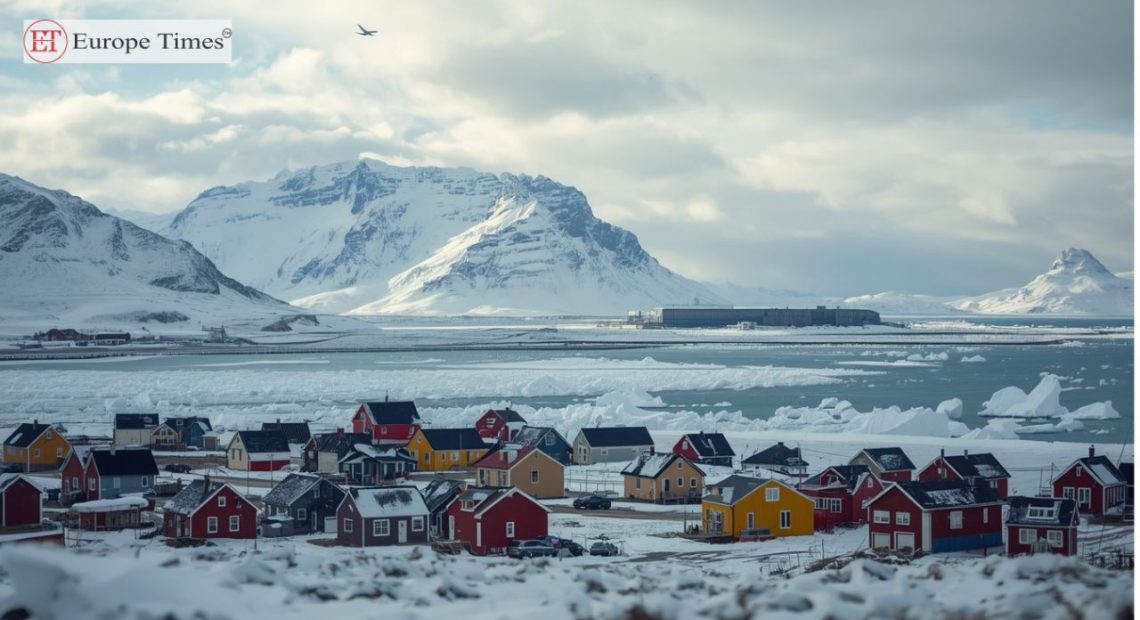
Greenland’s Prime Minister Jens-Frederik Nielsen has appointed his predecessor, Mute B. Egede, as the nation’s new foreign minister. In addition to managing international relations, Egede will oversee the critical portfolios of mineral resources and business policies. The move comes at a high-stakes moment for the island as it navigates complex diplomatic waters and seeks to stabilize its executive leadership following the recent resignation of the previous foreign minister’s party from the coalition government.

Egede’s primary challenge will be steering relations with the United States amid renewed pressure from President Donald Trump, who has repeatedly expressed a desire for U.S. control over the island for security reasons. While this stance has caused friction with European NATO allies, Egede has historically maintained a firm position on Greenlandic sovereignty. During his tenure as prime minister, which ended in mid-2025, he consistently rejected any notion of the island being “for sale,” asserting that its people alone will determine their future.

Despite the geopolitical tensions, Greenland, Denmark, and the U.S. began high-level negotiations in Washington this past January to salvage their diplomatic partnership. Egede, who previously served as finance minister, takes over the negotiating table from Vivian Motzfeldt during a period of ongoing dialogue. The international community is closely watching these scheduled meetings to see if Egede can balance the island’s economic interests in mineral resources with the need to protect its autonomy against intensifying American interest.

Pic courtesy: google/ images are subject to copyright

featured News Trending

Greenland’s Prime Minister Jens-Frederik Nielsen has strongly rejected U.S. President Donald Trump’s remarks describing Greenland as a “big, poorly run piece of ice,” calling the comments disrespectful and emphasizing the island’s sovereignty and global responsibility. Nielsen said Greenland is a proud nation of 57,000 people that respects international law and works closely with global allies, urging NATO members to stand together to protect the international order.

The comments came after Trump criticized NATO’s role in the Iran war and revived tensions over Greenland, which the U.S. has previously expressed interest in controlling due to its strategic Arctic location. Earlier this year, European nations including Germany and France sent troops to Greenland in a show of solidarity after concerns that the U.S. might consider military action, before diplomatic talks shifted the issue to negotiations.

Despite ongoing discussions between Greenland, Denmark, and the United States on defence cooperation, Nielsen warned that Trump’s ambitions regarding the island remain a concern. He stressed that Greenland supports dialogue and cooperation but remains cautious, noting that existing agreements already allow U.S. military presence on the island while maintaining Greenland’s autonomy and sovereignty.

Pic courtesy: google/ images are subject to copyright

featured News Trending

Spain has sharply escalated its criticism of Israel and the United States, condemning Israeli strikes on Lebanon and the broader conflict involving Iran. Foreign Minister Jose Manuel Albares described the situation as a grave attack on global values, echoing Prime Minister Pedro Sanchez, who has been a vocal opponent of the war.

Madrid’s stance has deepened tensions with Washington, especially amid pressure from allies of Donald Trump to penalize Spain. Sanchez has taken concrete steps, including closing Spanish airspace to aircraft involved in the conflict and urging the European Union to suspend its agreement with Israel, accusing it of violating international law and ceasefire terms.

Spain is also pursuing diplomatic efforts, announcing plans to reopen its embassy in Tehran to support regional peace. Meanwhile, Israeli Prime Minister Benjamin Netanyahu criticized Spain’s position, highlighting growing international divisions as Madrid continues to position itself as a leading critic of the ongoing conflict.

Pic courtesy: google/ images are subject to copyright

featured News Trending

Foreign ministers of the G7 nations have called for an immediate halt to attacks on civilians and civilian infrastructure amid the ongoing Iran war, following a high-level meeting in France. In a joint statement, the ministers stressed the urgent need to reduce harm to civilian populations and protect critical infrastructure affected by the conflict.

The leaders highlighted the importance of coordination and global partnerships to limit the wider impact of the war, including disruptions to energy, trade, fertilizer supplies, and global supply chains. They warned that continued instability could trigger economic shocks and affect countries far beyond the conflict region.

The G7 also emphasized the need to ensure safe and uninterrupted navigation through the Strait of Hormuz, a key global energy route, while reaffirming their commitment to regional stability and international cooperation. The group includes the United States, Britain, Canada, France, Germany, Italy, Japan, and the European Union.

Pic courtesy: google/ images are subject to copyright

featured News Trending

The United States has launched a new investigation into several major trading partners, including China, European Union and India, following a court ruling that struck down part of former tariff policies introduced by Donald Trump. The probe, announced by US Trade Representative Jamieson Greer, will examine alleged unfair trade practices and could lead to new import taxes on goods from the targeted countries. Officials said the investigation could be completed by summer.

The inquiry is being carried out under Section 301 of US trade law and covers a wide range of economies including Japan, South Korea, Mexico, Vietnam and Bangladesh. The administration argues the move is necessary to protect American manufacturing from what it calls excess production and unfair competition from overseas markets. Notably, Canada, the second-largest US trading partner, was not included in the probe.

The investigation follows a ruling by the Supreme Court of the United States that found earlier global tariffs introduced in 2025 unlawful. After the decision, Trump imposed a temporary 10% tariff on imports worldwide and signalled it could rise to 15%. The probe also comes ahead of expected talks between US officials and representatives from China in Paris, which may pave the way for a meeting between Trump and Chinese President Xi Jinping later this month.

Pic courtesy: google/ images are subject to copyright

featured News Trending

Iran has warned that any European Union country joining military attacks by the United States and Israel would be considered a “legitimate target” for retaliation. Iran’s Deputy Foreign Minister Majid Takht-Ravanchi made the statement during an interview with France 24, stressing that countries supporting the aggression would face direct consequences from Iran.

His comments come as tensions continue to escalate in the Middle East. Several EU nations, including France, Greece, and Italy, have deployed warships to the region. While many European leaders have criticized Iranian actions, they have also called for de-escalation and a diplomatic resolution to the conflict.

Meanwhile, German Chancellor Friedrich Merz said Germany is working with international partners to find ways to end the fighting. However, he noted that Berlin shares strategic goals with the United States and Israel regarding the situation with Iran.

Pic courtesy: google/ images are subject to copyright

featured News Trending

An artificial intelligence-driven productivity surge could ease pressure on debt-laden advanced economies, but economists caution it will not solve deep-rooted fiscal challenges. With public debt already exceeding 100% of GDP across most wealthy nations and projected to climb further due to ageing populations, defence spending and climate costs, AI-fuelled growth may only buy governments time rather than repair strained public finances.

Early estimates shared by the Organisation for Economic Co-operation and Development suggest that stronger productivity and employment gains from AI could reduce debt levels across member economies by about 10 percentage points from projected levels by 2036. In the United States, some economists see debt rising more slowly — to around 120% of GDP over the next decade — if AI meaningfully lifts growth and tax revenues. However, ratings agency S&P Global Ratings is not yet factoring in a major improvement in public finances.

Demographics remain the biggest constraint. Ageing populations and entitlement spending continue to drive debt higher, and uncertainty surrounds whether AI-led gains will translate into higher wages, employment and tax revenues. Economists warn that without fiscal discipline, even a sustained productivity boom may not offset mounting borrowing costs or prevent market pressure if growth disappoints.

Pic courtesy: google/ images are subject to copyright

featured News Trending

Germany is considering purchasing additional F-35 fighter jets from Lockheed Martin, potentially expanding its fleet beyond the 35 aircraft ordered in 2022. Sources said Berlin is in talks that could lead to buying more than 35 additional jets, which would significantly increase its reliance on U.S. military technology. Each aircraft costs over $80 million, and deliveries from the earlier order are expected to begin later this year.

The move comes as Germany and France face growing uncertainty over their joint Future Combat Air System (FCAS), a €100-billion program launched in 2017 to develop a next-generation fighter jet by 2040. Disagreements and delays have raised the possibility that the project could be abandoned. German officials, including Chancellor Friedrich Merz, have also questioned whether investing heavily in a new manned fighter jet remains practical given evolving military technology.

Expanding Germany’s F-35 fleet would mark a strategic shift toward closer defense integration with the United States and strengthen its role within NATO’s nuclear deterrence framework. The F-35 is currently the only Western aircraft certified to carry modern B61 nuclear bombs, making it essential for replacing Germany’s aging Tornado jets. While the future of the FCAS program remains uncertain, Germany and France are expected to continue cooperating on other defense areas such as drones and digital warfare systems.

Pic courtesy: google/ images are subject to copyright

featured News Trending

Pope Leo XIV called on Russia and the United States to extend the New START nuclear arms control treaty, which limits the number of strategic nuclear weapons deployed by each country. Speaking at his weekly audience at the Vatican, the pope emphasized that the current global situation “calls for doing everything possible to avert a new arms race.”

Signed in 2010, the treaty is set to expire on Thursday. Russian President Vladimir Putin proposed an informal one-year extension in September, but as of Wednesday, U.S. President Donald Trump had not responded, raising concerns about the potential lapse of the agreement.

The pope described the renewal as urgent, stressing the need to replace “the logic of fear and distrust with a shared ethic” that prioritizes the common good. Letting the treaty expire would mark the end of over 50 years of nuclear weapons constraints, a significant step in global arms control.

Pic courtesy: google/ images are subject to copyright

featured News Trending

Germany will remain closer to the United States than to China, despite recent tensions in transatlantic relations, Foreign Minister Johann Wadephul said on Monday. Speaking in Singapore, Wadephul stressed that Germany is “not in equidistance” between Washington and Beijing, adding that the U.S. continues to be Europe’s most important partner, particularly when it comes to security.

He acknowledged growing friction with Washington, including criticism from the Trump administration over Europe’s defence spending and reliance on U.S. military support. However, Wadephul warned against turning to China as an alternative, saying it would be the “wrong answer” for Europe to assume that closer ties with Beijing could replace the U.S. relationship, even as some Western countries pursue new trade deals with China.

Wadephul said Europe’s firm and united response to U.S. claims over Greenland showed the continent could defend its interests by clearly defining red lines. He also highlighted the European Union’s expanding network of free trade agreements as a key pillar of rules-based global trade and said the bloc is moving quickly to finalise new deals in the Asia-Pacific region, including with Malaysia, Thailand, the Philippines and Australia.

Pic courtesy: google/ images are subject to copyright