featured News Trending

Canada’s Cohere and Germany’s Aleph Alpha have signed a definitive merger agreement to combine their businesses and expand their presence in the enterprise artificial intelligence market. The combined company will operate under the Cohere name, with headquarters in Toronto and Berlin, while Aleph Alpha’s Heidelberg office will focus on research.

Aleph Alpha co-chief Ilhan Scheer will join Cohere as chief operating officer. The companies said the merger is aimed at meeting growing demand from businesses and governments for AI systems that can run within their own infrastructure while meeting local regulatory requirements. The deal was previously valued at around $20 billion, although updated financial terms were not disclosed.

Schwarz Group, the owner of Lidl, will invest €500 million in the combined company and provide computing capacity through its cloud arm, StackIT. Schwarz is investing up to €13 billion in a German data-centre campus expected to accommodate as many as 100,000 AI chips. The merger remains subject to regulatory approval.

Pic courtesy: google/ images are subject to copyright

featured News Trending

Amazon plans to raise £4.25 billion ($5.76 billion) through its first-ever sterling bond sale, exceeding its initial target as strong investor demand supports the debt offering. The move comes as major technology companies seek to diversify funding sources to finance heavy investment in artificial intelligence.

The four-part deal attracted more than £12 billion in demand, allowing Amazon to raise £1.25 billion through three-year bonds and £1 billion each through six-, 12- and 19-year bonds. The company has also tapped euro, Swiss franc and Canadian dollar debt markets as it expands its global funding programme.

Hyperscalers have issued more than $200 billion in debt this year, more than double their total for 2025, according to LSEG data. Amazon’s latest borrowing comes amid growing investor concerns that the rapid pace of AI-related debt issuance could test demand and increase financing costs for large technology companies.

Pic courtesy: google/ images are subject to copyright

featured News Trending

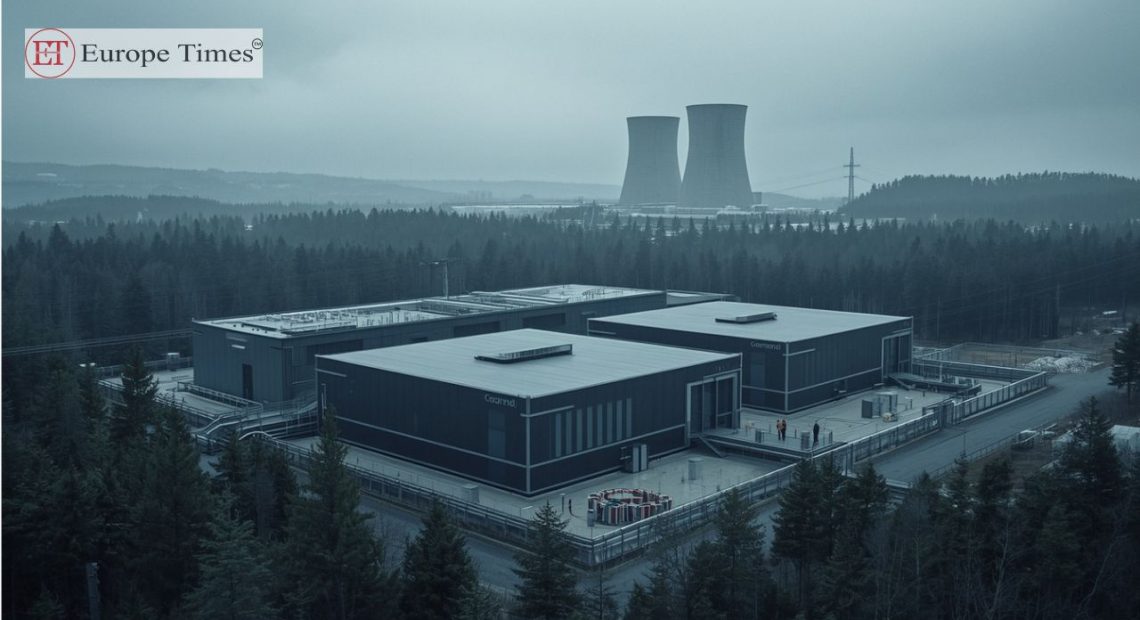
Google will invest at least €13 billion ($15.1 billion) in Finland over the next two years to expand its artificial intelligence infrastructure. The investment will include data centres, electricity grid upgrades, clean energy and battery projects, supporting services such as Gemini, Search, Maps and YouTube.

The technology giant has also signed a 22-year agreement with Finnish utility Fortum to purchase up to 50% of the electricity produced by one of the country’s nuclear power plants. The deal marks Google’s first nuclear energy agreement outside the United States and is intended to provide a reliable source of low-carbon power for its growing data centre operations.

Google said the investment could add about $3.6 billion to Finland’s GDP during the construction phase and support around 7,000 jobs annually once the infrastructure is operational. Finland’s cold climate and access to abundant low-carbon energy are helping attract major technology companies looking for efficient locations for energy-intensive data centres.

Pic courtesy: google/ images are subject to copyright

featured News Trending

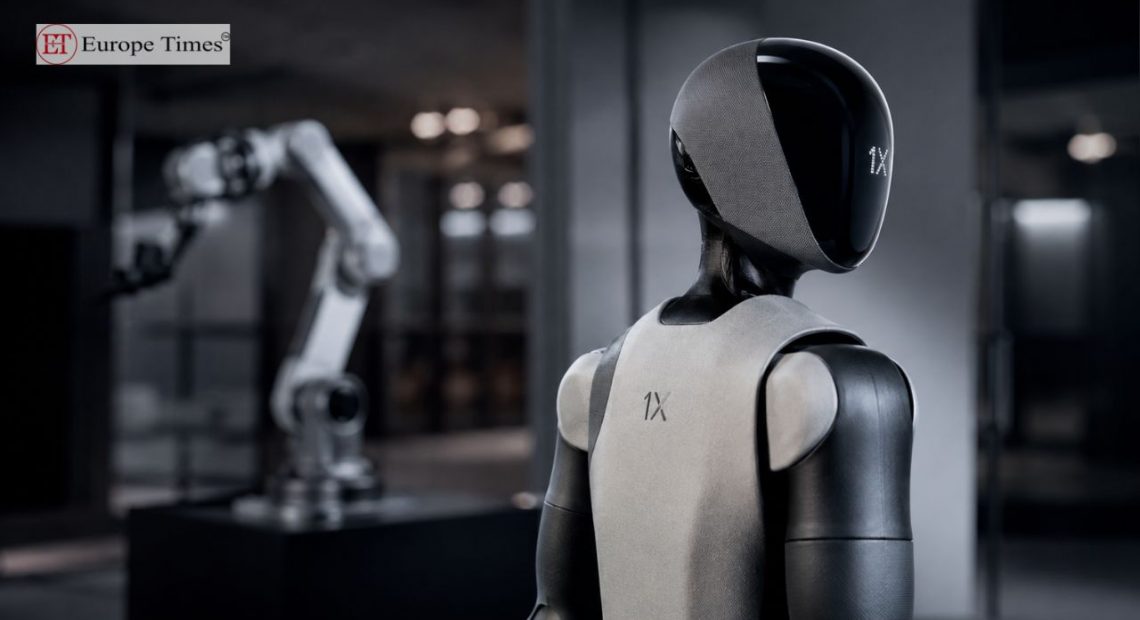
SoftBank is in talks to acquire a majority stake in OpenAI-backed humanoid robot developer 1X Technologies, in a deal that could value the startup at around $6 billion, according to a report by The Information citing people familiar with the matter. The talks are ongoing, and terms could still change.

The potential investment would strengthen SoftBank’s growing focus on robotics and artificial intelligence. OpenAI invested in 1X in 2023 through its startup fund, alongside Tiger Global and Norway-based investors. OpenAI and 1X had also discussed the possibility of an acquisition last year.

The move follows SoftBank’s broader expansion into the robotics sector. Last year, the Japanese conglomerate agreed to acquire Swiss engineering group ABB’s robotics business for about $5.4 billion, highlighting its ambition to build a stronger position in the rapidly developing robotics industry.

Pic courtesy: google/ images are subject to copyright

featured News Trending

Alibaba shares fell sharply in Hong Kong on Monday after the Chinese technology giant launched a $10.2 billion share sale to fund its expanding AI ambitions. The company priced 710 million new shares at HK$112.70 each, an 8.4% discount to Friday’s closing price, raising concerns over shareholder dilution and the risks involved in its heavy AI spending.

Despite the discount, the offering attracted strong investor demand, with orders reportedly reaching $28 billion. Around 40% of the shares are expected to go to long-term and sovereign investors. Alibaba Chairman Joe Tsai and CEO Eddie Wu also bought shares in the company, signaling confidence in its AI strategy.

Alibaba is increasingly shifting its focus toward AI as e-commerce growth slows. The company has committed nearly half of its 380 billion yuan three-year capital spending plan, while its AI-related spending contributed to a 75% year-on-year drop in quarterly net profit. The company expects its AI investments to break even within about three years as it develops proprietary chips and AI models.

Pic courtesy: google/ images are subject to copyright

featured News Trending

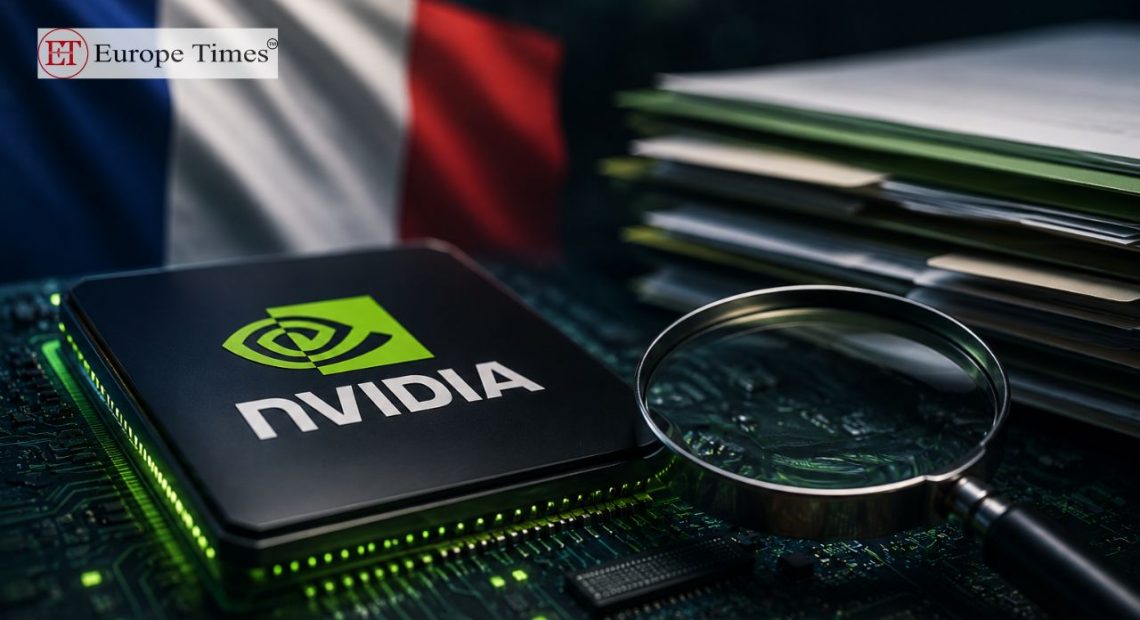
France’s competition authority has announced that its investigation into U.S. chipmaker Nvidia over alleged anti-competitive practices is nearing completion. The probe, which has examined Nvidia’s conduct in the semiconductor market, is now in its final stages, according to officials.

Umberto Berkani, the French competition authority’s general rapporteur, said the investigation is close to concluding but did not provide a timeline for a final decision or disclose any findings. The inquiry is part of broader regulatory scrutiny of major technology companies operating in Europe.

The outcome of the case could have implications for Nvidia’s business practices in the region, particularly as demand for AI chips continues to grow. Authorities have not yet indicated whether the investigation will result in penalties or other regulatory measures.

Pic courtesy: google/ images are subject to copyright

featured News Trending

Russia has demanded an explanation from Apple after several applications linked to Russian technology company VK were removed from the App Store without prior notice. VK, which operates popular social media, messaging, video, email, and educational platforms, said the company is not subject to U.S. sanctions and described Apple’s decision as unfair and unacceptable for millions of Russian users.

Kremlin spokesperson Dmitry Peskov said Russian authorities would formally seek clarification from Apple and warned that Moscow could reconsider future cooperation with the company if satisfactory answers are not provided. He also suggested that affected users could switch to Android devices, where VK’s applications remain available.

The dispute comes amid Russia’s broader effort to reduce reliance on Western technology platforms since the Ukraine conflict began in 2022. Moscow has increasingly promoted domestic digital services, including VK’s state-backed MAX messenger, while strengthening control over the country’s online ecosystem. VK remains one of Russia’s largest internet companies, with millions of daily users across its social media and video platforms.

Pic courtesy: google/ images are subject to copyright

featured News Trending

The Netherlands has agreed to join Pax Silica, a U.S.-led initiative aimed at strengthening and coordinating artificial intelligence supply chains among allied nations. The move marks a significant boost for Washington’s technology diplomacy efforts, even as the two countries continue to disagree over certain chip equipment exports to China.

The announcement comes as Dutch Trade Minister Sjoerd Sjoerdsma visits Washington to discuss trade issues, including concerns over the proposed U.S. Match Act. While both countries support restrictions on exporting advanced semiconductor manufacturing tools used for AI chip production, they remain divided on whether Dutch company ASML should be allowed to sell and maintain some less-advanced equipment in China.

Pax Silica seeks to enhance economic security and cooperation in critical technology sectors. Besides the Netherlands, members include Japan and South Korea, while Taiwan has endorsed the initiative without formally joining. The European Union is also expected to participate in the future, further expanding the alliance’s influence over global AI and semiconductor supply chains.

Pic courtesy: google/ images are subject to copyright

featured News Trending

France’s domestic intelligence agency, DGSI, has selected French technology company ChapsVision to replace data analysis tools currently provided by U.S.-based Palantir. Prime Minister Sebastien Lecornu said the move reflects France’s commitment to reducing dependence on foreign technology and strengthening national digital sovereignty.

Although ChapsVision has been chosen as the long-term replacement, Palantir’s existing contract with the agency remains active and its tools will continue to be used during a transition period. French officials said the gradual rollout is necessary to prevent any operational disruptions while the new system is integrated.

The decision comes amid growing concerns across Europe about reliance on American technology providers, particularly in sensitive areas such as security and artificial intelligence. France also announced plans to invest €655 million in AI initiatives, including government-wide chatbot services, a public health assistant, and new platforms to improve access to public data.

Pic courtesy: google/ images are subject to copyright

featured News Trending

An Albanian film and theatre actor has filed a lawsuit against the government, claiming her face and voice were used without consent to create an AI-generated “virtual minister.” The case centres on Anila Bisha, whose likeness was used for an avatar named Diella, unveiled when Prime Minister Edi Rama began his fourth term last September. The AI figure was presented as a cabinet member overseeing government contracts, a move billed as part of efforts to combat corruption.

Bisha says she had agreed for her likeness to be used only as a virtual assistant on a government website to help citizens access documents, not as a political figure. She told Reuters the unexpected transformation has led to online abuse and unwanted attention in public, with people referring to her as a government minister. The government denies wrongdoing, calling the lawsuit baseless and saying it is prepared to resolve the matter in court.

The dispute comes as Albania’s government faces heightened scrutiny following corruption allegations involving senior officials. Diella’s image appears prominently alongside cabinet members on the official website, adding to the controversy. A court in Tirana is expected to rule on whether the government must stop using Bisha’s image, while her lawyer says she is seeking €1 million in damages for the alleged violation of her personal data rights.

Pic courtesy: google/ images are subject to copyright