News Trending

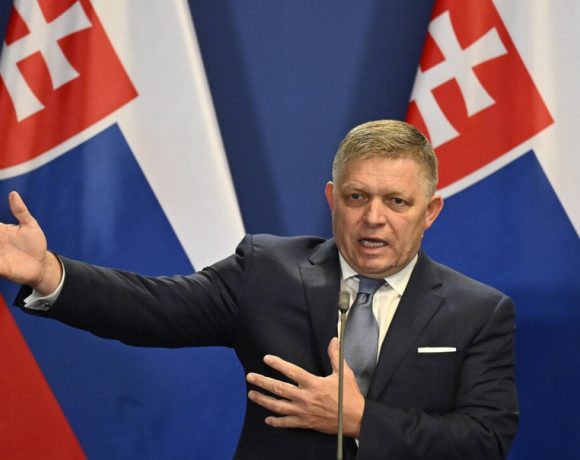
A 71-year-old man from Levice has been implicated in the attempted murder of Slovak Prime Minister Robert Fico, who was severely injured in a shooting incident. The suspect, though not officially named, has been widely identified by Slovak reports. If convicted, he could potentially face life imprisonment.

The assailant acted alone, according to Interior Minister Matus Sutaj Estok, who stated that the suspect had participated in anti-government protests and was discontented with the outcome of the recent presidential election, won by Peter Pellegrini, an ally of Fico.

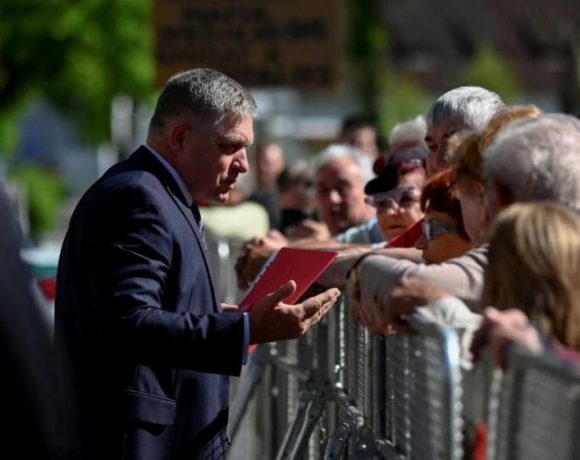
In the brazen daylight attack, Fico was shot five times at close range, sustaining serious injuries to his stomach and arm. His security detail was caught off guard, and Fico was swiftly taken to a hospital for emergency treatment. Despite the severity of his condition, Fico’s status has stabilized, though he remains in intensive care.

The alleged perpetrator is described as a writer and political activist, with a circulated video purportedly featuring him expressing grievances against the government’s policies, particularly regarding state media. However, the authenticity of the video and its connection to the detained suspect remain unverified.

The shooting has been condemned by Slovak politicians as an assault on democracy, prompting calls for unity and calm. Outgoing President Zuzana Caputova urged political leaders to convene and address the escalating tensions, while President-elect Peter Pellegrini called for a suspension of campaigning ahead of European Parliament elections.

The attack occurred amid parliamentary discussions concerning the government’s proposal to dissolve Slovakia’s public broadcaster RTVS, a move that has sparked widespread public protests in recent weeks. Some officials have attributed the shooting to heightened political rhetoric and hostility perpetuated by both media and opposition parties.

In response to the incident, Deputy Prime Minister Taraba and Interior Minister Estok criticized the opposition and media for allegedly fueling animosity, with concerns raised about the safety of journalists and NGOs in Slovakia.

Picture Courtesy: Google/images are subject to copyright
News Trending

The recent regional election in Catalonia marked a significant shift in the political landscape, with the Socialists, led by Salvador Illa, emerging victorious with 42 seats. This success contrasted with a drop in support for independence to 42%, down from 49% in 2017, signaling a setback for pro-independence parties.

Despite the Socialist victory, forming a government may prove challenging, as coalition negotiations are necessary. The fragmented nature of the Catalan parliament, divided by unionist-separatist allegiances and left-right divisions, is likely to prolong post-election discussions.

The amnesty law, a contentious issue benefiting nationalists and championed by Prime Minister Pedro Sánchez’s government, played a pivotal role in securing support. However, it has faced criticism, particularly from opponents on the right, for its perceived leniency towards separatist activities.

Calls for unity among pro-independence parties have emerged, but the complexity of the political landscape suggests that negotiations will be intricate. Despite former regional president Carles Puigdemont’s suggestion for a coalition between pro-independence parties, the path to forming a government remains uncertain.

Additionally, the election saw gains for the conservative People’s Party and the far-right Vox, while the centrist Ciudadanos lost all representation in the parliament. A new far-right party, Catalan Alliance, also secured two seats, further diversifying the political spectrum in Catalonia.

Picture Courtesy: Google/images are subject to copyright

News Trending

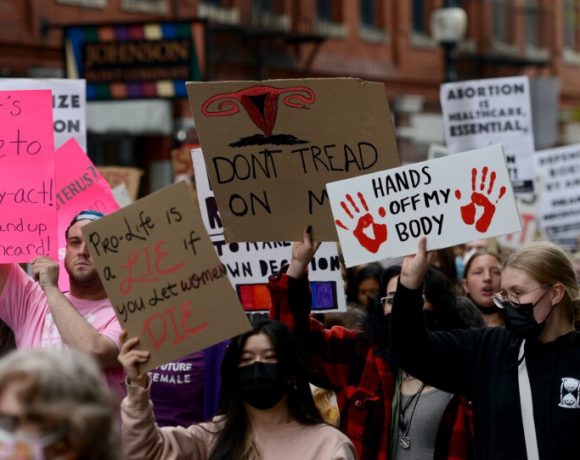
An expert commission appointed by the government in Germany has recommended legalizing abortion within the first 12 weeks of pregnancy. Currently, while abortions are technically illegal, exceptions exist for cases such as medical consultation beforehand, rape, or danger to the woman’s life. However, the ambiguous legal situation leads to challenges for both women seeking abortions and healthcare providers, contributing to stigma and uneven access to services, especially in rural areas.

The commission’s report, released a year ago, argues that maintaining the status quo is untenable in light of constitutional, human rights, and European law considerations. However, the government is not bound to follow the commission’s recommendations, and conservative opposition parties are threatening legal action if the law is changed. They accuse the commission of bias and claim the government is initiating a culture war over abortion rights.

While Germany has generally avoided the intense politicization of abortion seen in other countries, such as Poland or the US, upcoming national elections next year could intensify the debate. Politicians may use the issue to rally support amidst declining popularity, potentially prolonging the discussion and fueling further polarization.

Picture Courtesy: Google/images are subject to copyright

News Trending

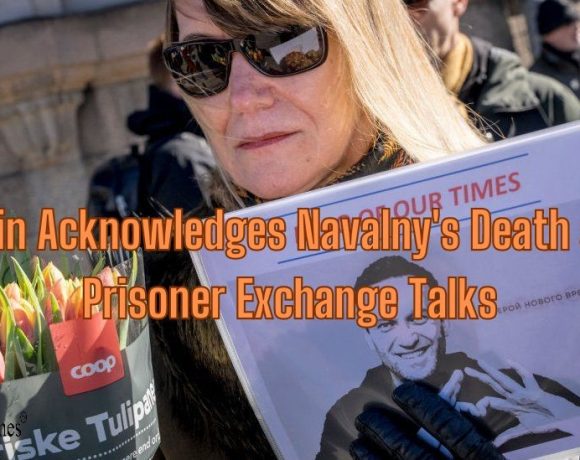
Vladimir Putin, known for his reluctance to address his main opponent in Russia directly by name, notably changed his approach following the death of Alexei Navalny. After securing his fifth term as president, Putin acknowledged Navalny’s passing, describing it as a sorrowful event. He also hinted at a potential agreement for Navalny’s involvement in a prisoner exchange.

Navalny’s associates allege he was murdered while in custody in an Arctic jail by Russian authorities, whereas official Russian sources attribute his death to natural causes. US President Joe Biden condemned Putin’s regime, characterizing Navalny’s demise as further evidence of Putin’s brutality.

Putin recently disclosed that prior to Navalny’s death, he had been informed of a proposed swap involving individuals detained in the West. Putin claimed he had agreed to the swap on the condition that Navalny remained outside Russia, but the plan did not materialize due to unforeseen circumstances.

Some observers interpret Putin’s remarks as an effort to distance himself from Navalny’s death, while others see it as a sign that Putin no longer perceives Navalny as a significant threat. Previously, Putin had rarely mentioned Navalny by name, arguing that he was just one among many opposition figures.

Navalny’s associates assert that Putin’s recent acknowledgment of Navalny’s name signifies a shift in his stance, indicating that Putin no longer feels the need to avoid mentioning him. However, critics view Putin’s comments with skepticism, considering them as attempts to downplay his involvement or responsibility in Navalny’s demise.

The circumstances surrounding Navalny’s death are intertwined with discussions of a potential prisoner swap, allegedly involving Navalny and individuals held in the West. Despite Putin’s acknowledgment of the proposed exchange, the Kremlin has not officially confirmed these negotiations. Additionally, Putin has refrained from directly naming Vadim Krasikov, a Russian hitman implicated in a high-profile murder in Germany, despite allusions to his involvement.

Overall, Putin’s remarks and the events surrounding Navalny’s death underscore the complex dynamics of Russian politics and international relations, with lingering questions regarding accountability and justice.

Picture Courtesy: Google/images are subject to copyright

News Trending

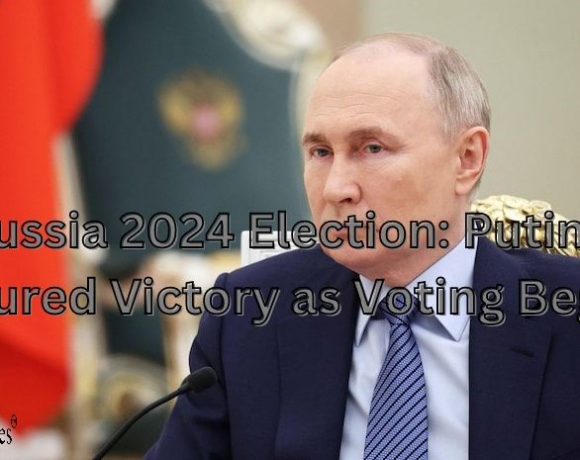
Voting has commenced in Russia’s presidential election, with Vladimir Putin poised to secure another six-year term in office without any significant opposition. The election spans three days, from the Kamchatka Peninsula to the Kaliningrad exclave, though the outcome is a foregone conclusion due to the absence of credible challengers.

Putin’s decision to run for a fifth term was portrayed as spontaneous, yet the Kremlin’s media apparatus swiftly mobilized to bolster his candidacy, portraying him as an indispensable national leader. Having already held power longer than any Russian leader since Stalin, Putin maneuvered to reset term limits, allowing him to potentially extend his rule until 2030.

Despite efforts to maintain a facade of legitimacy, the electoral process lacks genuine competition. Turnout is emphasized to showcase Putin’s popular support, though previous elections have been marred by irregularities. The limited opposition candidates on the ballot pose no real threat to Putin’s reign.

Televised debates excluded Putin, who instead engaged in choreographed interactions with various groups to bolster his image as a man of the people. His recent state-of-the-nation address primarily addressed domestic concerns, signaling awareness of pressing issues like poverty and healthcare failures, which remain unsolved despite his lengthy tenure.

The election, expected to be neither free nor fair, underscores Putin’s enduring dominance. The only notable challenge comes from Yulia Navalnaya, widow of Kremlin critic Alexei Navalny, who has urged supporters to demonstrate their presence at polling stations, although the impact is largely symbolic.

Ultimately, Putin’s victory is inevitable, and the illusion of democracy will persist for another six years.

Picture Courtesy: Google/images are subject to copyright

News Trending

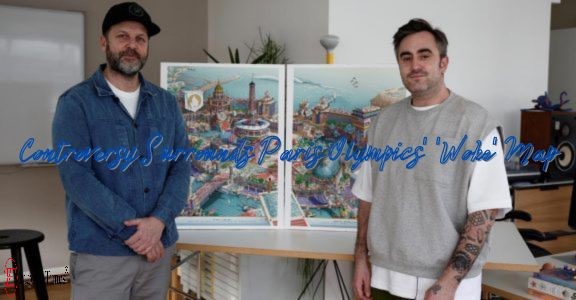
The artist behind the official poster for the upcoming Paris Olympics responded to criticism alleging that his artwork neglects French identity and Christianity. Ugo Gattoni, the designer, defended his creation, describing it as a vibrant and celebratory depiction of Paris.

Critics, particularly conservatives, have taken issue with the absence of prominent symbols such as the French tricolour and a cross on the Hôtel des Invalides. Some politicians accused the creators of the poster of attempting to erase France’s history and identity.

Gattoni explained that his intention was to convey a lively and festive atmosphere, rather than making any political statements. He emphasized that the buildings in his artwork were drawn based on his creative vision, without any underlying agenda.

The organizing committee also defended the poster, describing it as a whimsical interpretation of a transformed city-stadium, featuring various sports and landmarks. They stressed that the inclusion of the French flag colors and other national symbols should dispel any politically motivated interpretations.

Meanwhile, the Hôtel des Invalides has become embroiled in another controversy concerning proposals for Saudi Arabia to construct an Olympic village on its grounds. The French Armed Forces Ministry stated that negotiations with Saudi Arabia were ongoing but emphasized that any use of the Invalides site would be subject to strict conditions.

Some politicians, including right-wing MP Nathalie Serre, voiced opposition to the idea, asserting that certain historical sites like the Invalides should not be subject to commercial interests.

The Paris Olympics are scheduled to take place from July 26 to August 11, followed by the Paralympics from August 28 to September 8.

Picture Courtesy: Google/images are subject to copyright

News Trending

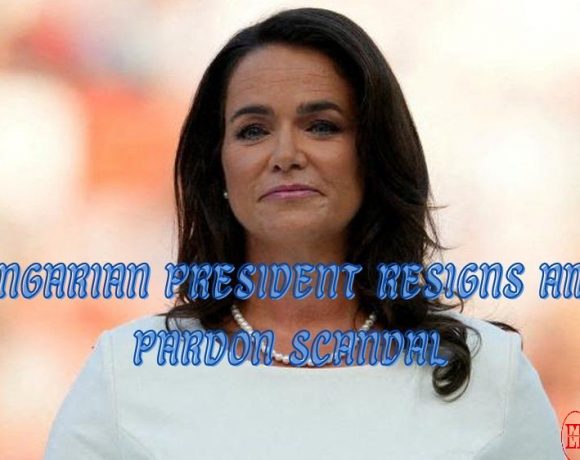
The president of Hungary has stepped down on live television following backlash over a controversial decision to pardon a man involved in covering up a child sexual abuse case. President Novak’s resignation comes amidst growing protests demanding her departure after it was revealed she pardoned a man convicted of coercing children to retract abuse allegations against a state-run children’s home director.

Novak, who had granted clemency to the individual, apologized for her actions, acknowledging her mistake. This decision also led to the resignation of Judit Varga, the former minister of justice, who approved the pardon and was overseeing the European elections campaign for Prime Minister Viktor Orban’s ruling Fidesz party.

The controversy erupted when the names of 25 individuals pardoned by Novak during a visit by Pope Francis were disclosed by Hungarian media. Among them was the deputy director of a children’s home near Budapest, convicted for pressuring children to withdraw abuse accusations against the home’s director, who himself was imprisoned for child abuse.

Novak’s sudden resignation, along with Varga’s departure, came as a surprise, considering Novak’s popularity within Fidesz and her significant role as the first female president of Hungary. The scandal has dealt a blow to Fidesz, known for its emphasis on traditional family values, and has caused embarrassment for the long-standing nationalist government.

In her televised address, Novak expressed regret for not standing up for the victims and acknowledged the doubts raised about the government’s commitment to combating pedophilia. The resignations of Novak and Varga, both prominent female figures in Fidesz, represent a significant setback for Orban’s party, especially with Varga slated to lead the party’s list in the upcoming European elections.

Picture Courtesy: Google/images are subject to copyright

News Trending

Andrea Giambruno, former partner of Italian Prime Minister Georgia Meloni, has been removed from his position as host of a national TV show following the leakage of off-air sexist comments to another program.

The TV company, Mediaset, has stated that Giambruno will retain an editorial role on the show. Meloni recently announced her separation from Giambruno after a recording of his conversation, which was broadcast on a satirical TV show, prompted controversy.

Mediaset, owned by the family of late Prime Minister Silvio Berlusconi, has replaced Giambruno’s role with journalist Manuela Boselli. There have been speculations in Italian media about the impact of this incident on the tensions within the Meloni government.

However, both the Berlusconi family and Forza Italia have denied any involvement in the leak. Meloni, known for her adherence to traditional Catholic family values, has emphasized the importance of a mother and father in a child’s life.

Antonio Ricci, director of the show that aired the recording, had earlier suggested that the incident might eventually benefit Meloni. Reports indicate that Giambruno had often joked about his relationship with the prime minister, and further embarrassing recordings could potentially emerge, according to sources.

Picture Courtesy: Google/images are subject to copyright

News Trending

After much speculation, Silvio Berlusconi’s will has been revealed, showing that he has bequeathed a majority stake in the family’s holding company Fininvest to his two eldest children, Marina and Pier Silvio. They will jointly own 53% of the family firm. Berlusconi, who passed away on June 12, was one of Italy’s wealthiest individuals, with a vast empire spanning real estate, television, cinema, and sports. His will also revealed that Marina and Pier Silvio, his children from his first marriage, will receive larger shares compared to his three other children from his second wife. The two eldest children have been involved in managing the family business since the early 1990s and have stated that no single shareholder will have overall individual indirect control of Fininvest.

In addition to his children, Berlusconi allocated €100 million to Marta Fascina, his partner at the time of his death. Although they were not married, Berlusconi referred to her as his wife on his deathbed. He left €100 million to his brother Paolo and €30 million to his close aide Marcello Dell’Utri. The distribution of Berlusconi’s other valuable assets, such as luxurious villas, has not been clarified yet and may present challenges in dividing them equally among his offspring. These properties include Villa San Martino in Arcore, a historic mansion covering 3,500 square meters, as well as homes in various locations such as Lake Maggiore, Rome, Cannes, and the Caribbean.

Among his properties, Villa Certosa in Sardinia stands out as a prestigious asset. Berlusconi purchased the mansion in the 1970s and hosted world leaders there, including Vladimir Putin and George W. Bush. The mansion, with 126 rooms and elaborate features like a fake erupting volcano, is estimated to be worth €259 million.

Silvio Berlusconi was a highly influential figure in Italy’s history, leaving a lasting impact on politics, media, football, and society. His will included a handwritten letter expressing his gratitude and love for his children. However, the question remains whether the family unity he maintained during his lifetime will persist after his passing and how that might affect the future of his business empire.

Picture Courtesy: Google/images are subject to copyright

News Politics Trending

354 members of the House of Commons vote in favour of a report from the COVID epidemic ‘Partygate’ incident that said the former prime minister lied about it.

A study that suggested punishing former British Prime Minister Boris Johnson for misleading the legislature about illegal, intoxicated parties hosted during the COVID-19 outbreak was approved by lawmakers in the country.

The report from the privileges committee, which recommended that the former leader should have his parliamentary pass removed, was approved by the House of Commons on Monday by a vote of 354 to 7. It would have also suggested a 90-day suspension from the legislature if he hadn’t already resigned.

Johnson abruptly left the House of Commons ten days ago after reading a draught of the report and branding the investigation a “witch hunt.”

Theresa May, a member of the Conservative Party and Johnson’s predecessor as prime minister, remarked, “It is important to show the public that there is not one rule for them and another for us.”

House of Commons Leader Penny Mordaunt urged lawmakers to “do what they think is right” as she opened the five-hour discussion. Mordaunt, a Conservative like Johnson, declared she will support the Commons Privileges Committee’s findings with her vote.

“This matters because the integrity of our institutions matter. The respect and trust afforded to them matters,” said Mordaunt. “This has real-world consequences for the accountability of members of Parliament to each other and the members of the public they represent.”

A few Johnson supporters stood forward to support the former leader. “I cannot see the evidence where Boris Johnson misled Parliament knowing, intentionally, or carelessly,” said MP Lia Nici.

Rishi Sunak, the prime minister of India, was among the several Conservative MPs who skipped the discussion. He remained aside out of concern for upsetting Johnson’s surviving fans.

The prime minister had “a number of commitments,” according to Sunak’s spokesperson Max Blain, including a meeting with the president of Sweden.

Johnson, who celebrated his 59th birthday on Monday, wasn’t either. He left his position as prime minister in September 2022, although he continued to serve as a member of parliament until June 9, when he resigned after learning of the Privileges Committee’s conclusions.

The debate on Monday was the most recent repercussion of the “Partygate” affair concerning events at Downing Street and other government facilities in 2020 and 2021.

When it was revealed that political staffers had birthday parties, garden parties, and “wine time Fridays” during the pandemic, it infuriated Britons who had abided by the regulations put in place to stop the coronavirus’s spread but were unable to visit friends and family or even say goodbye to relatives who were dying in hospitals.

In response to Partygate, Labour Party MP Chris Bryant claimed that “there is visceral anger” among people.

The Sunday Mirror newspaper’s publishing of a video this week of staff members dancing and drinking at a Conservative Party headquarters event in December 2020, when mingling between different families was prohibited indoors, brought back memories.

Picture Courtesy: Google/images are subject to copyright